Artwork
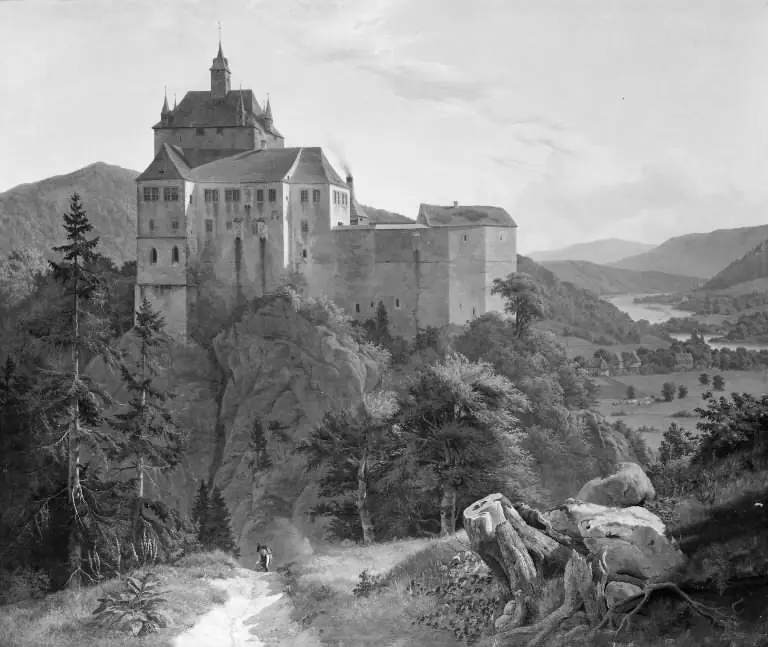
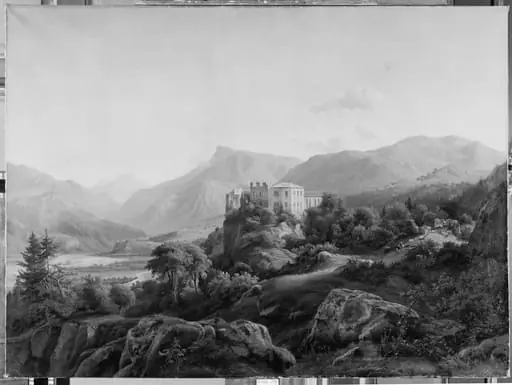
The Ruins of Hasselberg Castle near Bolzano. Tyrol
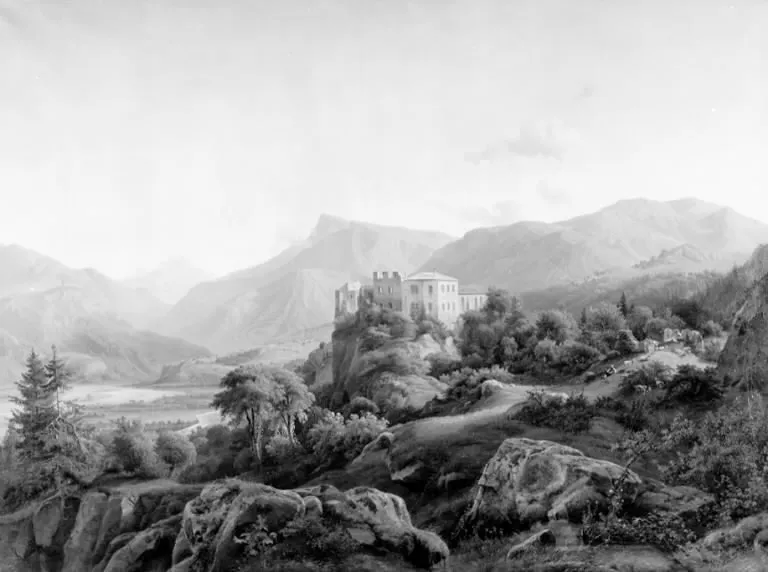
The Ruins of Hasselberg Castle near Bolzano. Tyrol is an oil painting by Johann Hermann Carmiencke. It dates from 1845 and is held in the collection of the Statens Museum for Kunst.
About this work
Overview
Painted in 1845 by Johann Hermann Carmiencke, this oil on canvas depicts the remnants of Hasselberg Castle overlooking the landscape near Bolzano in Tyrol.
Painted in 1845 by Johann Hermann Carmiencke, this oil on canvas depicts the remnants of Hasselberg Castle overlooking the landscape near Bolzano in Tyrol. The work is part of the collection at Statens Museum for Kunst in Copenhagen. It presents a quiet, contemplative view of a ruined structure nestled in a natural setting, rendered with careful attention to atmospheric detail and subdued tonal harmony.
Subject & Meaning
The painting centers on the decaying architecture of Hasselberg Castle, its tower and elongated roof standing as silent witnesses to time’s passage. Surrounded by vegetation and framed by distant mountains and a winding valley, the scene evokes a sense of solitude and historical endurance. The absence of human figures reinforces a mood of stillness, suggesting reflection on impermanence rather than narrative drama.
Technique & Style
Carmiencke employed a precise, observational approach, using fine brushwork to render textures of stone, foliage, and earth. The palette is restrained—dominated by grays, muted greens, and earth browns—enhancing the painting’s tranquil atmosphere. Light is diffused and even, minimizing dramatic contrast to support a sense of quiet realism, characteristic of mid-19th-century topographical painting.
History & Provenance
The painting was completed in 1845 during Carmiencke’s travels in the Tyrol region. It entered the collection of Statens Museum for Kunst in Denmark, where it remains today. While little is documented about its early ownership, its preservation in a national museum suggests it was recognized early for its technical skill and evocative depiction of a fading architectural landmark.
Context
In the mid-1800s, European artists increasingly turned to ruins as subjects, drawn by Romantic ideals of nature reclaiming human endeavor. Carmiencke’s work aligns with this trend, though it avoids overt sentimentality. His focus on precise topography reflects a broader interest in documenting regional landscapes, particularly in areas with layered histories like the Tyrol.
Legacy
Though not widely known outside Scandinavian and German-speaking art circles, Carmiencke’s painting contributes to a quiet tradition of landscape realism that valued observation over drama. It stands as a modest but enduring record of a specific place at a specific moment, valued for its calm integrity rather than grandeur.
Artist & collection

Artist
Johann Hermann Carmiencke (1810–1867) was an artist, born in Hamburg.

 Shepherd and his flock by Lake Nemi
 Parti i Valders i Norge. Aften
 Wood-Clad Rocks with Waterfall
 Wood-Clad Rocks with Waterfall
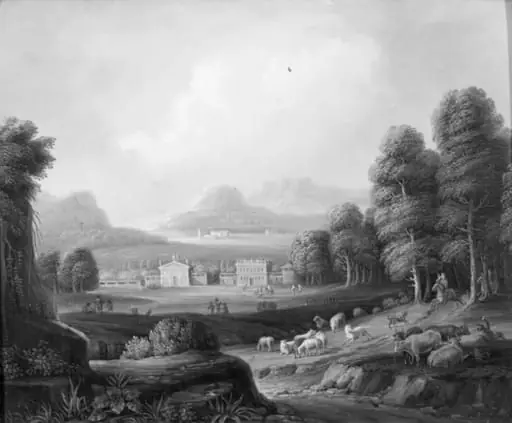 A Landscape with Villas in the Middle Distance and Mountains in the Background
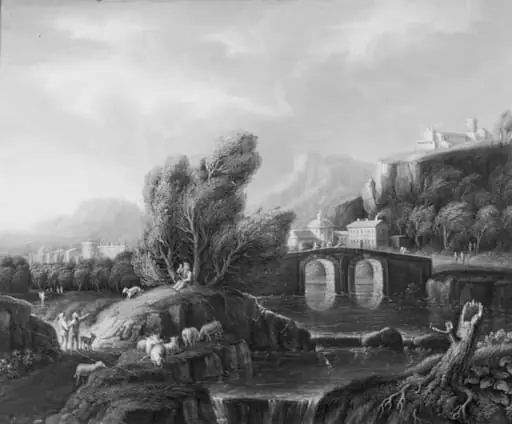 A Landscape with a Waterfall and a Stone Bridge
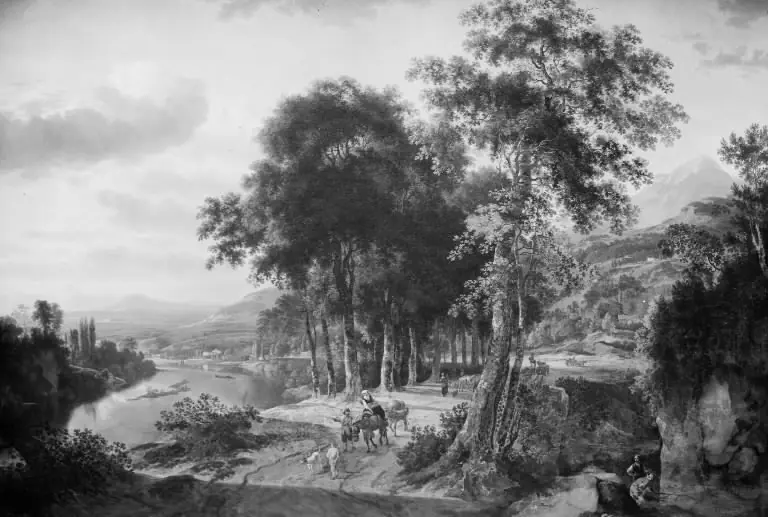 Southern Landscape, Sunset
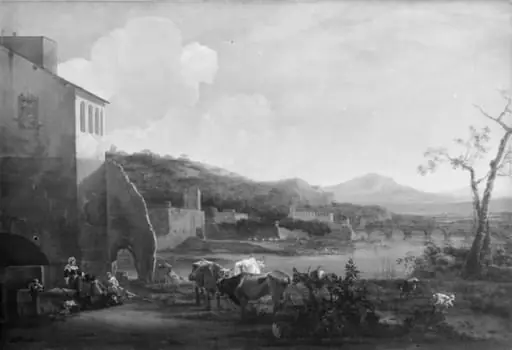 Italian Landscape
 River Landscape
 Forest View with Mountains
 A Landscape with Villas in the Middle Distance and Mountains in the Background
 The Ruins of Hasselberg Castle near Bolzano. Tyrol