Artwork
Two Trees (recto) Tree Studies (verso)
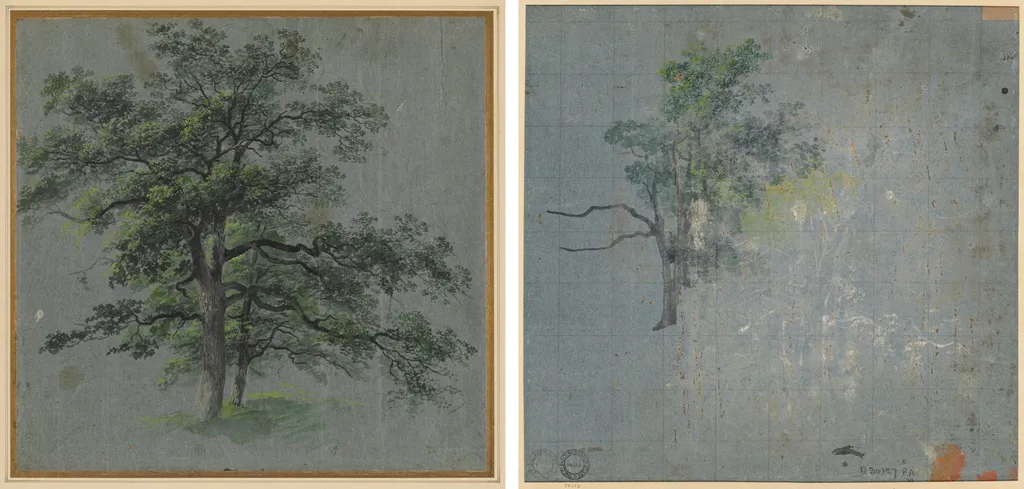
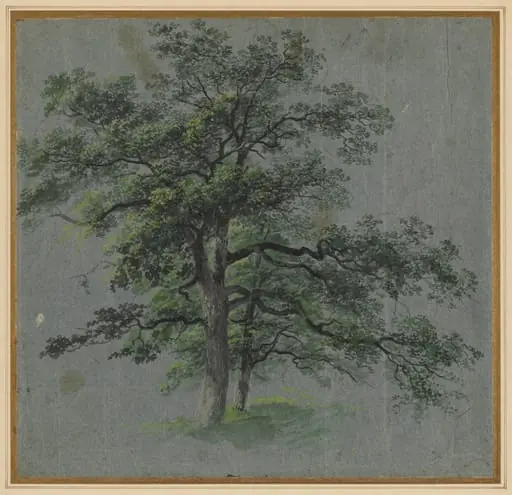
Two Trees (recto) Tree Studies (verso) is a drawing by the Romanticist artist Johann Jacob Dorner. It dates from 1804 and is held in the collection of the Cleveland Museum of Art.
About this work
Overview
Created around 1804 by Johann Jakob Dorner the Younger, this double-sided drawing features two trees on the front and additional studies on the reverse.
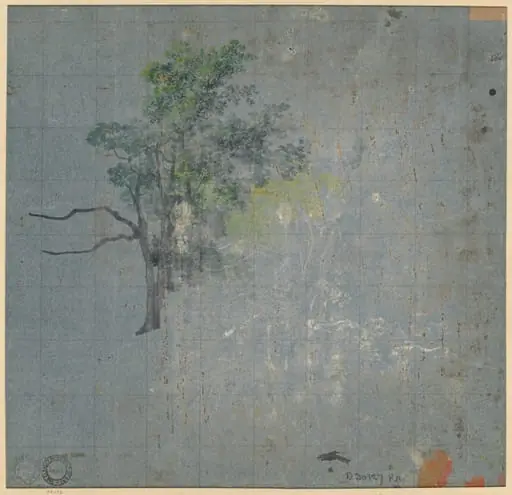
Created around 1804 by Johann Jakob Dorner the Younger, this double-sided drawing features two trees on the front and additional studies on the reverse. Executed in pencil or ink on paper, it reflects the artist’s close observation of natural forms during his travels across southern Germany and neighboring regions. The verso reveals preparatory sketches, indicating a methodical approach to capturing botanical structure.
Subject & Meaning
The two trees contrast in vitality—one robust with dense, irregular foliage, the other bare and angular—suggesting a meditation on growth, decay, and resilience. The muted, expansive background emphasizes the trees as solitary figures within a quiet landscape. No human presence or narrative is implied; the focus remains on the trees’ physical presence and individual character.
Technique & Style
Dorner employed careful linear precision, evident in the grid on the reverse, which likely aided in scaling and proportion. The rendering of bark and branches is detailed yet restrained, avoiding theatricality. Faint pigment loss across the surface hints at frequent handling, possibly during study or teaching. The subdued palette and controlled brushwork reflect a preference for observation over emotional exaggeration.
History & Provenance
Dorner, trained by his father and Johann Baptist Mannlich, became a respected figure in Bavarian art circles. He later served as Restorer and Inspector of the Royal Gallery in Munich and was elected to academies in Hanau and Vienna. The drawing entered the Cleveland Museum of Art’s collection through documented acquisition, preserving its connection to early 19th-century German artistic practice.
Context
Working during the rise of Romanticism, Dorner’s focus on individual trees aligns with a broader interest in nature as a subject worthy of quiet contemplation. Unlike dramatic Romantic landscapes, his approach is intimate and empirical, rooted in the tradition of topographical drawing. His travels through Switzerland and France exposed him to French and Dutch landscape conventions, which subtly inform his compositional balance.
Legacy
Dorner’s work contributed to the development of landscape study in southern Germany, bridging empirical observation with emerging Romantic sensibilities. His role in preserving and organizing the Munich gallery collection helped institutionalize the value of preparatory drawings. This piece remains a testament to the scholarly discipline behind landscape art in the early 1800s.
Artist & collection
Artist
Johann Jakob Dorner the Younger (1775–1852) was a Bavarian landscape painter. The son of Johann Jakob Dorner the Elder, he was born in Munich and was instructed in art by his father and by Mannlich. Afterwards he…

 清 佚名 舊傳范寬 煙嵐秋曉圖 卷|Autumn Landscape
 名繪集珍 冊 宋夏珪松厓客話
 Ink Landscape (Suiboku sansui zu)
 Winter Scene with Plum Trees and Pheasants
 Spring Fragrance, Clearing After Rain
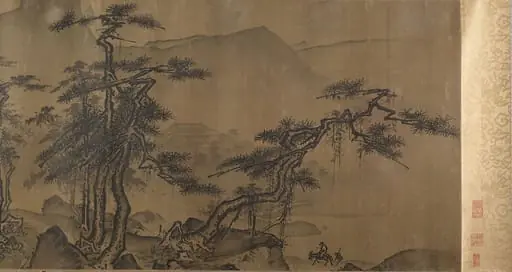 明/清 佚名 李遠(僞款) 仿夏珪江山清遠圖 卷|Landscape
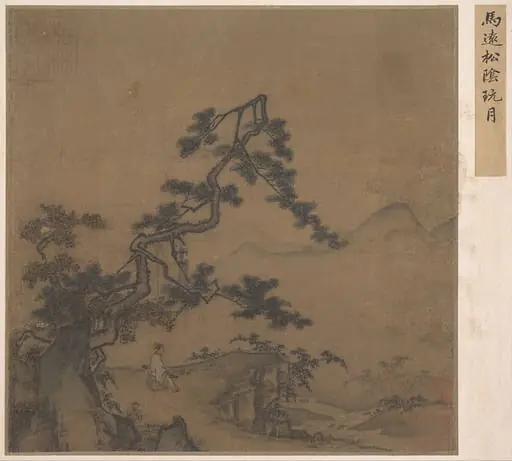 南宋 佚名 倣馬遠 松陰玩月圖 冊頁|Viewing the Moon under a Pine Tree
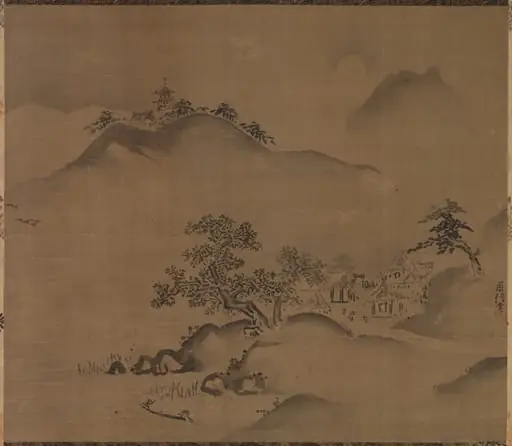 Chinese Landscape
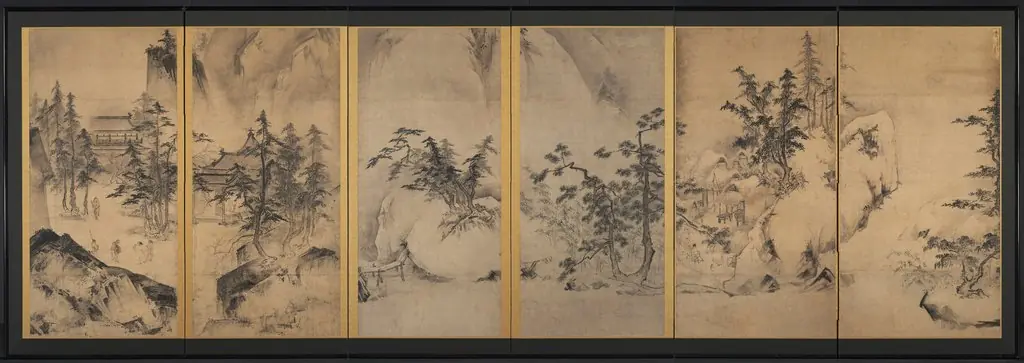 Winter and Spring Landscape
 清 樊圻 山水圖 冊 紙本|Landscapes
 Moonlit Landscape
 Tree Study