Artwork
Moonlit Landscape
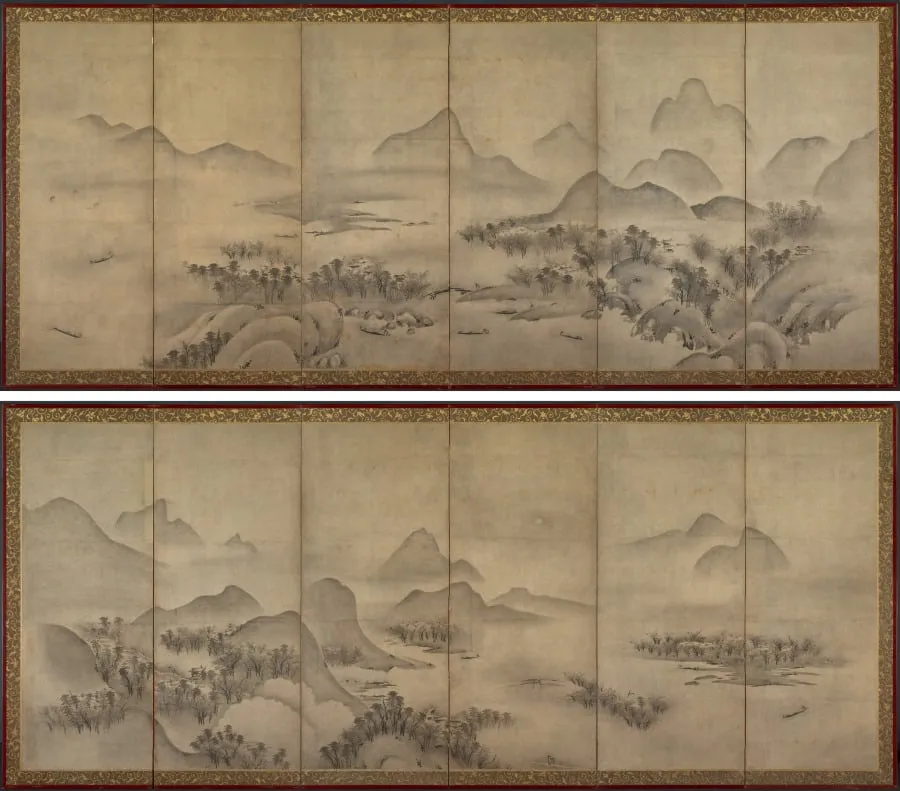
Moonlit Landscape is an unspecified painting by the Renaissance artist Unknown. It dates from 1504 and is held in the collection of the Cleveland Museum of Art.
About this work
Overview
The composition unfolds horizontally, guiding the viewer from day into night under the quiet dominance of moonlight.
This unsigned painting depicts a nocturnal landscape inspired by the Chinese Eight Views of the Xiao and Xiang Rivers, adapted into a Japanese artistic tradition. Rather than presenting all eight canonical scenes, it selectively includes four: sunset over a fishing hamlet, distant sails at dusk, the autumn moon above Lake Dongting, and a temple bell heard through mist. The composition unfolds horizontally, guiding the viewer from day into night under the quiet dominance of moonlight.
Subject & Meaning
The painting evokes a poetic journey through time and place, tracing a single day’s transition into night. The moon serves as both literal illumination and symbolic thread, connecting disparate scenes and unifying the narrative. Its presence suggests contemplation and transience, core themes in East Asian landscape aesthetics. The omission of certain views does not diminish the reference but instead invites the viewer to complete the literary allusion through imagination.
Technique & Style
The artist employs subtle gradations of ink and wash to render mist, water, and shadow, creating depth without sharp outlines. Tiny, sparse details—fishing lights, distant sails, temple roofs—anchor the vastness of the scene. The moon, rendered as a pale disc, casts no direct light but governs the tonal harmony, suggesting atmosphere over realism. This restrained approach aligns with ink-wash traditions that prioritize mood over detail.
History & Provenance
The work lacks signature or seal, common in certain Japanese ink-painting circles where anonymity emphasized the tradition over the individual. It likely originated in the Muromachi or early Edo period, when Chinese literary themes were widely adapted in Japan. Its survival without documentation suggests it was privately held, possibly within a scholarly or monastic context, valued for its meditative quality rather than public display.
Context
The Eight Views motif entered Japan through Chinese poetry and painting, becoming a staple of ink-wash landscapes. Artists often reinterpreted the scenes to suit local topography and seasonal sensibilities. This painting reflects a shift from literal representation to emotional resonance, aligning with Zen-influenced aesthetics that favored suggestion over description. The moon’s centrality echoes classical Japanese poetry’s preoccupation with natural cycles and quiet beauty.
Legacy
Though unsigned, the painting exemplifies how Japanese artists transformed Chinese literary models into deeply personal expressions. Its emphasis on atmosphere and implied narrative influenced later generations of ink painters who prioritized emotional tone over topographical accuracy. The work remains a quiet testament to the enduring power of moonlit landscapes in East Asian visual culture, where silence and subtlety carry as much weight as form.
Artist & collection

 Domestic Scene
 Giacomo and Cardinal Marco, investing Andrea, Abbot of San Zeno, with his Benefice
 The Nymph of Fontainebleau
 Portrait of a Woman
 Madonna and Child with Saints in the Enclosed Garden
 Venus and Minerva
 Family Group of Four on Sofa
 Wall painting from Room H of the Villa of P. Fannius Synistor at Boscoreale
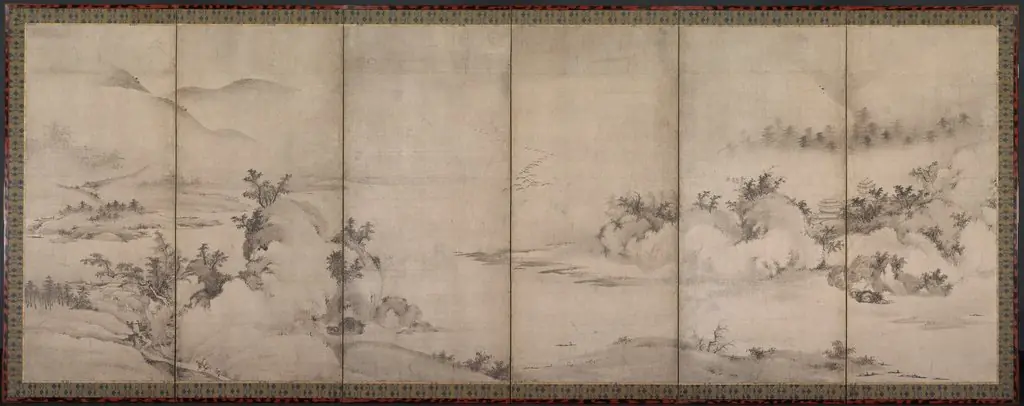 Landscape with Motifs from the Eight Views of Xiao-Xiang
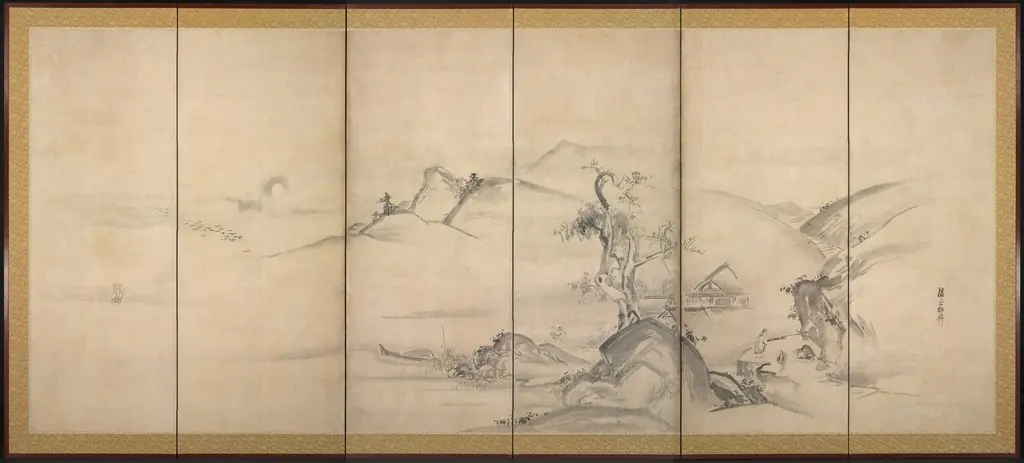 Eight Views of the Xiao and Xiang Rivers
 相阿弥筆 四季山水図 (瀟湘八景)|Landscape of the Four Seasons (Eight Views of the Xiao and Xiang Rivers)
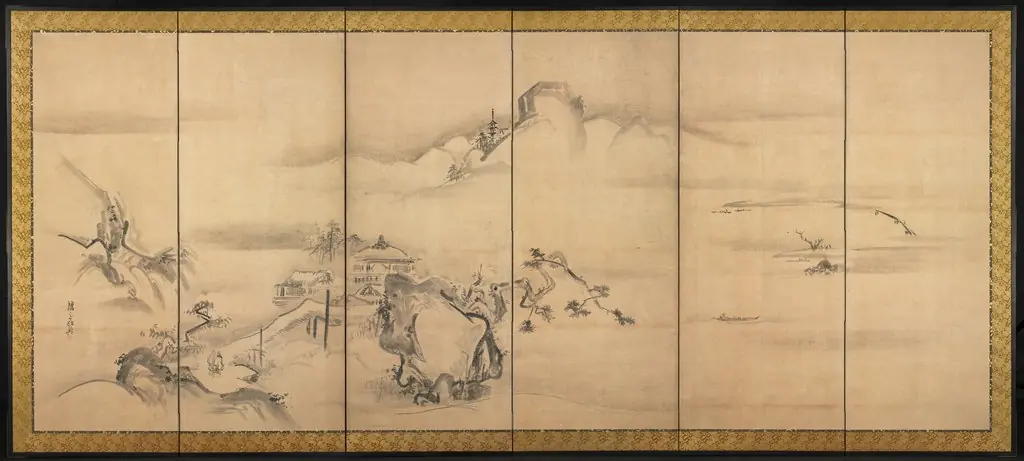 Eight Views of the Xiao and Xiang Rivers
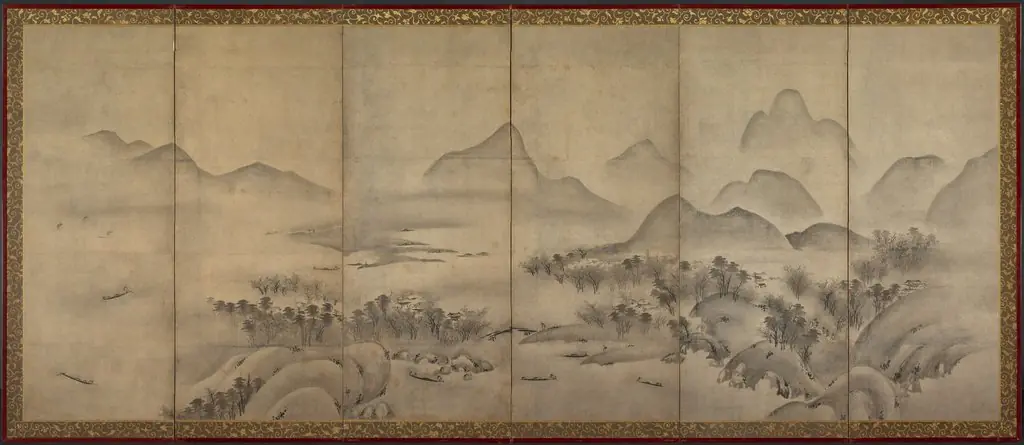 Moonlit Landscape
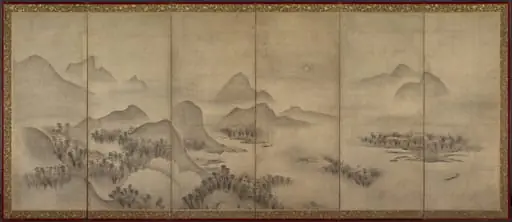 Moonlit Landscape (one of a pair)
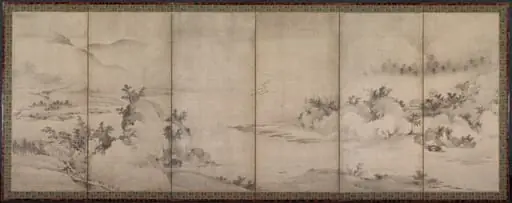 Landscape with Motifs from the Eight Views of Xiao-Xiang
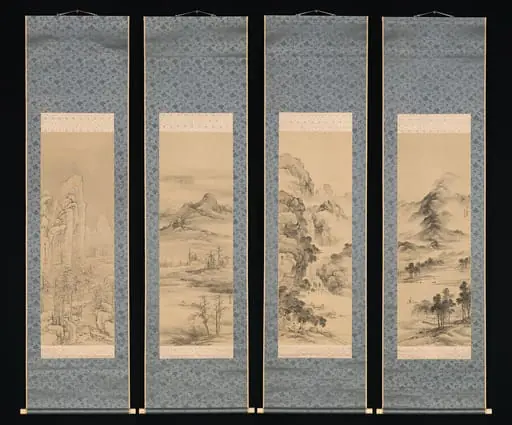 山本梅逸筆 四季山水図|Landscapes of the Four Seasons
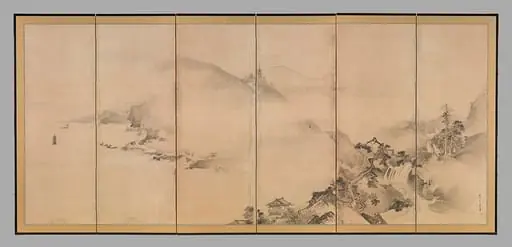 四季山水図屏風|Landscapes of the Four Seasons