Artwork
Apollo with Erato and Cupid
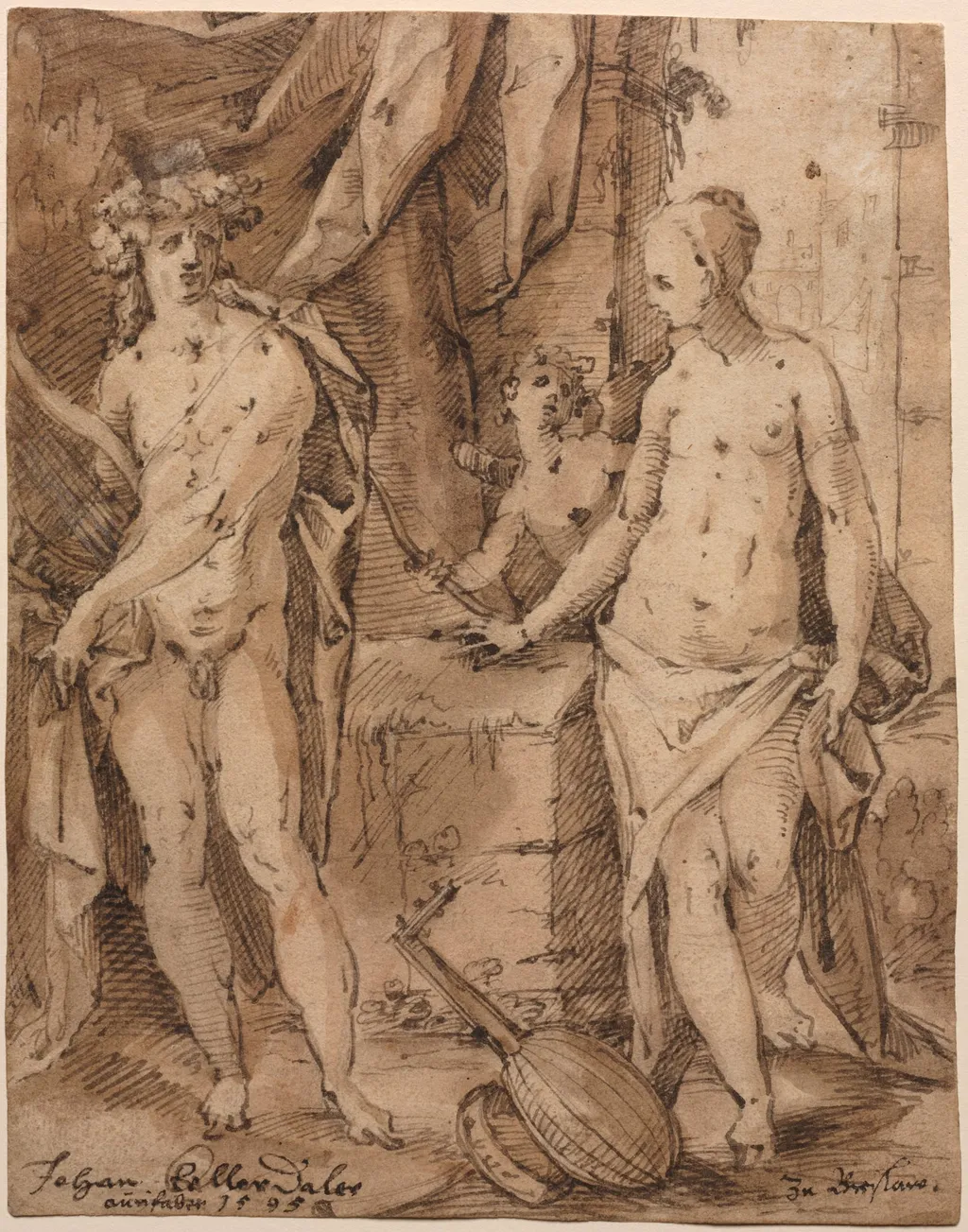
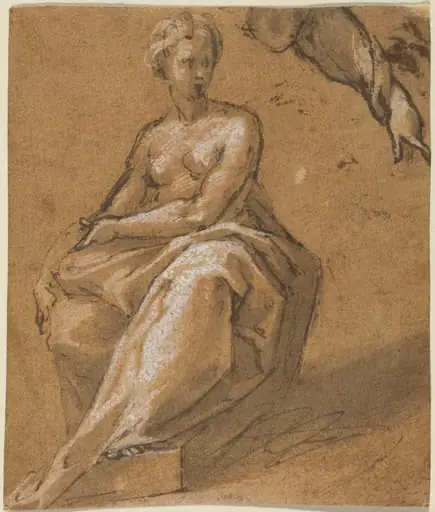
Apollo with Erato and Cupid is a drawing by the Renaissance artist Johann Kellerthaler. It dates from 1595 and is held in the collection of the Cleveland Museum of Art. This drawing depicts Apollo, the Greek god of music and poetry, accompanied by Erato, the Muse of lyric poetry, and Cupid.
About this work
Overview
The scene reflects a Renaissance tradition of allegorizing the arts through classical figures, using musical instruments and gestures to convey abstract ideals.
This drawing depicts Apollo, the Greek god of music and poetry, accompanied by Erato, the Muse of lyric poetry, and Cupid. The figures are arranged in a quiet, intimate composition, emphasizing their symbolic roles rather than narrative action. The scene reflects a Renaissance tradition of allegorizing the arts through classical figures, using musical instruments and gestures to convey abstract ideals.
Subject & Meaning
Apollo, holding a kithara, represents the divine source of poetic inspiration. Erato, identified by the lute and tambourine at her feet, embodies lyric poetry—short, emotionally charged verses often set to music. Cupid, present as a quiet observer, suggests the connection between love and poetic expression. Together, the trio forms a visual metaphor for the interplay of inspiration, emotion, and artistic creation.
Technique & Style
The artist rendered the figures in delicate pen and ink, with fine linear precision that defines drapery and anatomy without heavy shading. The composition is restrained, favoring clarity and balance over dramatic movement. The use of minimal color, likely wash, enhances the scholarly tone, aligning with the refined aesthetic favored in courtly artistic circles of early 17th-century Dresden.
History & Provenance
Created by Johann Kellerthaler, a multi-disciplinary artist active in Dresden, the drawing likely originated as a preparatory study or a gift for a Saxon noble patron. Kellerthaler’s documented work for the court—including painting, sculpture, and goldsmithing—suggests this piece was part of a broader cultural project to elevate the visual language of the arts under Saxony’s patronage.
Context
In early 17th-century Germany, classical mythology remained a vital framework for expressing intellectual and artistic ideals. Courts like Dresden cultivated imagery that linked rulers to Apollo’s divine authority, reinforcing cultural prestige. Drawings such as this served both as artistic exercises and as symbols of refined taste, circulating among educated elites who valued allegory and erudition.
Legacy
Though Kellerthaler is less widely known today, this drawing reflects a broader European tradition of allegorical drawing that influenced later Baroque and Neoclassical art. Its preservation in The Cleveland Museum of Art underscores its role as a quiet but significant example of how court artists translated literary and mythological themes into visual form during a period of intense cultural patronage.
Artist & collection

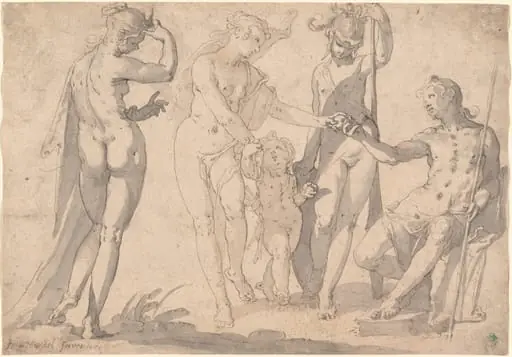 The Judgment of Paris
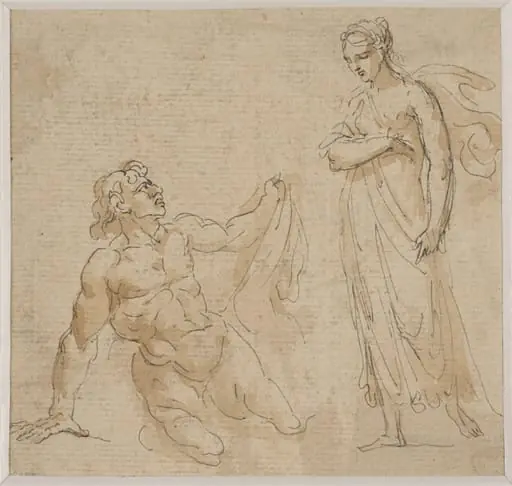 A woman approaching a kneeling man
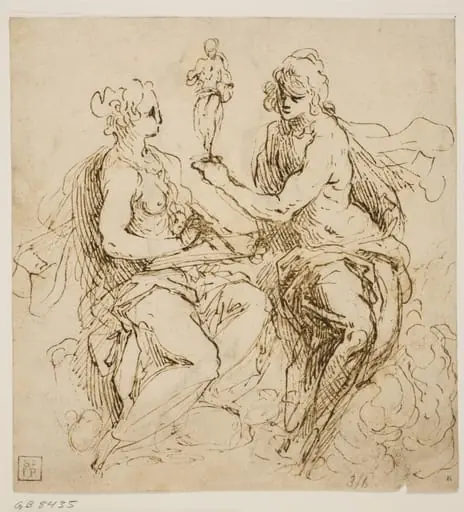 Personifications of Painting and Sculpture sitting on clouds
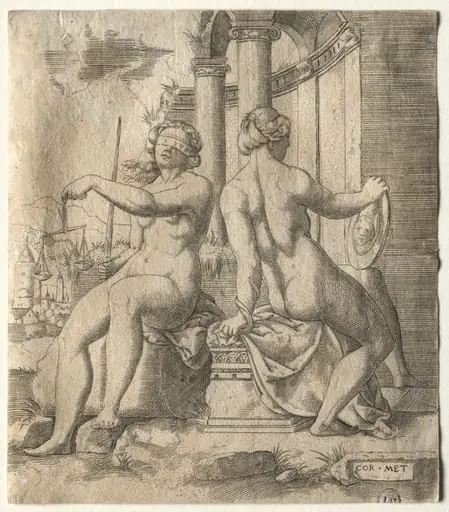 Justice and Prudence
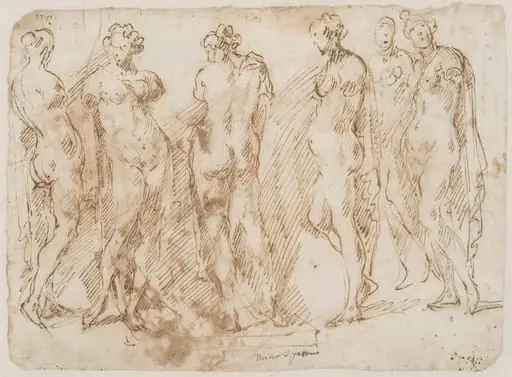 Six studies after an armless state of a female nude
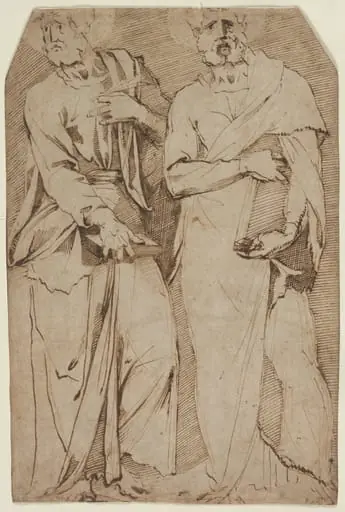 Two Standing Saints
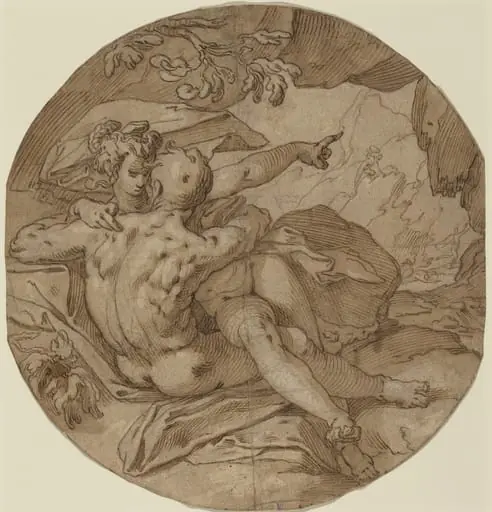 Acis and Galatea
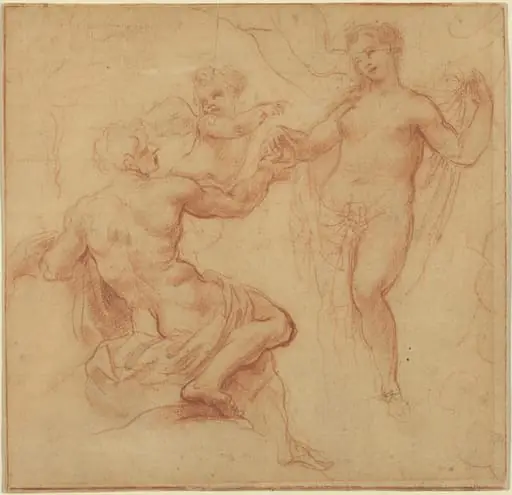 Paris Awarding the Apple to Venus
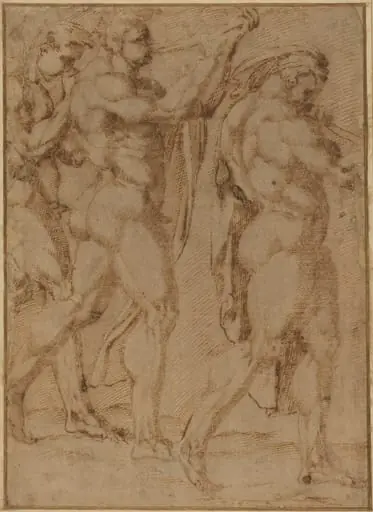 Triumphal Procession
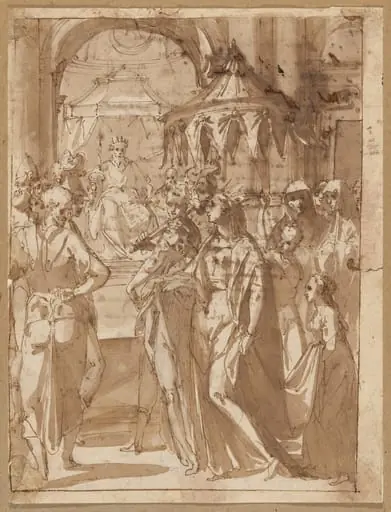 Esther before Ahasuerus
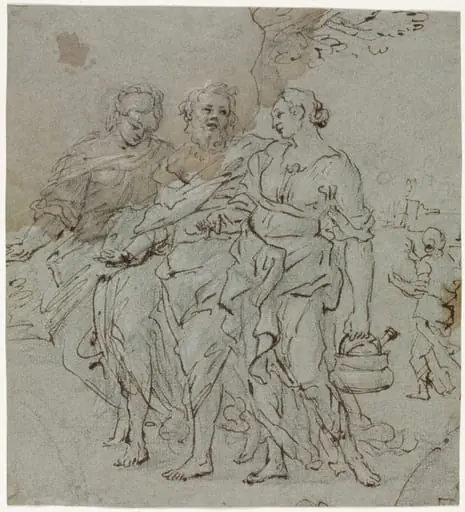 Lot and His Daughters (recto)
 Seated Nude with Drapery