Artwork
Lot and His Daughters (recto)
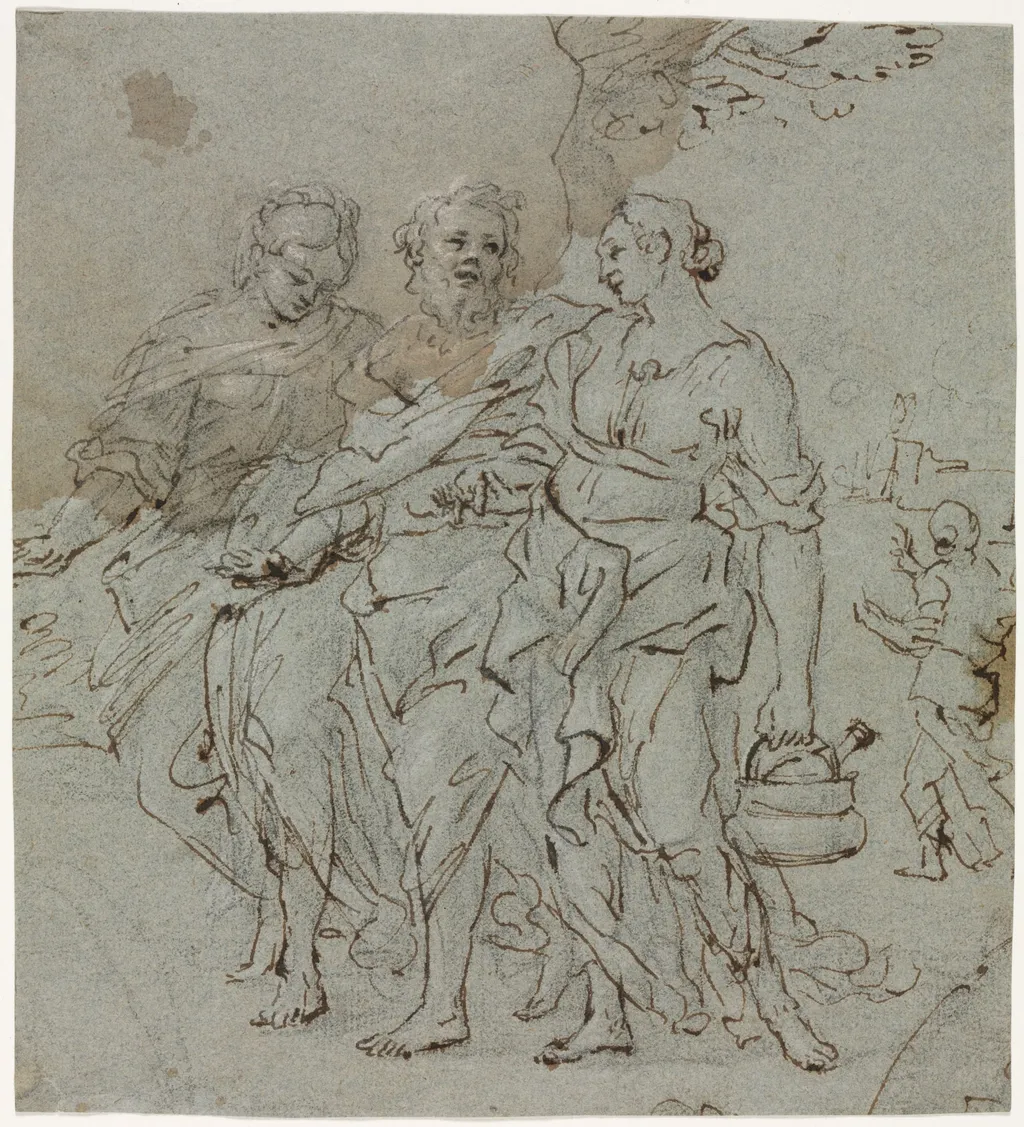
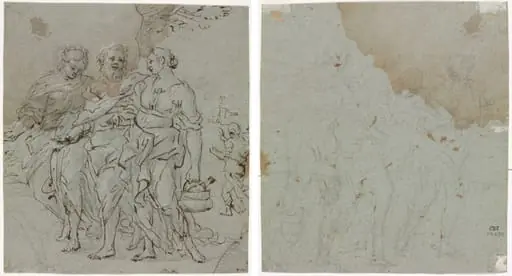
Lot and His Daughters (recto) is a drawing by the Baroque artist Pietro da Cortona. It dates from 1604 and is held in the collection of the Cleveland Museum of Art.
About this work
Overview
The work is a preparatory study, revealing his interest in expressive gesture and emotional intensity, hallmarks of his mature Baroque style.
Created around 1604, this drawing by Pietro da Cortona captures a moment from the biblical story of Lot’s escape from Sodom. Executed in ink and wash, it reflects the artist’s early experimentation with dynamic composition before his later large-scale frescoes. The work is a preparatory study, revealing his interest in expressive gesture and emotional intensity, hallmarks of his mature Baroque style.
Subject & Meaning
The scene illustrates Lot and his two daughters in the aftermath of Sodom’s destruction, as recounted in Genesis. The figures are shown in a moment of vulnerability and confusion, with the daughters clinging to their father while he appears overwhelmed. The drawing emphasizes human distress rather than divine judgment, focusing on psychological tension and physical entanglement as symbols of survival and moral ambiguity.
Technique & Style
Cortona employed rapid, forceful ink strokes to convey movement and emotional urgency. The figures are rendered with thick, uneven lines that suggest drapery and muscle beneath, while the wash adds depth and shadow without refinement. Facial expressions are simplified but potent—open mouths and tilted heads amplify the sense of panic. The composition feels unpolished, prioritizing energy over finish, typical of preparatory sketches from this period.
History & Provenance
The drawing is part of a small group of early works by Cortona, likely made during his formative years in Rome. It was likely kept in the artist’s studio as a study for later compositions. Its survival suggests it held value to Cortona or his circle, though its exact provenance before the 19th century remains undocumented. It is now held in a major European collection, acquired in the 1800s.
Context
In early 17th-century Italy, artists turned to biblical narratives to explore human emotion and physical drama. Cortona, influenced by Michelangelo and Caravaggio, used such subjects to test expressive potential before committing to grand frescoes. This drawing reflects a broader trend among Baroque draftsmen who valued spontaneity and movement as tools for conveying narrative power.
Legacy
Though less known than his ceiling frescoes, this drawing reveals Cortona’s foundational approach to figural drama. Its raw energy influenced later Baroque draftsmen who sought to capture fleeting emotion through gesture and line. As a surviving example of his preparatory process, it offers insight into how monumental works were conceived from intimate, urgent studies.
Artist & collection
Artist
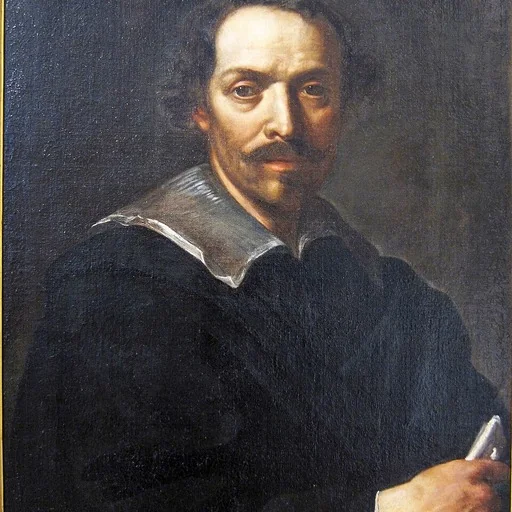
Pietro da Cortona (Italian: ; 1 November 1596 or 1597 – 16 May 1669) was an Italian Baroque painter and architect.

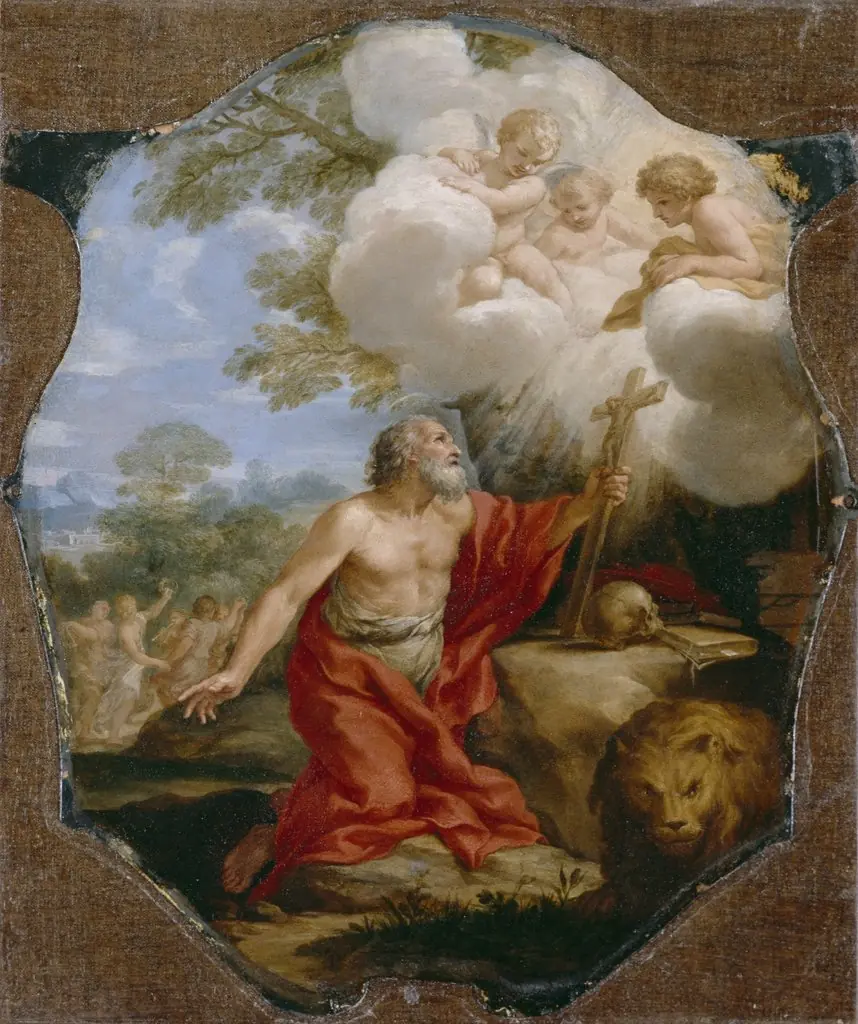
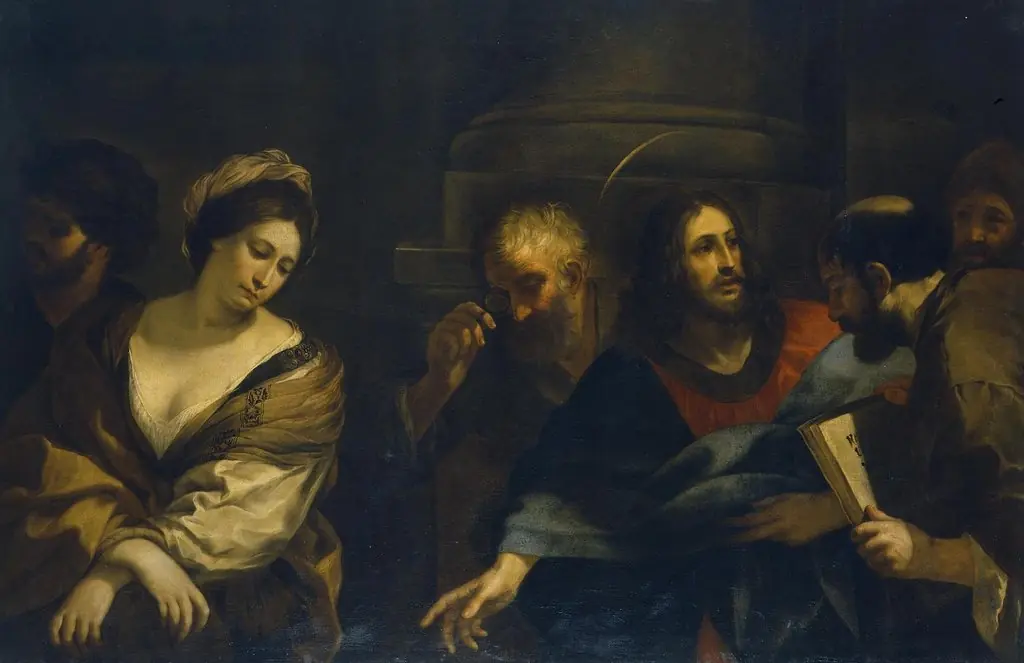
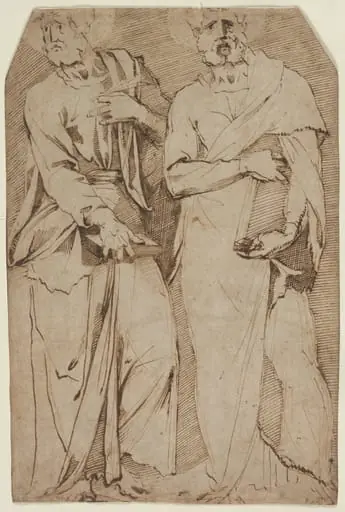 Two Standing Saints
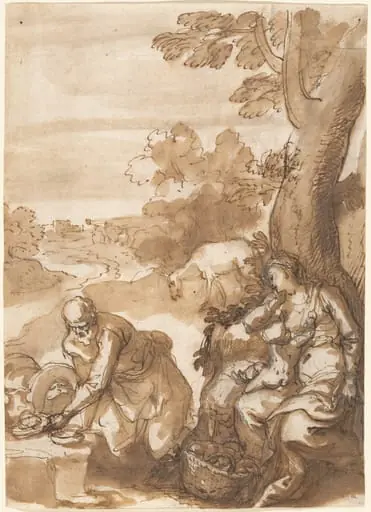 Rest on the Flight into Egypt
 Two Seated Women
 Abraham wrestling with the Angel
 The Finding of Moses
 The Three Marys
![Female Saint Carrying a Banner [recto], by Baldassare Franceschini](https://artifactworldgallery.com/img/baldassare-franceschini--female-saint-carrying-a-banner-recto--7b0a38585a5ad76d-w320.webp) Female Saint Carrying a Banner [recto]
Female Saint Carrying a Banner [recto]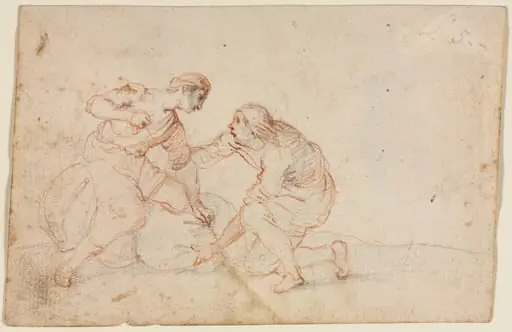 Two Men Tying a Bundle (recto)
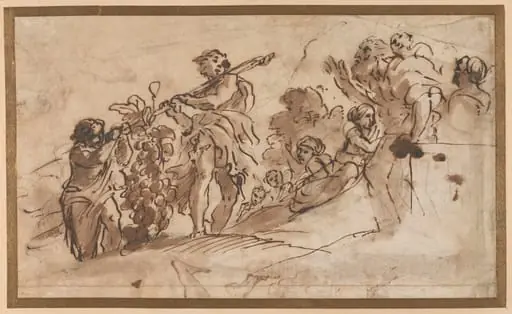 The Return of the Spies from the Promised Land
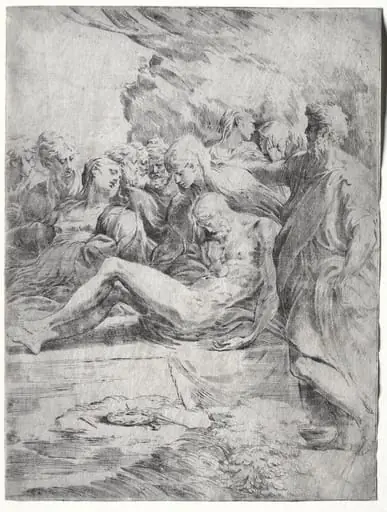 The Entombment
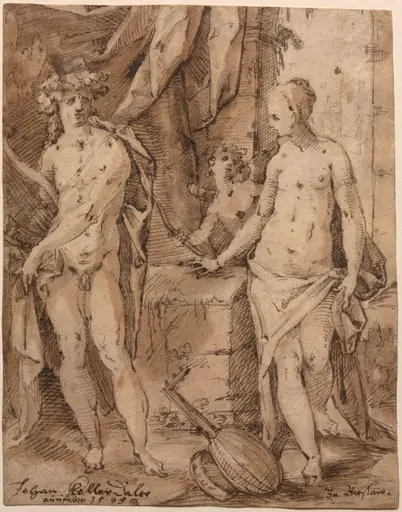 Apollo with Erato and Cupid
 Lot and His Daughters (recto); Sketch for Lot and His Daughters (verso)