Artwork
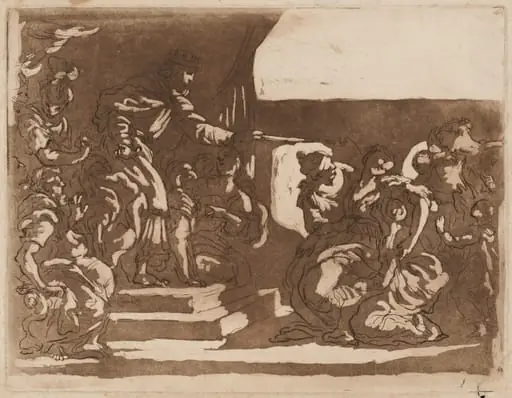
Esther before Ahasuerus
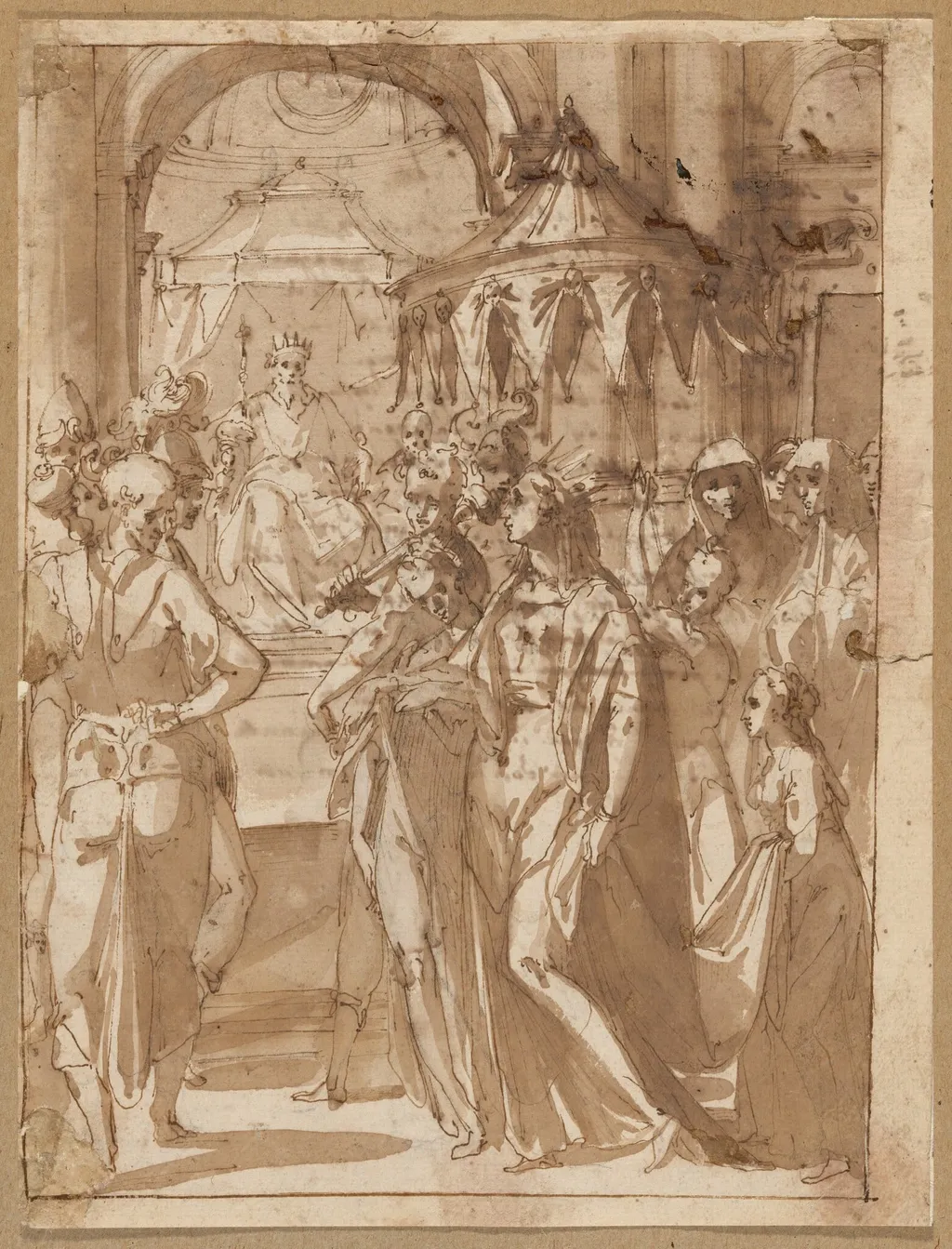
Esther before Ahasuerus is a chalk drawing by the Renaissance artist Giovanni Guerra. It dates from 1588 and is held in the collection of the National Gallery of Art.
About this work
Overview
Created in 1588 by Giovanni Guerra, this drawing depicts a moment from the biblical Book of Esther. Executed in pen and brown ink with brown wash over black chalk on laid paper, it is a preparatory study that captures a scene of courtly tension. The work resides in the National Gallery of Art in Washington, D.C., as part of its collection of Renaissance-era drawings.
Subject & Meaning
She stands before him on a raised dais, surrounded by attendants and courtiers holding scrolls, while a tented pavilion suggests a royal encampment.
The scene portrays Esther, queen of Persia, approaching King Ahasuerus uninvited—a potentially fatal act—to plead for her people. She stands before him on a raised dais, surrounded by attendants and courtiers holding scrolls, while a tented pavilion suggests a royal encampment. The composition conveys suspense and moral gravity, emphasizing the peril of her intervention and the weight of royal authority.
Technique & Style
Guerra employed rapid, fluid lines in pen and chalk to define forms, then layered translucent brown washes to model volume and suggest light. The loose handling of ink creates a sense of motion, while the washes add depth without obscuring the underlying structure. This method reflects a working artist’s approach: expressive, economical, and focused on capturing gesture and spatial relationships.
History & Provenance
The drawing entered the National Gallery of Art’s collection through the Chester Dale bequest in 1963. Its provenance prior to that is not fully documented, but its style and date align with Guerra’s known activities in Rome during the late 16th century. As a study, it likely served as a reference for larger commissions, possibly theatrical or decorative projects.
Context
Guerra worked in Rome during a period when artists frequently drew from biblical and historical narratives to explore human drama and spatial composition. His sketches, often made for stage designs or fresco cycles, reveal a fascination with theatrical lighting and group dynamics. This drawing fits within a broader tradition of Italian Renaissance preparatory work, where quick studies informed monumental projects.
Legacy
Though not widely exhibited, the drawing exemplifies the role of preparatory sketches in Renaissance practice. It demonstrates how artists used minimal means to convey complex narratives and emotional tension. Guerra’s approach influenced later draftsmen who valued immediacy and expressive line over polished finish, contributing to the evolution of drawing as an independent art form.
Artist & collection


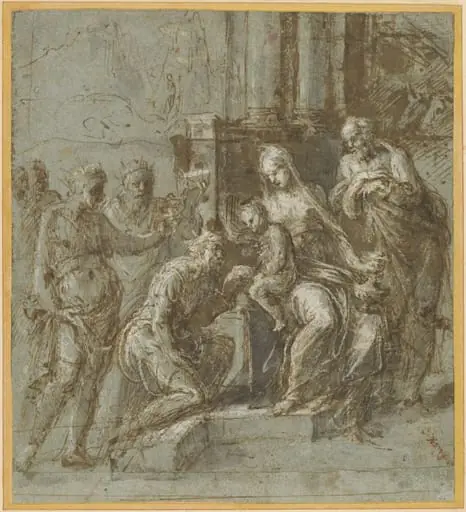 The Adoration of the Magi
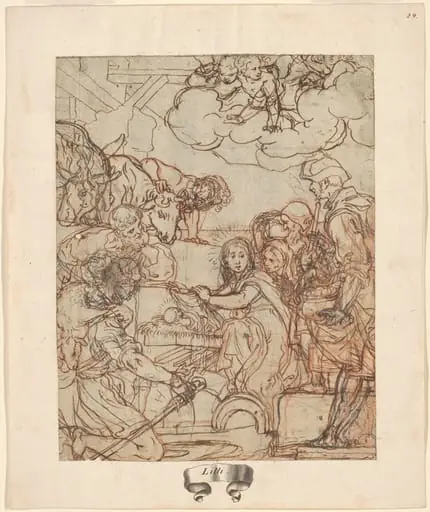 The Adoration of the Shepherds
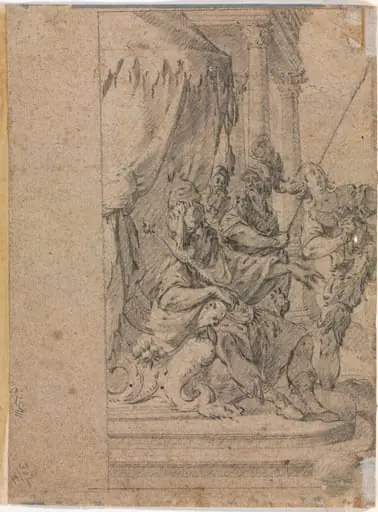 Panthea before Cyrus? (verso)
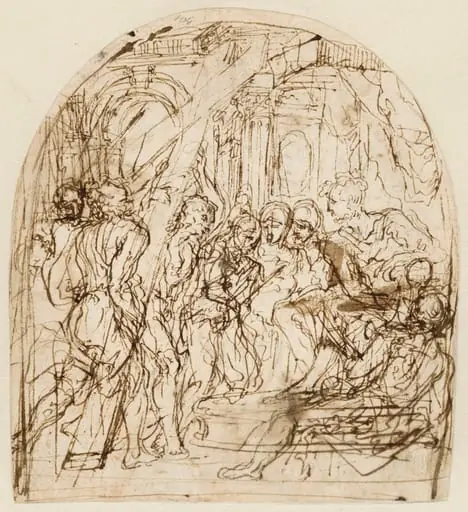 Christ Carrying the Cross
 The Disputation of Saint Catherine of Alexandria
![Presentation of the Virgin in the Temple [verso], by Antonio Zanchi](https://artifactworldgallery.com/img/antonio-zanchi--presentation-of-the-virgin-in-the-temple-verso--450080eaf8685583-w320.webp) Presentation of the Virgin in the Temple [verso]
Presentation of the Virgin in the Temple [verso] A Performance by the Commedia dell'Arte
 The Sacrifice of Iphigenia
 Crucifixion of Saint Peter
 Saint Homobono
 Apollo and the Muses on Mount Parnassus
 Esther before Ahasuerus