Artwork
Crucifixion of Christ
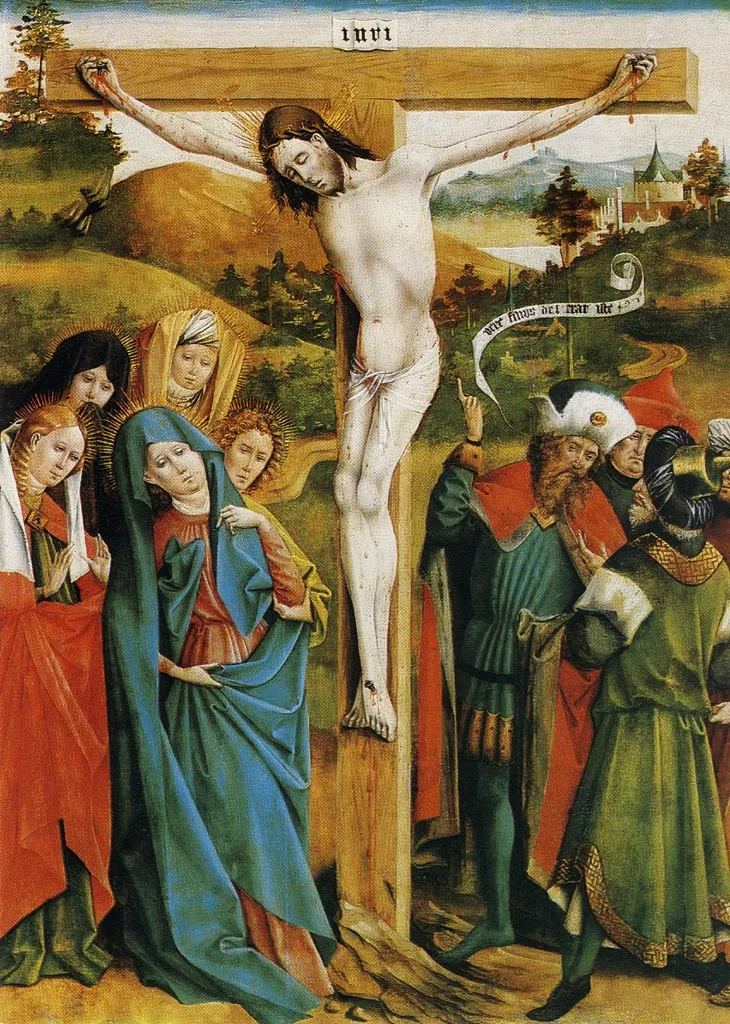
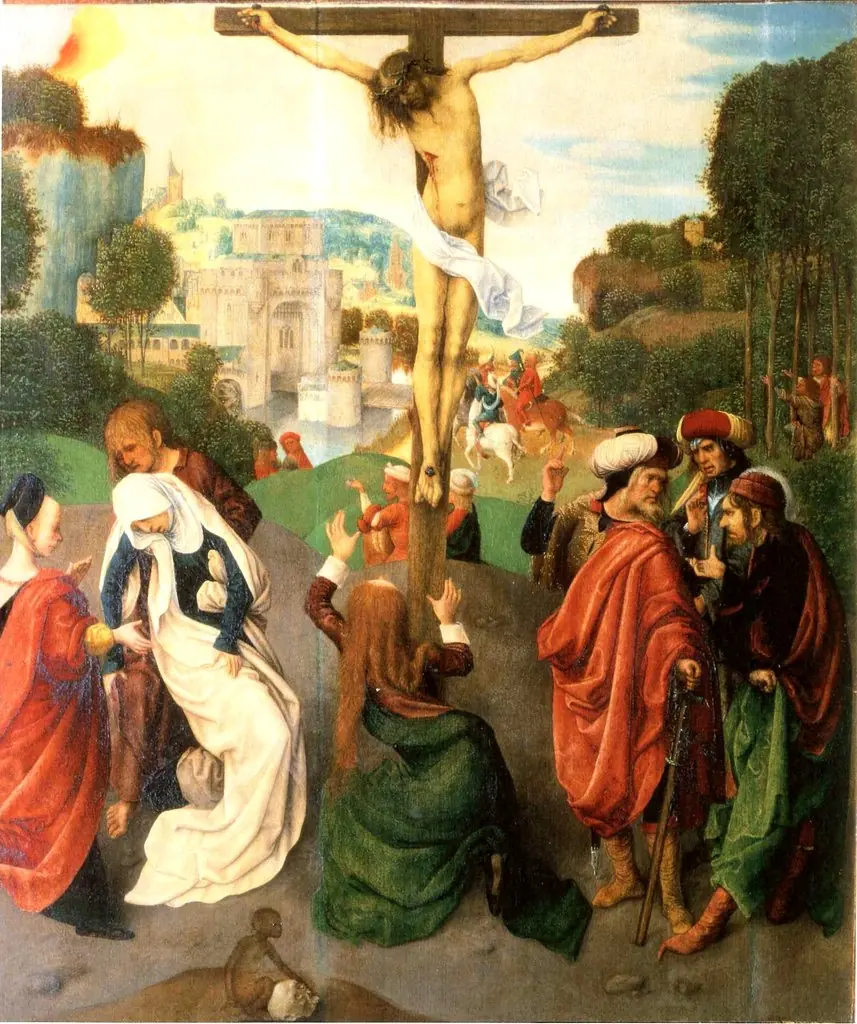
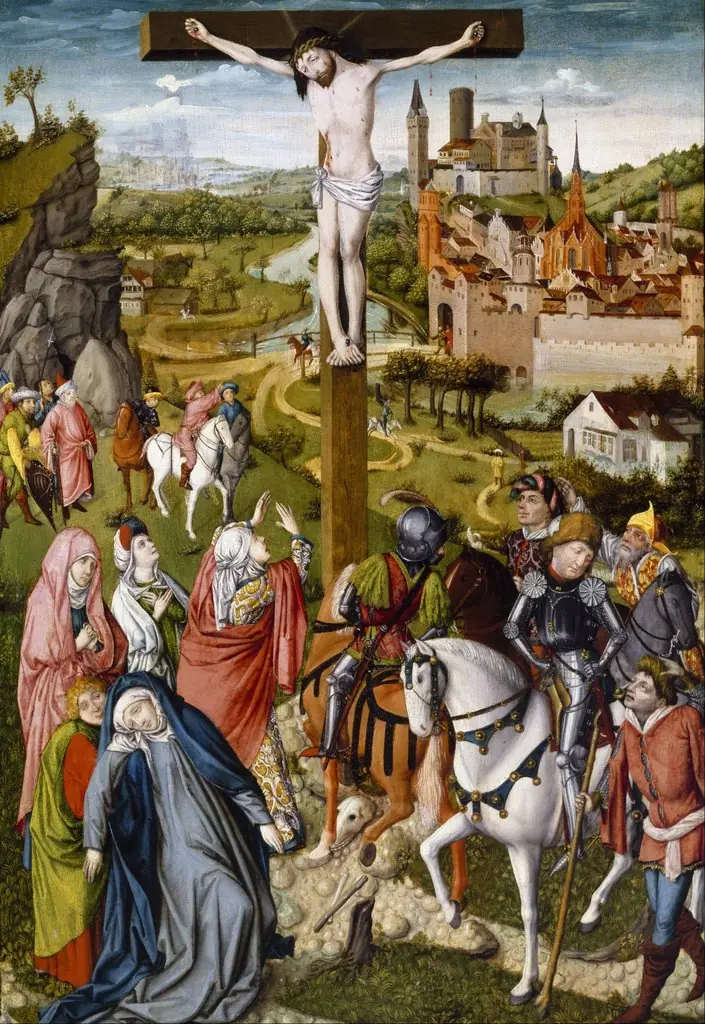
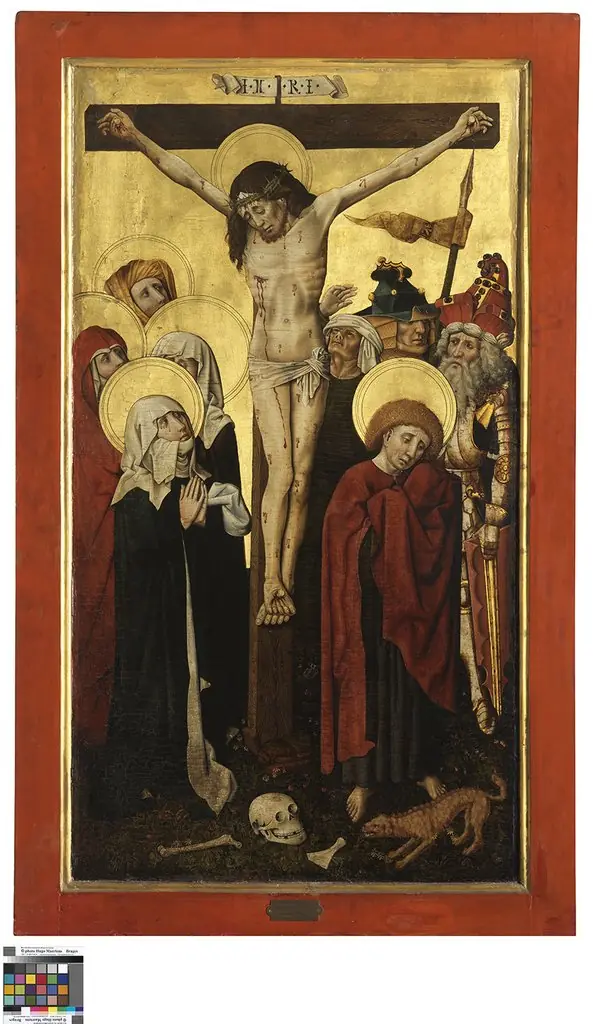
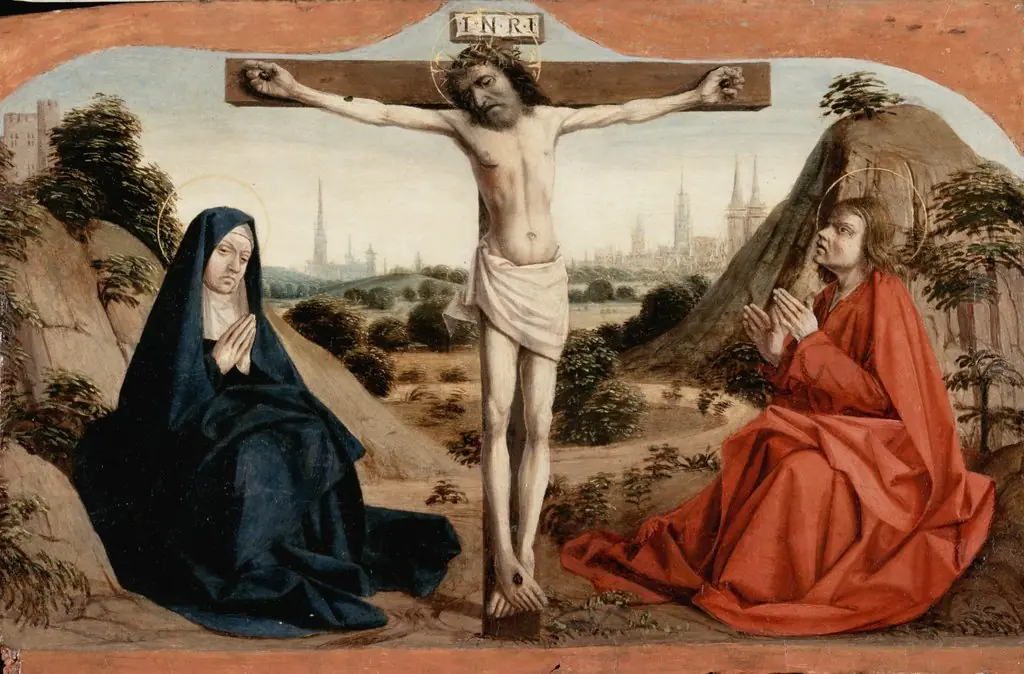
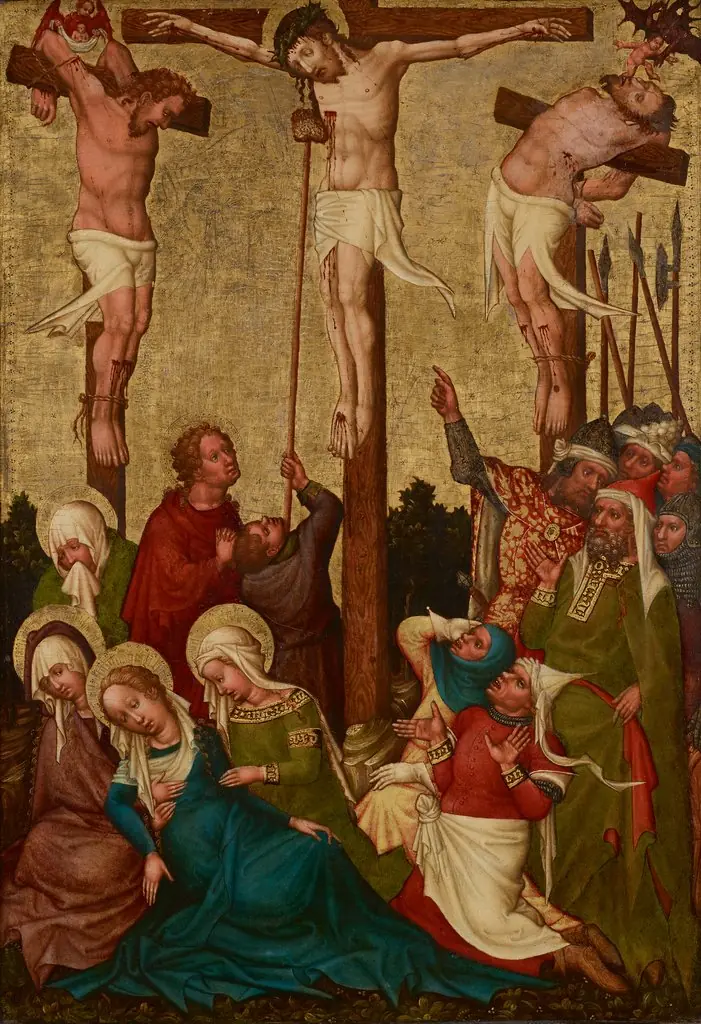
Crucifixion of Christ is a tempera painting by the Northern Renaissance artist Johann Koerbecke. It is held in the collection of the Gemäldegalerie Berlin.
About this work
Overview
Created in 1500 by Johann Koerbecke, this tempera painting portrays the crucifixion of Jesus Christ. Executed in the Northern Renaissance idiom, the work is housed in Berlin’s Gemäldegalerie and exemplifies the devotional art of early sixteenth‑century Westphalia.
Subject & Meaning
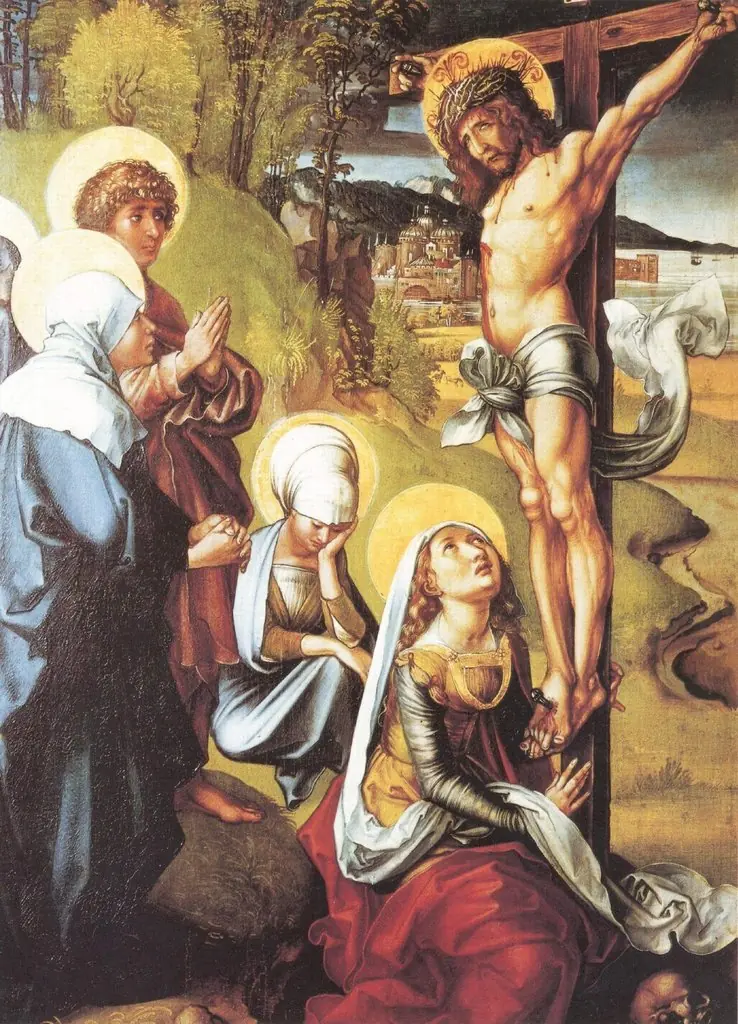
The central figure is the naked Christ, bound only by a white cloth at his waist, suspended on a wooden cross. Around the base, a small crowd of men and women—identified by contemporary dress—gazes upward, their expressions conveying sorrow and contemplation, reinforcing the scene’s solemn religious significance.
Technique & Style
Koerbecke employs tempera on panel, a medium that yields fine, luminous detail. The composition reflects Gothic conventions of the Westphalian School, with a clear, linear arrangement and a restrained palette, while also incorporating emerging Renaissance spatial cues such as a receding landscape and atmospheric sky.
History & Provenance
Johann Koerbecke is the earliest documented painter from Westphalia, linked stylistically to the anonymous Master of the Schöppingen Altarpiece and the Master of 1473. The painting entered the Gemäldegalerie’s collection in the twentieth century, where it remains part of the museum’s Northern Renaissance holdings.
Artist & collection

Artist
Johann Koerbecke (c. 1415/20, Coesfeld or Münster - 13 June 1491, Münster) was a German Gothic painter of the Westphalian School. He is believed to have worked with the Master of the Schöppingen Altarpiece and the…