Artwork
Fæstningen Kufstein i Inn-dalen i Tyrol
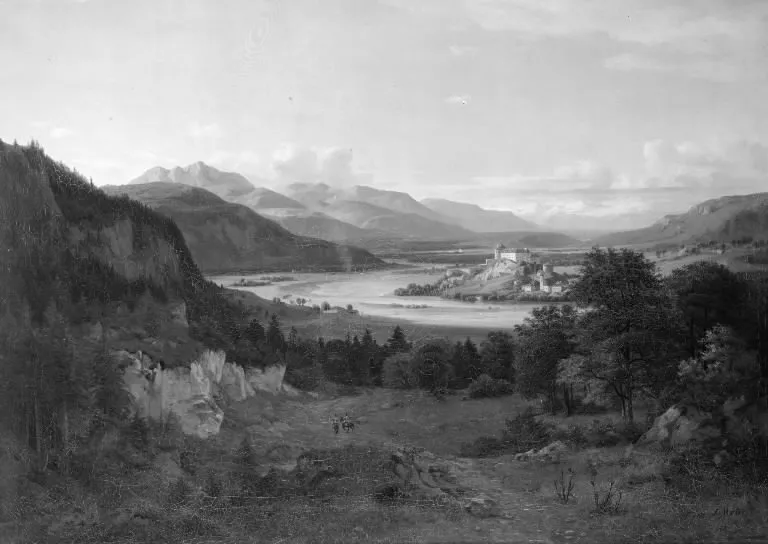
Fæstningen Kufstein i Inn-dalen i Tyrol is an oil painting by the German Romanticist artist Johann Mohr. It dates from 1838 and is held in the collection of the Statens Museum for Kunst.
About this work
Overview
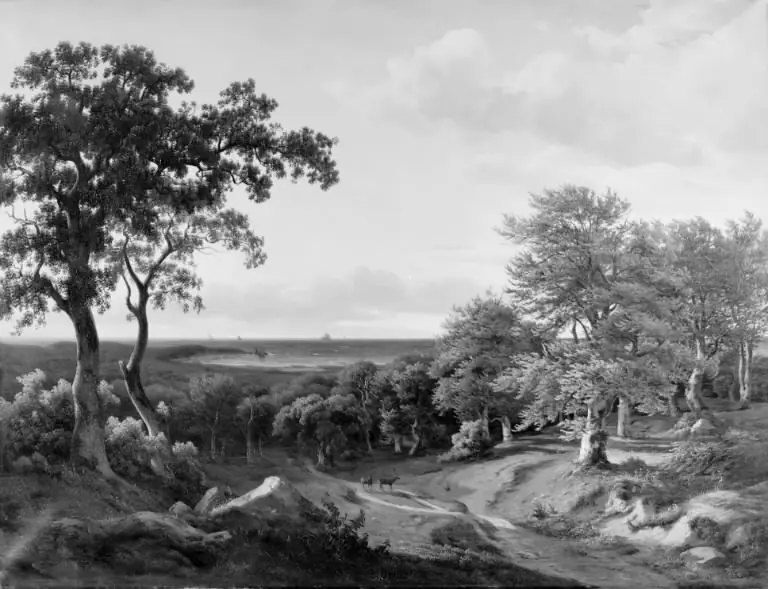
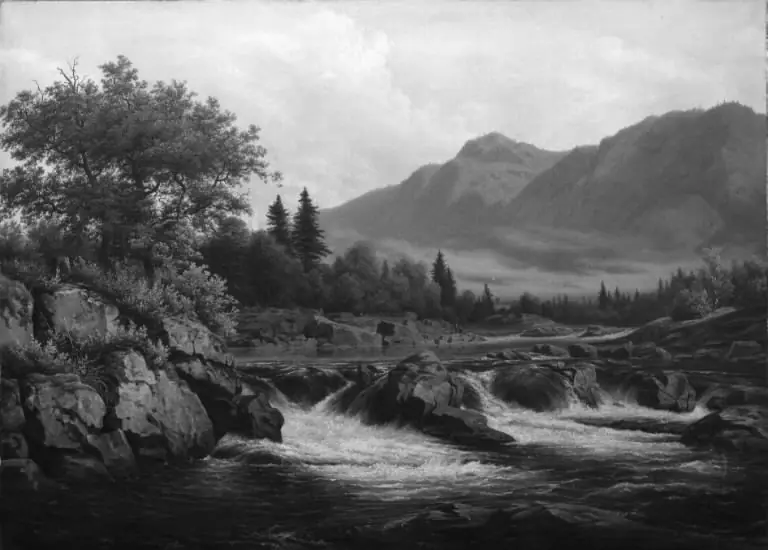
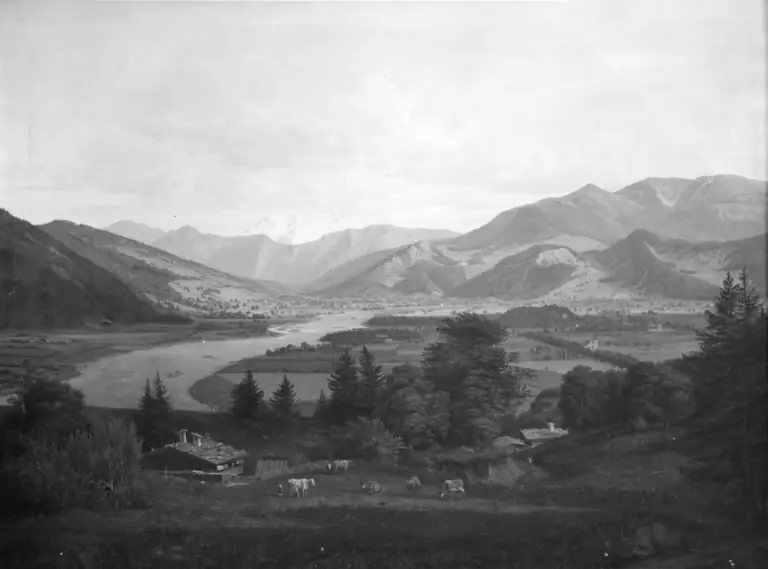
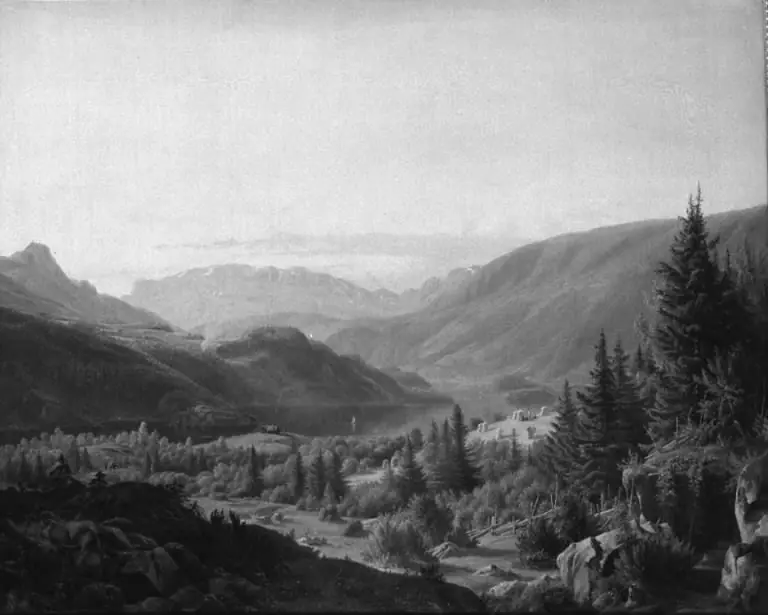
Painted in 1838 by Johann Mohr, this oil on canvas depicts the fortress of Kufstein nestled in the Inn Valley of Tyrol. The work is part of the collection at Statens Museum for Kunst in Copenhagen. It presents a quiet, wide-angle view of the landscape, emphasizing the relationship between architecture and nature without dramatic tension or human activity at its center.
Subject & Meaning
The sparse human figures in the foreground reinforce a mood of solitude, inviting reflection on the passage of time and the quiet endurance of place.
The painting centers on Kufstein Fortress, a historic stronghold perched on a rocky outcrop above the Inn River. Its placement in the distance, framed by dense foliage and soft atmospheric haze, suggests contemplation rather than celebration of military power. The sparse human figures in the foreground reinforce a mood of solitude, inviting reflection on the passage of time and the quiet endurance of place.
Technique & Style
Mohr employed traditional oil painting methods, including layered glazes to achieve subtle transitions in light and color. The horizon is softly rendered, with cool blues and muted greens receding into the distance, while warmer tones in the foreground ground the composition. Brushwork remains restrained, favoring atmospheric cohesion over detailed texture, characteristic of early 19th-century topographical landscape conventions.
History & Provenance
Created during Mohr’s active period in Denmark, the painting entered the collection of Statens Museum for Kunst shortly after its completion. Its journey from Tyrol to Copenhagen reflects 19th-century European interest in regional landscapes as subjects of artistic and cultural study. No significant alterations or restorations are documented, preserving its original tonal balance and surface integrity.
Context
In the 1830s, European artists increasingly turned to regional landscapes as subjects of quiet reverence, moving away from grand historical narratives. Mohr’s depiction aligns with this trend, echoing the influence of German and Danish Romanticism. The painting reflects a broader cultural fascination with the Alpine region as a symbol of natural order and historical continuity.
Legacy
Though not widely exhibited outside Denmark, the painting remains a representative example of Nordic engagement with Central European topography. It contributes to the understanding of how 19th-century Scandinavian artists interpreted foreign landscapes through a lens of calm observation, preserving a visual record of place that prioritizes atmosphere over spectacle.
Artist & collection