Artwork
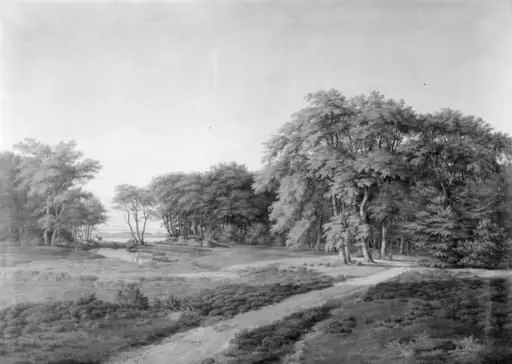
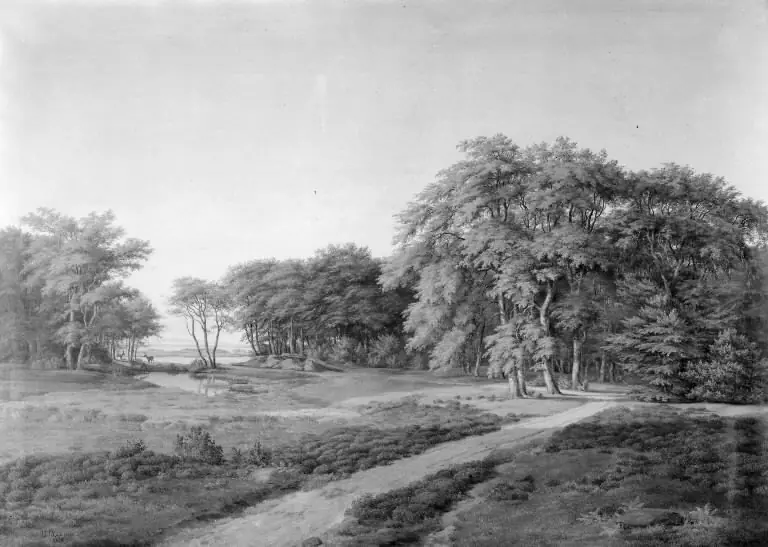
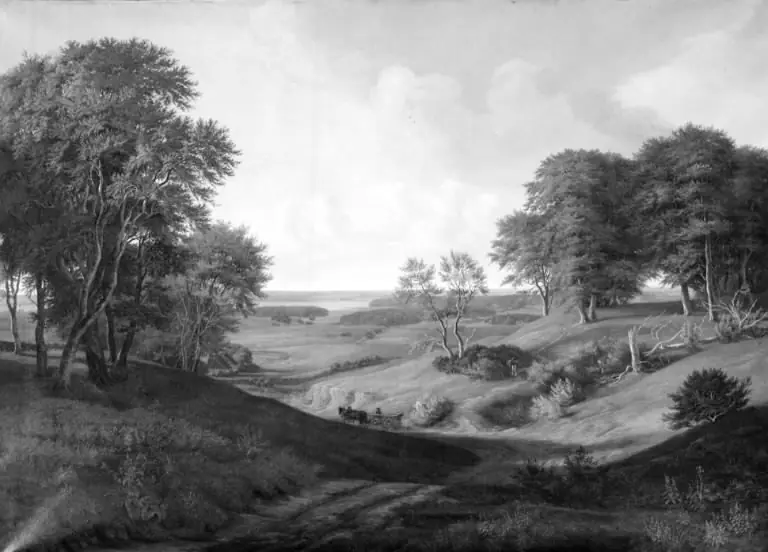
Udsigt over havet ved den holstenske kyst nær Kiel
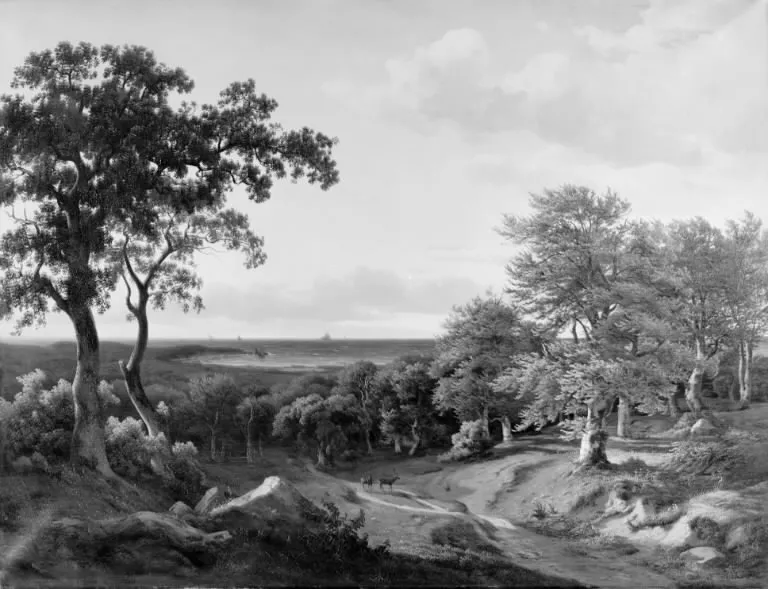
Udsigt over havet ved den holstenske kyst nær Kiel is an oil painting by the German Romanticist artist Johann Mohr. It dates from 1840 and is held in the collection of the Statens Museum for Kunst.
About this work
Overview
Painted in 1840 by Johann Mohr, this oil on canvas work captures a quiet coastal view near Kiel in Holstein. The composition balances land, sea, and sky in a restrained, observational manner. It resides in the collection of Statens Museum for Kunst in Copenhagen, representing a lesser-known but carefully rendered example of 19th-century Danish landscape painting.
Subject & Meaning
The scene presents a tranquil stretch of the Baltic coast, with sparse human presence indicated only by distant structures. The focus lies in the quiet interaction between natural elements—rocky shore, open water, and shifting clouds—rather than narrative or symbolism. It reflects a contemplative engagement with place, typical of regional landscape traditions in northern Europe at the time.
Technique & Style
Mohr employs visible, deliberate brushwork to convey texture in the foliage and water’s surface. A subtle contrast between warm atmospheric hues in the sky and cooler tones of the sea enhances spatial depth. Light is rendered diffusely, without dramatic chiaroscuro, favoring naturalistic gradations that suggest a calm, overcast day. The handling is observational, avoiding idealization.
History & Provenance
The painting entered the collection of Statens Museum for Kunst in the 19th century, likely acquired during a period of increased institutional interest in Danish and North German landscape art. Its provenance remains unremarkable, with no documented exhibitions or ownership changes beyond museum records, suggesting it was valued for its quiet authenticity rather than public acclaim.
Context
Created during a time when Danish artists were turning toward native landscapes, this work aligns with a broader movement away from grand historical themes toward intimate, local scenes. While not part of the Danish Golden Age’s most celebrated circle, it reflects the growing appreciation for regional topography and atmospheric effects among provincial painters.
Legacy
Though not widely reproduced or studied, the painting contributes to the understanding of regional Danish painting beyond its major figures. It stands as a modest but coherent example of how everyday coastal views were rendered with technical care and emotional restraint, preserving a quiet record of 19th-century northern European landscape sensibility.
Artist & collection