Artwork
Familienbildnis
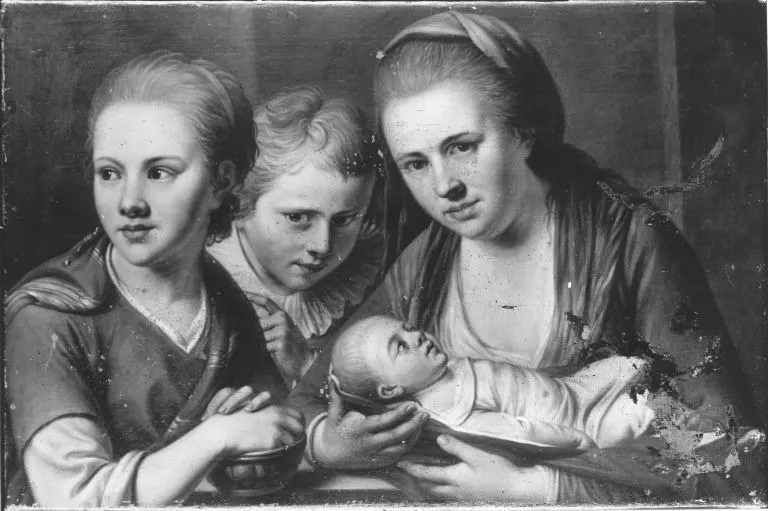
Familienbildnis is an unspecified painting by the Rococo painting artist Johann Wilhelm Hoffnas. It dates from 1761 and is held in the collection of the Bavarian State Painting Collections. Painted in 1761 by Johann Wilhelm Hoffmann, this family portrait is part of the Alte Pinakothek’s collection.
About this work
Overview
The figures are rendered against a deep, shadowed background that isolates them and focuses attention on their gestures and expressions.
Painted in 1761 by Johann Wilhelm Hoffmann, this family portrait is part of the Alte Pinakothek’s collection. It depicts a mother seated with an infant in her arms, flanked by two young children. The composition centers on quiet domesticity, avoiding grandeur in favor of restrained, intimate interaction. The figures are rendered against a deep, shadowed background that isolates them and focuses attention on their gestures and expressions.
Subject & Meaning
The painting presents a private moment of familial care, with the mother’s tender posture and the children’s attentive glances suggesting emotional connection rather than formal display. The absence of symbols or elaborate settings shifts focus to the unspoken bonds between them. The subdued attire and modest setting reflect a middle-class domestic ideal, emphasizing sincerity over status.
Technique & Style
Hoffmann employs chiaroscuro to model the figures with soft, gradual transitions between light and shadow, lending volume and presence to the forms. The dark background enhances the luminosity of the faces and hands, drawing the viewer’s eye to the mother’s gentle expression and the children’s curious stares. Brushwork is precise yet unobtrusive, favoring naturalism over theatricality.
History & Provenance
Created in 1761, the painting entered the Alte Pinakothek’s holdings in the 19th century, likely through state acquisition or donation. Its provenance prior to museum ownership remains undocumented, but its preservation suggests it was valued within private collections. No significant alterations or restorations are recorded, and the work retains its original surface and framing.
Context
In mid-18th-century Germany, portraiture increasingly turned toward intimate, domestic themes as Enlightenment ideals emphasized personal virtue and family life. Hoffmann’s work aligns with this shift, distancing itself from aristocratic conventions. While influenced by Dutch and Flemish genre painting, it avoids narrative detail, focusing instead on quiet psychological presence.
Legacy
Though not widely exhibited outside Germany, the painting contributes to the understanding of regional portraiture in the late Baroque period. It reflects a growing interest in everyday life as worthy of artistic attention, foreshadowing 19th-century realist tendencies. Hoffmann’s restrained approach offers a counterpoint to more ornate contemporary styles, preserving a sense of private dignity.
Artist & collection

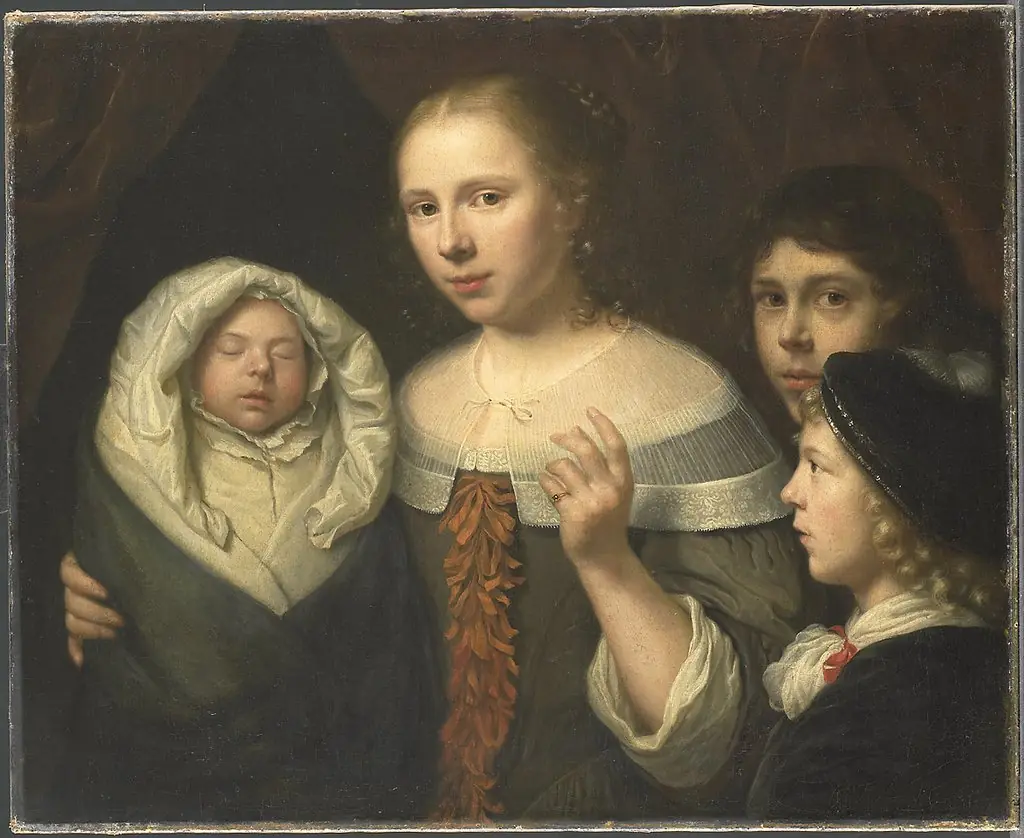 Portrait of a young woman with three children
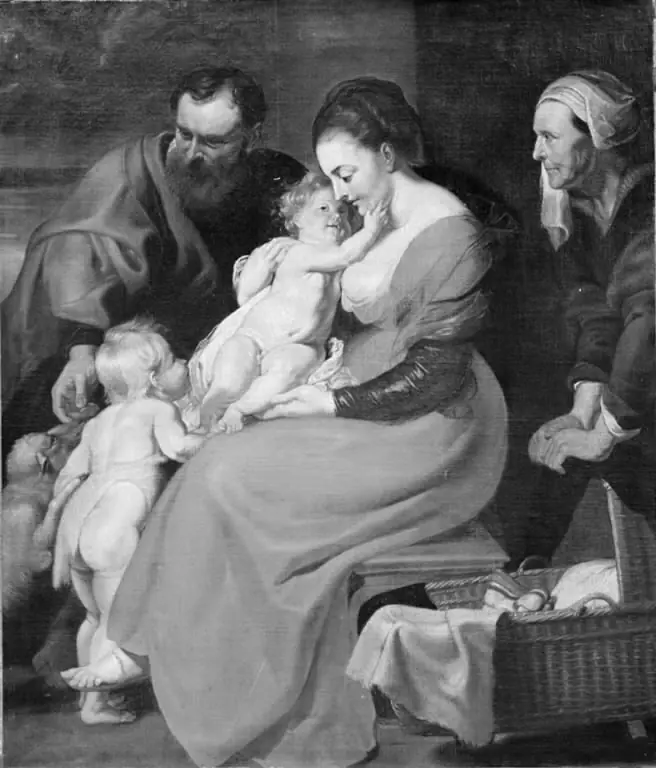 The holy family
 The Holy Family
 Portrait of a Young Woman with Three Children
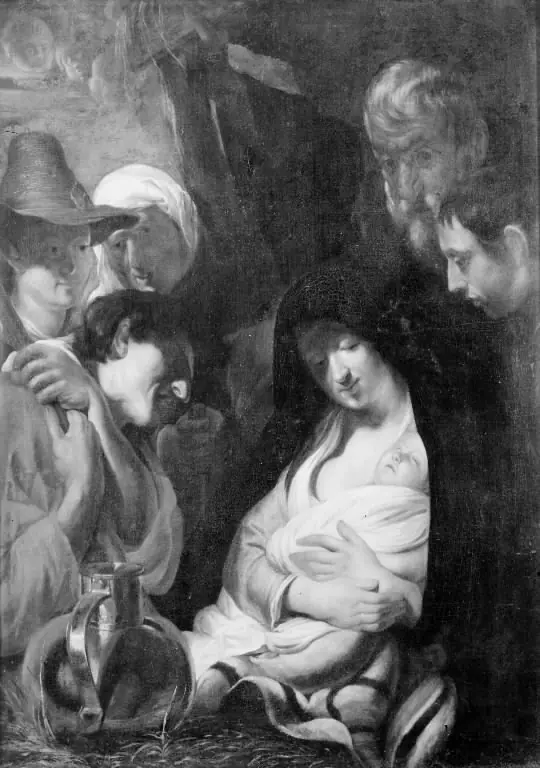 The Adoration of the Shepherds
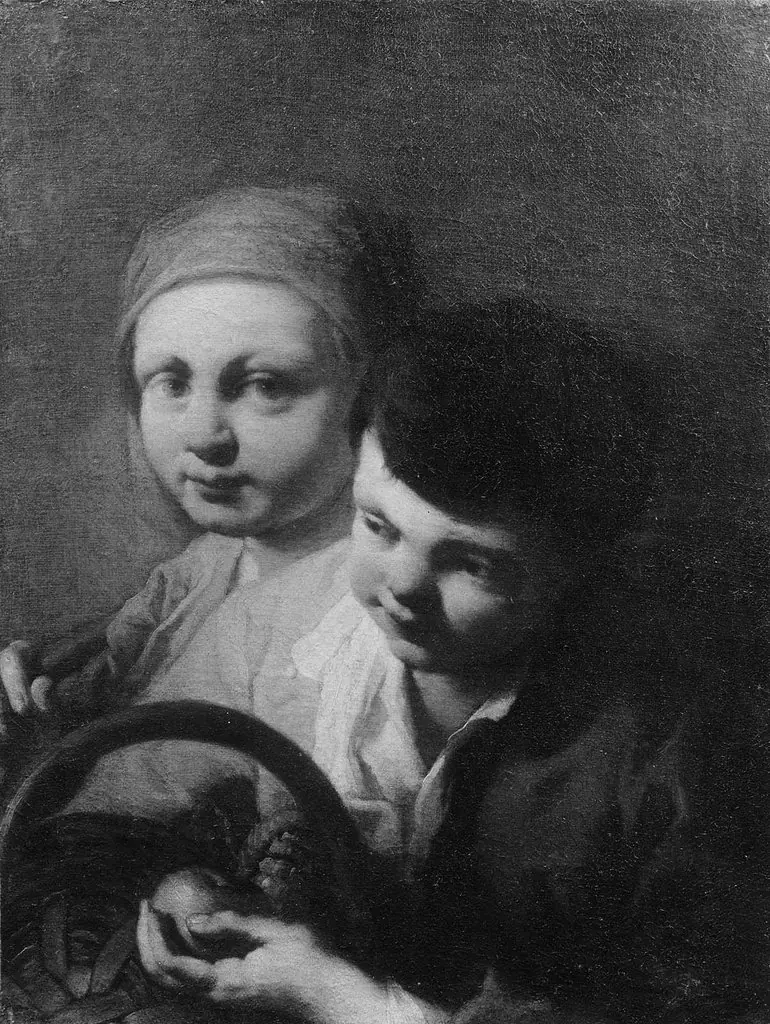 Two Peasant Boys with a Basket
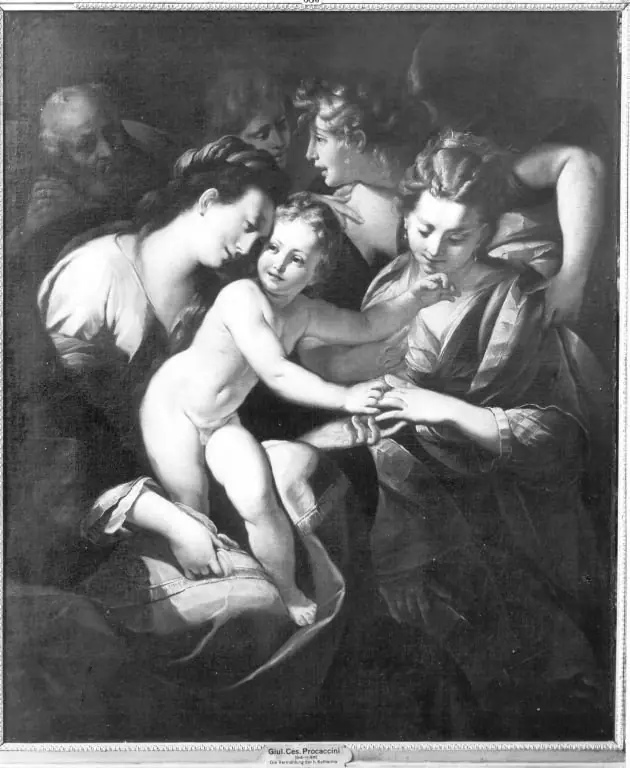 Die Vermählung der hl. Katharina
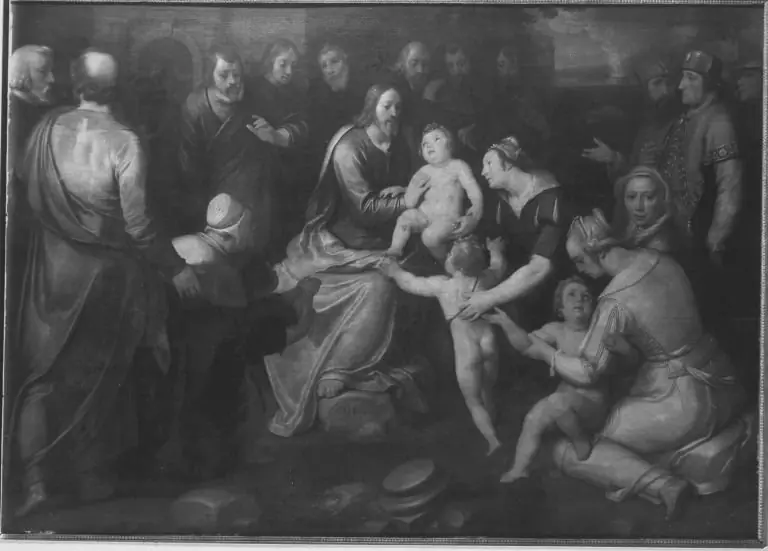 Suffer the little children to come unto me (Matt. 19:14)
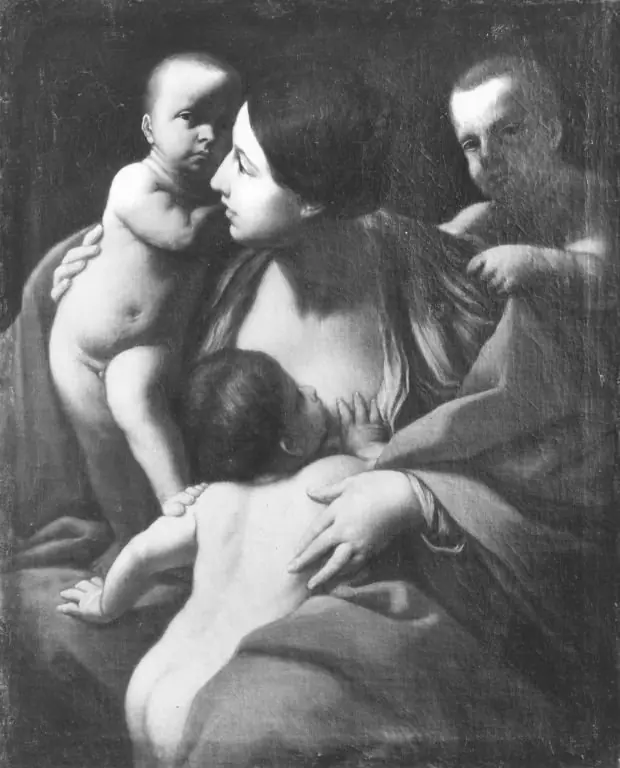 Caritas (Kopie nach)
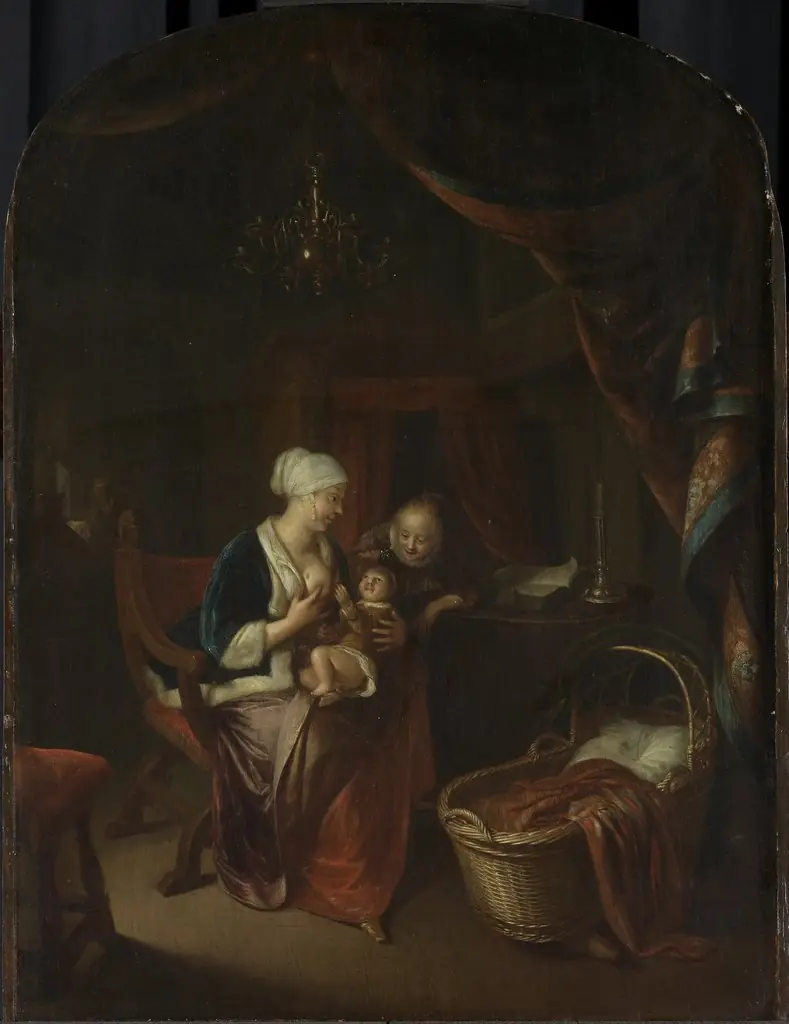 A Mother Giving her Child the Breast
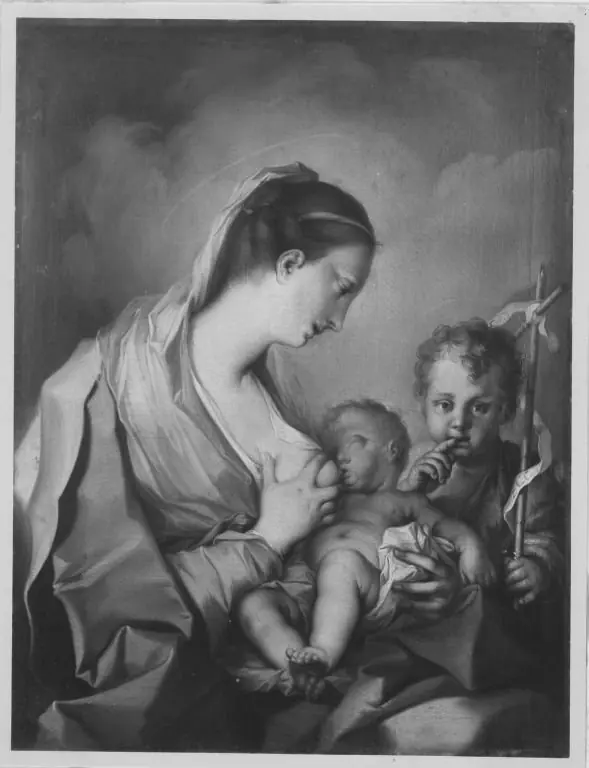 Maria mit Kind und Johannesknaben
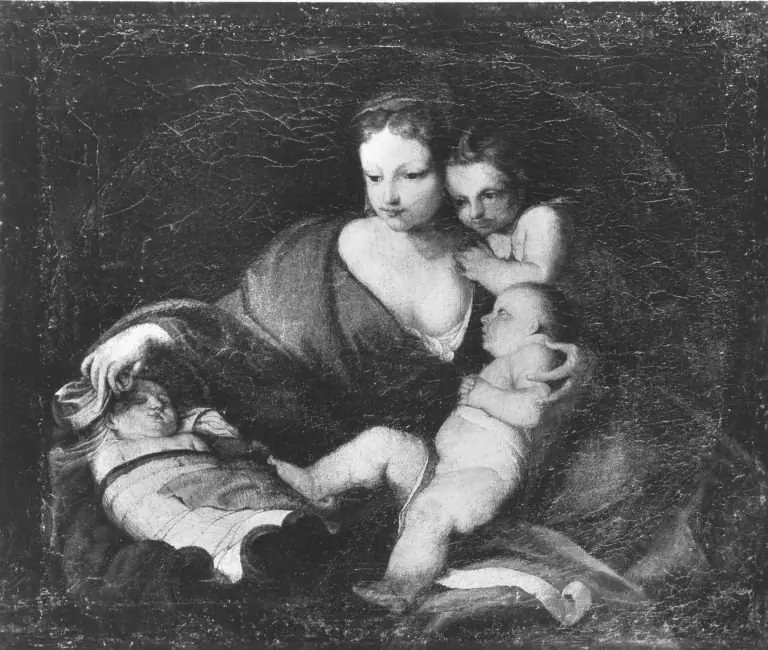 Caritas by Carlo Maratti