Artwork
Portret van Franciscus Josephus Kinsoen
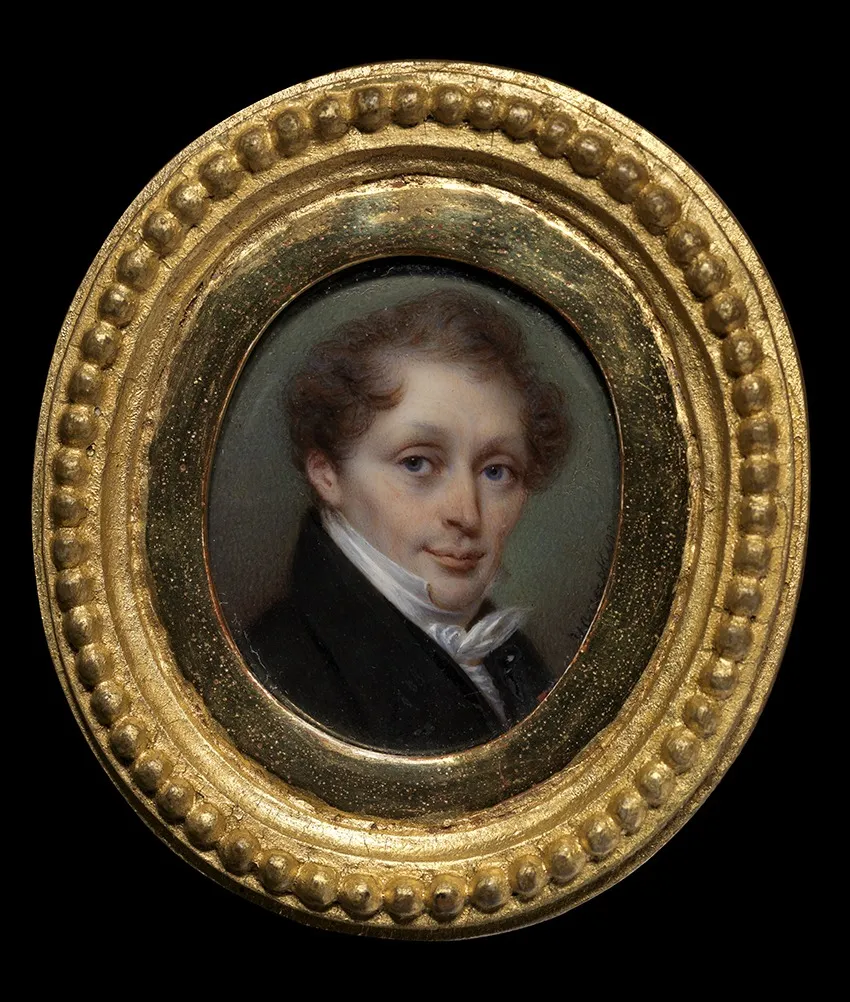
Portret van Franciscus Josephus Kinsoen is an oil painting by the Biedermeier artist Johannes Baptista van Acker. It dates from 1825 and is held in the collection of the Groeningemuseum.
About this work
Overview
Painted in 1825 by Johannes Baptista van Acker, this oil-on-canvas portrait depicts Franciscus Josephus Kinsoen, a figure of modest social standing.
Painted in 1825 by Johannes Baptista van Acker, this oil-on-canvas portrait depicts Franciscus Josephus Kinsoen, a figure of modest social standing. Van Acker, trained in miniature painting, shifted to larger-scale portraiture after periods of work in Paris and Bruges. The work is part of the Groeningemuseum’s collection and reflects the artist’s mature style, blending precision with restrained emotional tone.
Subject & Meaning
The sitter, Franciscus Josephus Kinsoen, is portrayed with calm composure, his gaze direct but unassuming. Dressed in a black jacket and white cravat, his attire suggests middle-class respectability rather than aristocratic privilege. The absence of symbolic objects or elaborate settings emphasizes personal identity over status, aligning with Biedermeier ideals of introspection and quiet dignity.
Technique & Style
Van Acker employs fine brushwork to render the texture of fabric, the curl of hair, and the sheen of the cravat with subtle realism. The muted green background isolates the figure without distraction, enhancing focus on facial expression and attire. The lighting is even and soft, avoiding dramatic contrasts, which reinforces the restrained, intimate character of Biedermeier portraiture.
History & Provenance
Created during van Acker’s return to Bruges after his time in Paris, the portrait was likely commissioned by Kinsoen’s family or local circle. It entered the Groeningemuseum’s collection in the 20th century, where it remains as part of a broader assembly of 19th-century Flemish portraiture. No earlier ownership records are publicly documented beyond its museum acquisition.
Context
This portrait emerged during the Biedermeier era, a period in Central Europe marked by domestic tranquility and a focus on individual character over grand narratives. In Flanders, such works reflected a growing middle-class interest in personal representation. Van Acker’s transition from miniatures to oil portraits mirrors this broader cultural shift toward accessible, intimate portraiture.
Legacy
Though van Acker is not widely known outside regional art histories, his portraits like this one contribute to the understanding of Flemish visual culture in the early 19th century. The work exemplifies how local artists adapted international styles to depict ordinary individuals with quiet sincerity, preserving a nuanced record of civilian life beyond royal or religious subjects.
Artist & collection
Artist
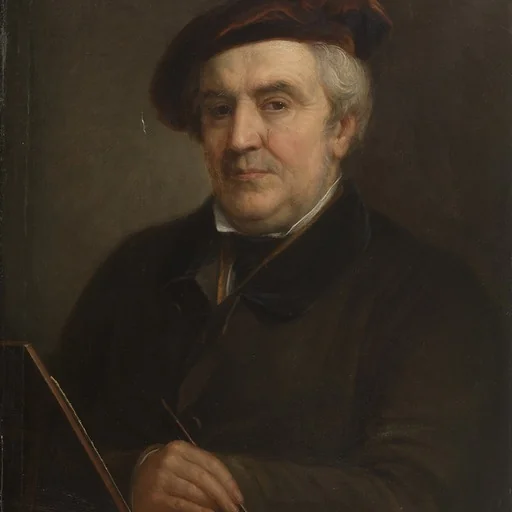
Johannes Baptista van Acker (1794–1863) was a Flemish painter. Van Acker was born at Bruges. He studied under Ducq, and soon became popular as a miniature-painter. In 1834 he went to Paris, and was there acknowledged as…

 Pieter de Riemer (1769-1831). Professor in de ontleed- en verloskunde, consulent chirurgijn van koning Willem I
 Self-portrait
 Self-Portrait
 Runoilija Eric Sjöberg
 Portrait of a Gentleman
 Portrait of Władysław Brunwej
 Portrait of a Man, possibly Alexander I, Emperor of Russia
 Portrait of a Gentleman
 George Frederik Diederichs (1799–1862). Bookhandler of Amsterdam
 Robert Macomb
 Portrait of a Man, possibly Alexander I, Emperor of Russia
 Portrait of a Man