Artwork
Arcadian landscape
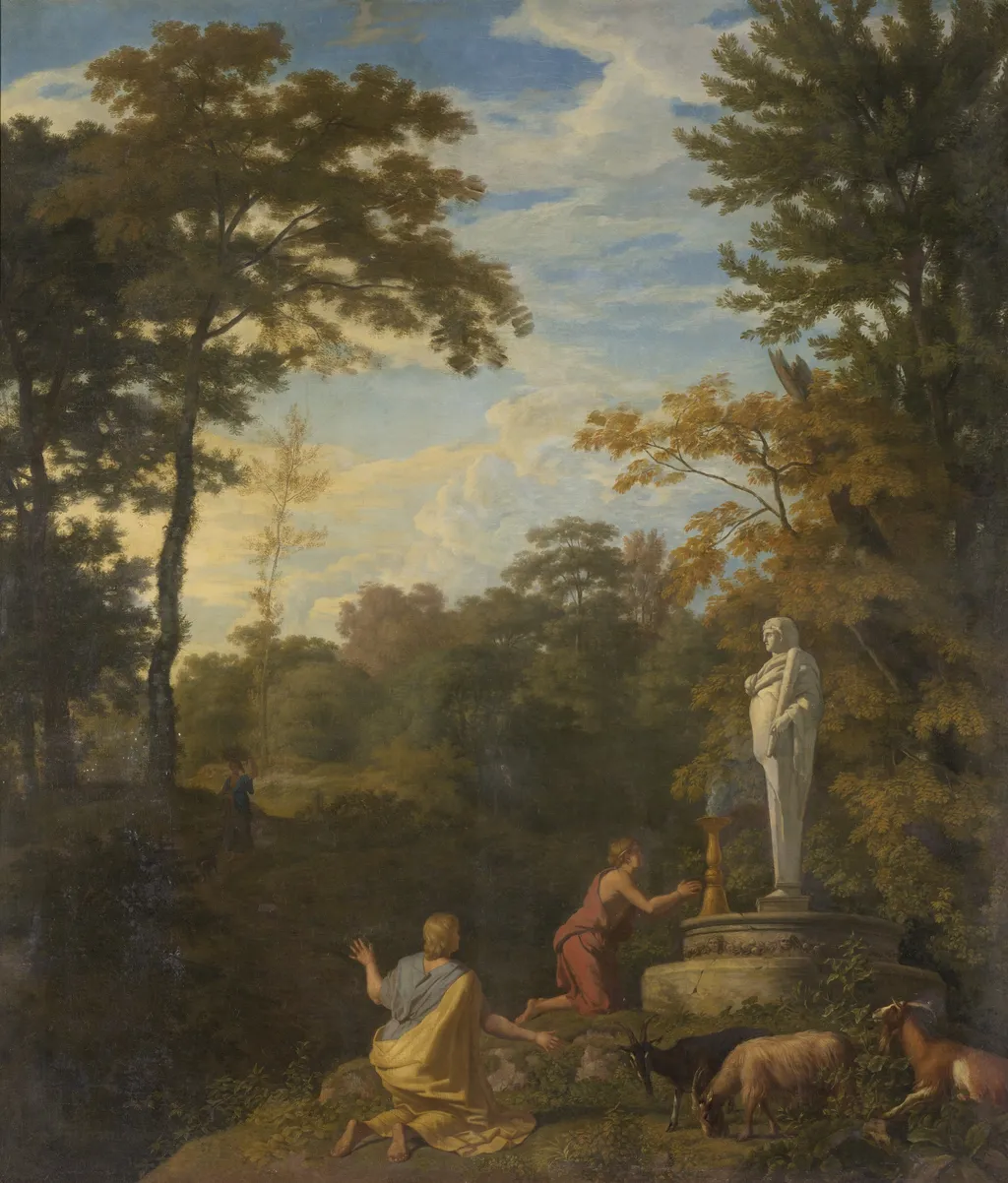
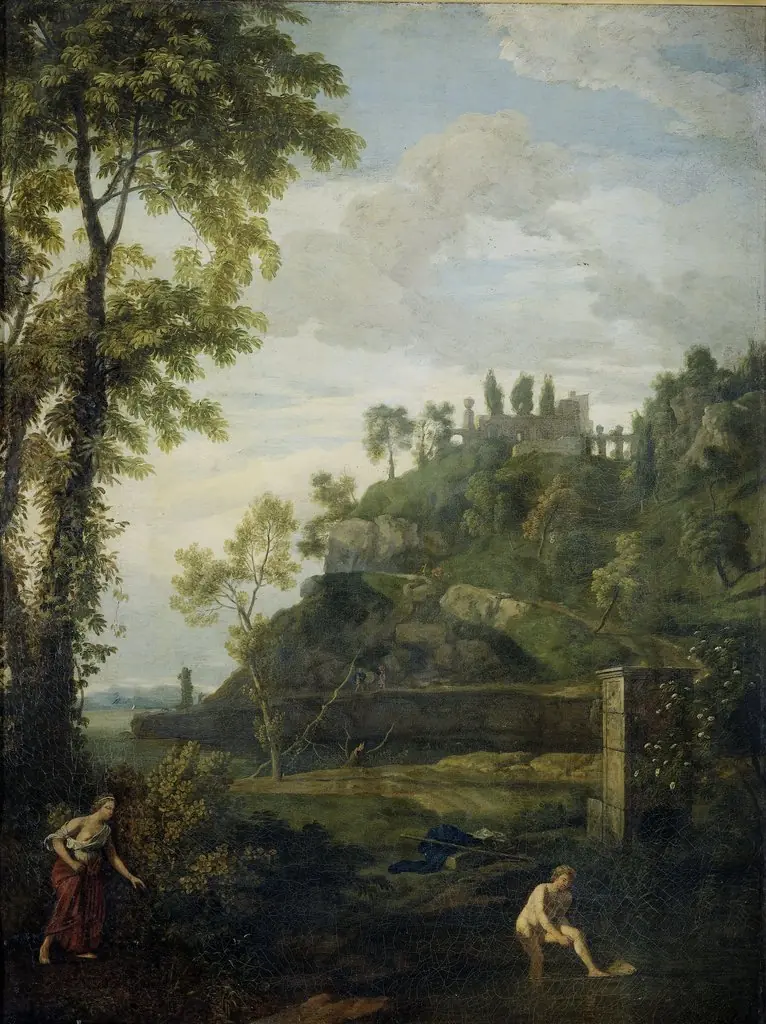
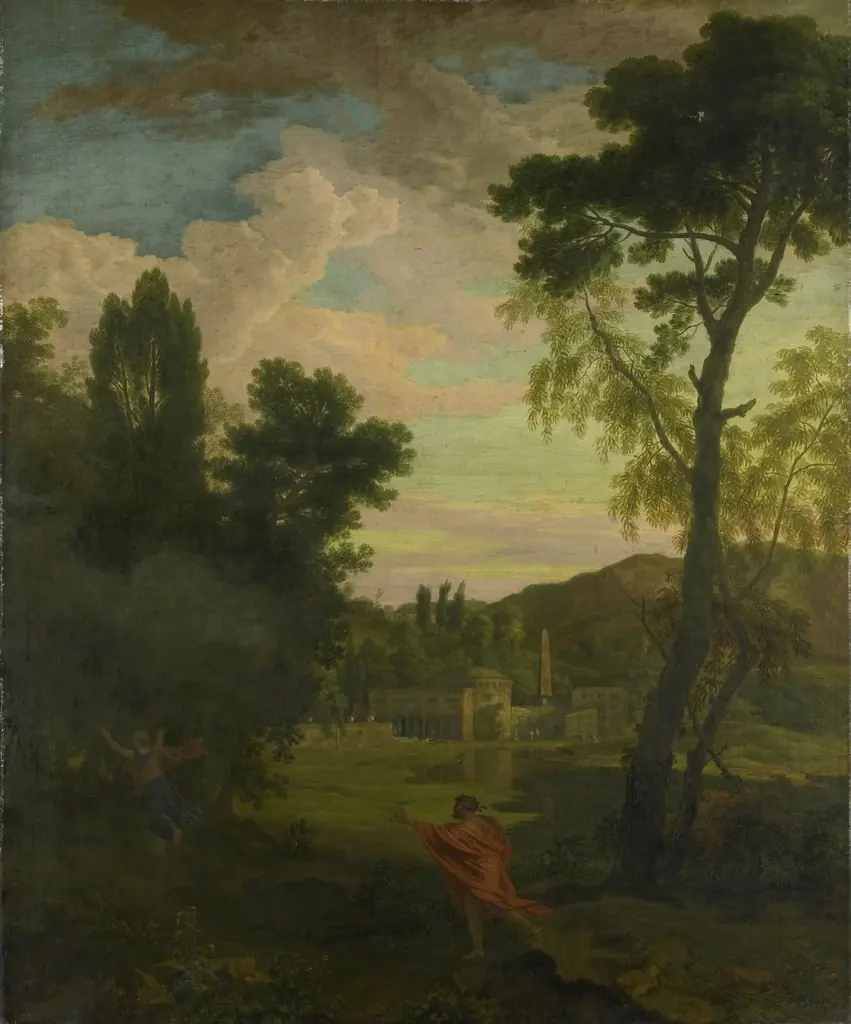
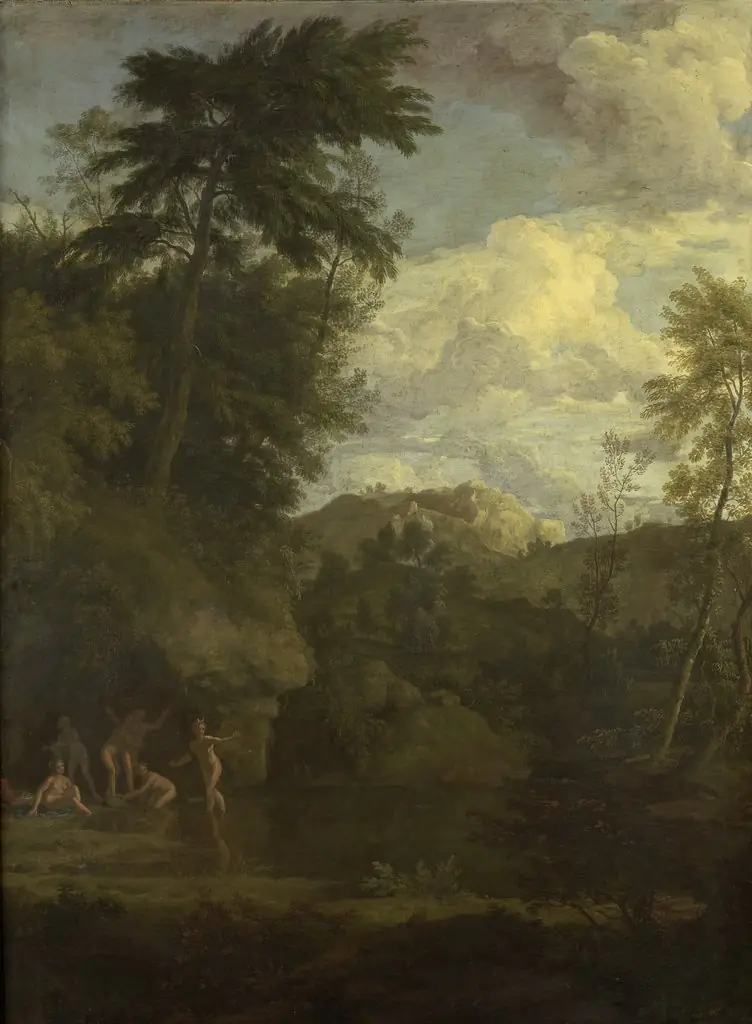
Arcadian landscape is an oil painting by the Dutch Golden Age artist Johannes Glauber. It dates from 1703 and is held in the collection of the Rijksmuseum.
About this work
Overview
Johannes Glauber’s 1703 oil painting titled “Arcadian Landscape” presents a tranquil woodland scene bathed in the warm glow of late afternoon. The composition is anchored by a stone fountain topped with a serene female statue, around which two robed figures are positioned, while a solitary traveler and a small herd of goats occupy the surrounding forest.
Subject & Meaning
The work juxtaposes stillness and movement: the statue’s composed posture contrasts with one figure reaching toward the water and another seated in contemplation. A lone wanderer moves through the trees, suggesting a narrative of pilgrimage or meditation within an idealized pastoral setting, a common theme in Arcadian imagery that celebrates harmony between humanity and nature.
Technique & Style
Executed in oil on canvas, Glauber employs a subtle chiaroscuro, allowing the golden-hour light to illuminate the foliage and figures while deepening the shadows among the trees. The palette shifts from deep greens to autumnal golds, and the soft, diffused clouds enhance the atmospheric depth, characteristic of early‑18th‑century Dutch landscape painting.
History & Provenance
Created in 1703, the painting entered the collection of the Rijksmuseum, where it remains on display. Its acquisition reflects the museum’s broader effort to represent Dutch Golden Age landscape artists and to preserve works that illustrate the period’s fascination with idealized rural vistas.
Own this work as a print
Artist & collection