Artwork
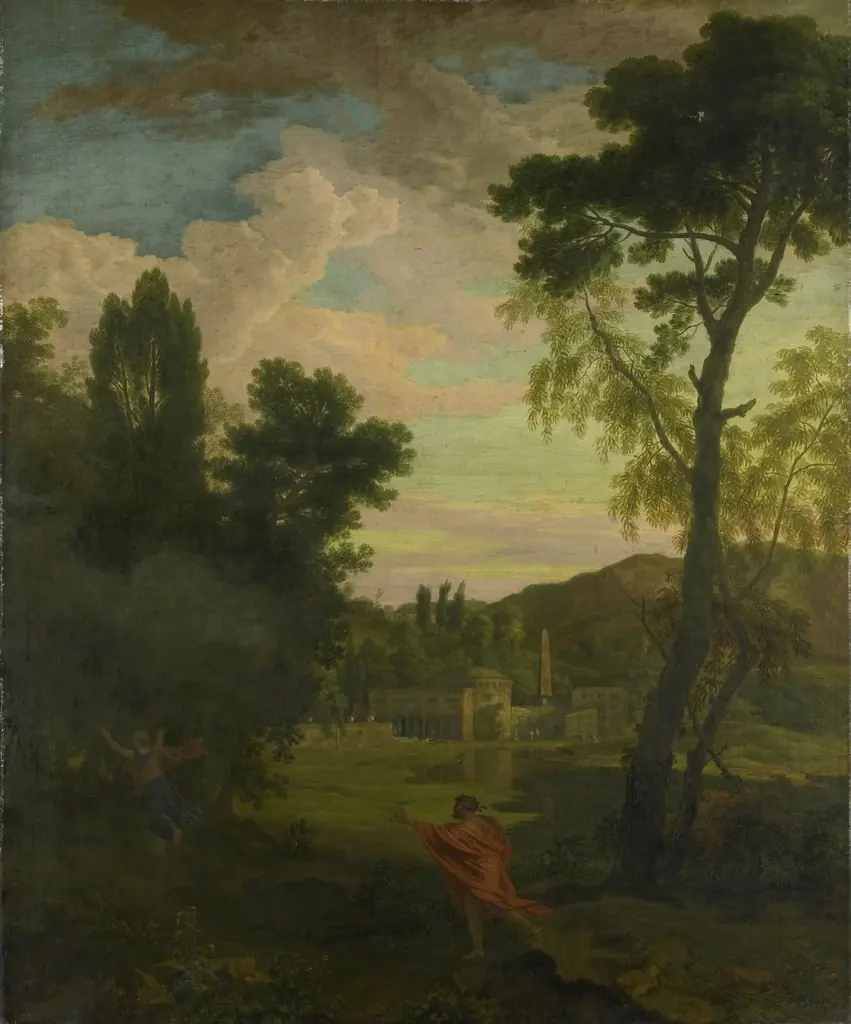
Arcadian landscape with Salmacis and Hermaphroditus
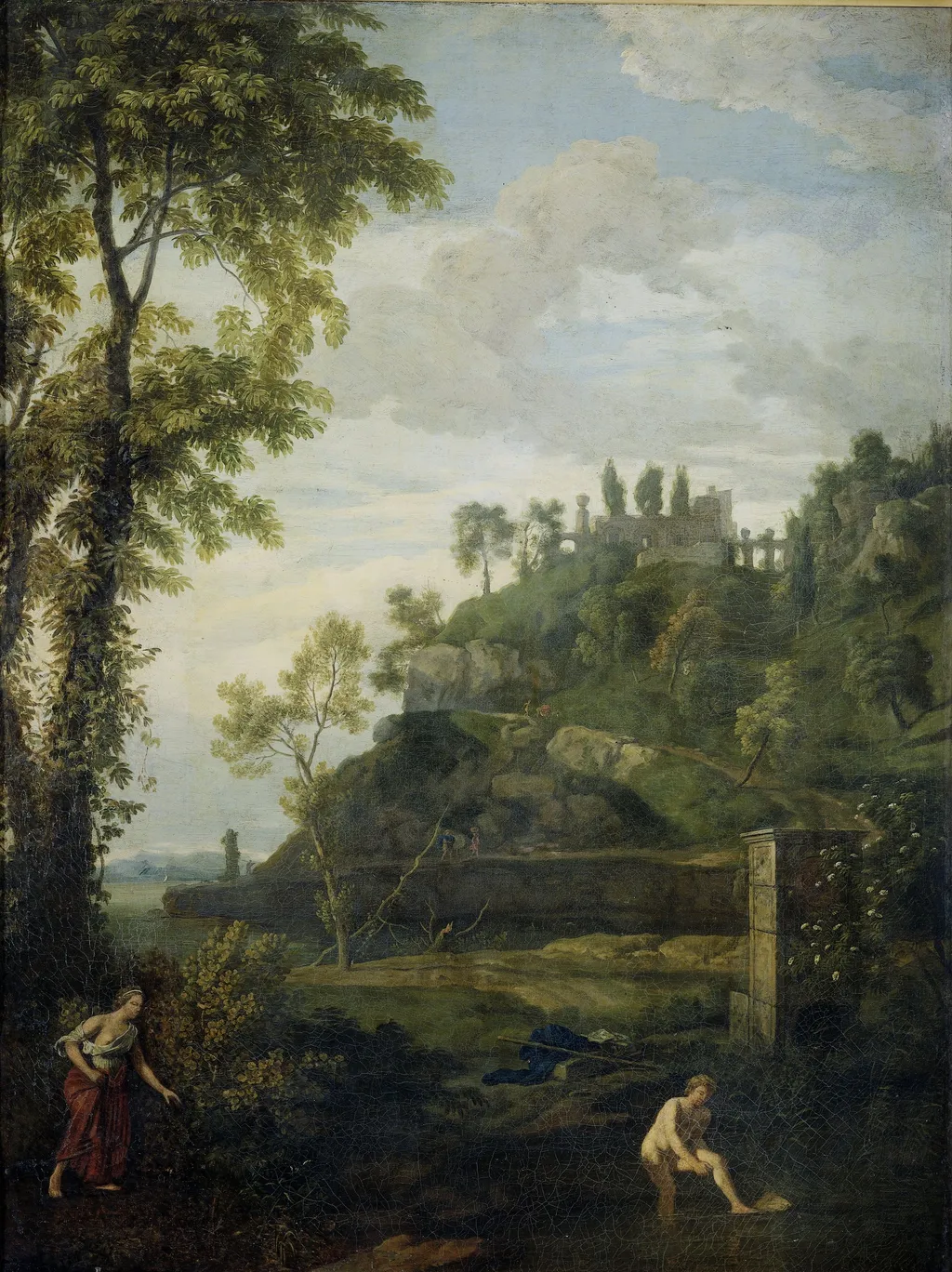
Arcadian landscape with Salmacis and Hermaphroditus is an oil painting by the Rococo painting artist Johannes Glauber. It dates from 1703 and is held in the collection of the Rijksmuseum.
About this work
Overview
The work is part of the collection of the Rijksmuseum in Amsterdam.
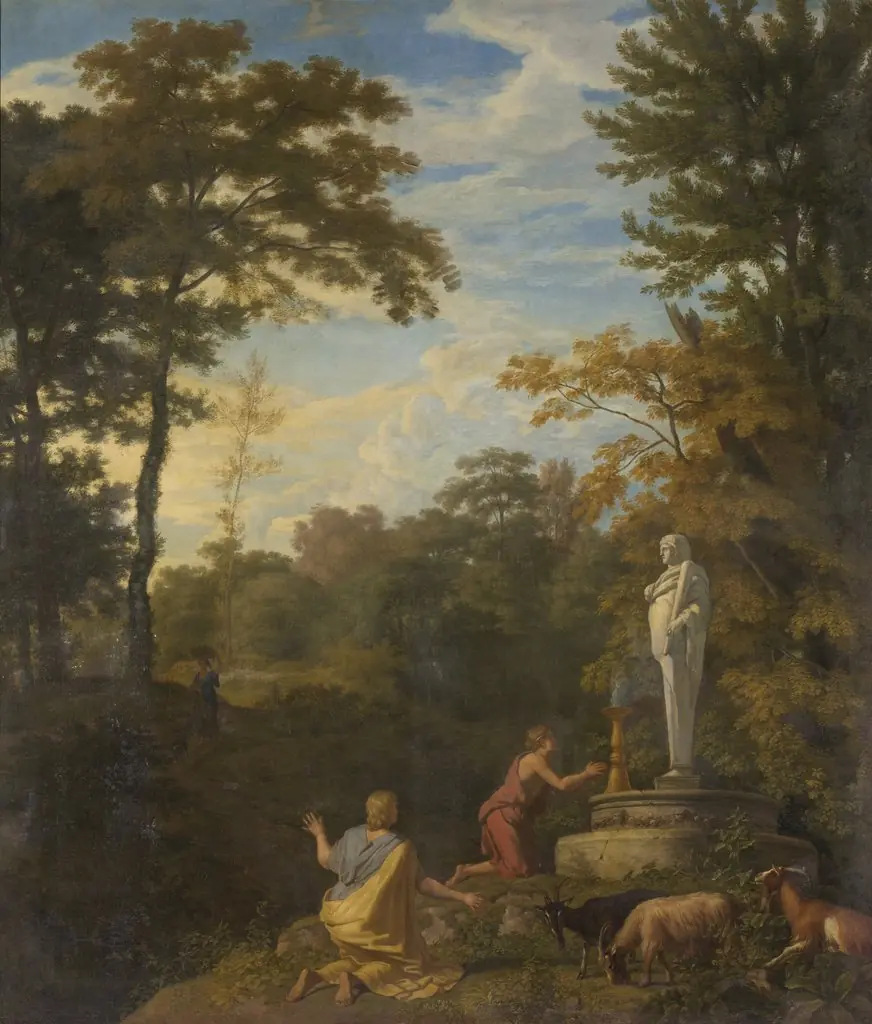
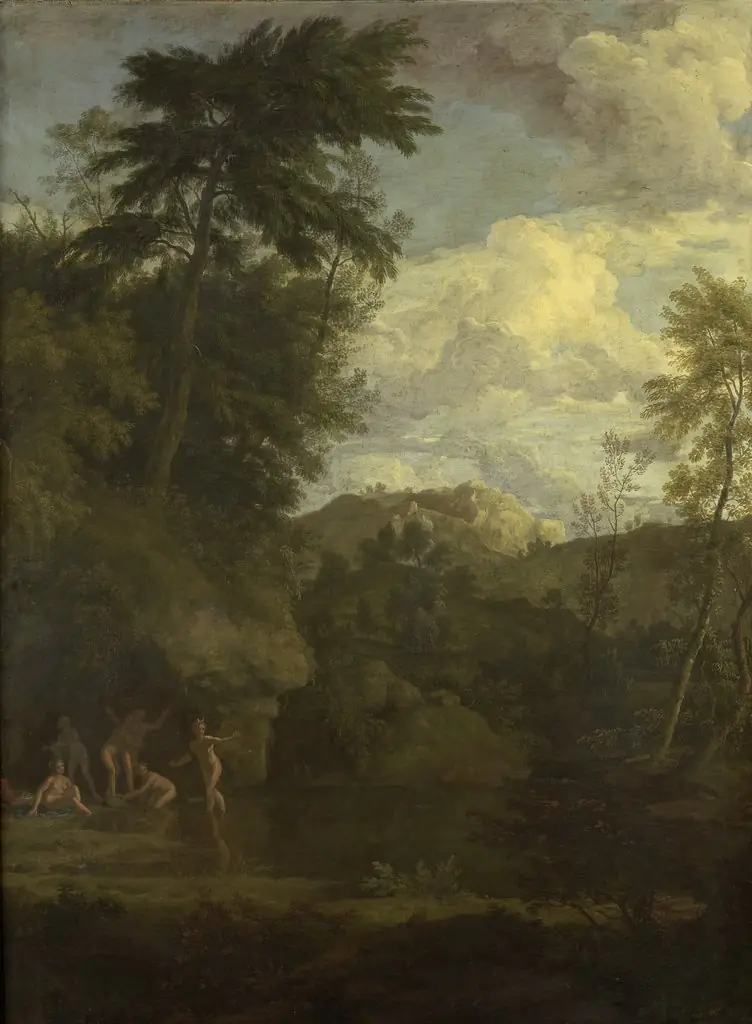
Johannes Glauber’s oil on canvas, executed in 1703, presents a tranquil Arcadian setting that incorporates the mythological encounter of Salmacis and Hermaphroditus. The composition balances a modest architectural element, a distant hill, and a cluster of trees beneath a softly clouded sky, all rendered in the artist’s characteristic Baroque palette. The work is part of the collection of the Rijksmuseum in Amsterdam.
Subject & Meaning
At the foreground, a woman dressed in red stands beside a solitary tree, her gaze directed downward, while a nude male figure kneels near a low fence, extending his hand toward her. This pairing alludes to the ancient tale in which the nymph Salmacis embraces the youth Hermaphroditus, a narrative often invoked to explore themes of union and transformation within pastoral contexts.
Technique & Style
Glauber employs a subtle chiaroscuro, allowing light to fall selectively on the figures and foliage, thereby creating a sense of depth and volume. The handling of brushwork is smooth in the landscape, contrasting with the more detailed rendering of the human forms, which are highlighted by a brighter tonal range against the muted background.
History & Provenance
Painted early in Glauber’s Dutch period, the canvas later entered the holdings of the Rijksmuseum, where it has been displayed as part of the museum’s Baroque collection. Documentation traces its acquisition to the early twentieth century, though earlier ownership records remain sparse.
Context
The work reflects the 17th‑century fascination with idealized rural scenes that served as stages for classical myths. Glauber, known for his decorative landscapes, often combined architectural ruins with mythological figures, aligning his practice with the broader European trend of integrating narrative content into bucolic vistas.
Artist & collection