Artwork
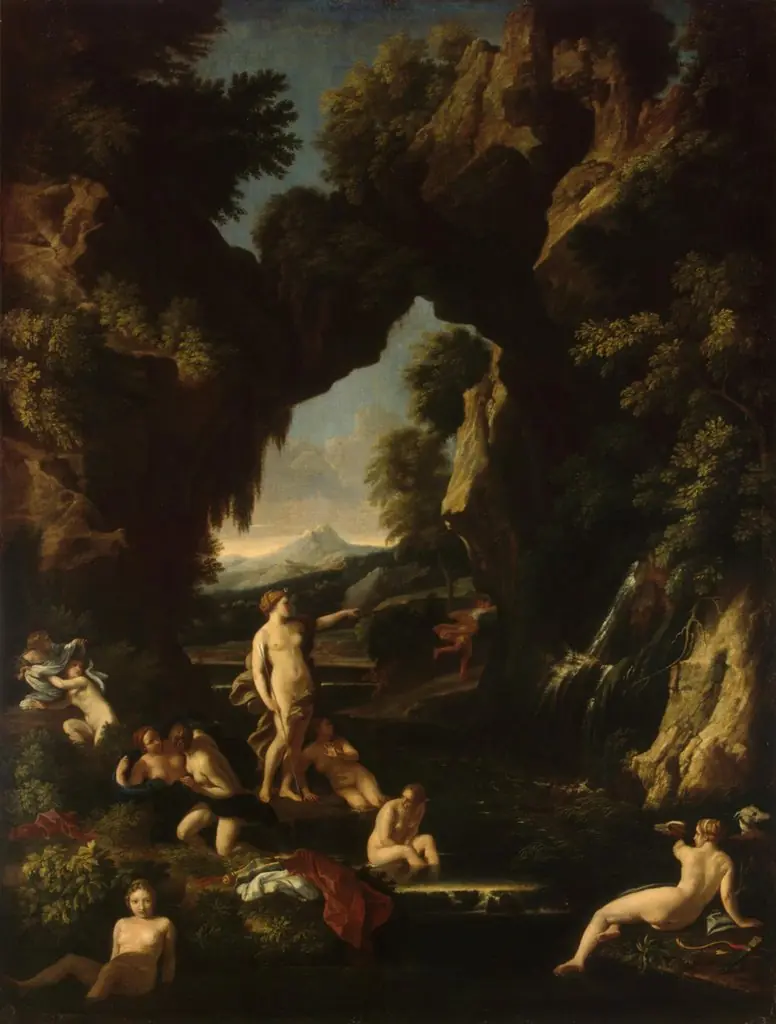
Arcadian landscape with bathing Diana
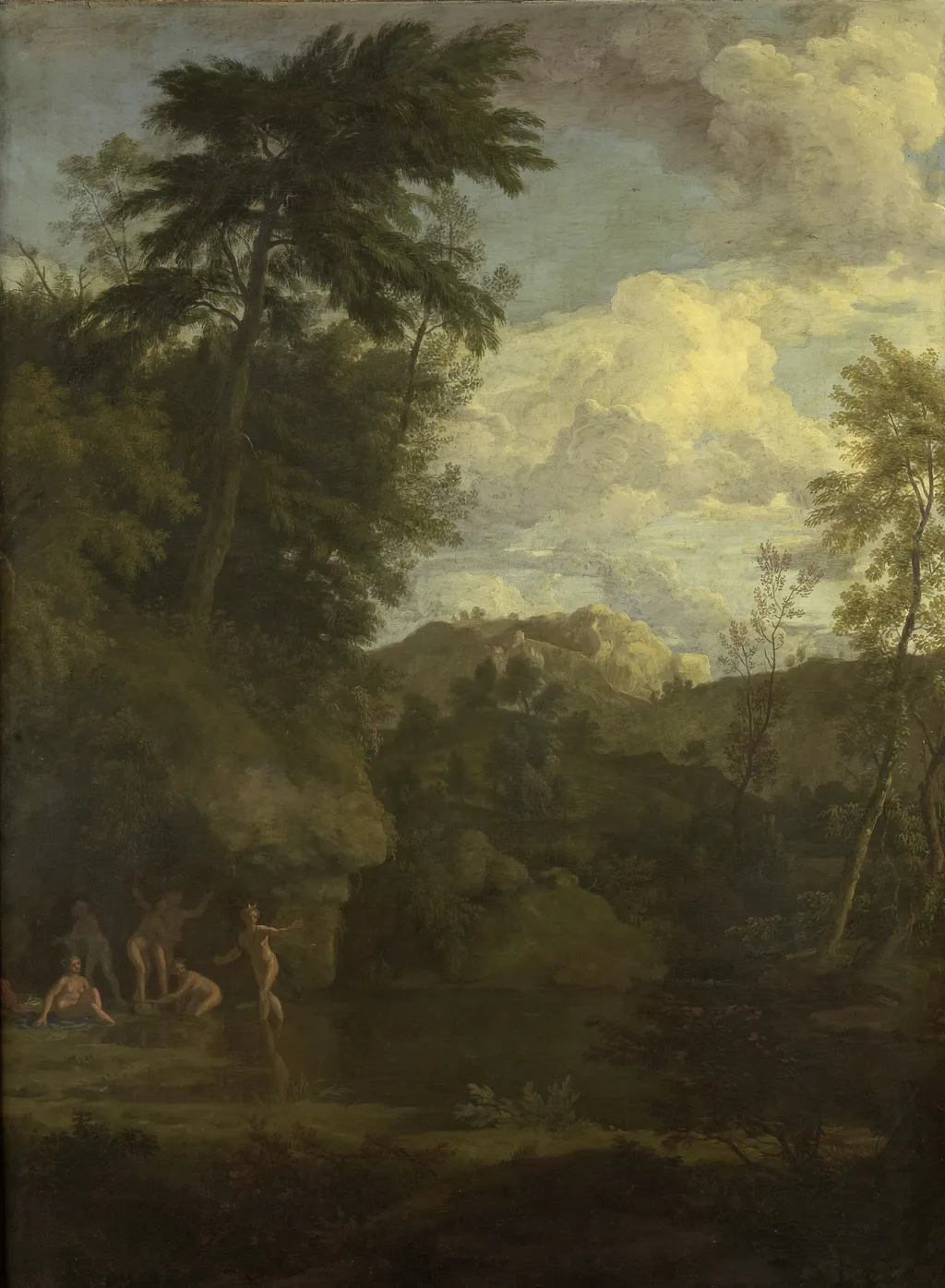
Arcadian landscape with bathing Diana is an oil painting by the Rococo painting artist Johannes Glauber. It dates from 1697 and is held in the collection of the Rijksmuseum.
About this work
Overview
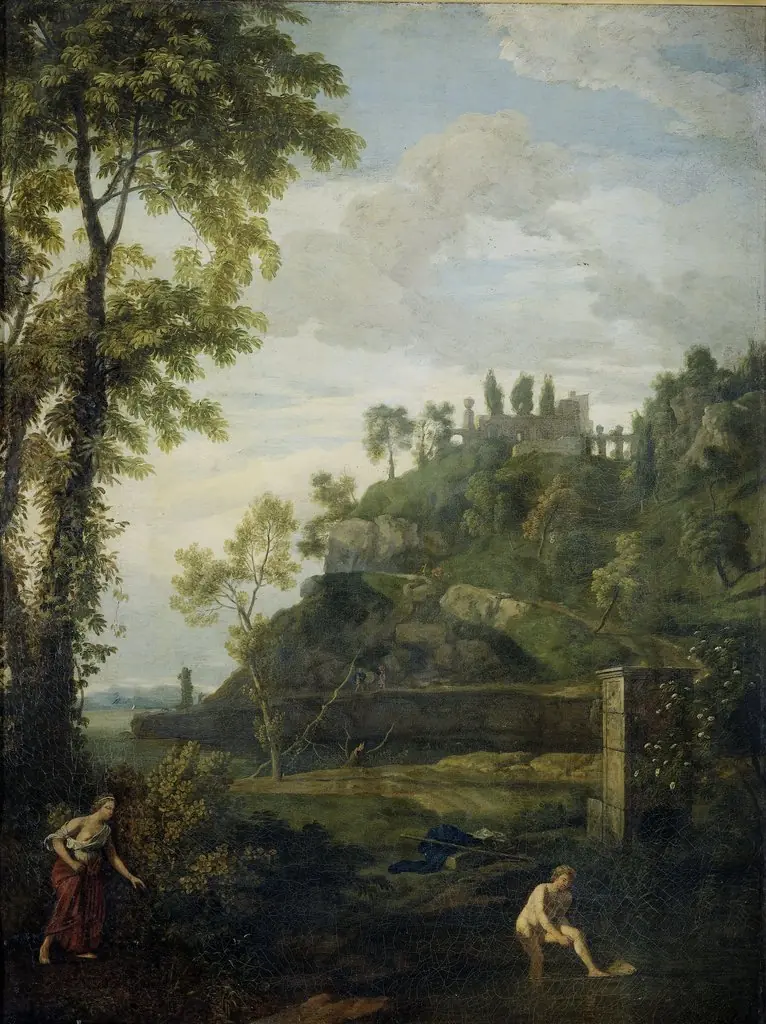
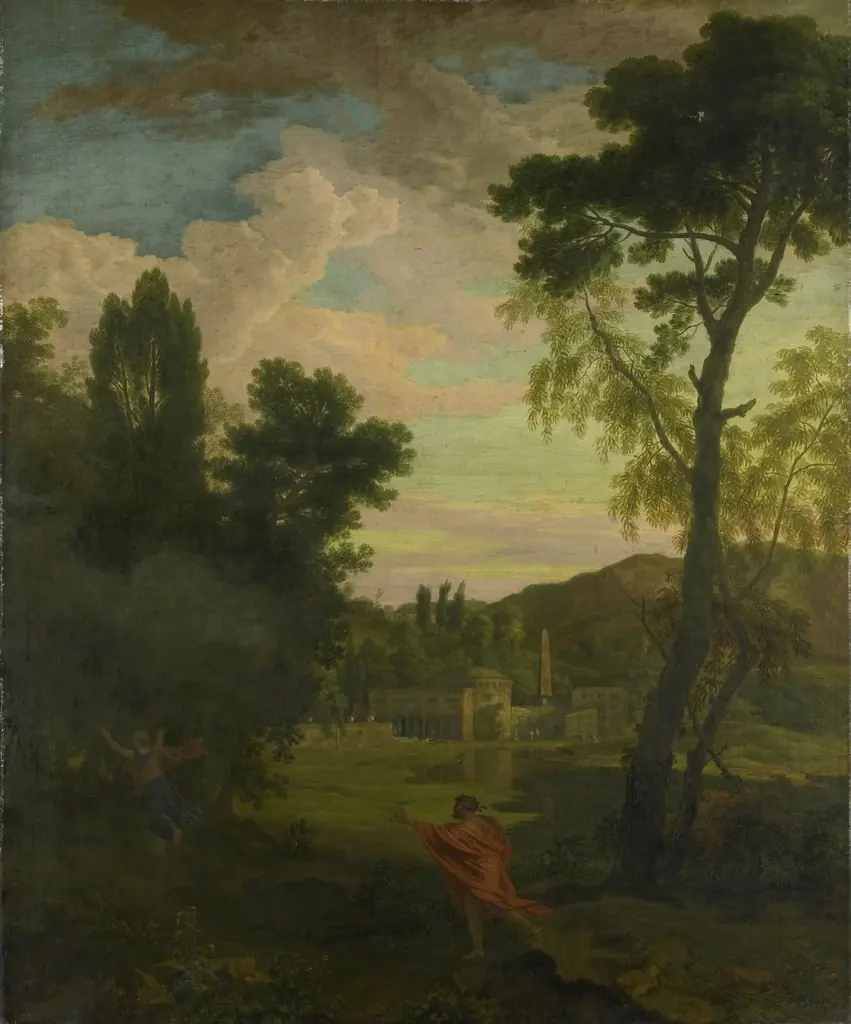
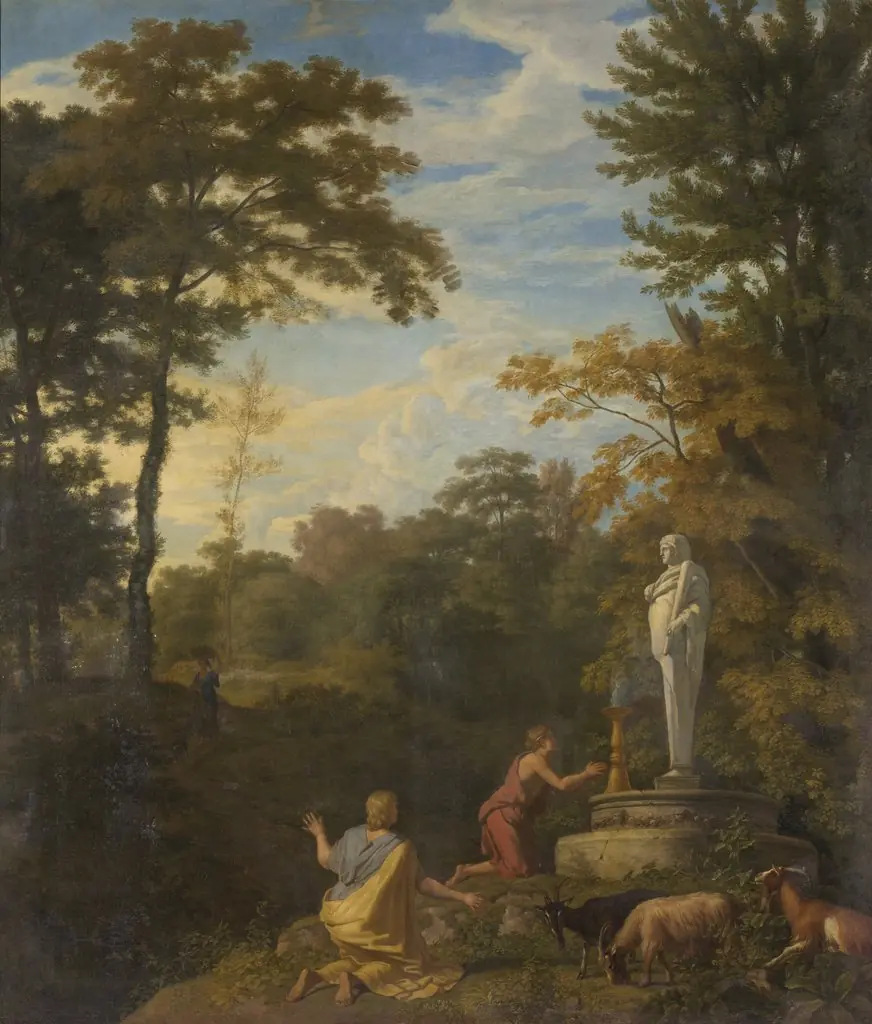
Johannes Glauber’s oil painting, Arcadian Landscape with Bathing Diana, was executed in 1697. The work presents a serene woodland scene populated by four nude figures, two seated beneath a prominent tree and two standing near a rocky rise. A bright sky dotted with fluffy clouds illuminates the setting, while the foliage casts soft shadows across the ground, creating a tranquil atmosphere.
Subject & Meaning
The composition centers on a mythological theme, portraying the goddess Diana in a pastoral context. The relaxed poses of the figures suggest a moment of private leisure, emphasizing the harmony between the divine and the natural world. The inclusion of a solitary tree and gentle landscape elements reinforces the idealized Arcadian vision of peaceful coexistence.
Technique & Style
Glauber employs a restrained palette of muted greens, earth tones, and delicate blues, allowing light to filter through the canopy and highlight the figures. The handling of chiaroscuro—subtle contrasts of light and shadow—adds depth to the foliage and terrain, while the soft modeling of the bodies conveys a sense of calm intimacy within the scene.
History & Provenance
Created at the close of the 17th century, the painting entered the collection of the Rijksmuseum, where it remains on display. Its acquisition reflects the museum’s interest in Dutch Golden Age landscape painting and the broader European fascination with classical mythology rendered in an idyllic setting.
Own this work as a print
Artist & collection