Artwork
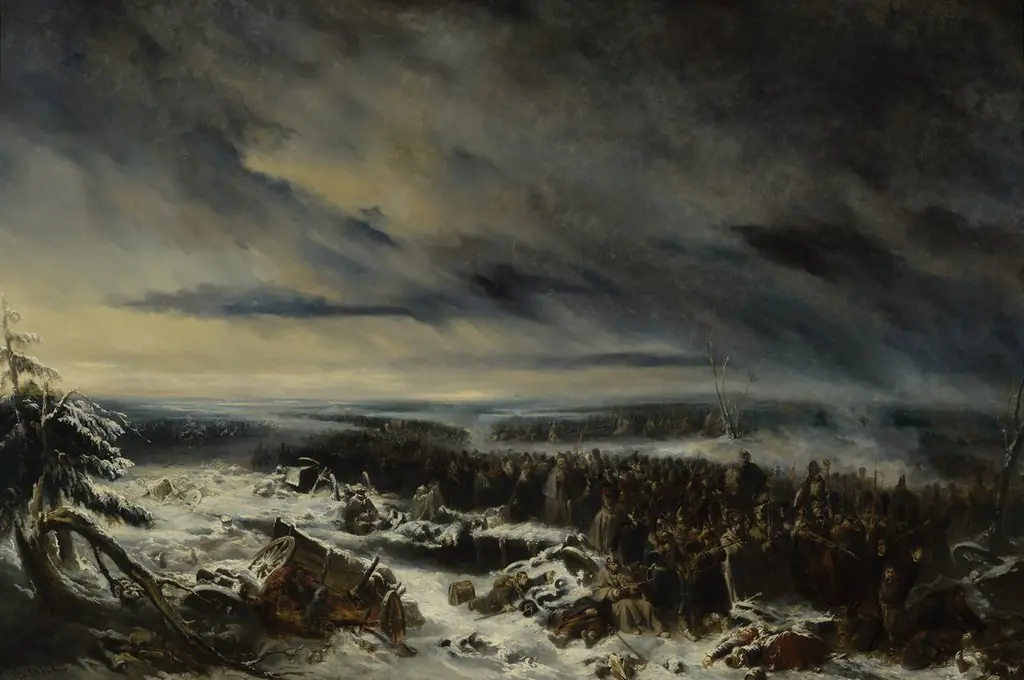
Bivouac at Molodechno, 3-4 December 1812: an episode from Napoleon's Retreat from Russia
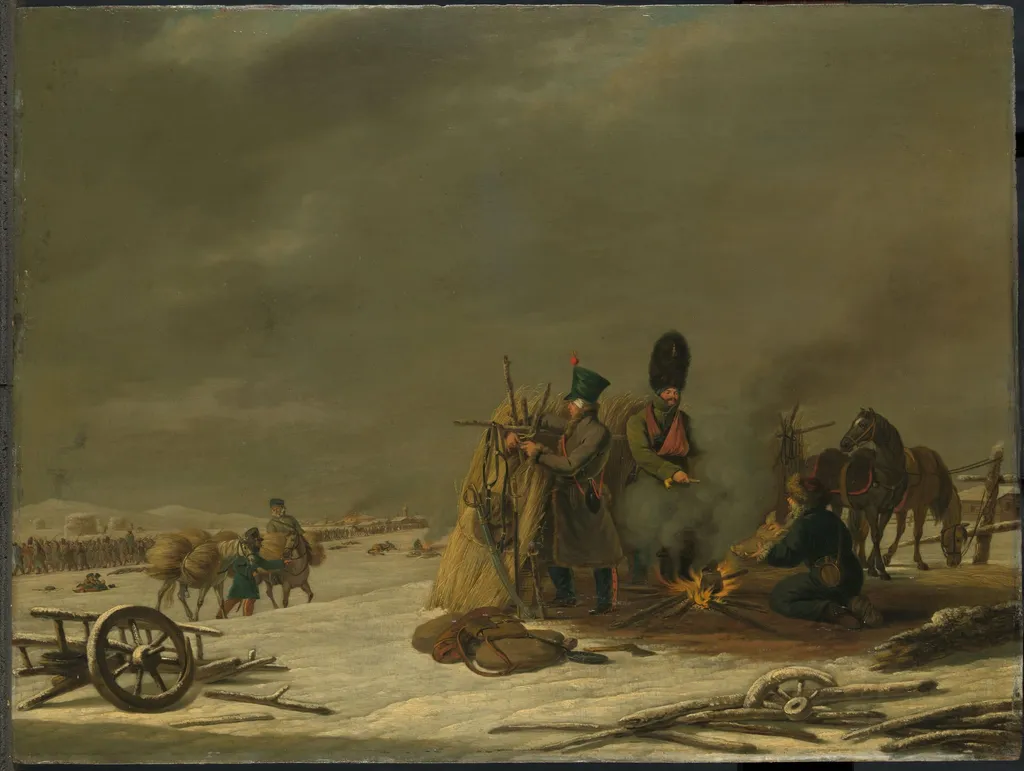
Bivouac at Molodechno, 3-4 December 1812: an episode from Napoleon's Retreat from Russia is an unspecified painting by Johannes Hari. It dates from 1816 and is held in the collection of the Rijksmuseum.
About this work
The pig’s head is strange—maybe the artist added it to show how desperate the soldiers were, or just to make the scene feel more real.
You see French soldiers huddled around a small fire in deep snow. Some stand in long lines, others crouch under a makeshift shelter of reeds. A man holds a pig’s head near the flames. Horses wait on the right.
This painting shows Napoleon’s army retreating from Russia in 1812. The pig’s head is strange—maybe the artist added it to show how desperate the soldiers were, or just to make the scene feel more real. No one knows who painted it, but it was made only four years after the event.
To see more scenes like this, visit the Rijksmuseum.
Overview
The canvas, titled *Bivouac at Molodechno, 3‑4 December 1812*, captures a night‑time encampment of French troops during the disastrous retreat from Russia. Set in deep snow, the scene concentrates on a small fire surrounded by soldiers, horses, and a rudimentary reed shelter, offering a snapshot of the army’s hardship in the harsh winter.
Subject & Meaning
The work depicts French soldiers huddled around a low flame, some arranged in long, orderly ranks while others crouch beneath a makeshift shelter of reeds. A solitary figure holds a pig’s head near the fire, an element that may allude to the extreme scarcity and desperation faced by the retreating army.
Technique & Style
Rendered with a muted palette that emphasizes the cold, the painting employs careful modelling of light and shadow to convey the glow of the fire against the surrounding darkness. The composition balances detailed figures with a broader, atmospheric depiction of the snowy landscape, typical of early‑19th‑century military genre painting.
History & Provenance
The artist’s identity remains unknown, though the work was produced only a few years after the events it portrays, around 1816. It entered the collection of the Rijksmuseum, where it has been preserved as a visual document of the 1812 campaign.
Context
Molodechno (Maladzyechna) was a waypoint on the retreat route of Napoleon’s Grande Armée after the failed invasion of Russia. The painting reflects the broader narrative of logistical collapse, harsh weather, and the suffering of ordinary soldiers during that campaign.
Own this work as a print
Artist & collection