Artwork
Cossack Outpost in 1813
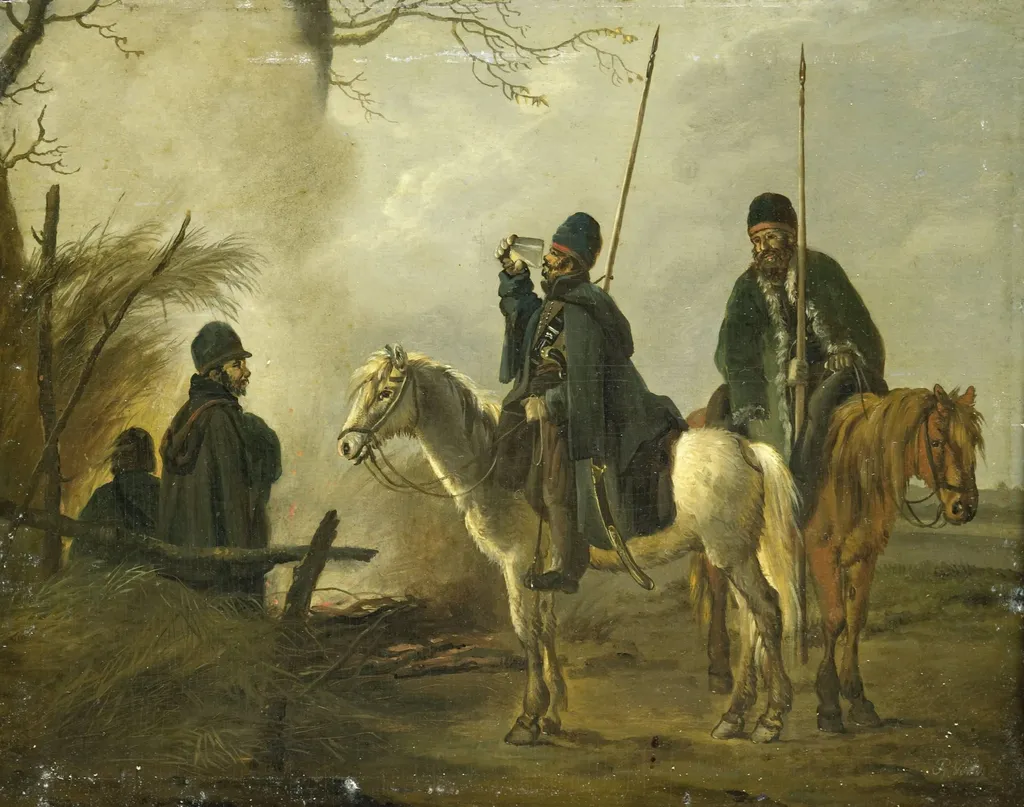
Cossack Outpost in 1813 is an unspecified painting by Pieter Gerardus van Os. It dates from 1814 and is held in the collection of the Rijksmuseum. This painting depicts a nighttime scene of four Cossacks stationed at a remote outpost during the Napoleonic Wars.
About this work
Overview
The composition captures a fleeting moment of respite amid military duty, rendered with quiet realism rather than dramatic flourish.
This painting depicts a nighttime scene of four Cossacks stationed at a remote outpost during the Napoleonic Wars. They gather around a small fire, their postures relaxed yet alert. Two remain mounted on horseback, spears at the ready, while one drinks from a glass and another stands nearby. The composition captures a fleeting moment of respite amid military duty, rendered with quiet realism rather than dramatic flourish.
Subject & Meaning
The scene portrays ordinary soldiers in a moment of stillness, emphasizing the human side of wartime service. The Cossacks, known for their mobility and frontier role, are shown not in battle but in the quiet routine of watch and rest. The act of drinking suggests a ritual of endurance, while the weapons nearby hint at constant readiness. It reflects the tension between fatigue and vigilance inherent in border patrols during the conflict.
Technique & Style
The artist employs muted tones and focused lighting to convey the intimacy of the night setting. Firelight casts soft, shifting shadows across faces and gear, lending depth and immediacy to the scene. Brushwork is restrained, avoiding idealization; details like worn clothing and weathered equipment are rendered with observational precision. The lack of overt narrative or heroism gives the image a documentary quality.
History & Provenance
Created around 1813, the painting emerged during a period when Russian Cossack units were actively deployed across Eastern Europe in opposition to Napoleon’s forces. The artist remains unidentified, and the work’s early ownership is unrecorded. It entered the Rijksmuseum’s collection in the 19th century, likely acquired as part of a broader interest in military and ethnographic subjects from the era.
Context
Cossack outposts like this one served as mobile sentries along the shifting front lines of the Napoleonic Wars. Their presence was vital for reconnaissance and rapid response, often operating far from main armies. This image aligns with contemporary European interest in the customs and daily lives of frontier troops, reflecting both military necessity and cultural curiosity about these semi-autonomous groups.
Legacy
Though unsigned and unattributed, the painting endures as a quiet testament to the lived experience of soldiers on the periphery of grand historical events. Its unembellished realism distinguishes it from more theatrical military art of the period. It continues to be studied for its depiction of routine in wartime and remains a subtle example of how ordinary moments can preserve historical texture.
Own this work as a print
Artist & collection
Artist
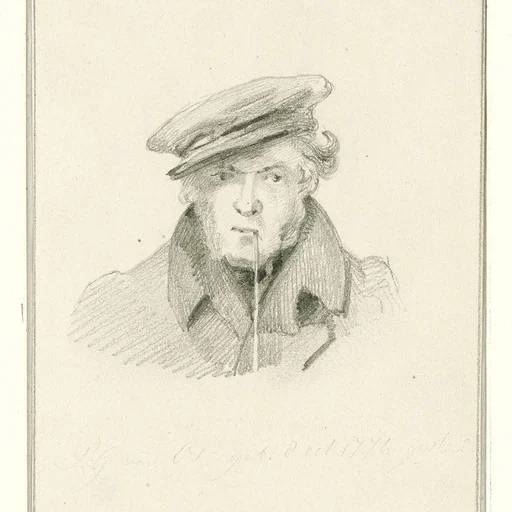
Pieter Gerardus van Os (8 October 1776 – 28 March 1839) was a Dutch painter and engraver and a member of the renowned Van Os family of artists.

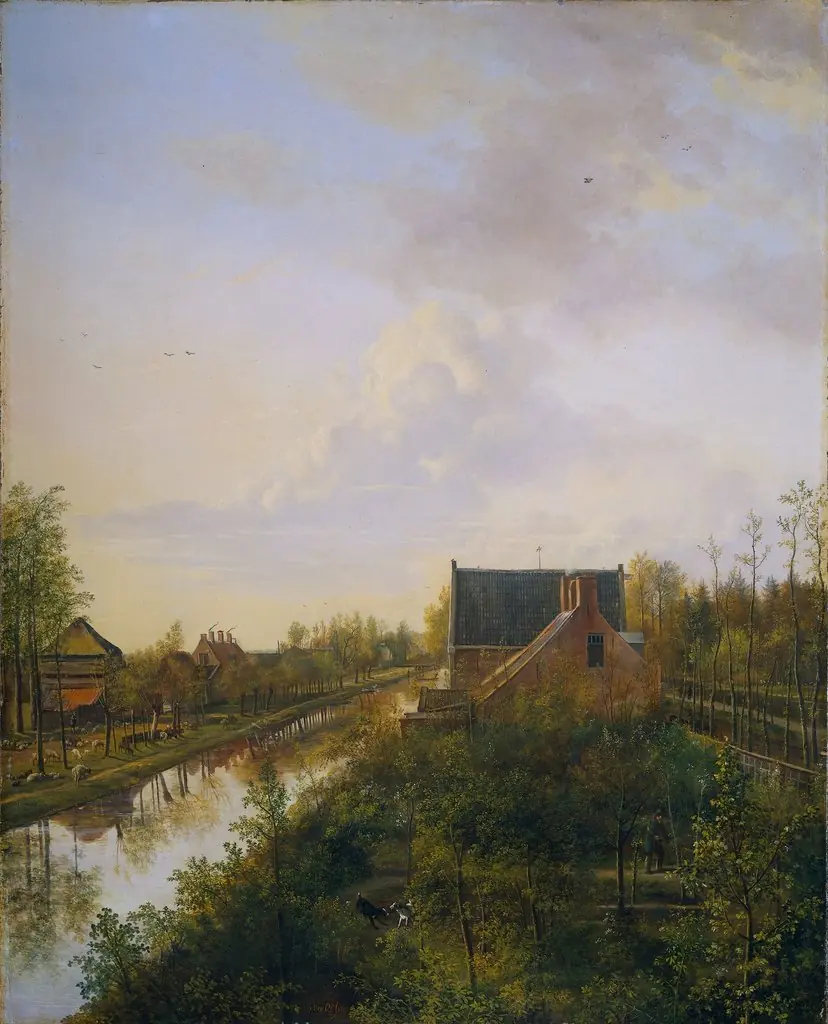 The canal at 's-Graveland
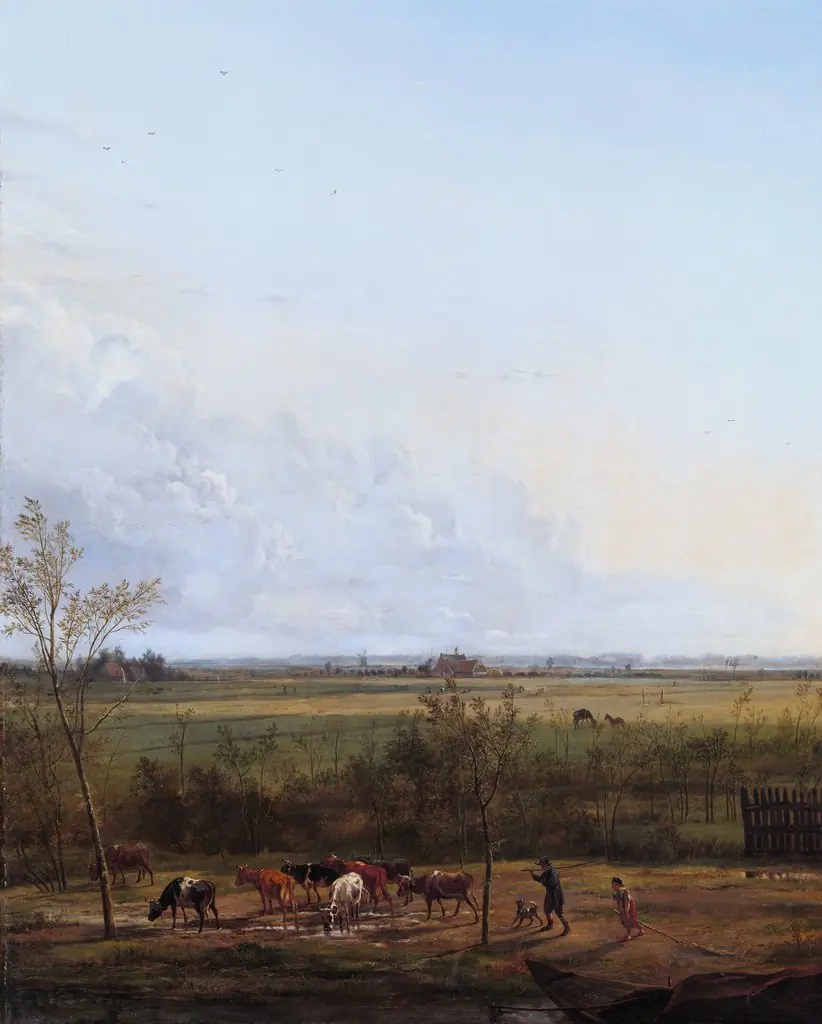 Distant View of the Meadows at ’s-Graveland
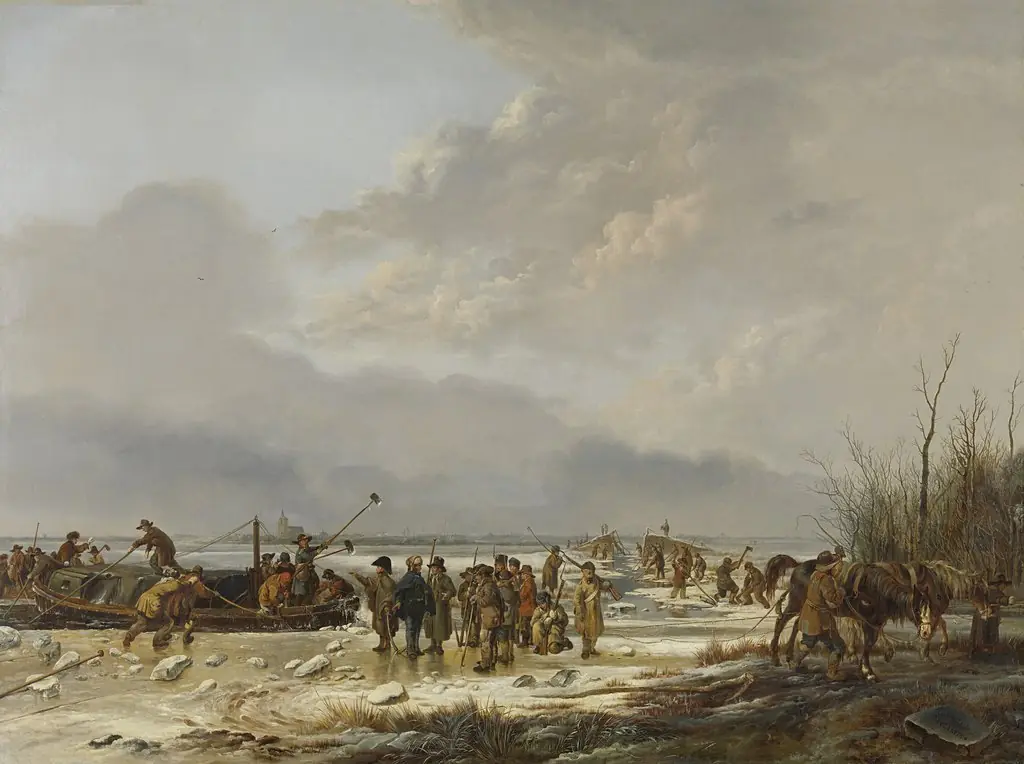 Breaking of the Ice on the Karnemelksloot near Naarden, January 1814
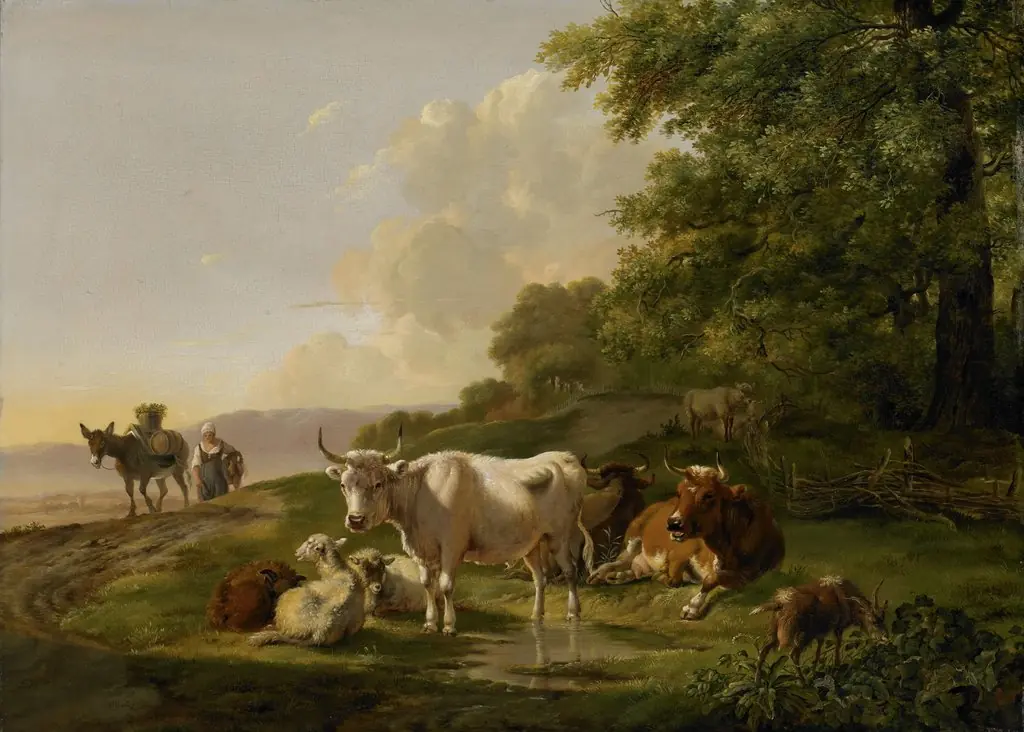 Landscape with Cattle
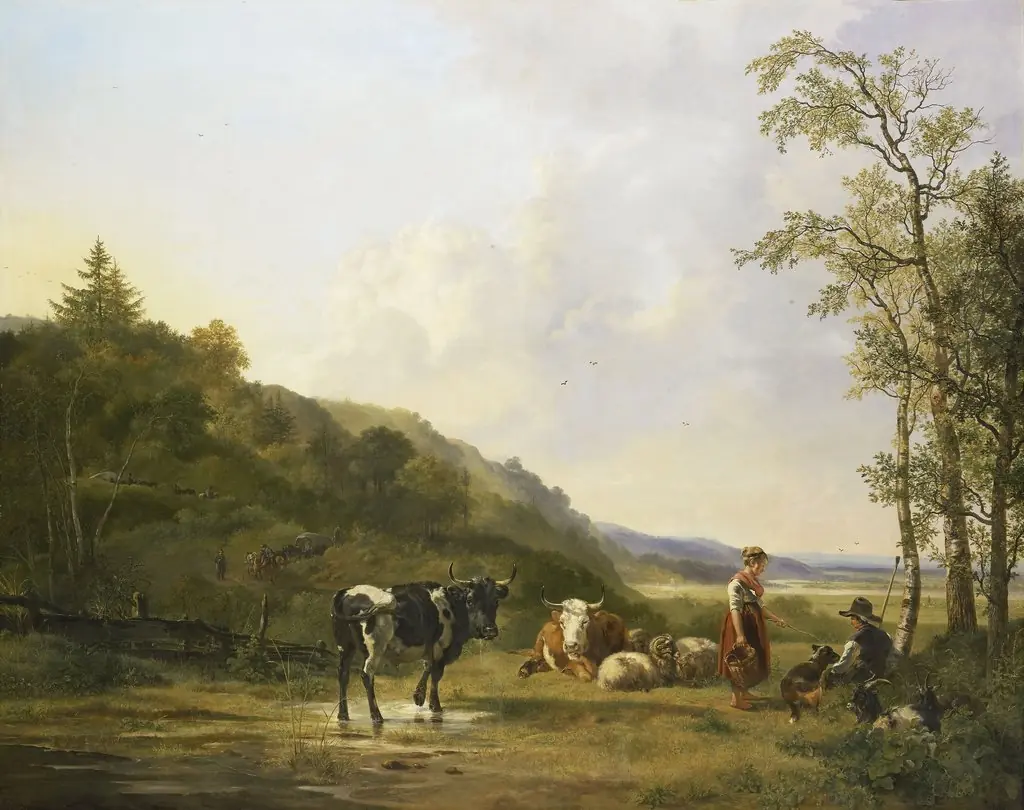 Landscape with Shepherd, Shepherdess and Cows
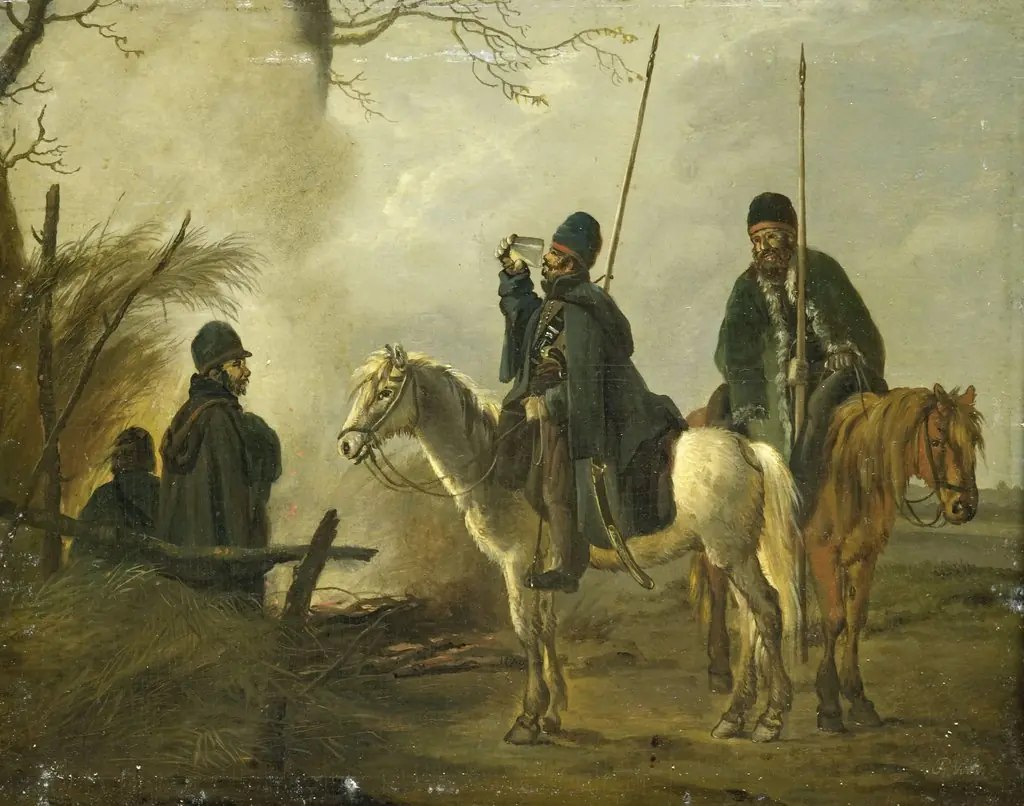 Cossack Outpost in 1813
 Hilly Landscape with Shepherd, Drover and Cattle
 A lion from the Menagerie of King Louis Napoleon, 1808
 Bivouac at Molodechno, 3-4 December 1812: an episode from Napoleon's Retreat from Russia
 Oberst Boncke Bönnichsens fald den 6. december 1813 under en fægtning mellem jyske dragoner og kosakker
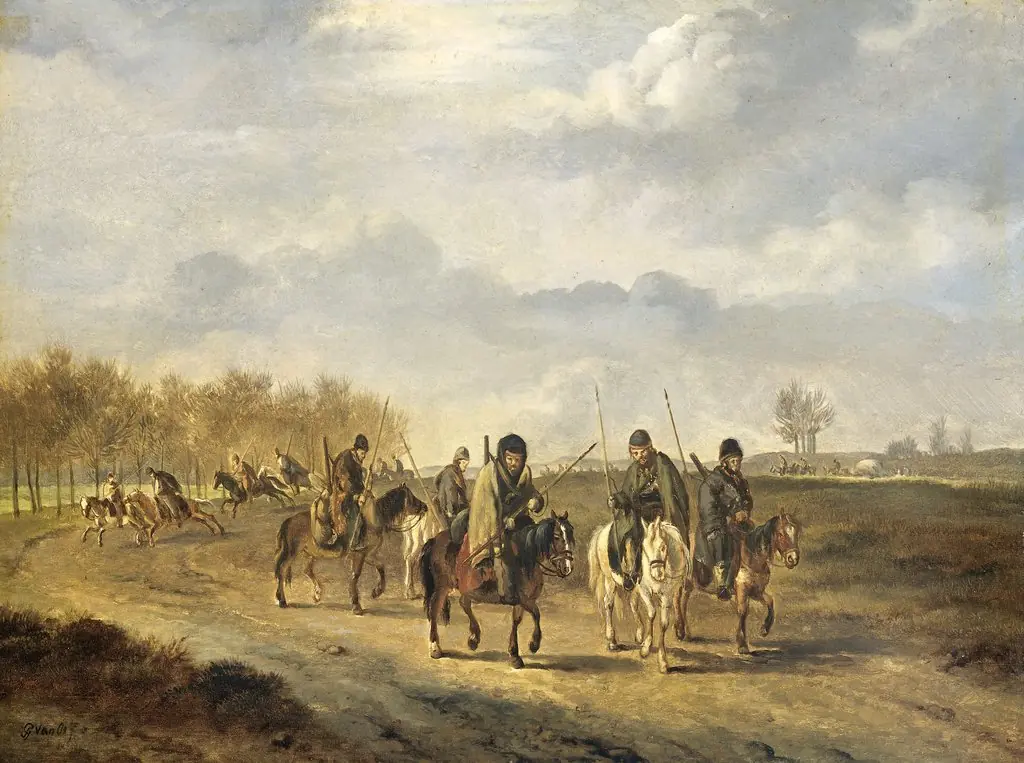 Cossacks on a country Road near Bergen in North Holland, 1813
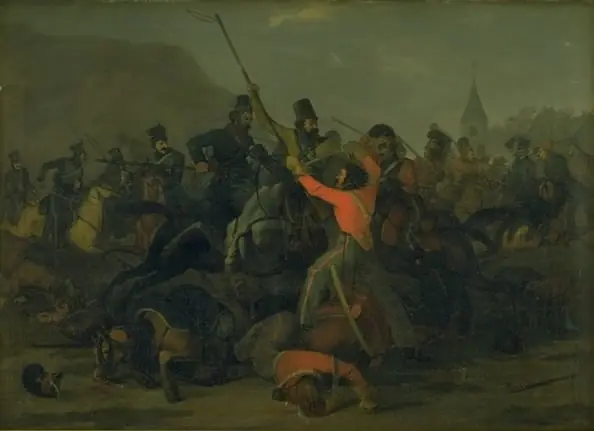 Oberst Boncke Bönnichsens fald den 6. december 1813 under en fægtning mellem jyske dragoner og kosakker
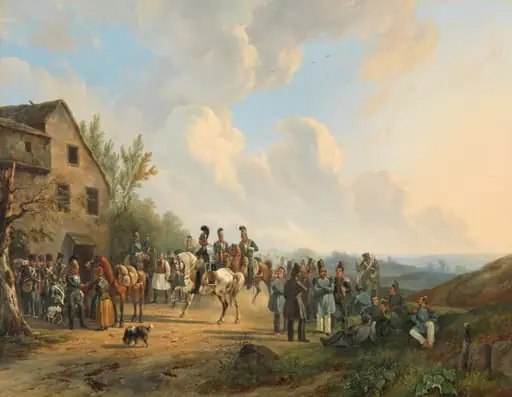 Scene from the Ten Days' Campaign against the Belgian Revolt, August 1831