Artwork
Retreat from Russia (Retour de Russie)
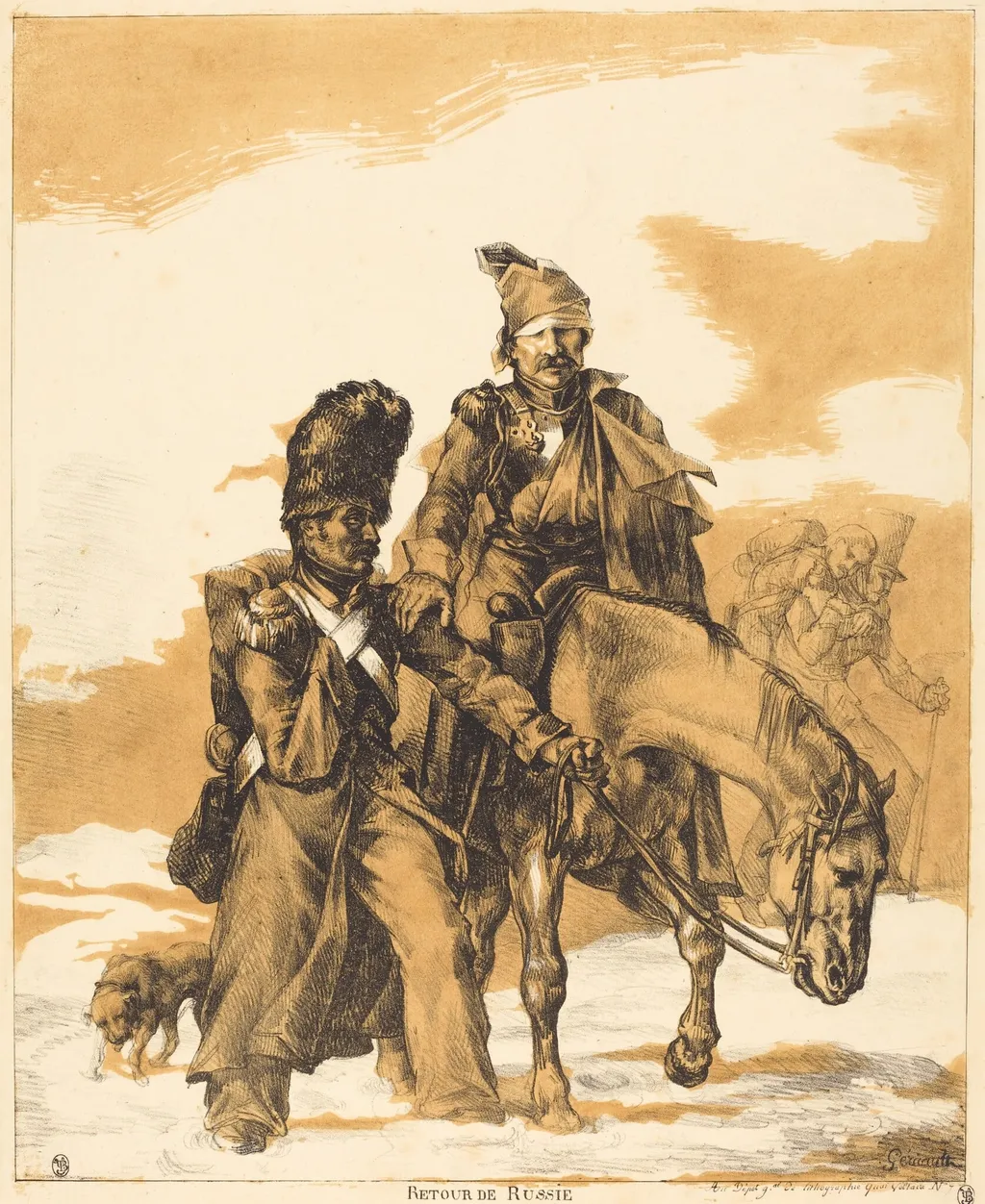
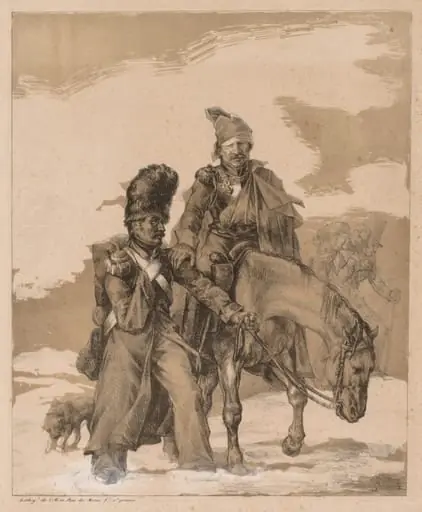
Retreat from Russia (Retour de Russie) is an ink print by the Romanticist artist Théodore Géricault. It dates from 1818 and is held in the collection of the National Gallery of Art.
About this work
Overview
Théodore Géricault produced the lithograph Retreat from Russia in 1818, capturing a moment from Napoleon’s catastrophic withdrawal from Russia in 1812.
Théodore Géricault produced the lithograph Retreat from Russia in 1818, capturing a moment from Napoleon’s catastrophic withdrawal from Russia in 1812. As one of the earliest French artists to embrace lithography for serious subject matter, Géricault used the medium to convey the grim reality of war. This print stands apart from his larger oil paintings, offering a compact yet potent narrative of survival amid collapse.
Subject & Meaning
The image shows two mounted soldiers, one seated behind the other, moving through a barren landscape. A dog trails beside them, suggesting companionship amid isolation. The figures, wrapped in heavy coats and hats, appear weary and diminished. The scene reflects the human toll of the retreat—exhaustion, displacement, and the erosion of military order—rather than heroic triumph.
Technique & Style
Géricault employed lithography to achieve a textured, tonal range that mimicked the grain of charcoal or chalk. The light brown background, accented with darker strokes, creates a sense of depth without detail, emphasizing atmosphere over precision. The loose, energetic lines convey motion and urgency, aligning with Romanticism’s focus on emotion and the sublime in human suffering.
History & Provenance
Created just six years after the retreat, the print was likely made for a limited audience, possibly as part of Géricault’s broader interest in contemporary military trauma. It was not widely distributed during his lifetime and remained largely unknown until later scholarly attention. Its survival offers rare insight into how early lithographs were used to document recent historical events.
Context
Géricault was deeply affected by the French army’s defeat in Russia, a disaster that reshaped European politics. He had already begun researching military suffering for The Raft of the Medusa, and this print extends that focus to the Eastern front. The retreat became a symbol of hubris and collapse, and Géricault’s work contributed to a growing visual culture of war’s aftermath in post-Napoleonic France.
Legacy
Though less known than his monumental paintings, Retreat from Russia exemplifies Géricault’s commitment to documenting human endurance in crisis. His use of lithography helped legitimize the medium for narrative and political subjects, influencing later artists like Daumier. The print remains a quiet but powerful testament to the personal cost of imperial ambition.
Artist & collection
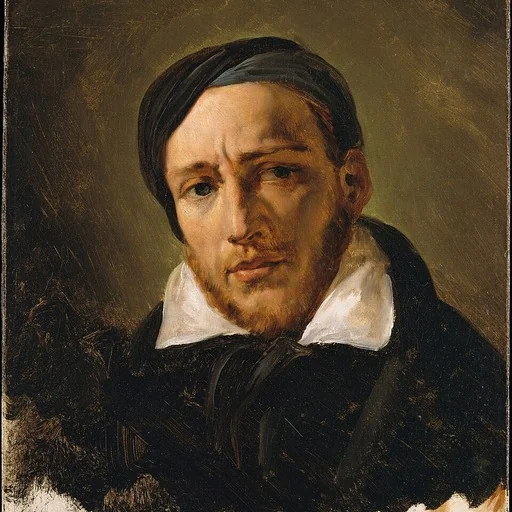
Artist
Jean-Louis André Théodore Géricault (French: ; 26 September 1791 – 26 January 1824) was a French painter and lithographer.

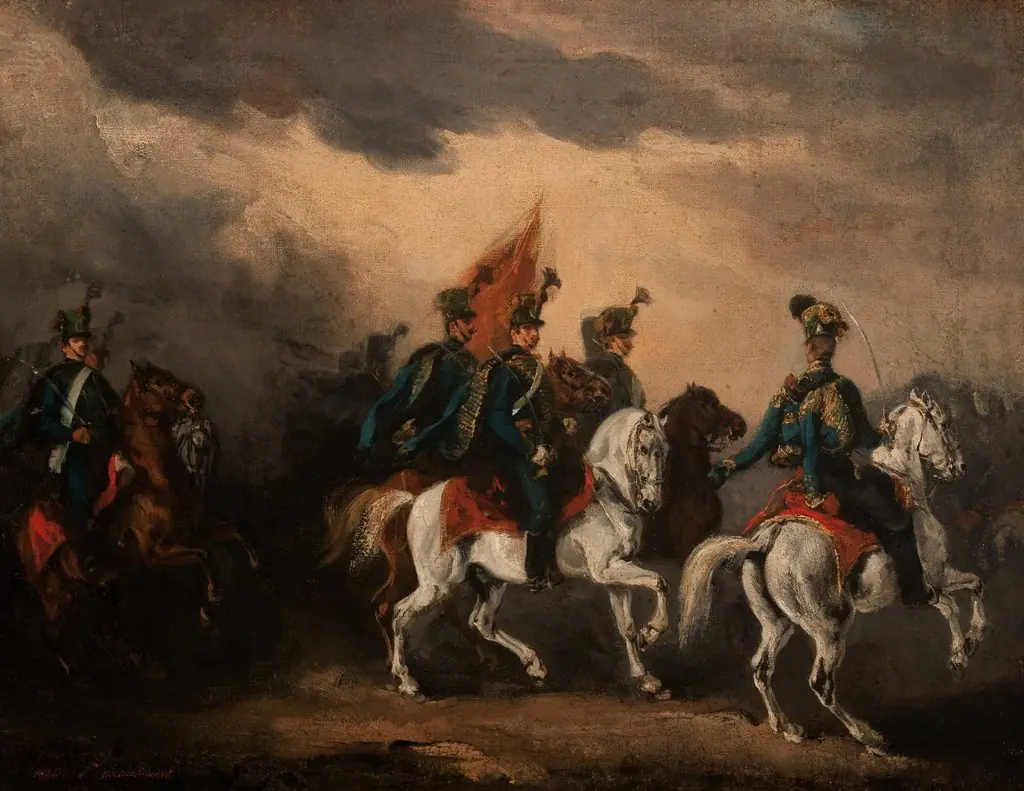 Blue Hussars
 Return from Russia
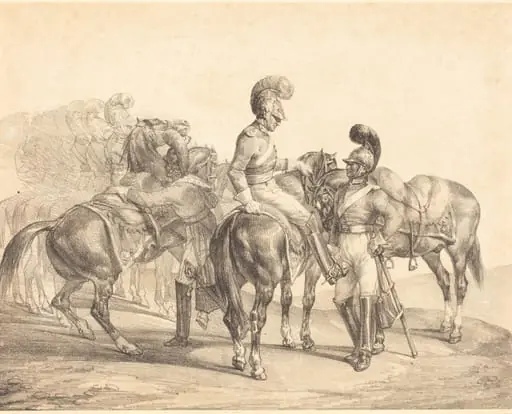 A Party of Life Guards
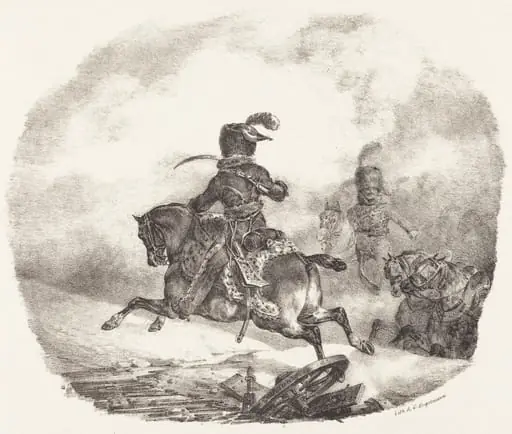 Light Artillery Officer of the Imperial Guard (Officier d'artillerie legerie de la garde imperiale)
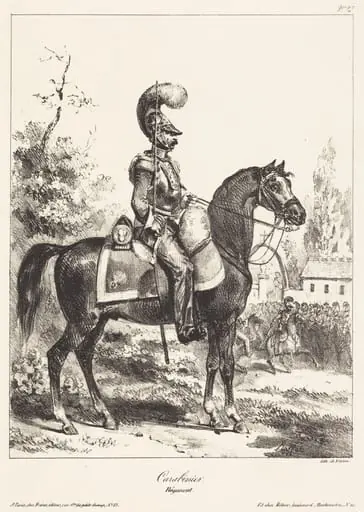 Carabinier
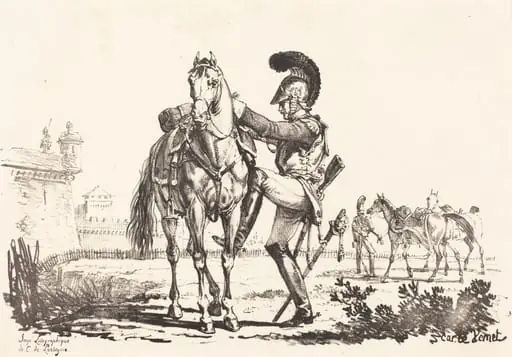 Carabinier Mounting a Horse
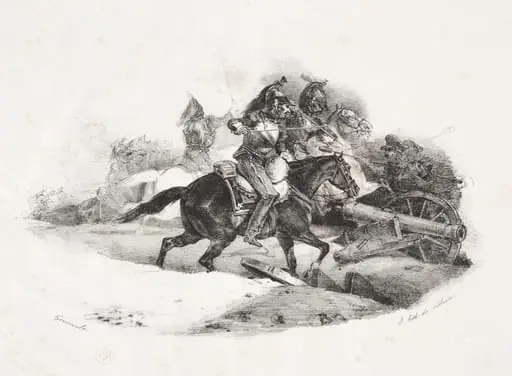 Cuirassiers Charging an Artillery Battery
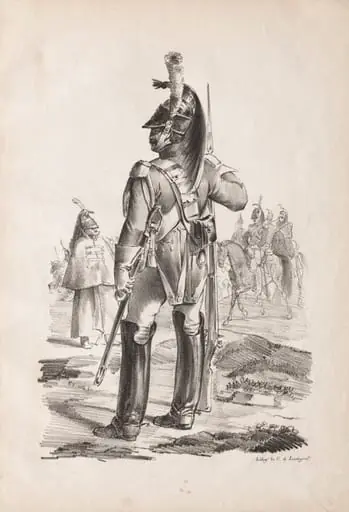 Military Costumes: Grenadier of the Royal Guard
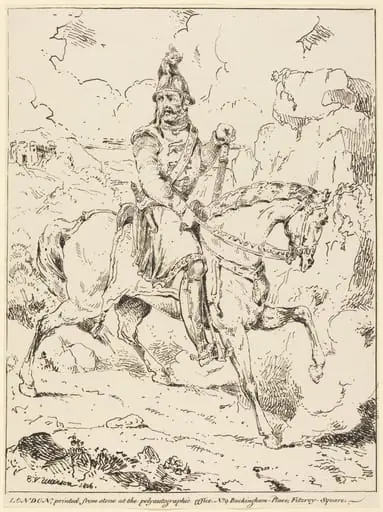 Knight in Armor on Horseback
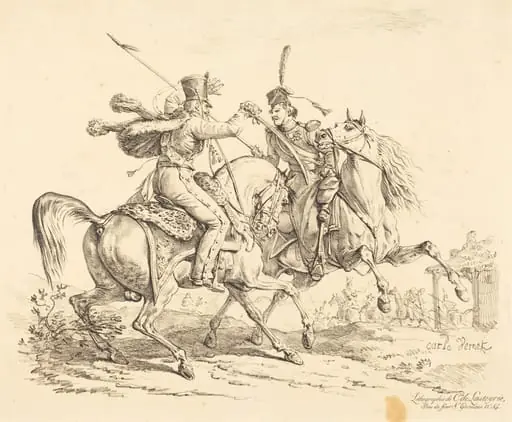 Hussard Striking a Cosack
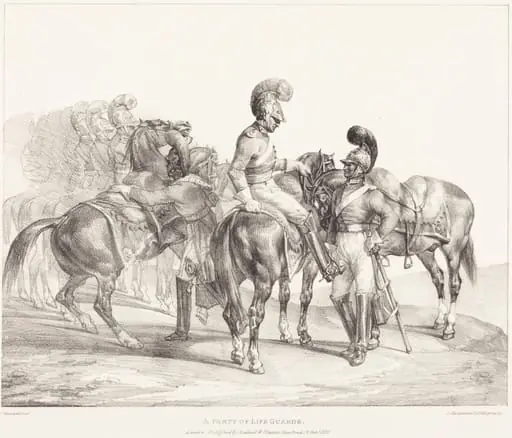 A Party of Life Guards
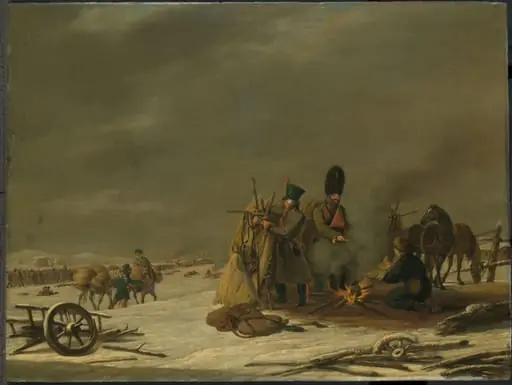 Bivouac at Molodechno, 3-4 December 1812: an episode from Napoleon's Retreat from Russia