Artwork
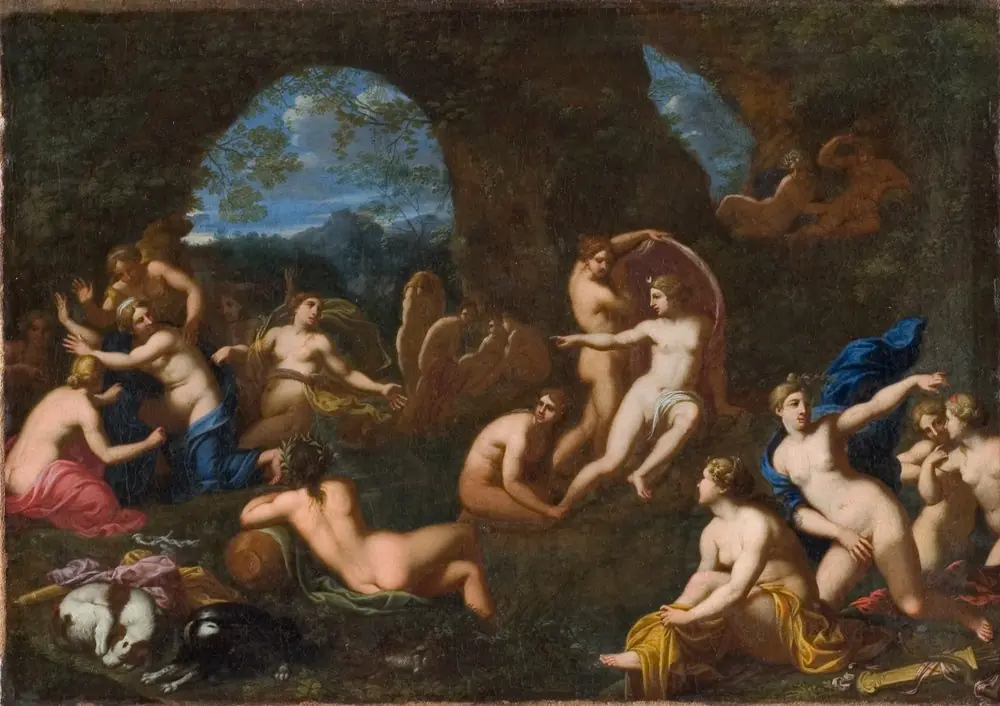
Paris Giving Venus the Apple
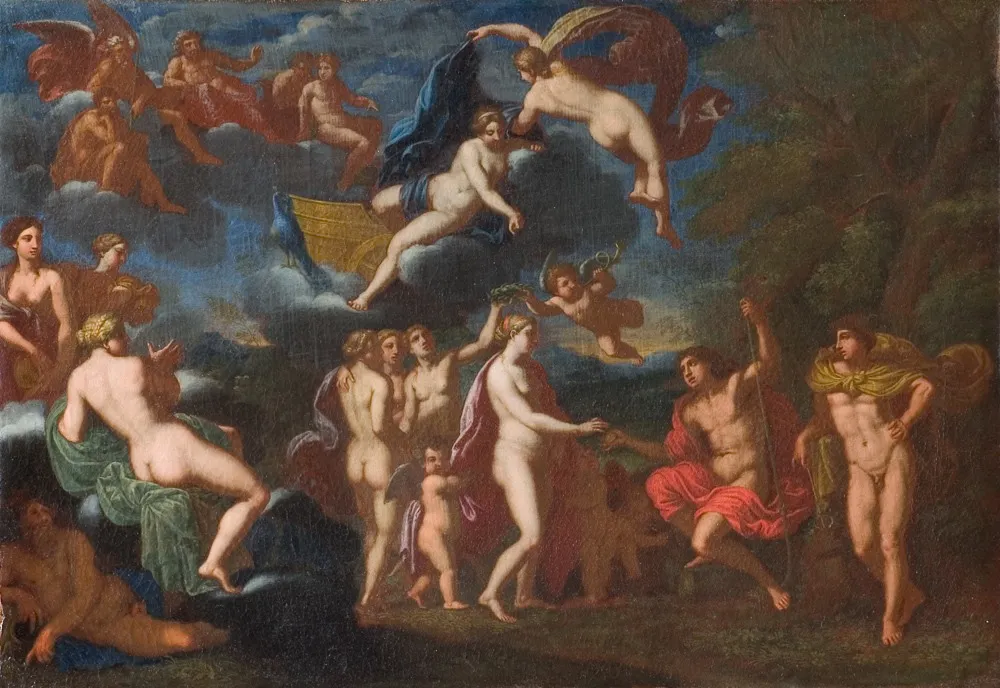
Paris Giving Venus the Apple is an oil painting by the Dutch Golden Age artist Jan van Haensbergen. It dates from 1691 and is held in the collection of the Statens Museum for Kunst.
About this work
Overview
Johannes van Haensbergen’s oil painting Paris Giving Venus the Apple, executed in 1691, presents a mythological tableau that is part of the collection of the Statens Museum for Kunst. The work brings together figures from classical legend within a composition that merges celestial and terrestrial space.
Subject & Meaning
The scene centers on the Trojan prince Paris offering the golden apple to the goddess Venus, a moment linked to the judgment of Paris that led to the Trojan War. Van Haensbergen includes additional deities and mythic symbols, such as winged figures with bows, to underscore the divine context of the narrative.
Technique & Style
Rendered in oil on canvas, the painting employs a warm palette of reds, golds, and flesh tones. Van Haensbergen uses chiaroscuro to model the figures, allowing light to illuminate select bodies while casting others in shadow, thereby creating a sense of depth and three‑dimensionality within the crowded composition.
History & Provenance
Created in the late seventeenth century, the work entered the holdings of Denmark’s national gallery, the Statens Museum for Kunst, where it remains on display. Its acquisition reflects the museum’s interest in Dutch and Flemish Baroque paintings that depict classical themes.
Context
Van Haensbergen, active in the Dutch Republic, was known for his narrative scenes that combined genre elements with mythological subject matter. This painting aligns with the period’s fascination with antiquity and the moralizing potential of myth, a trend prevalent among European courts and collectors of the era.
Artist & collection