Artwork
Self-Portrait
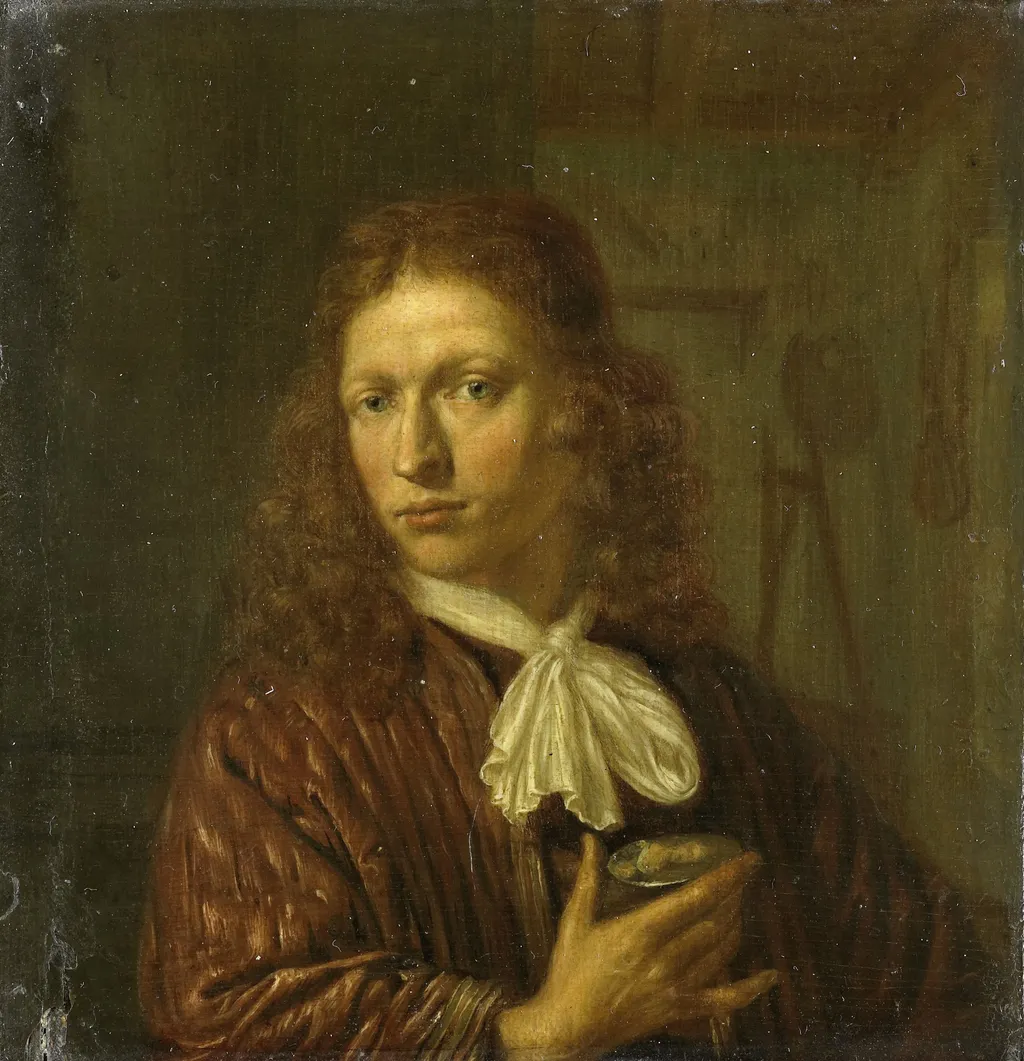
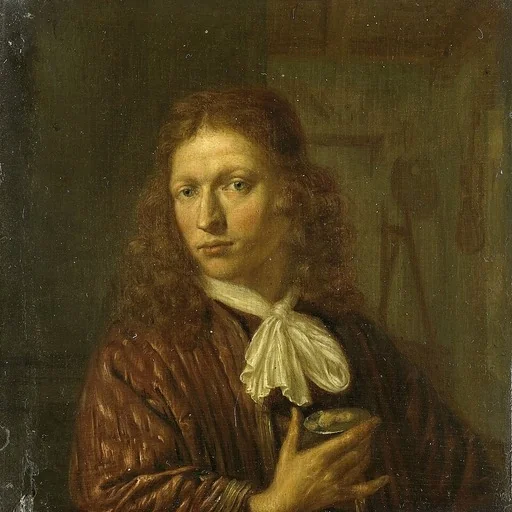
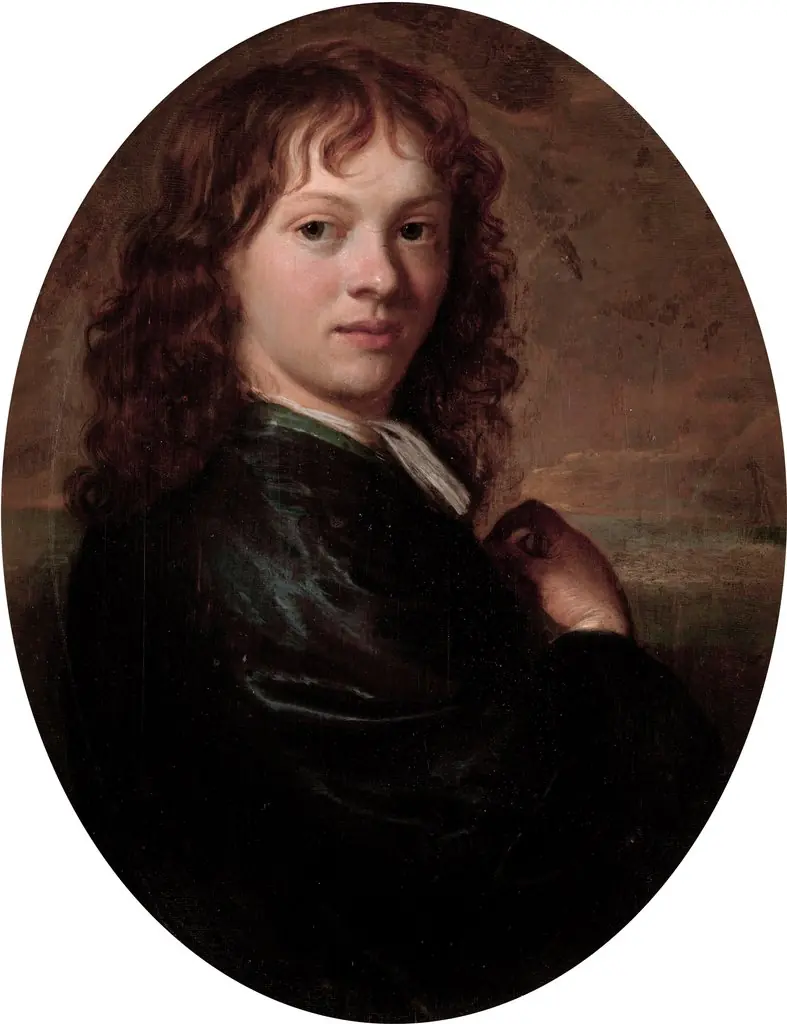
Self-Portrait is an oil painting by the Dutch Golden Age artist Jan van Haensbergen. It dates from 1690 and is held in the collection of the Rijksmuseum. Johannes van Haensbergen’s Self‑Portrait, executed in oil on canvas in 1690, is part of the Rijksmuseum’s collection.
About this work
Overview
Johannes van Haensbergen’s Self‑Portrait, executed in oil on canvas in 1690, is part of the Rijksmuseum’s collection. The work presents the artist in a half‑length pose, his face illuminated against a dark backdrop, allowing the viewer to focus on his features and attire.
Subject & Meaning
The portrait shows van Haensbergen himself, a man with tightly curled hair and a solemn expression. He is dressed in a dark brown jacket trimmed with a white collar and an ornate lace cuff, holding a small object—perhaps a coin or a ring—in his left hand, suggesting personal or professional significance.
Technique & Style
The painter employs a restrained chiaroscuro, using a dark background to heighten the contrast between light and shadow. Smooth, controlled brushwork renders the sheen on the fabric and the subtle modeling of the skin, while the limited palette emphasizes the three‑dimensionality of the figure.
History & Provenance
Created in the late seventeenth century, the self‑portrait has remained in the Netherlands, eventually entering the Rijksmuseum’s holdings. Its provenance reflects the museum’s focus on Dutch Golden Age art, preserving a work that offers insight into van Haensbergen’s own artistic identity.
Context
Van Haensbergen was active during a period when portraiture served both as a personal record and a demonstration of skill. This painting aligns with contemporary practices of self‑representation, where artists often highlighted their status through clothing details and subtle symbols, such as the object held in the hand.
Own this work as a print
Artist & collection