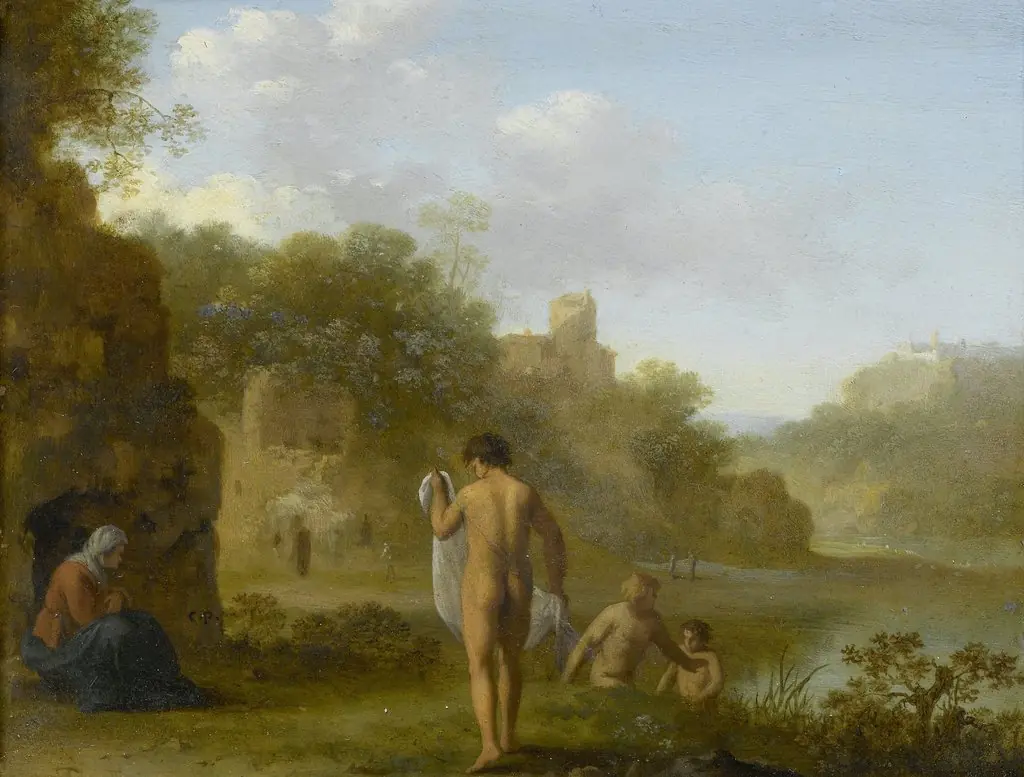
Artwork
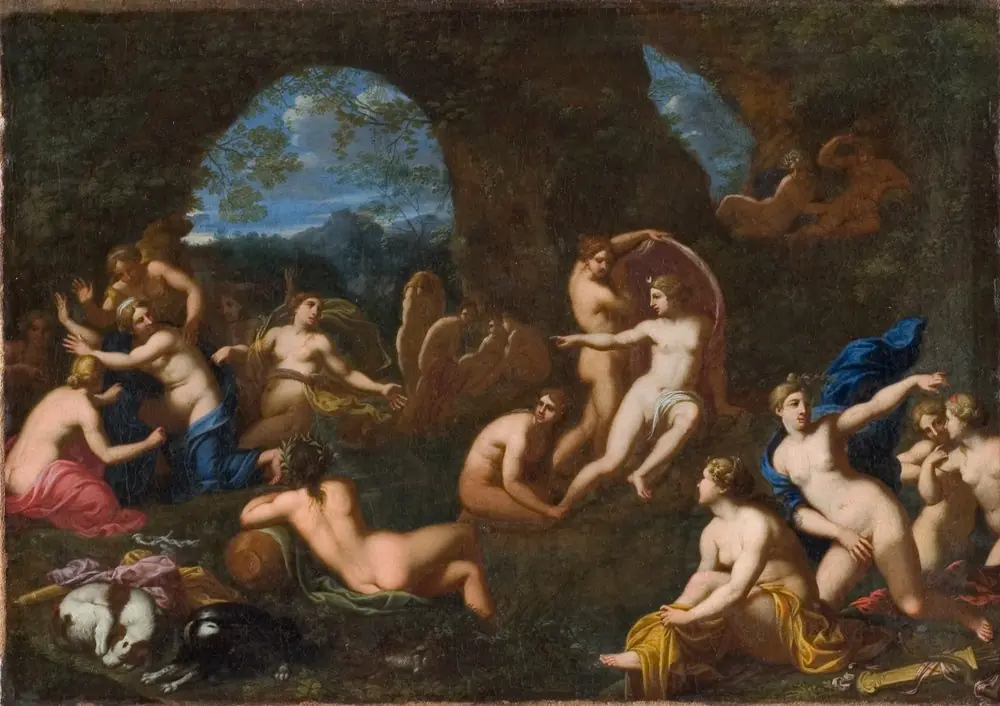
Nymphs Bathing
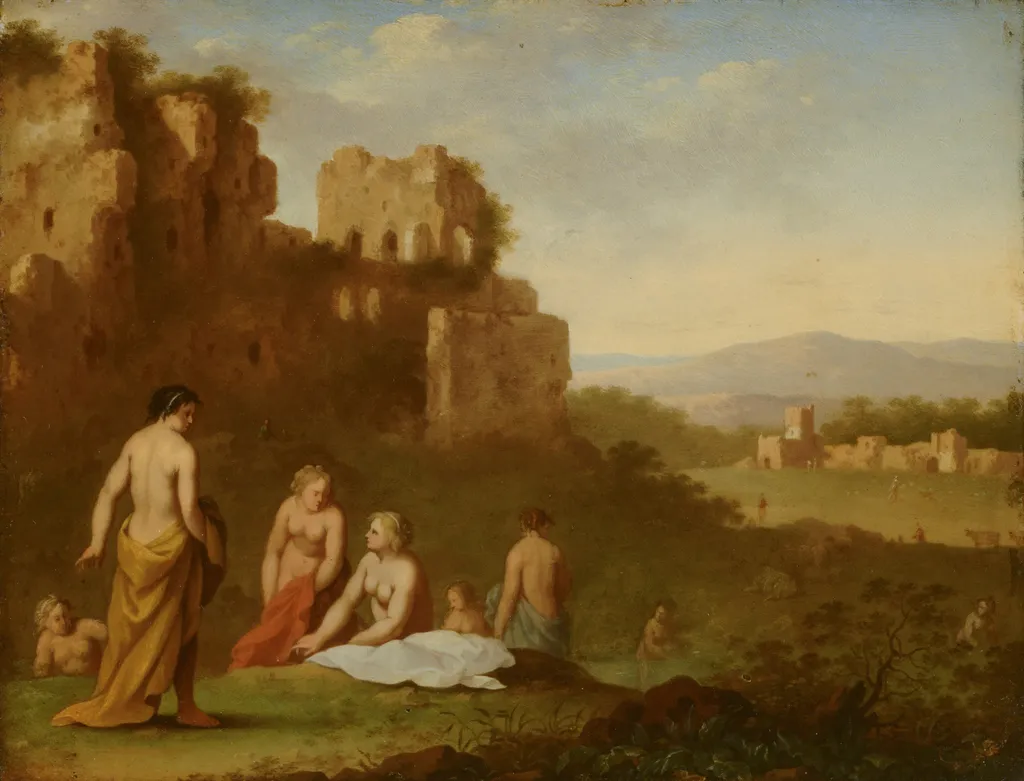
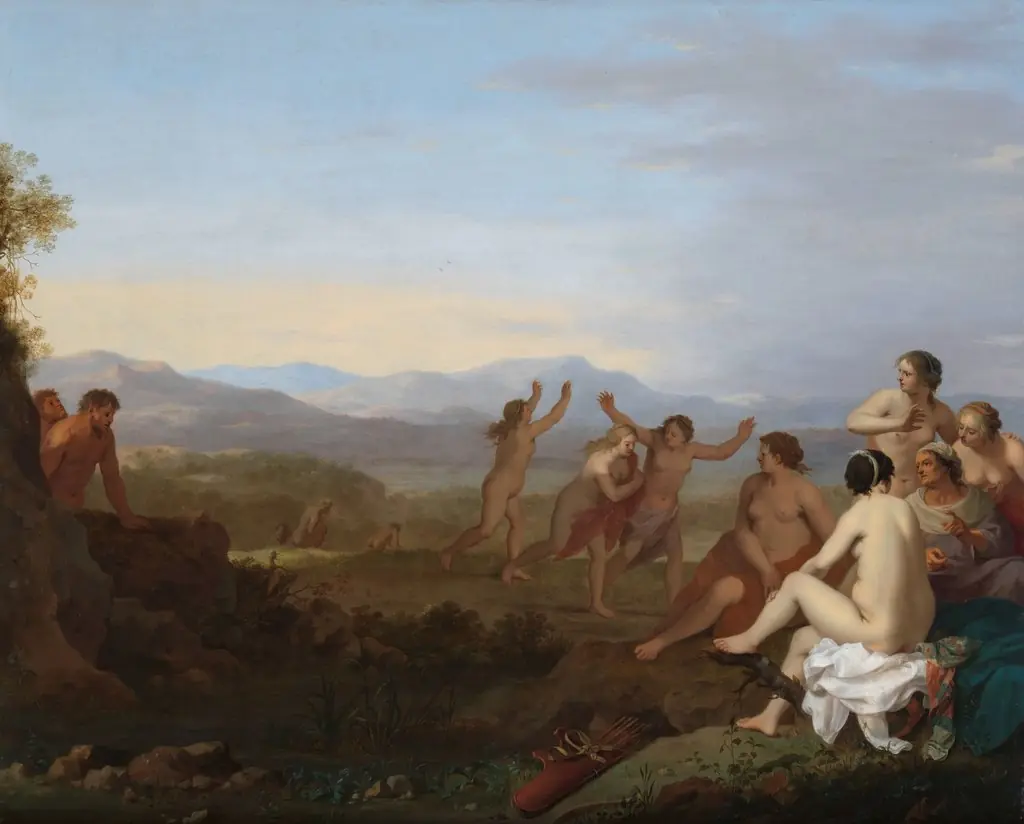
Nymphs Bathing is an oil painting by the Dutch Golden Age artist Jan van Haensbergen. It dates from 1670 and is held in the collection of the Mauritshuis.
About this work
Overview
Created in 1670, *Nymphs Bathing* is a copper painting by Dutch artist Johannes van Haensbergen. The work is part of the Mauritshuis collection in The Hague. It presents a tranquil outdoor setting where several nude figures interact with a decaying medieval ruin, rendered in a muted palette that emphasizes calm over drama.
Subject & Meaning
The juxtaposition of vulnerable bodies against crumbling architecture suggests a meditation on the fleeting nature of beauty and the passage of time.
The composition features four women and a child, all depicted nude, gathered near the remnants of an old stone castle. One figure is partially covered with a yellow drape, while the others assume relaxed, natural poses on a white cloth or standing amid the landscape. The juxtaposition of vulnerable bodies against crumbling architecture suggests a meditation on the fleeting nature of beauty and the passage of time.
Technique & Style
Executed on copper, the painting benefits from the metal's smooth surface, allowing van Haensbergen to apply fine, delicate brushwork. A restrained palette of earthy browns, pale blues, and warm greens creates a subdued atmosphere. The soft modeling of flesh contrasts with the rough, textured depiction of the ruined walls, highlighting the artist’s skill in balancing detail with overall harmony.
History & Provenance
After its completion in the late 17th century, the work entered private collections before being acquired by the Mauritshuis, where it remains on display. Its attribution to van Haensbergen has been consistently accepted by scholars, and the painting has been documented in the museum’s catalogue since the early 20th century.
Context
Van Haensbergen, active in the Dutch Golden Age, often painted genre scenes with mythological overtones. *Nymphs Bathing* reflects contemporary interests in classical subjects and the idealization of the nude, while also incorporating the period’s fascination with ruins as symbols of antiquity. The piece aligns with the era’s broader trend of integrating allegorical content within pastoral settings.
Own this work as a print
Artist & collection