Artwork
Comedy and Tragedy
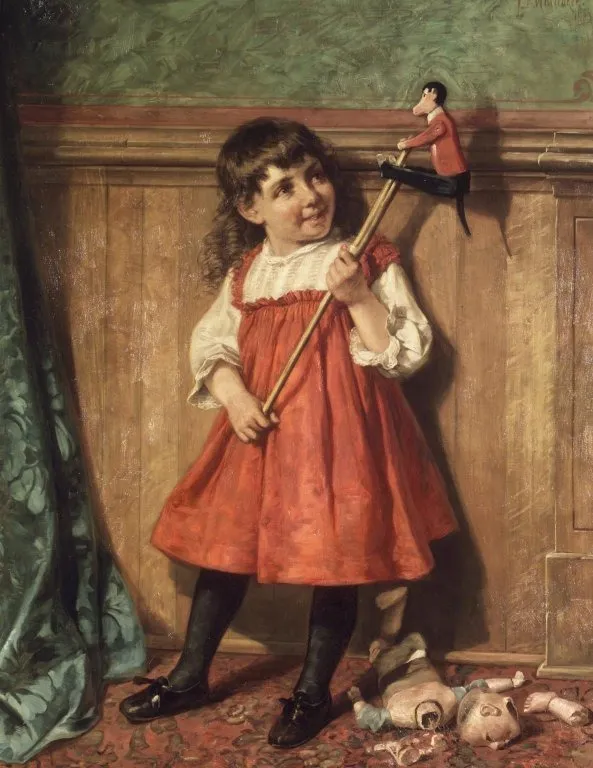
Comedy and Tragedy is an oil painting by the Post-Impressionist artist John Barnard Whittaker. It dates from 1892 and is held in the collection of the Brooklyn Museum.
About this work
Overview
Comedy and Tragedy is an 1892 oil painting by John Barnard Whittaker, currently in the collection of the Brooklyn Museum. The work presents a quiet domestic scene centered on a young girl engaged with a hand puppet. The composition balances simplicity with subtle symbolic undertones, using color and posture to suggest a moment of imaginative play rather than narrative drama.
Subject & Meaning
The girl, dressed in red, holds a puppet resembling a male figure in contrasting black and red attire.
The girl, dressed in red, holds a puppet resembling a male figure in contrasting black and red attire. At her feet lies a doll, reinforcing the theme of childhood play. The title evokes classical theatrical archetypes, yet the scene resists direct allegory. Instead, it invites interpretation of how early imagination engages with roles and emotions, framing theater as an extension of childhood curiosity rather than formal performance.
Technique & Style
Whittaker employs soft brushwork and muted tonal contrasts to render the interior space with gentle realism. The red dress and rug create a focal warmth against the darker wood paneling and patterned wallpaper. Light falls evenly across the scene, minimizing shadows and enhancing the calm, introspective mood. Details like the puppet’s stitching and the rug’s design are rendered with care but without excessive ornamentation.
History & Provenance
Painted in 1892, the work entered the Brooklyn Museum’s collection through documented acquisition, though its early ownership history remains unrecorded. It has been exhibited intermittently since the early 20th century, primarily in American genre painting surveys. No significant restoration or alteration is known, and the painting retains its original frame and surface integrity.
Context
Created during the late Victorian era, the painting reflects contemporary interest in childhood as a distinct, morally significant phase of life. Whittaker’s focus on a solitary girl in a domestic setting aligns with broader artistic trends that idealized quiet, introspective moments over grand narratives. The absence of adult figures underscores the autonomy of the child’s imaginative world.
Legacy
Though Whittaker is not widely known today, Comedy and Tragedy endures as a quiet example of late 19th-century American genre painting. Its restrained symbolism and attention to childhood psychology distinguish it from more overtly sentimental works of the period. The painting continues to be studied for its nuanced portrayal of imagination and the subtle interplay between play and identity.
Artist & collection
Artist
John Barnard Whittaker painted scenes of everyday life and theater in 19th-century Britain.

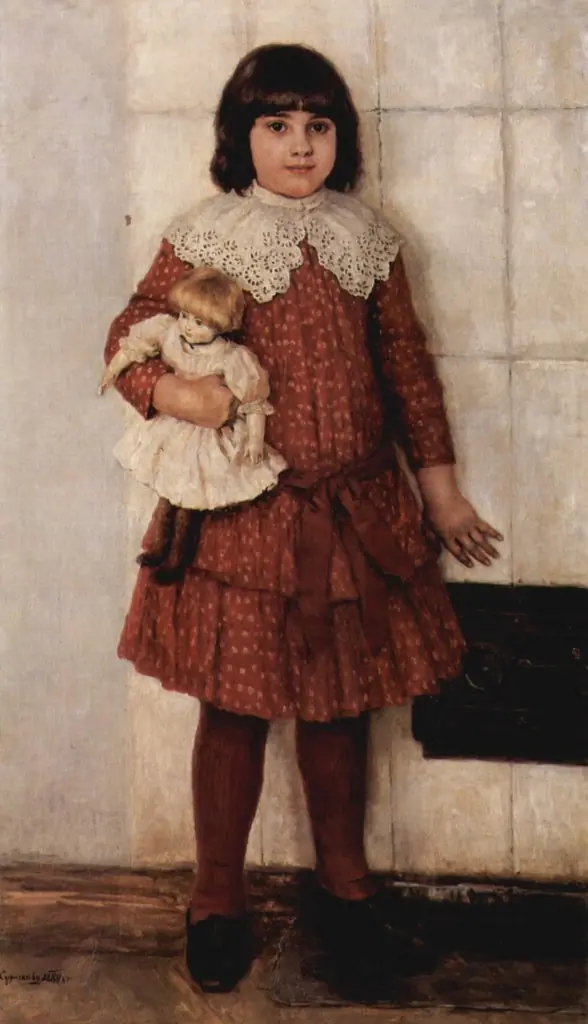 Portrait of Olga Wassiljewna Surikowa, the artist's daughter (Girl with Doll)
 I'm Perfectly Happy
 Girl with a doll – Convalescent
 Portrait of Varvara Bibikova
 Portrait of William Wickham Mills Smith
 Helena Maria Brusewitz (1849-1932)
 Copil în uniformă militară
 Fetiță
 The Boy Violinist
 Alone at the Atelier
 George Speaight Punch & Judy Collection
 Arrangement in Black, No. 3: Sir Henry Irving as Philip II of Spain