Artwork
The Boy Violinist
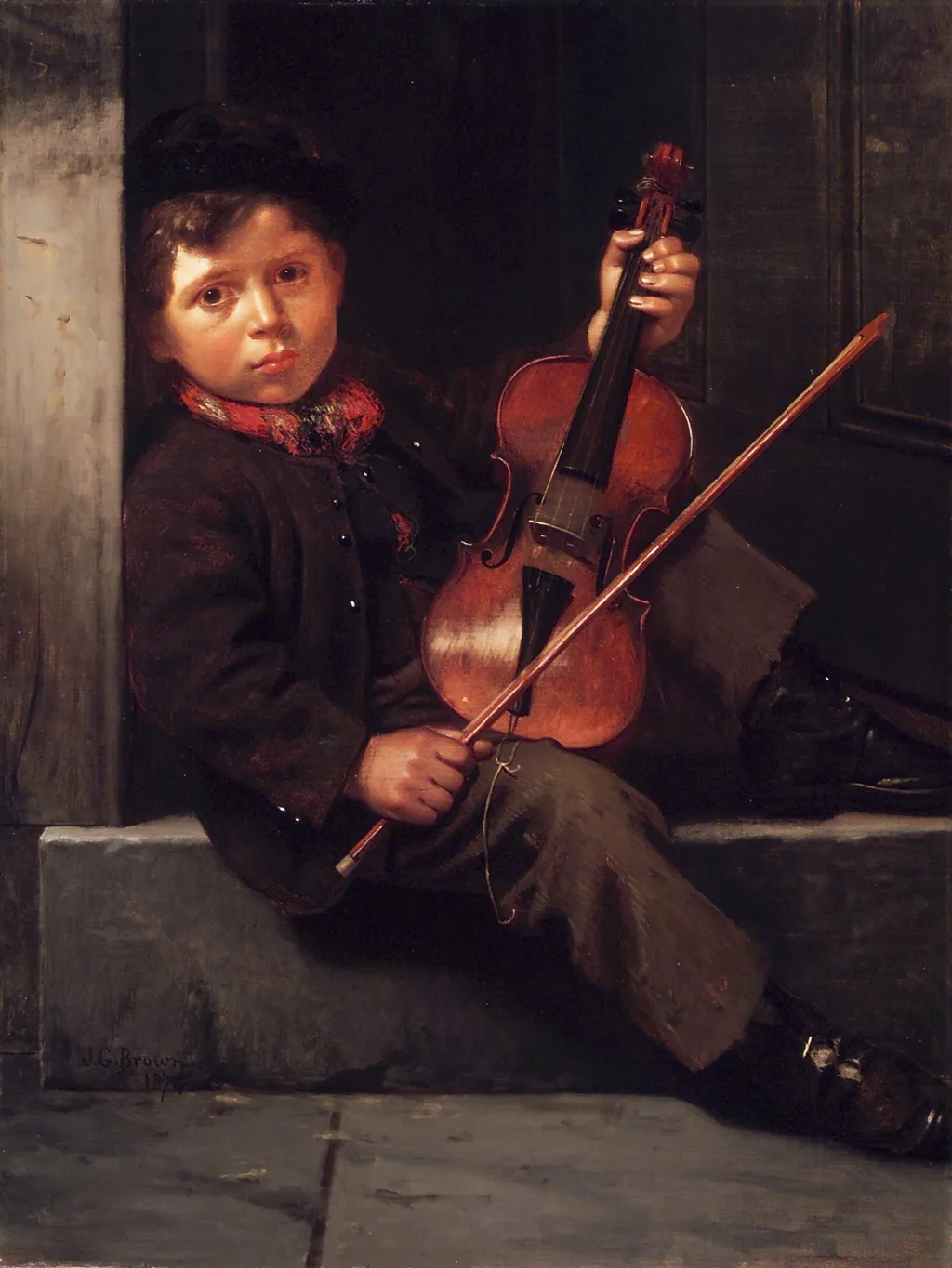
The Boy Violinist is an oil painting by the American Impressionist artist John George Brown. It dates from 1874 and is held in the collection of the Brooklyn Museum.
About this work
Overview
Painted in 1874 by British-born American artist John George Brown, *The Boy Violinist* is an oil-on-canvas work that captures a moment of quiet concentration.
Painted in 1874 by British-born American artist John George Brown, *The Boy Violinist* is an oil-on-canvas work that captures a moment of quiet concentration. The painting is part of the Brooklyn Museum’s collection and reflects Brown’s interest in everyday life, particularly scenes of urban youth. Though often associated with American Impressionism, its approach leans more toward detailed realism with subtle tonal effects.
Subject & Meaning
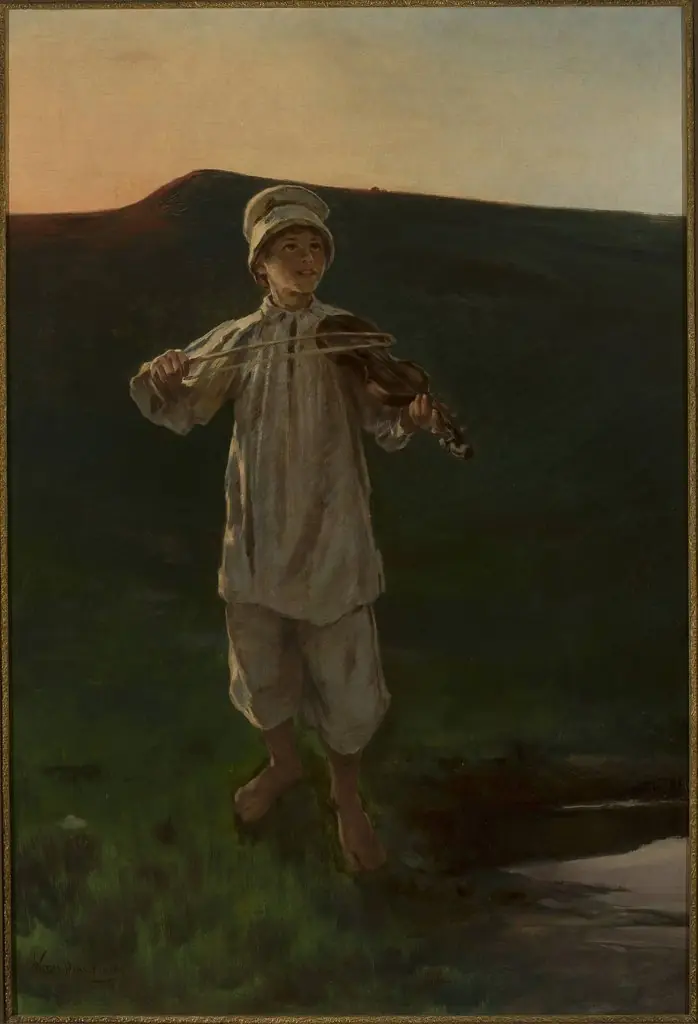
The painting portrays a young boy seated on a stone ledge, violin resting under his chin, bow held with focused grip. His attire—a dark coat and vivid red scarf—suggests modest means, while the solitary setting implies a moment of private practice. The boy’s expression is neither joyful nor sorrowful, but absorbed, evoking the quiet dignity of labor and discipline in childhood.
Technique & Style
Brown employs chiaroscuro to isolate the boy against a dim, indistinct background, directing attention to his face and hands. The contrast between the pale skin and the violin’s deep brown wood enhances visual focus. Brushwork is precise in the figure’s features, while the surroundings remain loosely rendered, creating depth without distraction. Light falls naturally, modeling form without theatricality.
History & Provenance
Created during Brown’s peak period of genre painting, the work entered the Brooklyn Museum’s collection in the early 20th century. It was likely acquired through a private donation or gallery purchase, consistent with the museum’s efforts to document American life in the late 1800s. No significant alterations or restorations are documented in its recorded history.
Context
In post-Civil War America, depictions of working children were common in art, often serving as social commentary or sentimental appeal. Brown’s portrayal avoids overt moralizing, instead emphasizing quiet resilience. The violin, a symbol of aspiration and cultural refinement, contrasts with the boy’s humble surroundings, reflecting broader tensions between poverty and artistic ambition in urban centers.
Legacy
While not widely reproduced, *The Boy Violinist* remains a representative example of Brown’s genre work and the era’s interest in candid youth portraiture. It contributes to the understanding of how American artists depicted labor and dignity outside elite circles. The painting continues to be studied for its restrained emotional tone and effective use of light to convey focus and presence.
Artist & collection

Artist
John George Brown (November 11, 1831 – February 8, 1913) was a British citizen and an American painter who specialized in genre scenes.