Artwork
Wells Cathedral
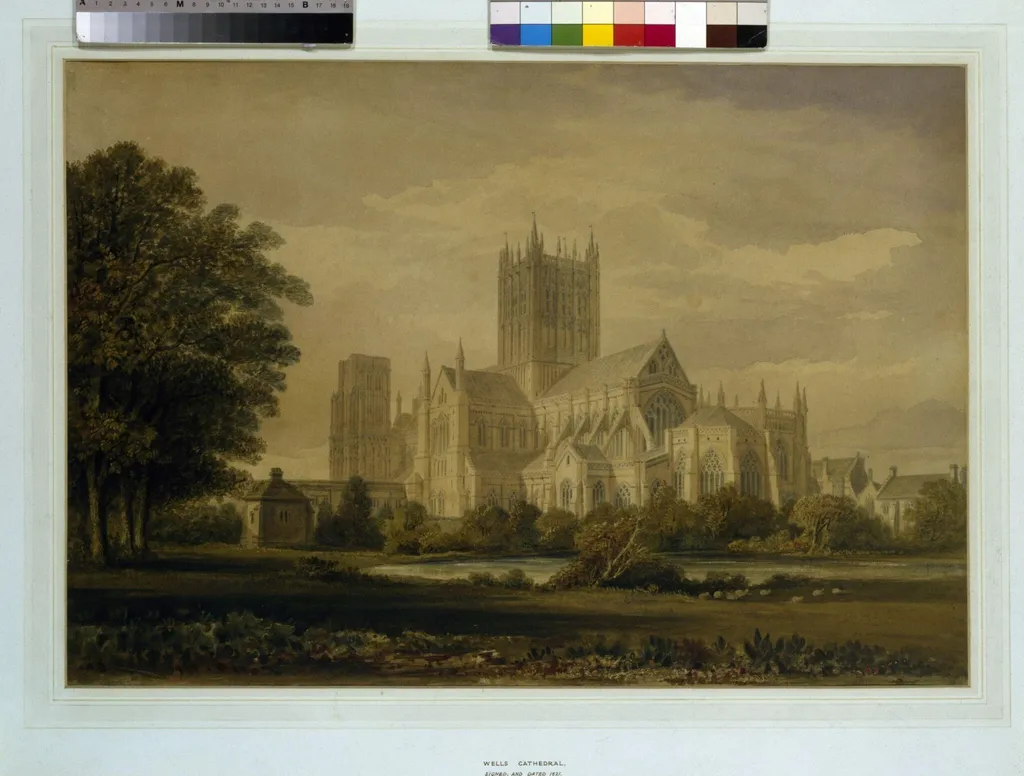
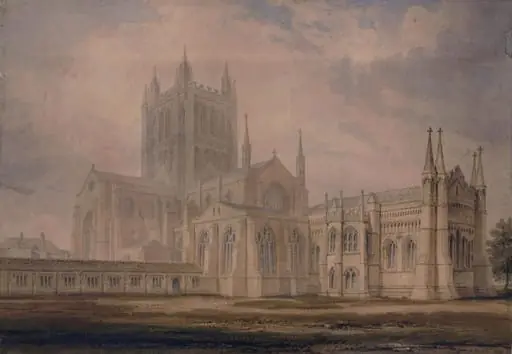
Wells Cathedral is a watercolor work on paper by the British Romanticist artist John Buckler. It dates from 1821 and is held in the collection of the Victoria and Albert Museum.
About this work
Overview
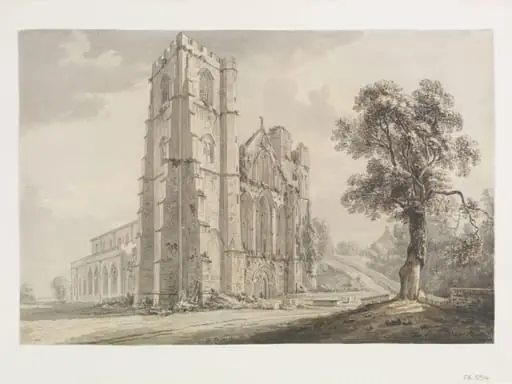
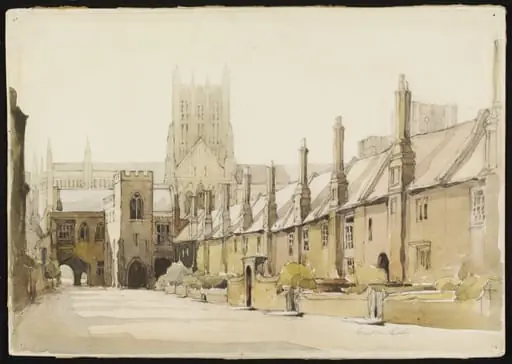
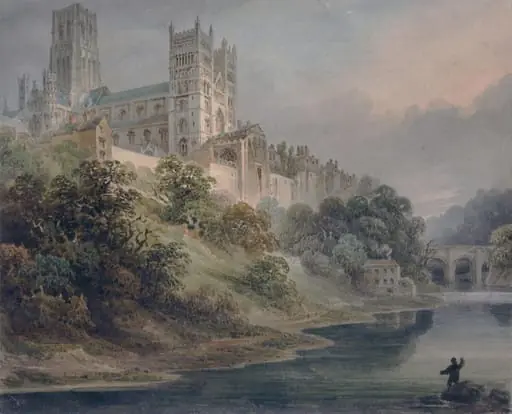
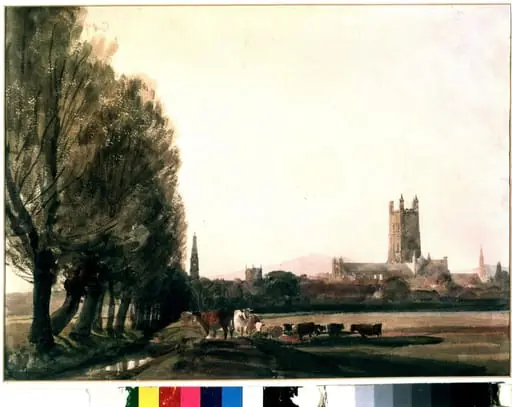
John Buckler’s 1821 watercolour depicts Wells Cathedral from a south‑east perspective. Rendered in muted browns and greys, the composition places the Gothic edifice amid a landscape of trees, shrubbery and a reflective water surface, beneath a cloud‑filled sky.
Subject & Meaning
The painting focuses on the cathedral’s towering spires and intricate silhouette, emphasizing its monumental presence within the surrounding countryside. By situating the structure in a tranquil natural setting, Buckler highlights the interplay between medieval architecture and the English landscape.
Technique & Style
Executed in watercolor, the work employs layered washes to convey atmospheric depth and the reflective quality of the water. Buckler’s handling of light and shadow creates a subdued tonal range, while fine brushwork delineates the cathedral’s Gothic details.
Context
Wells Cathedral, whose foundations were laid in 1180, embodies centuries of Gothic construction. Notably, the building houses an early 14th‑century clock, reputedly one of the oldest still in operation, featuring a pre‑medieval mechanism that illustrates a Copernican cosmology.
History & Provenance
The watercolour bears Buckler’s signature and the date 1821, along with inscribed dedications, indicating its creation as a documented study of the cathedral’s architecture during the early nineteenth century.
Artist & collection

Artist
John Buckler, Snr was a British artist and occasional architect who is best remembered for his many drawings of churches and other historic buildings, recording much that has since been altered or destroyed.