Artwork
Hereford Cathedral
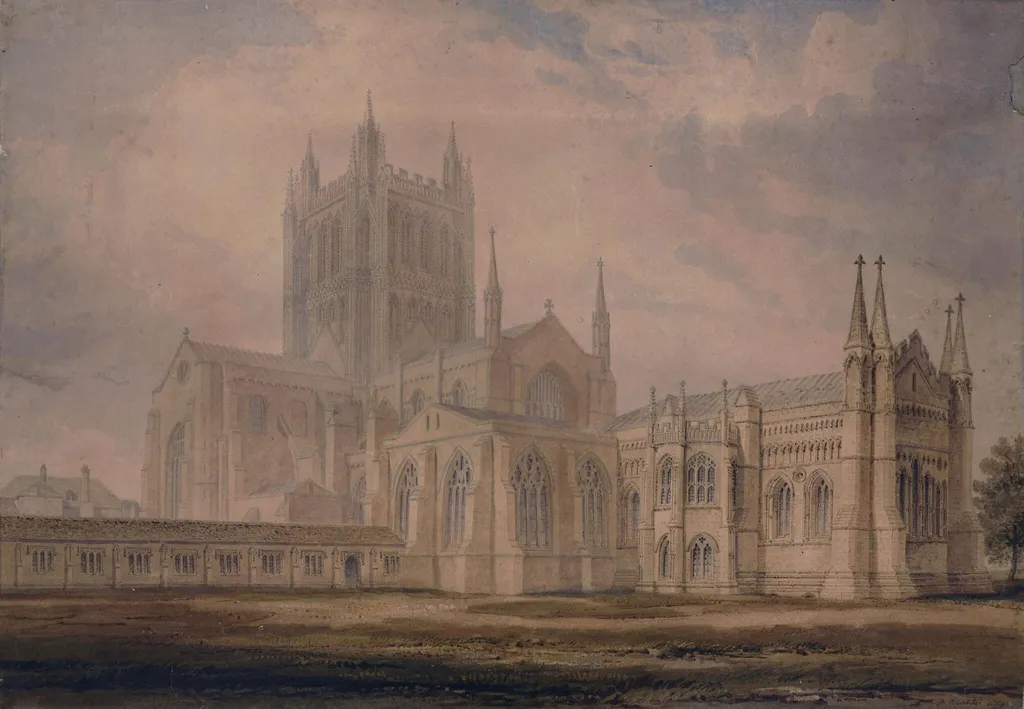
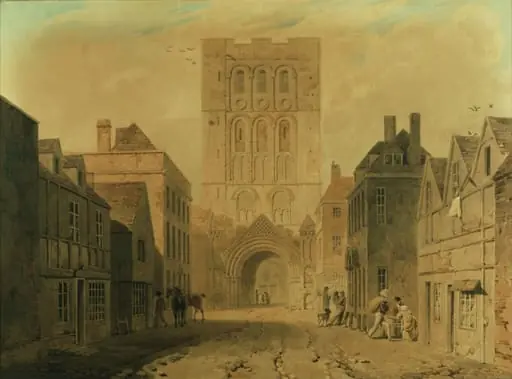
Hereford Cathedral is a watercolor work on paper by the British Romanticist artist John Chessell Buckler. It dates from 1809 and is held in the collection of the Victoria and Albert Museum.
About this work
Overview
Painted in 1809, this watercolor by John Chessell Buckler depicts Hereford Cathedral as seen from a low vantage point.
Painted in 1809, this watercolor by John Chessell Buckler depicts Hereford Cathedral as seen from a low vantage point. Executed with delicate precision, the work reflects the artist’s early engagement with architectural subjects. It resides in the Victoria and Albert Museum’s collection, having been produced from a sketch Buckler made as a teenager, underscoring a lifelong interest in Gothic structures.
Subject & Meaning
The composition centers on the cathedral’s slender spire, rising above a dense cluster of medieval stone dwellings. The scene conveys a quiet reverence for the building’s endurance amid everyday life. Buckler does not idealize the setting; instead, he presents it as a lived-in landscape, where sacred architecture coexists with humble domestic forms, suggesting continuity rather than grandeur.
Technique & Style
Buckler employed thin, layered washes to model light and shadow, allowing the paper’s white surface to suggest highlights in the sky and stone. The cathedral’s stonework is rendered with sharp, controlled lines, while surrounding trees and rooftops are softened with loose, almost blurred strokes. This contrast between precision and fluidity creates a sense of depth and atmosphere without overt drama.
History & Provenance
The painting originated from a sketch Buckler made at age fifteen, three years prior to completing this work. This reuse of early material reveals his methodical approach to architectural study. The piece entered the Victoria and Albert Museum’s holdings as part of a broader 19th-century effort to preserve topographical watercolors, valued for their documentary and artistic merit.
Context
In the early 1800s, topographical watercolors like this one were widely produced by amateur and professional artists alike, often as records of regional landmarks. Buckler’s work aligns with this tradition, yet his attention to atmospheric effect and subtle tonal variation distinguishes it from purely documentary efforts, reflecting a growing interest in mood over mere accuracy.
Legacy
Though not widely exhibited today, the painting exemplifies the transition from topographical record to lyrical observation in British watercolor. Buckler’s use of layered washes and controlled brushwork influenced later artists in the Norwich School and beyond, contributing to the medium’s evolution as a vehicle for quiet, contemplative landscape expression.
Artist & collection


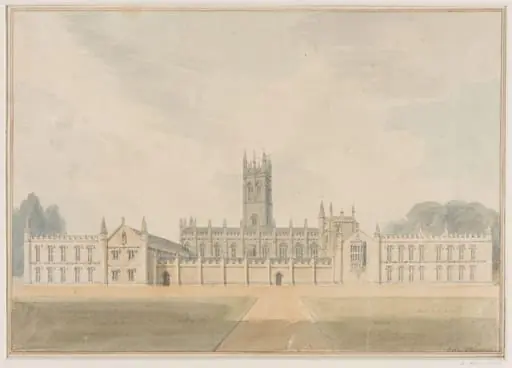
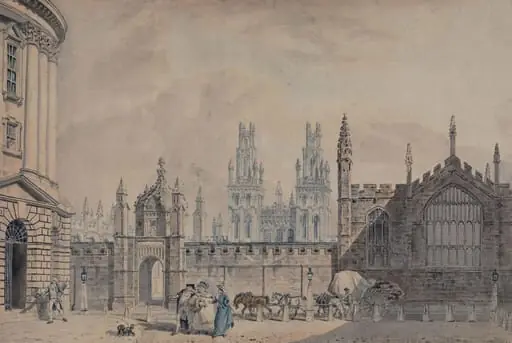 All Souls' College, Oxford
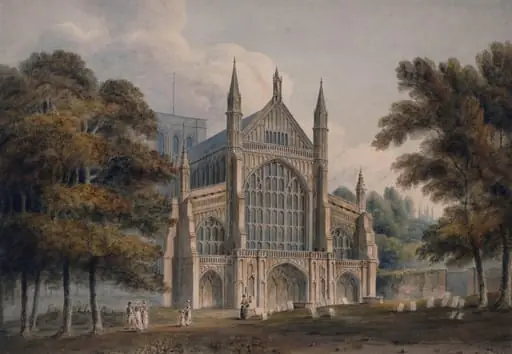
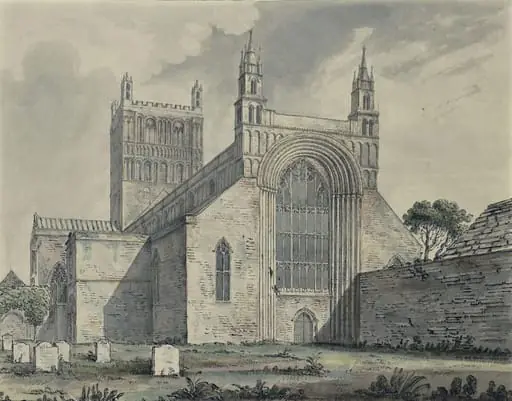 West front and tower of Tewkesbury Abbey Church, Gloucestershire
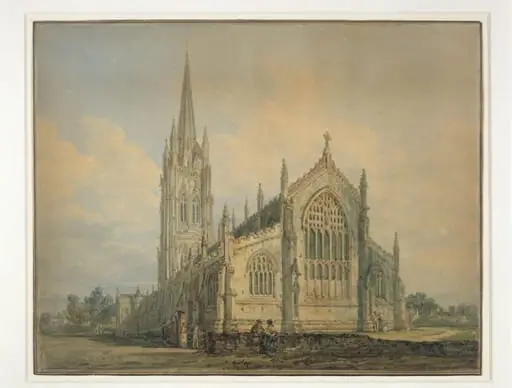 Louth Church, Lincolnshire
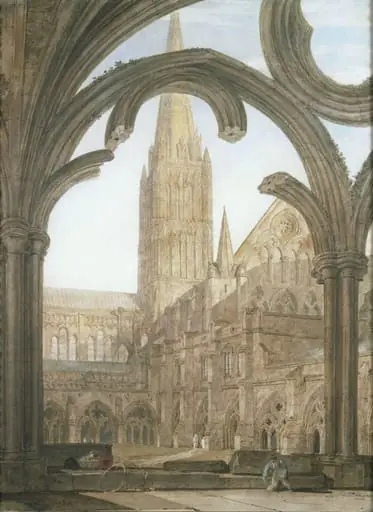 South view of Salisbury Cathedral from the Cloisters
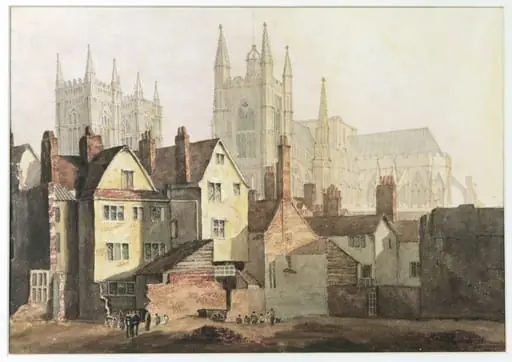 St. Margaret's, Westminster, and the abbey with old buildings in the foreground
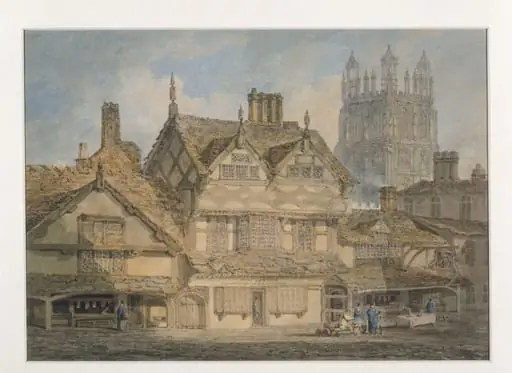 Wrexham, Denbighshire
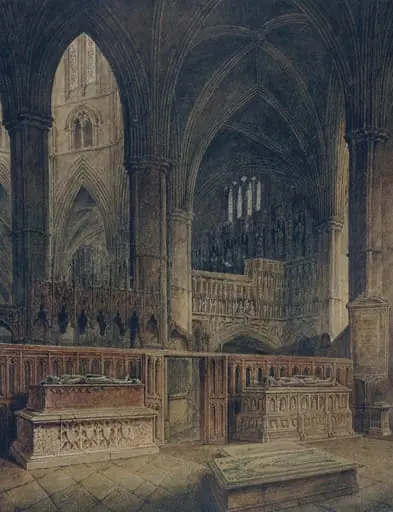 Interior of Edmund's Chapel, Westminster Abbey
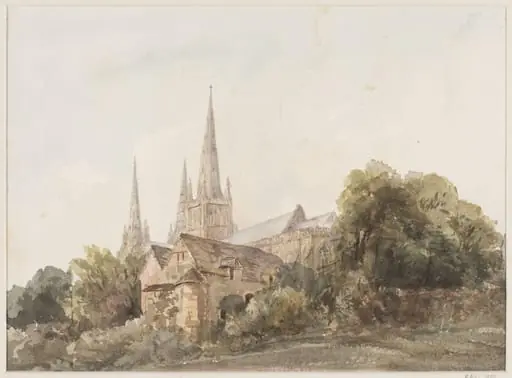 Dr Gooden's House and south view of Lichfield Cathedral
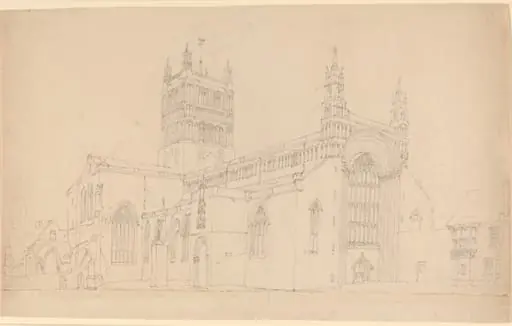 Tewkesbury Abbey
 Norman tower at Bury St. Edmunds