Artwork
Llandaff Cathedral
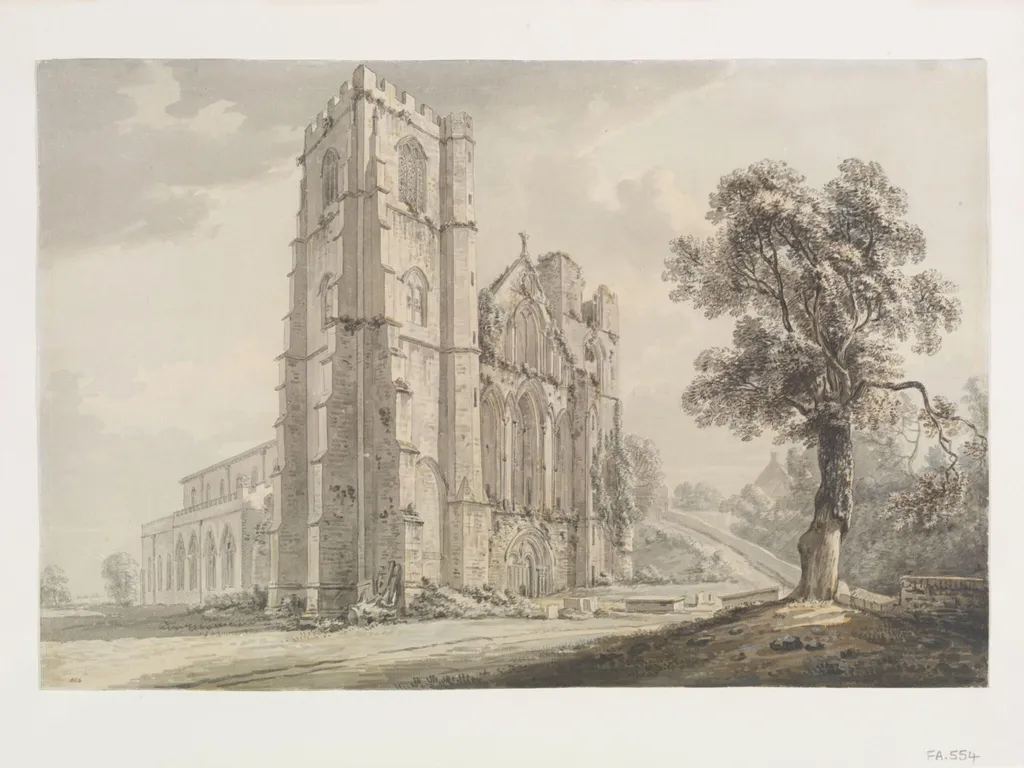
Llandaff Cathedral is a watercolor work on paper by the Rococo painting artist Paul RA Sandby. It dates from 1775 and is held in the collection of the Victoria and Albert Museum.
About this work
Overview
Paul Sandby created a watercolour of Llandaff Cathedral in Cardiff, Wales, capturing the structure in a state of partial decay. The work is rendered in delicate washes, emphasizing the weathered stone and the quiet solitude of the site. Sandby’s choice of medium allows for subtle gradations of tone, enhancing the sense of age and erosion in the architecture.
Subject & Meaning
The cathedral appears as a ruin, its walls fractured and tower intact but worn. The presence of a large, spreading tree on the right suggests nature’s reclamation of human structures. The composition conveys a contemplative mood, reflecting on time’s passage and the impermanence of religious and civic monuments in the landscape.
Technique & Style
Sandby employed light washes and controlled tonal contrasts to model the stone surfaces, using chiaroscuro to define texture and depth. Areas of the building catch soft light, while recesses remain shadowed, giving the ruins a three-dimensional presence. The sky is rendered with minimal pigment, allowing the paper’s white to suggest atmospheric haze.
History & Provenance
The watercolour dates from the late 18th century, a period when topographical views of historic sites gained interest among British artists and antiquarians. Sandby, known for his detailed landscape studies, likely made this work during a tour of Wales. Its survival suggests it was preserved within private or institutional collections focused on architectural heritage.
Context
In the decades after the Reformation, many Welsh churches fell into disrepair. Sandby’s depiction aligns with a broader 18th-century fascination with ruins as subjects of aesthetic and historical reflection. His approach avoids romantic exaggeration, instead offering a measured record of a site in transition between use and abandonment.
Legacy
Sandby’s watercolour contributes to a visual archive of British ecclesiastical architecture during its period of decline. It stands as an early example of topographical art that values accuracy over idealization, influencing later artists and documentarians interested in preserving the appearance of historic structures before further decay.
Artist & collection
Artist
Paul Sandby painted Britain’s rolling hills and old buildings in soft watercolours during the late 1700s.

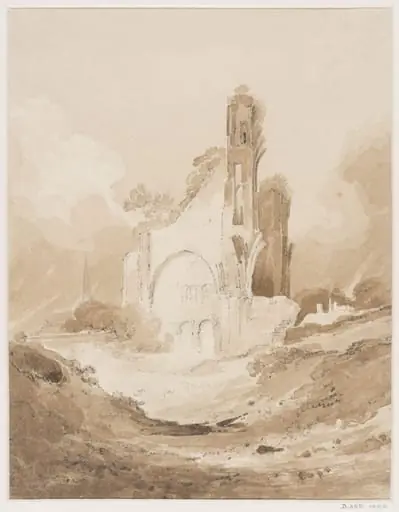
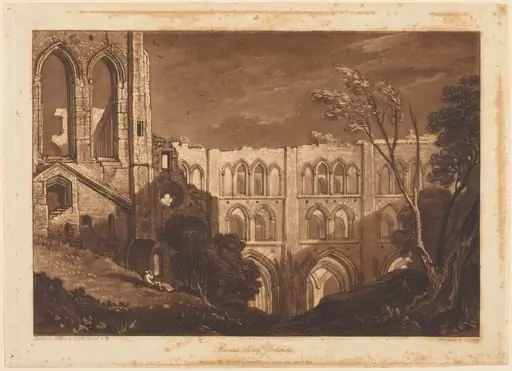 Rivaux Abbey
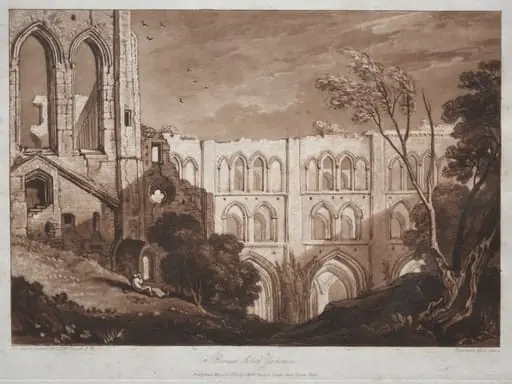 Liber Studiorum: Rivaux Abbey, Yorkshire
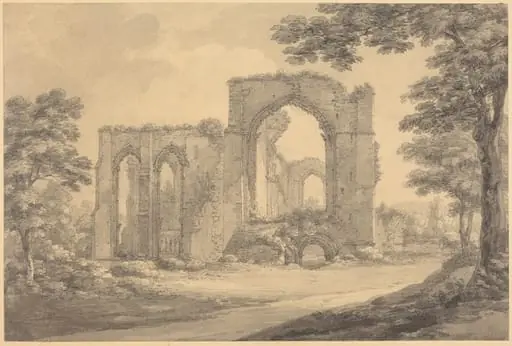
 Wenlock Priory, Salop
 Furness Abbey
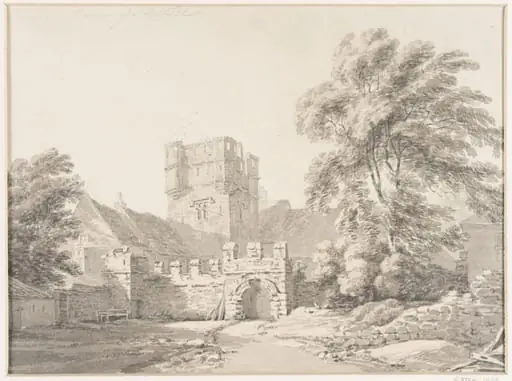 Mortham Tower, near Rokeby, Yorkshire.
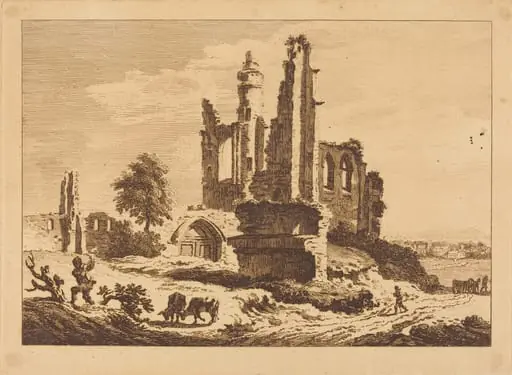 Ruined Abbey with Cattle and a Man Chopping Wood
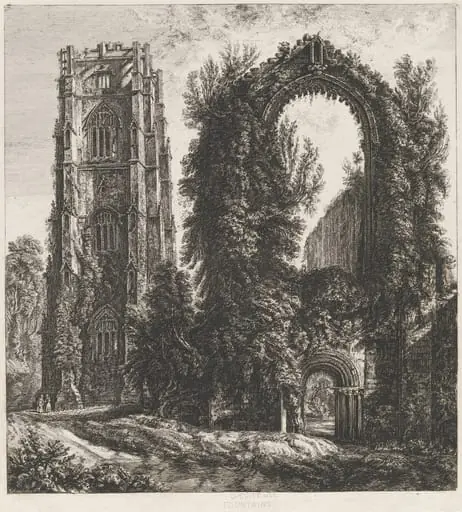 Fountains
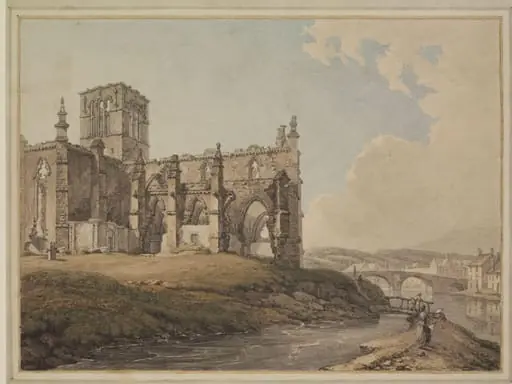 Untitled
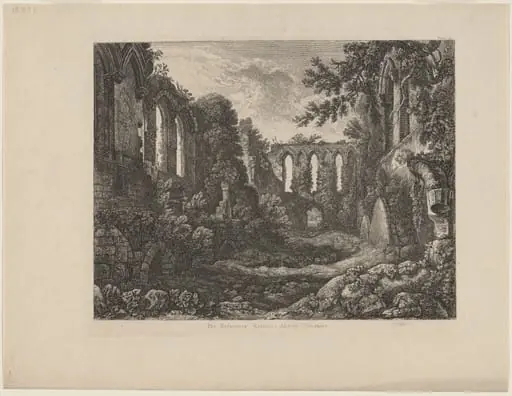 The Refectory, Rievaulx Abbey, Yorkshire
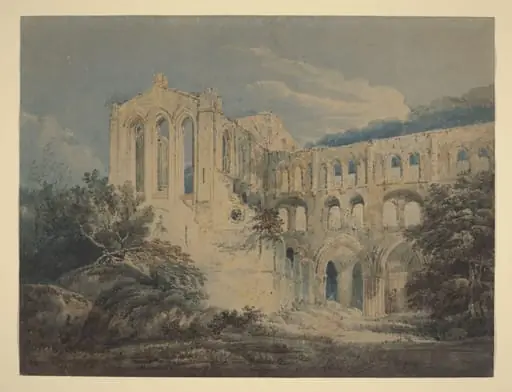 Rievaulx Abbey, Yorkshire
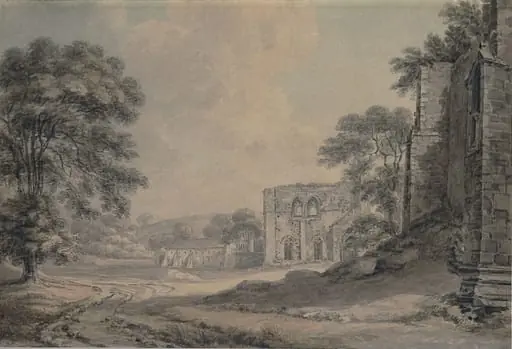 Landscape with ecclesiastical ruins
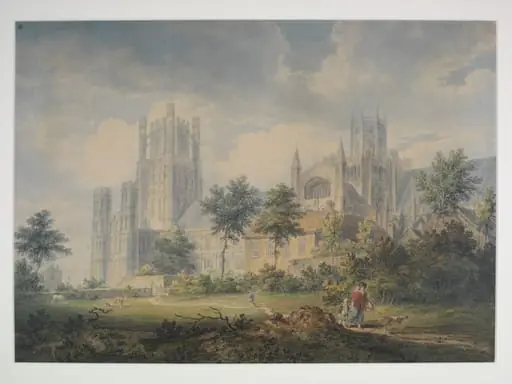 Ely Cathedral