Artwork
The Ferry at Twickenham
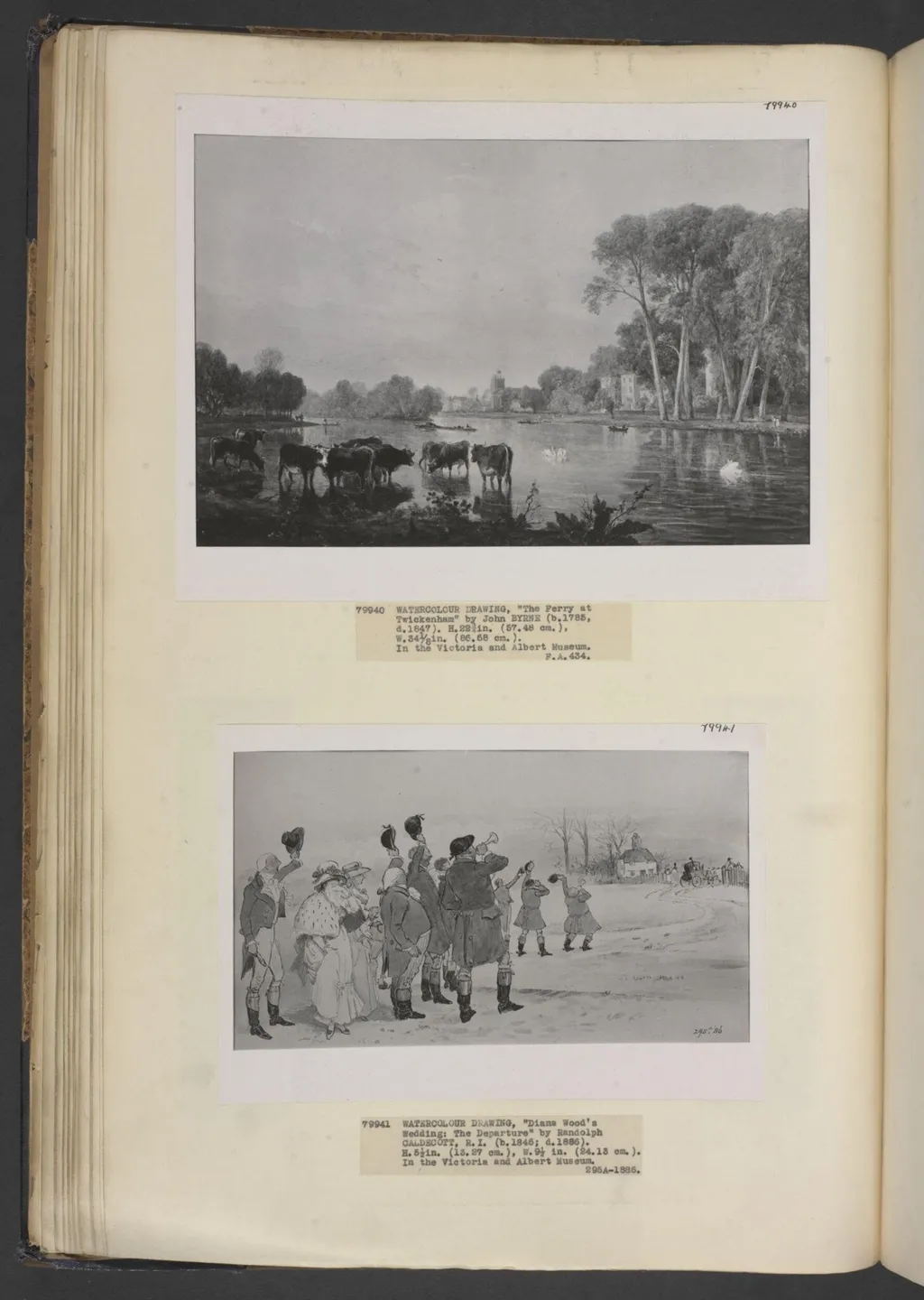
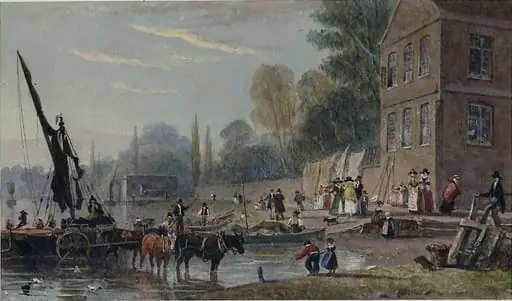
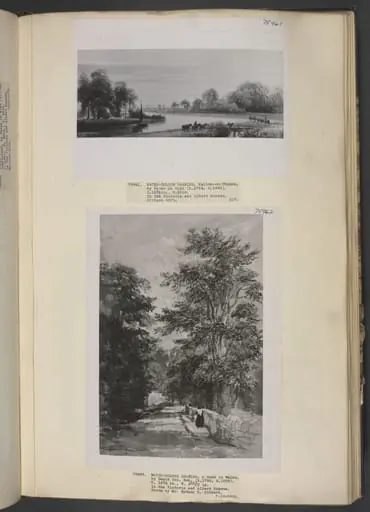
The Ferry at Twickenham is a watercolor work on paper by the British Romanticist artist John Byrne. It dates from 1830 and is held in the collection of the Victoria and Albert Museum.
About this work
Overview
Created around 1830, The Ferry at Twickenham is a watercolor by John Byrne that captures a tranquil riverside moment in suburban London.
Created around 1830, The Ferry at Twickenham is a watercolor by John Byrne that captures a tranquil riverside moment in suburban London. The work is part of the Victoria and Albert Museum’s collection, where it represents the quiet observational style favored by early 19th-century British watercolorists. Its modest scale and restrained palette reflect a preference for everyday scenes over theatrical narratives.
Subject & Meaning
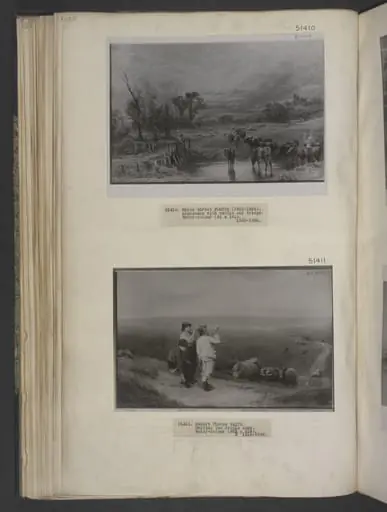
The painting depicts a serene stretch of the Thames near Twickenham, with grazing cattle, idle boats, and a distant building partially obscured by trees. There is no human activity visible, emphasizing stillness and solitude. The absence of drama suggests an appreciation for the unremarkable rhythms of rural life along the river, aligning with contemporary tastes for peaceful, contemplative landscapes.
Technique & Style
Byrne employed transparent watercolor washes to build subtle gradations of light and atmosphere. The soft blending of sky and water, along with delicate brushwork in the foliage, creates a hazy, diffused effect. Forms are suggested rather than sharply defined, reinforcing the mood of quietude. The technique reflects the influence of the English watercolor tradition, prioritizing tonal harmony over detail.
History & Provenance
The painting entered the Victoria and Albert Museum’s collection as part of its broader effort to document British decorative and fine arts of the 19th century. While little is documented about its early ownership, its preservation in a major public institution indicates its recognition as a representative example of amateur and professional watercolor practice during the period.
Context
In the 1830s, watercolor was increasingly valued as a medium for both artistic expression and topographical record. Artists like Byrne responded to a growing public interest in landscapes of the Thames Valley, often painted en plein air. The Ferry at Twickenham fits within this trend, capturing a familiar local scene with sensitivity rather than grandeur.
Legacy
Though not widely known today, the work contributes to the understanding of how British artists engaged with everyday landscapes during the early Victorian era. It exemplifies a shift toward intimate, unidealized views of nature, influencing later generations who sought authenticity over spectacle in landscape representation.
Artist & collection
Artist
John Byrne painted soft, detailed landscapes in watercolor around the early 1800s.