Artwork
A Landing Place by the Waterside
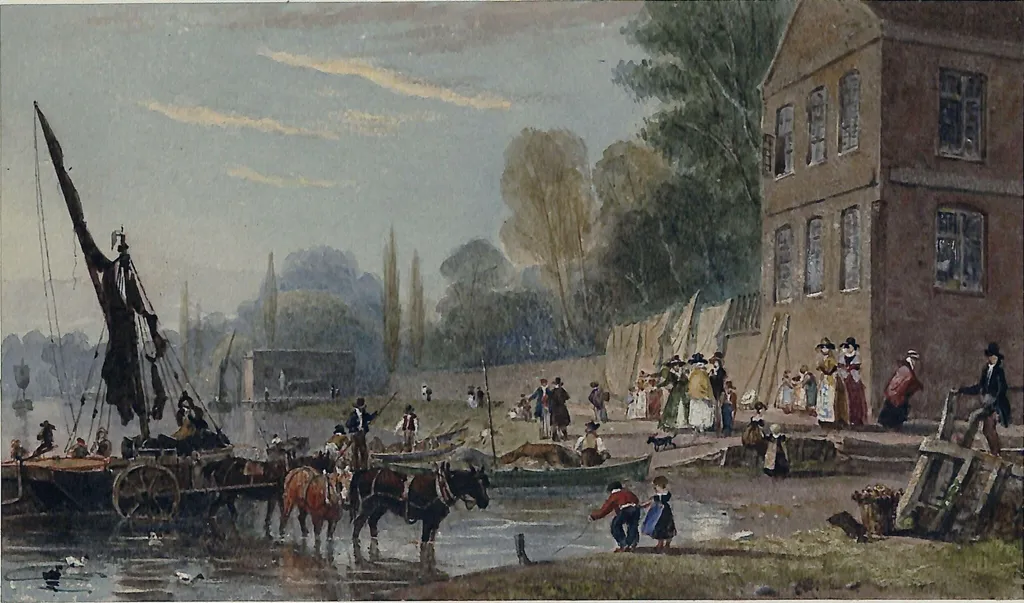
A Landing Place by the Waterside is a watercolor work on paper by the British Romanticist artist John Byrne. It dates from 1800 and is held in the collection of the Victoria and Albert Museum.
About this work
Overview
The composition centers on a large sailing vessel anchored near the bank, with smaller figures and carts engaged in loading or waiting.
Created in 1800 by John Byrne, this watercolour depicts a quiet riverside activity near a modest settlement. The composition centers on a large sailing vessel anchored near the bank, with smaller figures and carts engaged in loading or waiting. The scene unfolds with subtle movement, suggesting daily commerce rather than grand spectacle. Soft washes of pigment define the water, sky, and foliage, conveying a sense of early morning stillness.
Subject & Meaning
The painting captures a working waterfront, where transport and trade intersect. Boats, horses, and carts imply the movement of goods, while figures in period attire engage in routine tasks. The presence of a multi-windowed building suggests a local hub, perhaps an inn or warehouse. No single narrative dominates; instead, the work records the rhythm of ordinary life along a river, valuing quiet utility over drama.
Technique & Style
Byrne employed transparent watercolour washes to suggest atmosphere and light. The water reflects pale hues of sky and sail, while delicate brushwork defines faces and fabric folds without detail. Trees and buildings are rendered with loose, suggestive strokes, emphasizing tone over precision. The palette remains muted—ochres, greys, and soft blues—enhancing the calm, observational tone of the scene.
History & Provenance
The work is documented as part of John Byrne’s output from the turn of the 19th century, though little is known of his personal history. It entered the Victoria and Albert Museum’s collection in the late 19th century, likely through a donation or acquisition of British watercolours. Its survival reflects a growing institutional interest in everyday scenes from the period.
Context
In early 1800s Britain, rivers were vital arteries for commerce, linking towns and ports. Watercolours like this were often made for private collectors interested in topographical accuracy or rural life. Byrne’s work aligns with a broader trend of documenting local scenes, distinct from grand historical or romantic landscapes, offering a grounded view of economic activity in the pre-industrial age.
Legacy
Though not widely exhibited, the painting contributes to a body of work that preserves the visual texture of British riverside life before industrialization. It stands as an example of how amateur and professional artists alike recorded the mundane with care, offering later viewers a quiet testament to the rhythms of pre-modern labor and landscape.
Artist & collection
Artist
John Byrne painted soft, detailed landscapes in watercolor around the early 1800s.

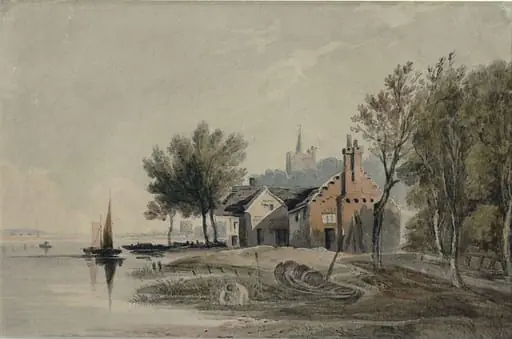 Chiswick
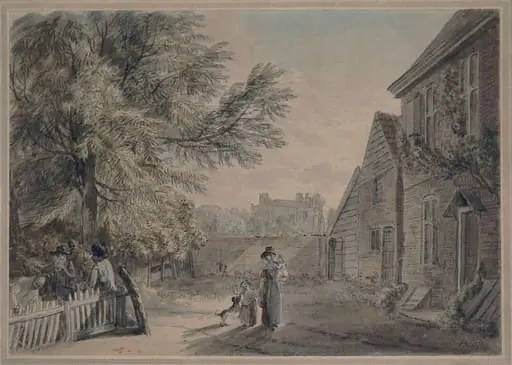 Old Public House, Bayswater
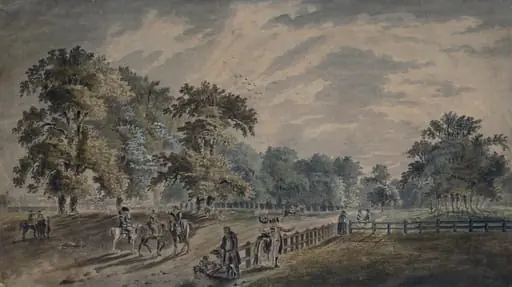 St. James's Park
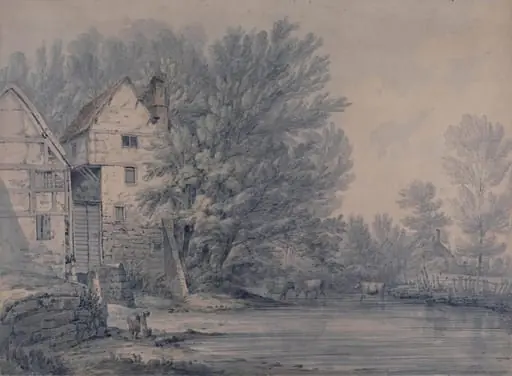 Millpond near Shrewsbury
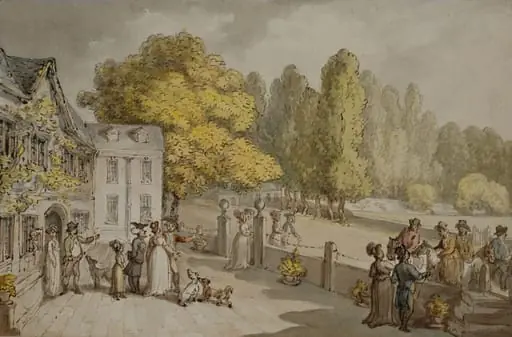 A House and Figures
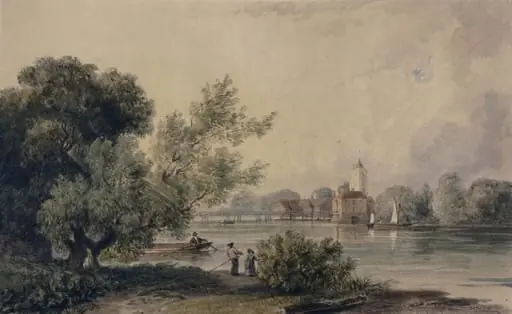 Fulham Church and Putney Old Bridge
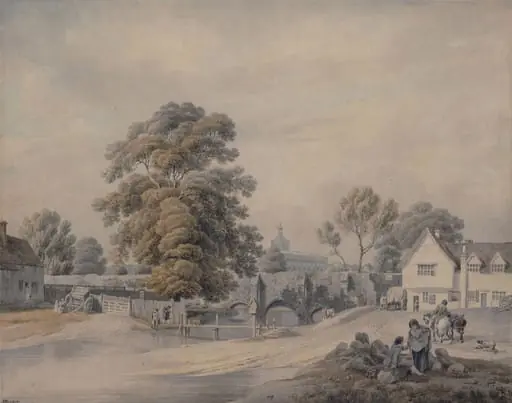 Abbot's Bridge, Bury St. Edmunds
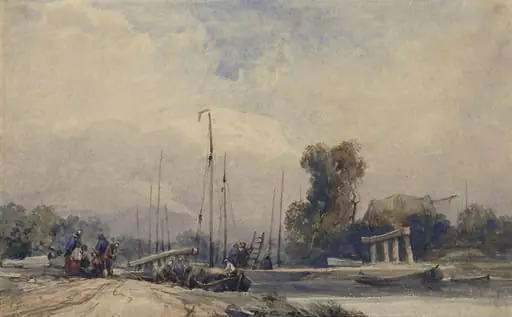 The Banks of a Canal
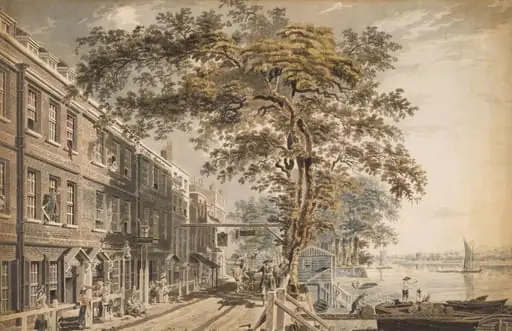 Cheyne Walk, Chelsea
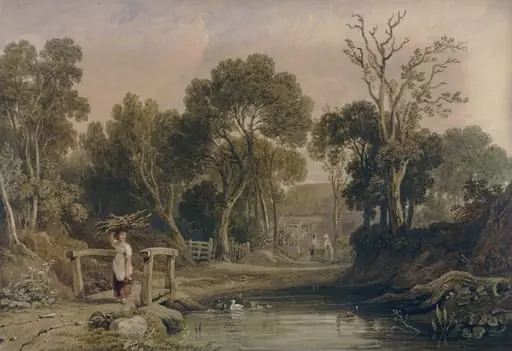 Landscape with a pond and country folk outside a cottage
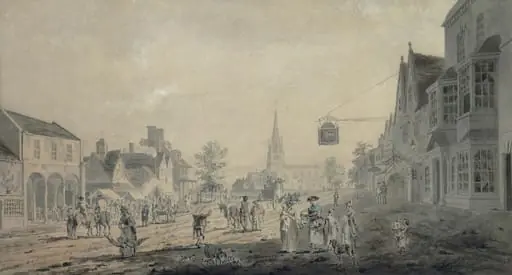 Witney, Oxfordshire
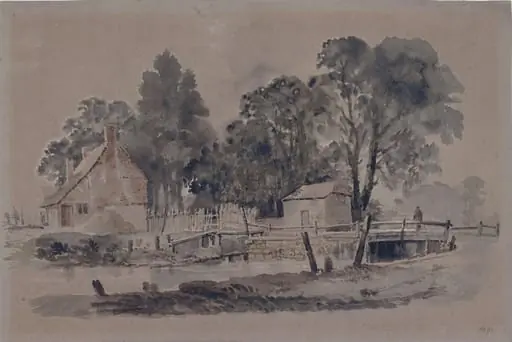 Stream with bridge and cottages