Artwork
A View in Suffolk
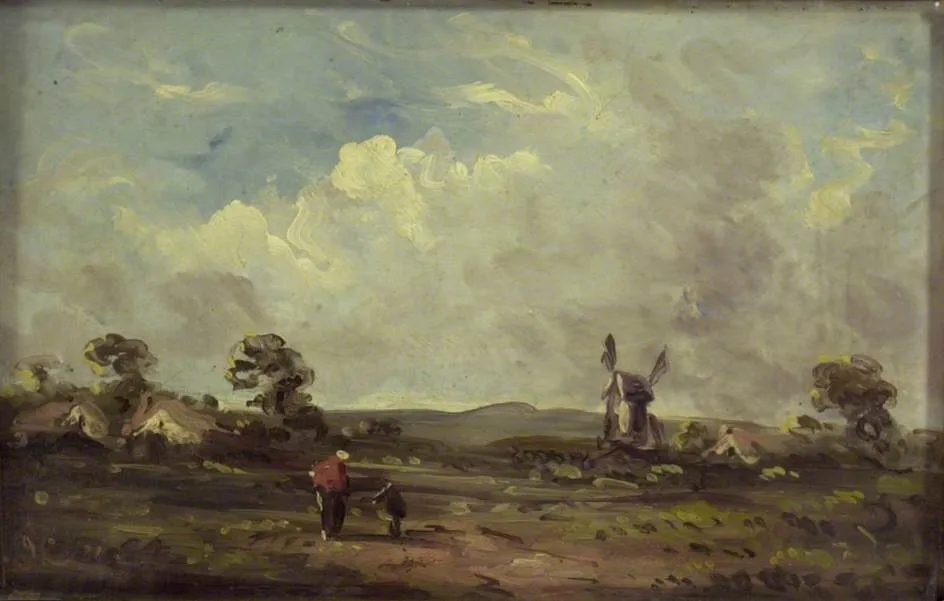
A View in Suffolk is an oil painting by John Constable. It dates from 1816 and is held in the collection of the Ashmolean Museum.
About this work
Overview
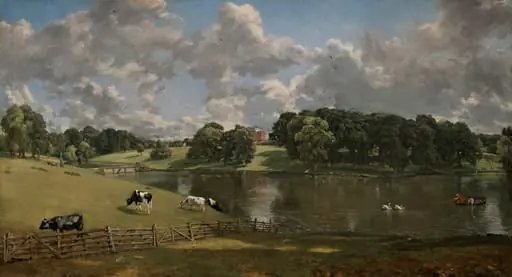
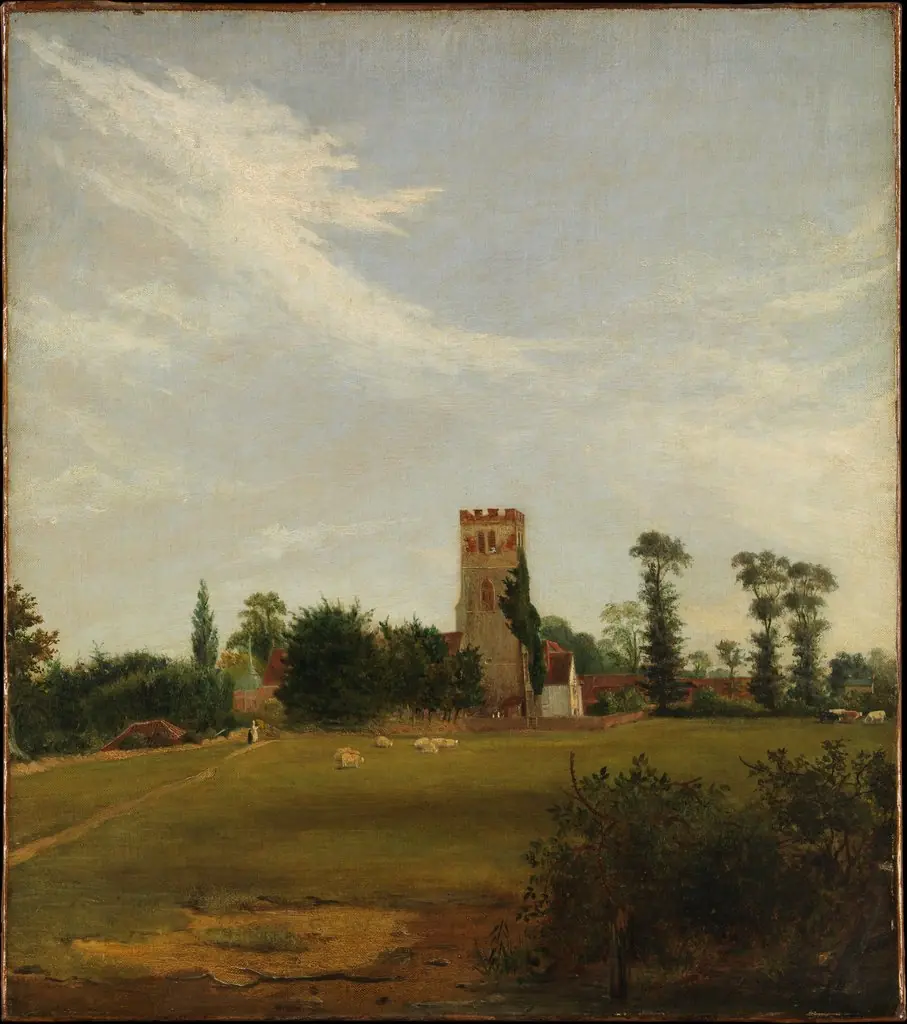
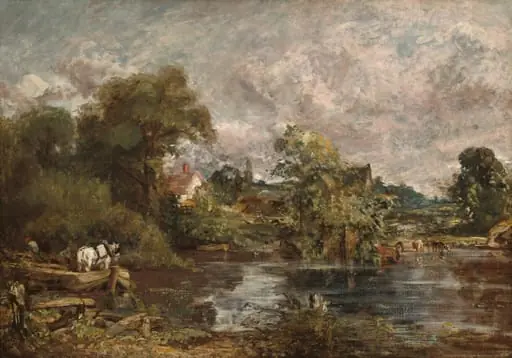
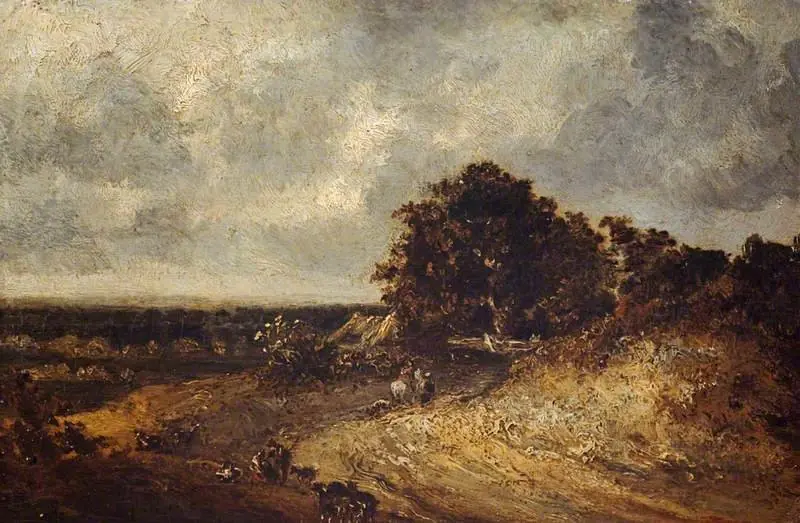
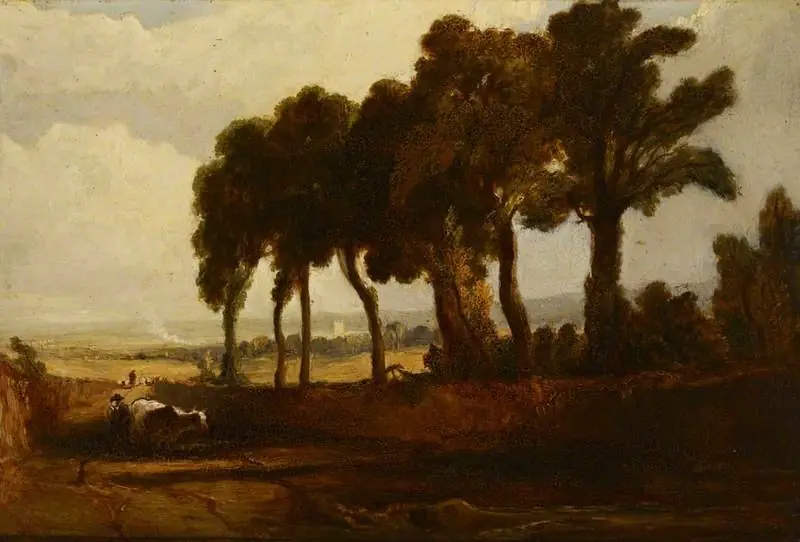
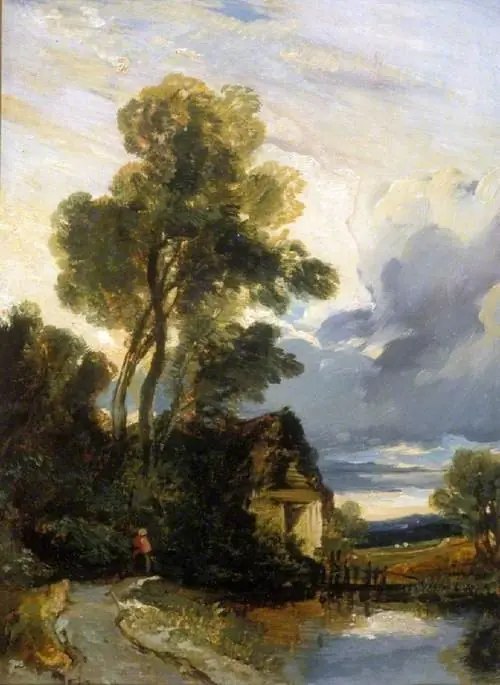
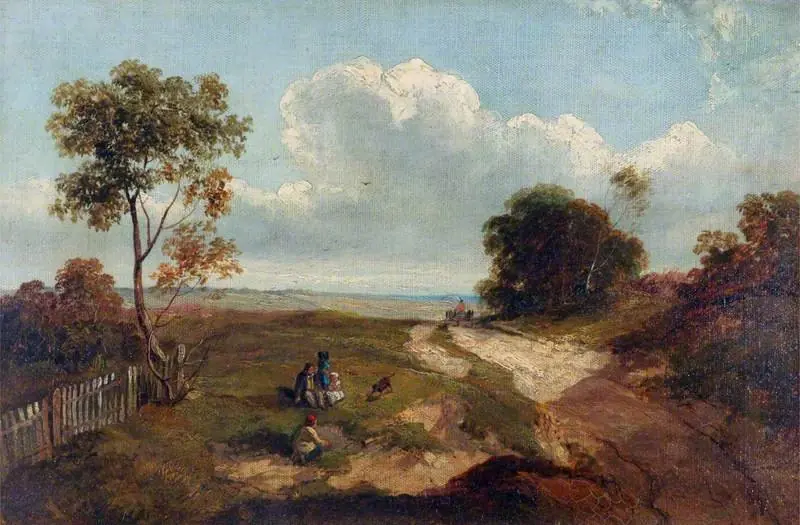
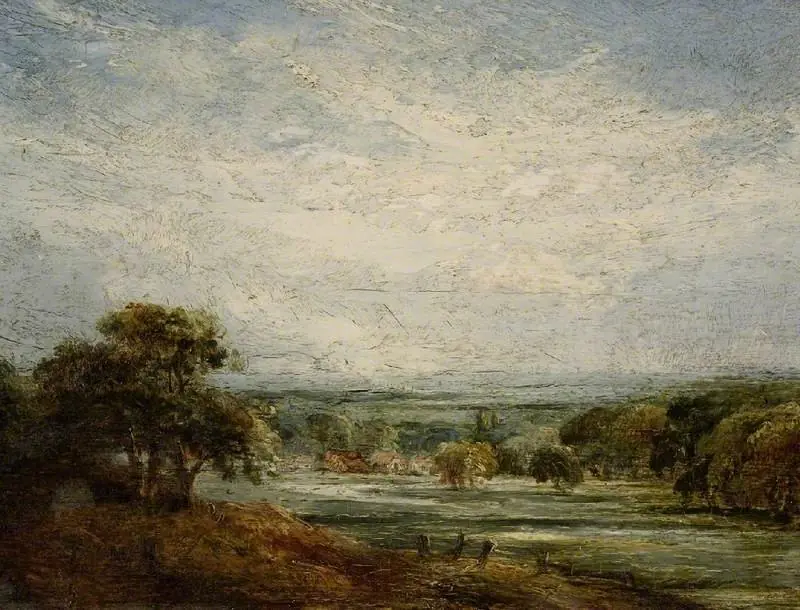
A View in Suffolk, painted around 1816 by John Constable, is an oil-on-canvas landscape depicting a quiet rural scene in eastern England. The work is part of the Ashmolean Museum’s collection and reflects Constable’s deep engagement with the English countryside. It captures a moment of stillness amid natural elements, emphasizing atmosphere over narrative.
Subject & Meaning
The windmill, a functional structure, anchors the composition and symbolizes the quiet rhythm of rural life, integrated into the land rather than dominating it.
The painting presents a solitary figure accompanied by a dog, standing near the foreground as they observe the distant windmill and rolling hills. This quiet presence suggests contemplation rather than action, reinforcing the painting’s meditative tone. The windmill, a functional structure, anchors the composition and symbolizes the quiet rhythm of rural life, integrated into the land rather than dominating it.
Technique & Style
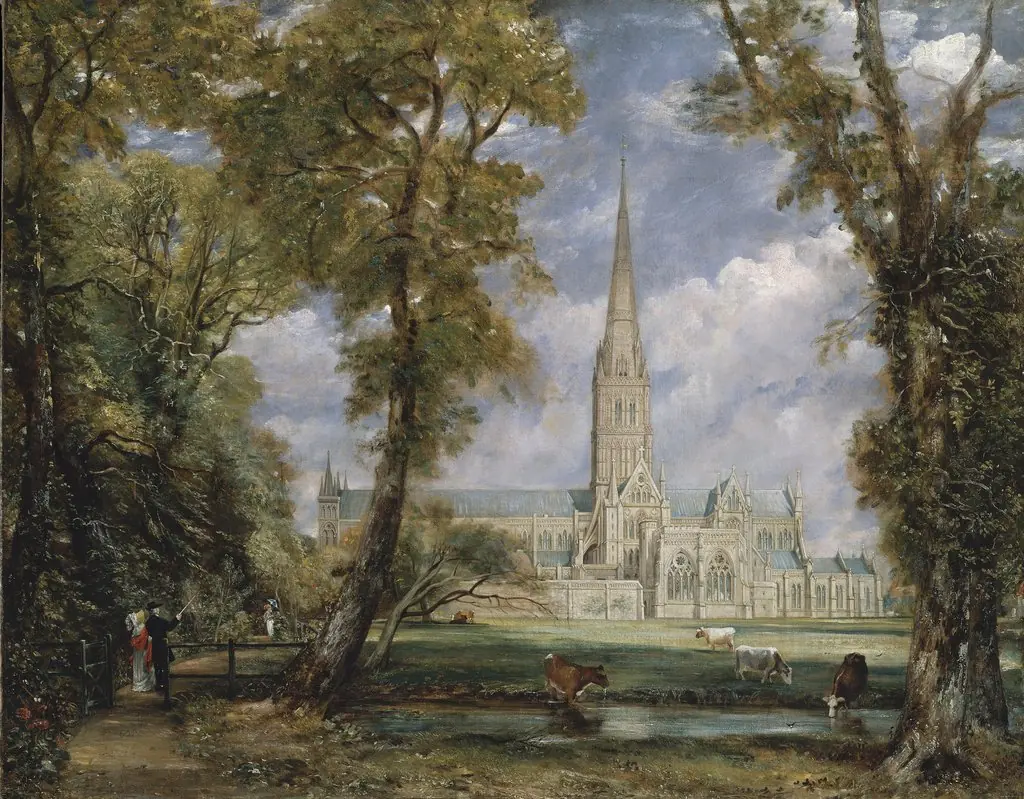
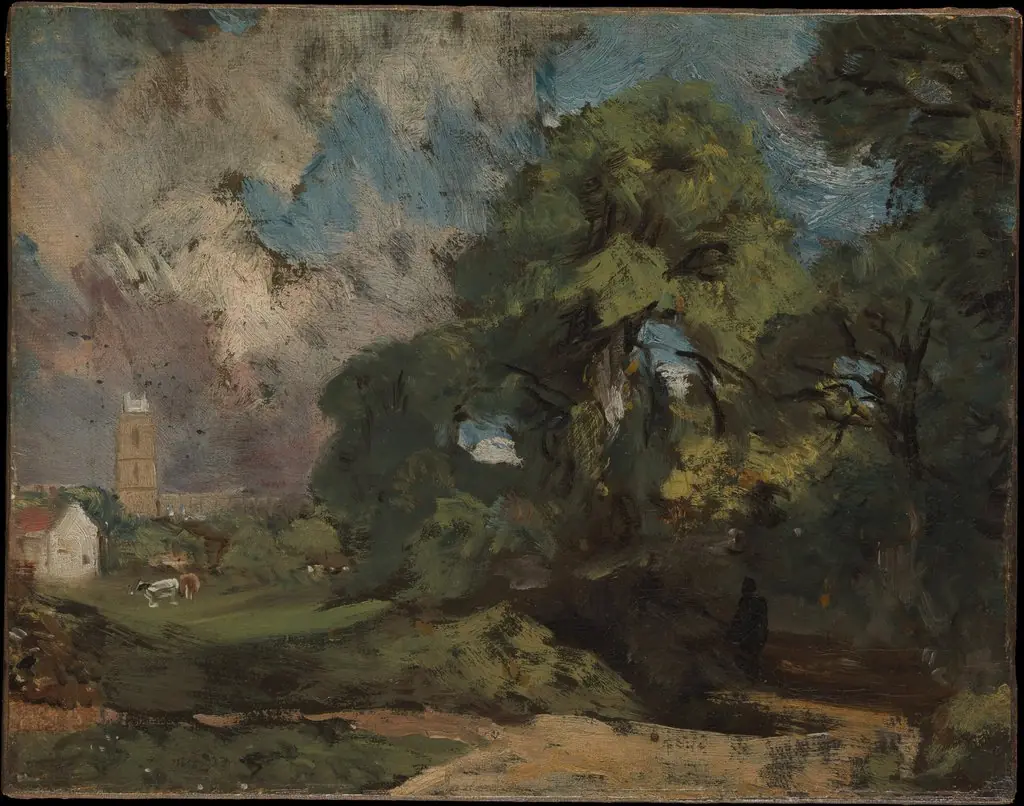
Constable employed loose, energetic brushwork to render sky and foliage, creating a sense of movement in the clouds and grass. His use of layered pigments and subtle tonal shifts enhances spatial depth, particularly in the transition from foreground to horizon. The palette is restrained, dominated by earth tones and soft blues, with light applied to suggest changing weather and natural illumination.
History & Provenance
Created during Constable’s early period of mature landscape development, the painting remained in private hands until entering the Ashmolean Museum’s collection. Its provenance traces back to the artist’s immediate circle, though specific ownership records before the 20th century are limited. The work has been consistently recognized as representative of his Suffolk studies, made during his formative years away from London.
Context
Painted in the years following Constable’s marriage and his move to Suffolk, the work aligns with his growing commitment to depicting specific, observed locales rather than idealized scenery. It reflects the broader Romantic interest in nature’s emotional resonance, while resisting theatricality. Constable’s focus on local topography distinguished him from contemporaries who favored grander, more dramatic landscapes.
Legacy
A View in Suffolk exemplifies Constable’s influence on later landscape traditions, particularly in the emphasis on direct observation and atmospheric effect. Though not widely exhibited during his lifetime, such works contributed to a shift in British art toward naturalism. Today, it stands as a quiet testament to his method: painting not for spectacle, but for the integrity of place.
Artist & collection
Artist
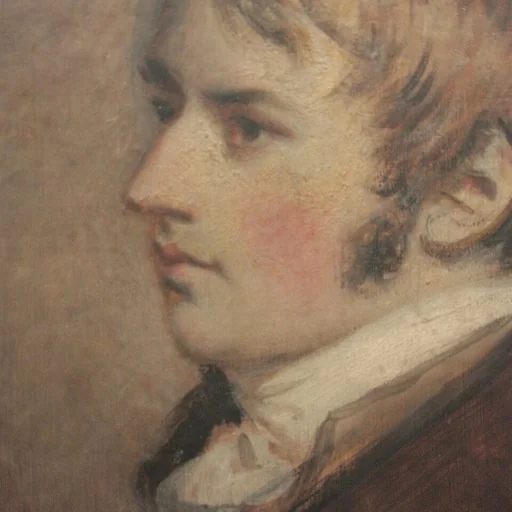
John Constable (; 11 June 1776 – 31 March 1837) was an English landscape painter in the Romantic tradition.