Artwork
The Programme Seller
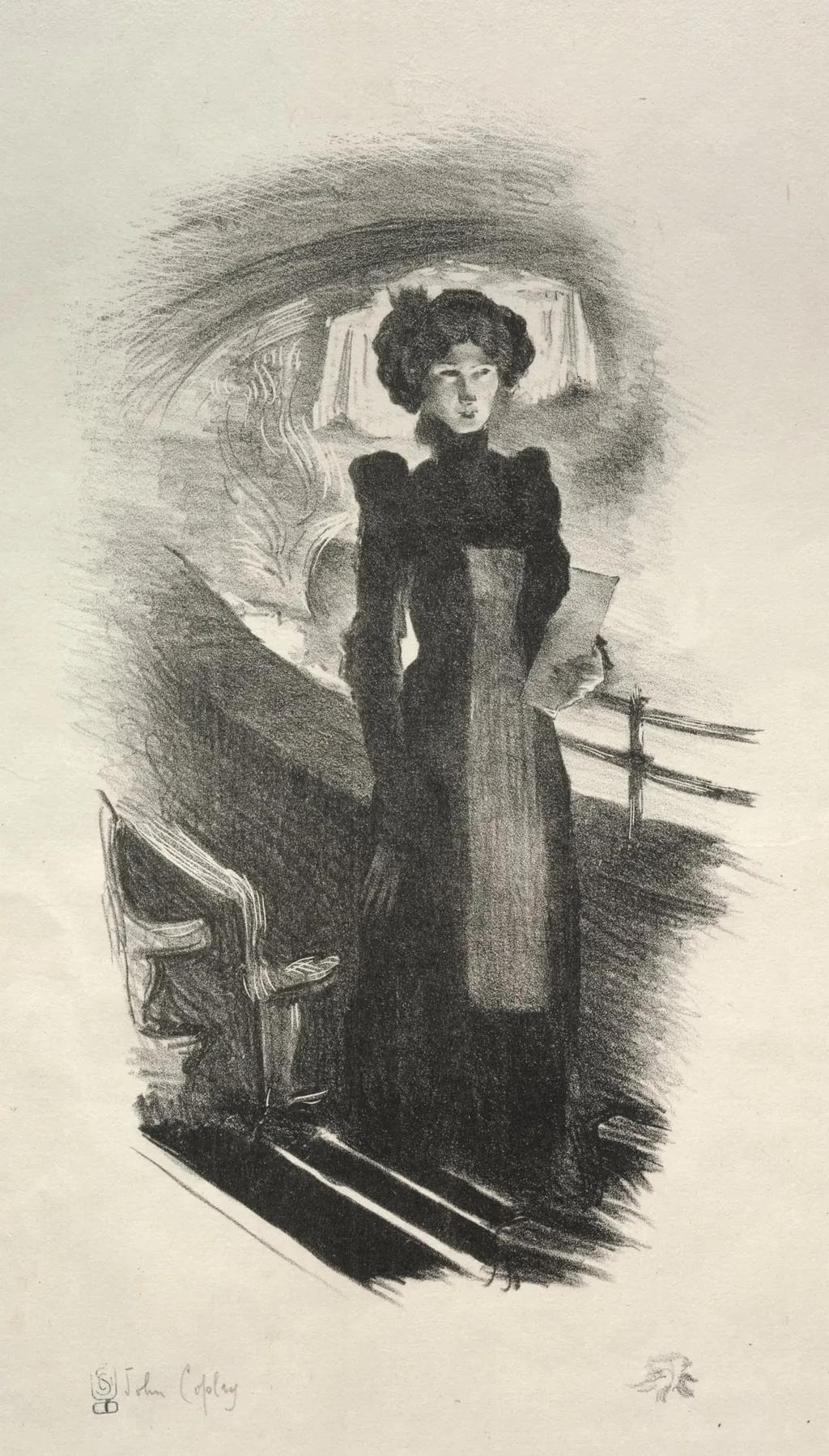
The Programme Seller is a print by John Copley. It dates from 1909 and is held in the collection of the Cleveland Museum of Art.
About this work
Overview
Created in 1909 by British artist John Copley, *The Programme Seller* is a drypoint etching capturing a quiet moment in a public space.
Created in 1909 by British artist John Copley, *The Programme Seller* is a drypoint etching capturing a quiet moment in a public space. Copley, known for his interest in everyday life and printmaking, produced this work during his active years with the Senefelder Club, an organization dedicated to promoting intaglio techniques. The piece reflects his focus on observational detail and the dignity of ordinary labor.
Subject & Meaning
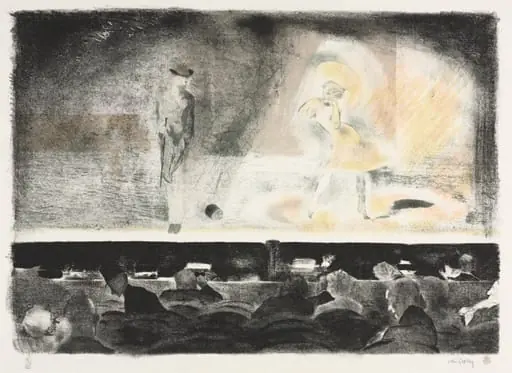
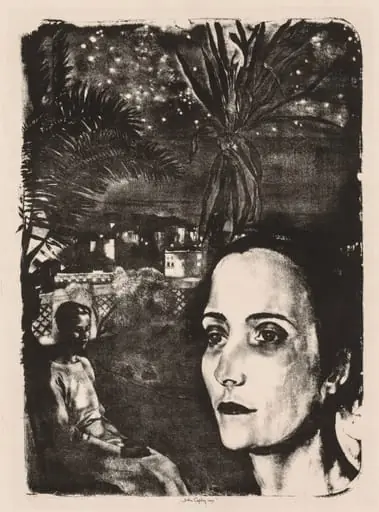
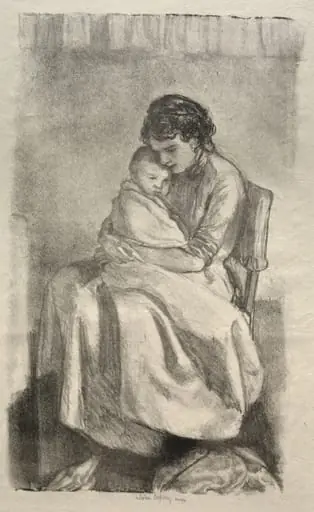
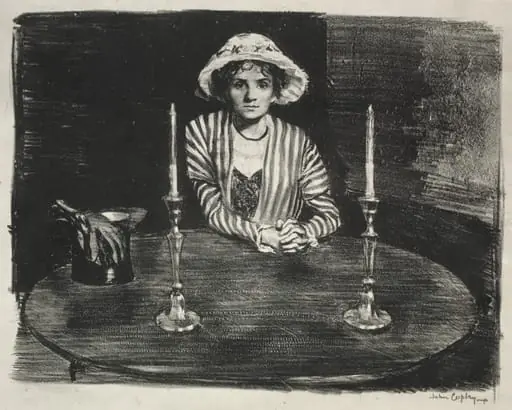
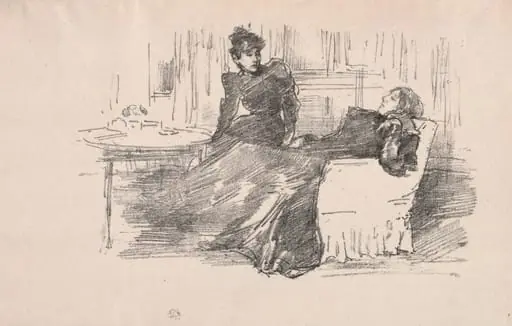
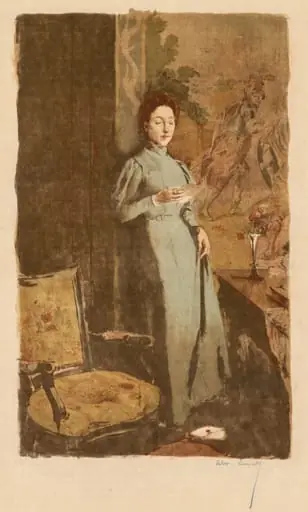
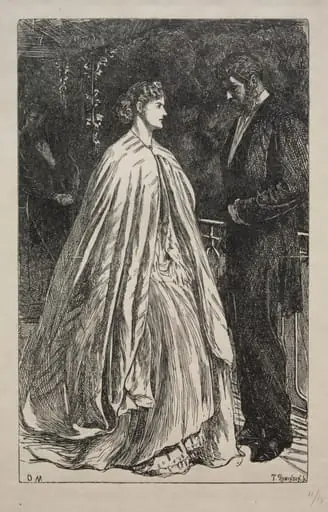
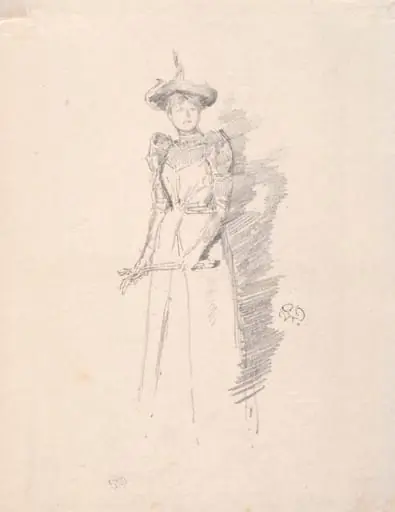
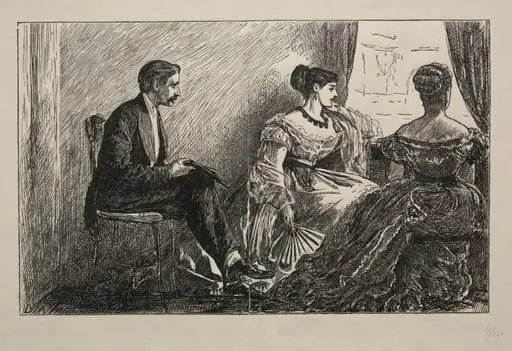
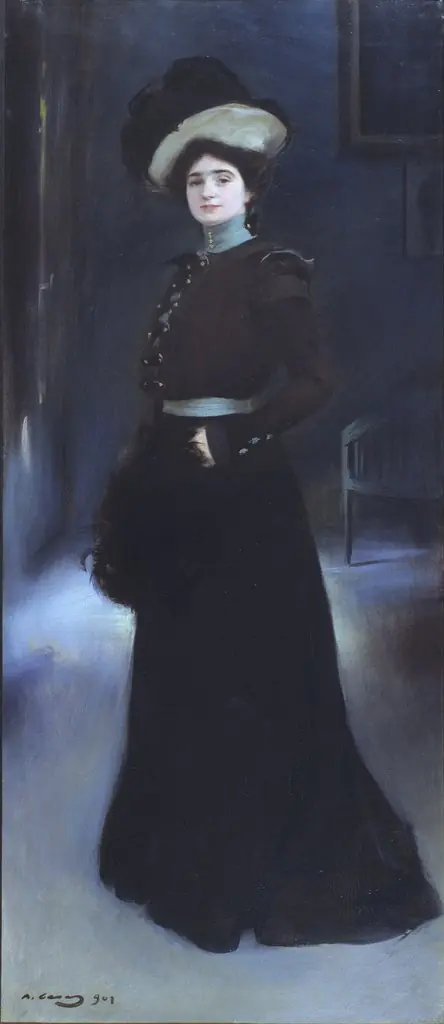
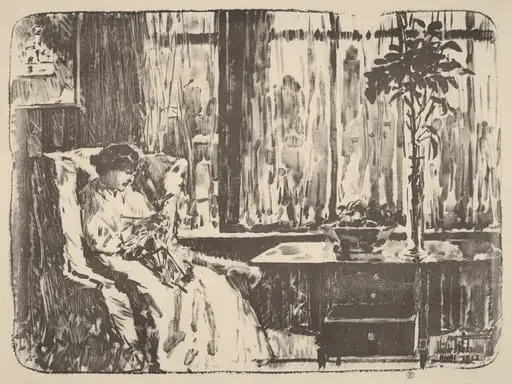
The figure is a woman, dressed in a dark, modest garment, standing still while holding a small booklet—likely a theater program. Her composed posture and direct gaze suggest quiet diligence rather than performative display. The setting, implied by a chair, table, and window, situates her in a transitional space between public event and private routine. The image honors the unseen workers who facilitated cultural gatherings without drawing attention to themselves.
Technique & Style
Executed in drypoint, the work employs fine, irregular lines that create texture and depth with minimal strokes. The sketchy quality conveys immediacy, as if the scene was observed and rendered swiftly. Soft light filters through a window, rendered with subtle tonal shifts rather than sharp outlines. The absence of elaborate detail focuses attention on the figure’s presence and the quiet rhythm of her task.
History & Provenance
Copley, a founding member of the Senefelder Club, produced this print during a period of renewed interest in etching among British artists. While specific ownership history is not widely documented, the work aligns with the club’s mission to elevate printmaking as a serious artistic medium. It was likely circulated among collectors and institutions sympathetic to the revival of traditional print techniques in the early 20th century.
Context
In early 1900s Britain, theater-going was a common social activity, and program sellers—often women—were a familiar presence in lobbies and foyers. Copley’s focus on this role reflects a broader artistic trend of depicting working-class life with empathy and restraint. Unlike theatrical scenes emphasizing drama, this image captures the stillness behind the spectacle, resonating with contemporary realist movements in both literature and visual art.
Legacy
Though not widely exhibited today, *The Programme Seller* exemplifies Copley’s contribution to the British print revival. His commitment to intimate, unembellished subjects influenced a generation of printmakers who valued observation over grandeur. The work remains a quiet testament to the dignity of labor and the aesthetic potential of everyday moments in early modern British art.
Artist & collection
Artist
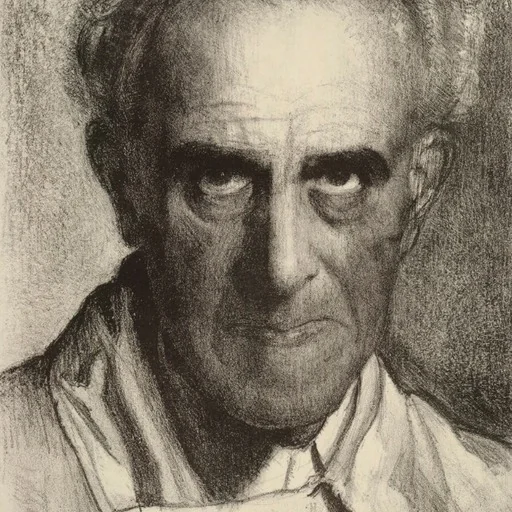
John Copley (25 June 1875 – 17 July 1950) was a British artist. He was a founder member of the Senefelder Club and served as its honorary secretary from 1910 to 1916. While there he met his future wife, Ethel Léontine…