Artwork
A Sandy Bank
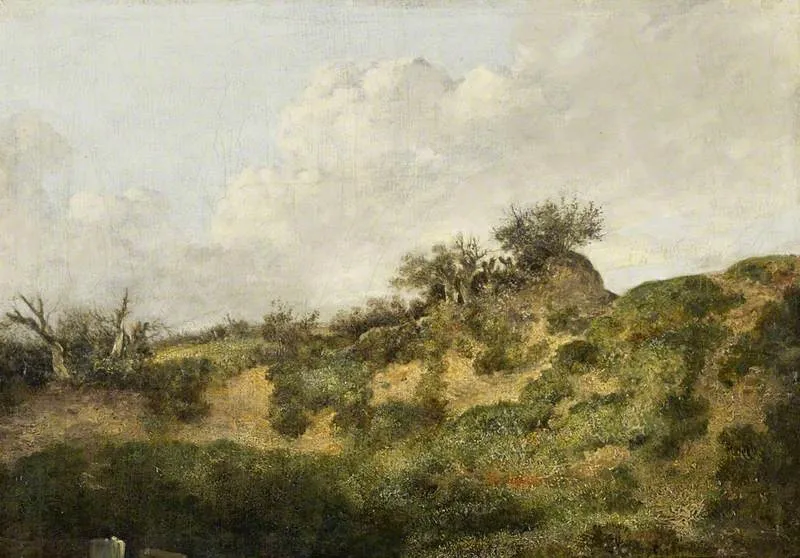
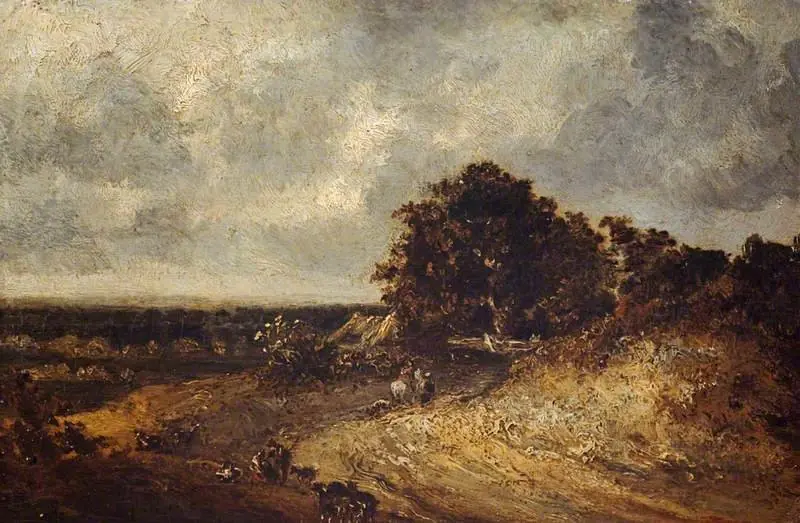
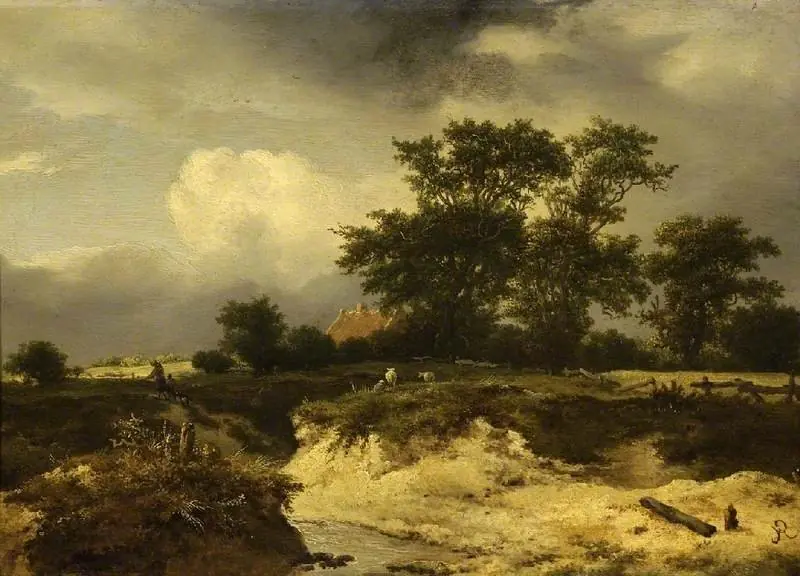
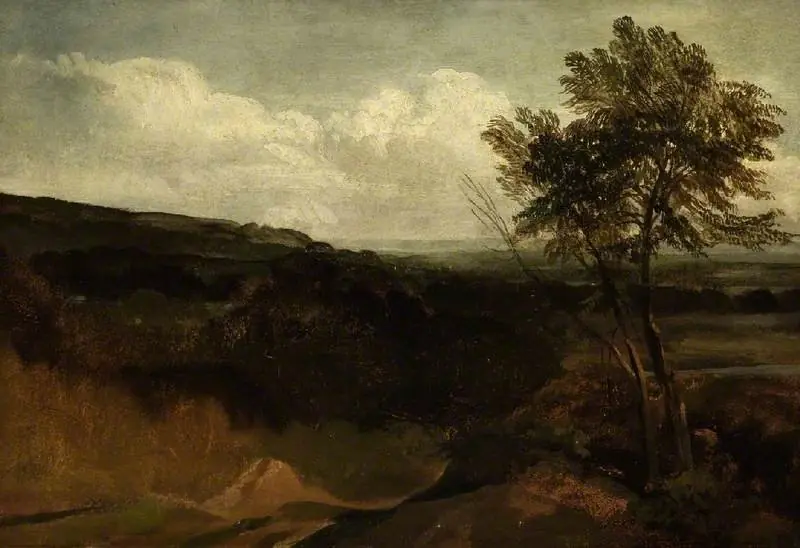
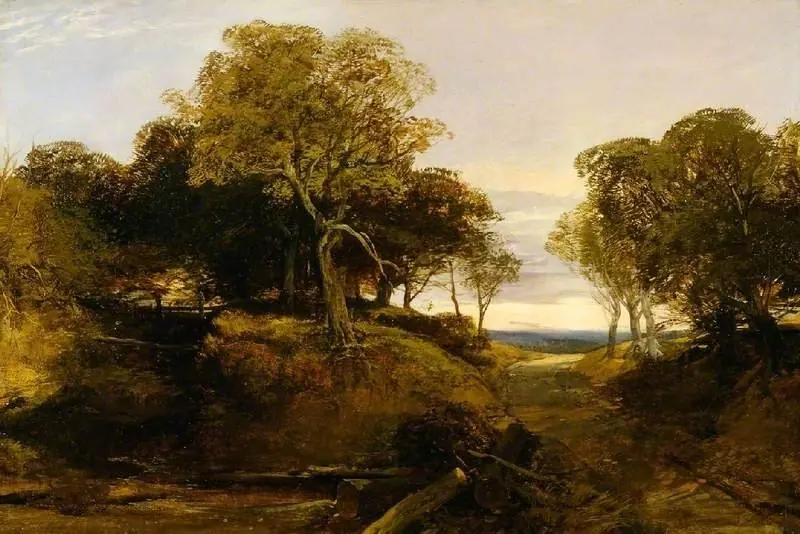
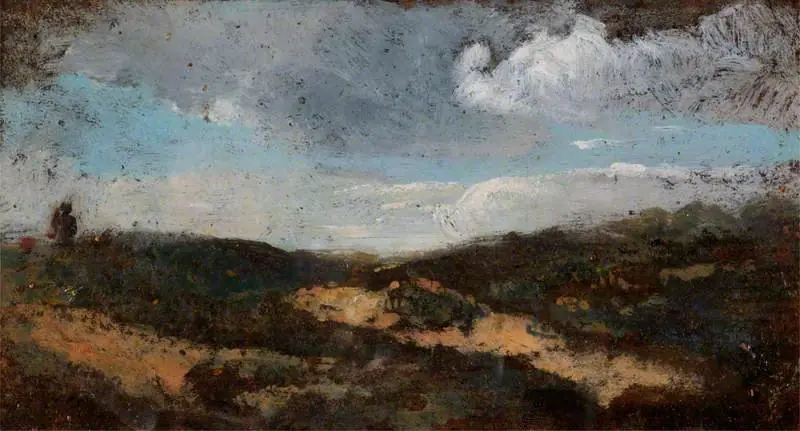
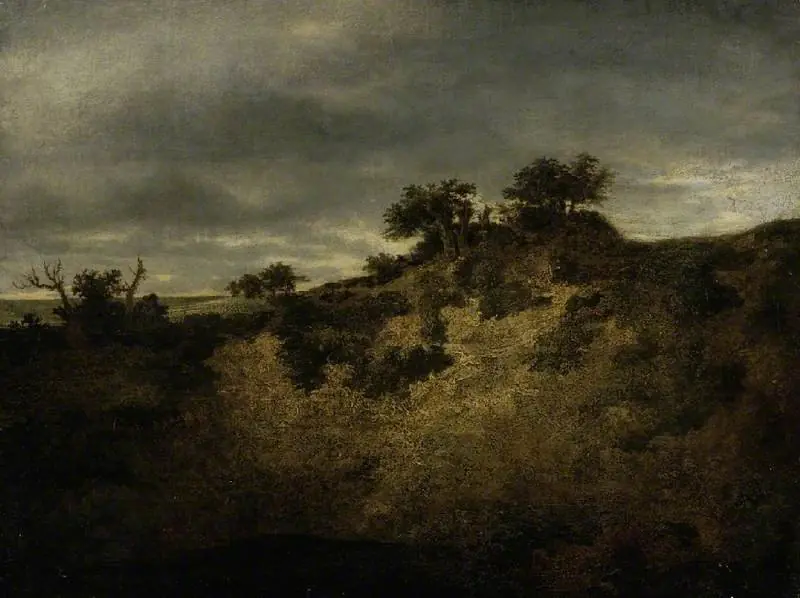
A Sandy Bank is an oil painting by John Crome. It dates from 1820 and is held in the collection of the National Galleries Scotland.
About this work
Overview
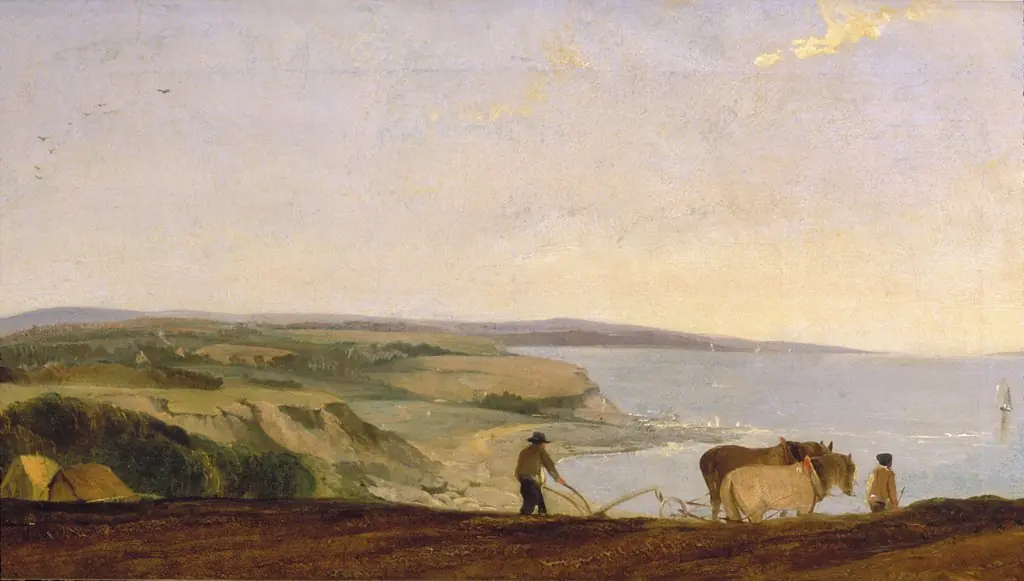
It presents a quiet, unidealized stretch of coastal terrain, focusing on a gently sloping sandy ridge adorned with low vegetation.
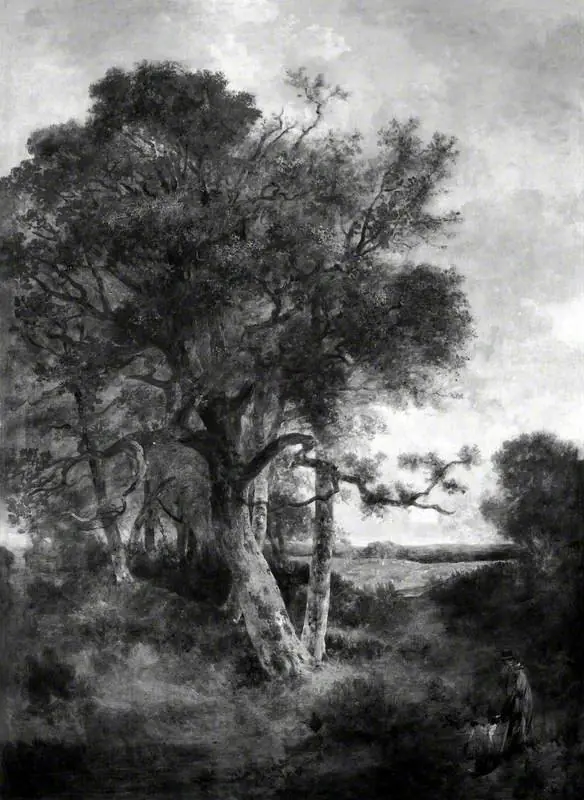
A Sandy Bank is an oil painting completed by John Crome in 1820. It presents a quiet, unidealized stretch of coastal terrain, focusing on a gently sloping sandy ridge adorned with low vegetation. The composition avoids dramatic elements, instead emphasizing the subtle interplay of light and earth. The work is part of the Scottish National Gallery’s collection, where it stands as a representative example of Crome’s landscape approach during his mature period.
Subject & Meaning
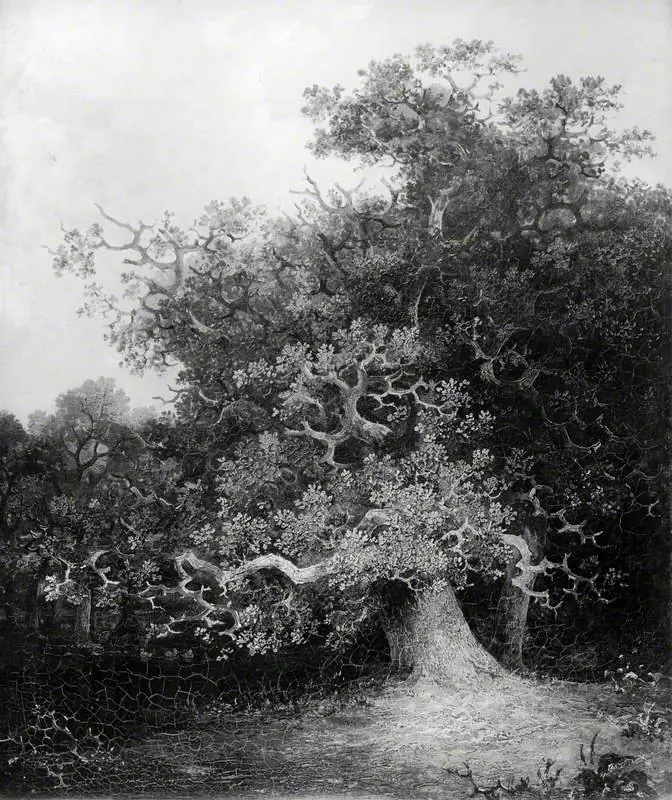
The painting captures a modest, everyday stretch of shoreline, devoid of human figures or narrative. The sandy bank, thick with scrub and scattered trees, suggests a place of quiet observation rather than activity. The overcast sky and muted tones reinforce a mood of stillness, reflecting Crome’s interest in the natural world as it exists without embellishment. The scene invites contemplation of nature’s quiet rhythms rather than asserting grandeur.
Technique & Style
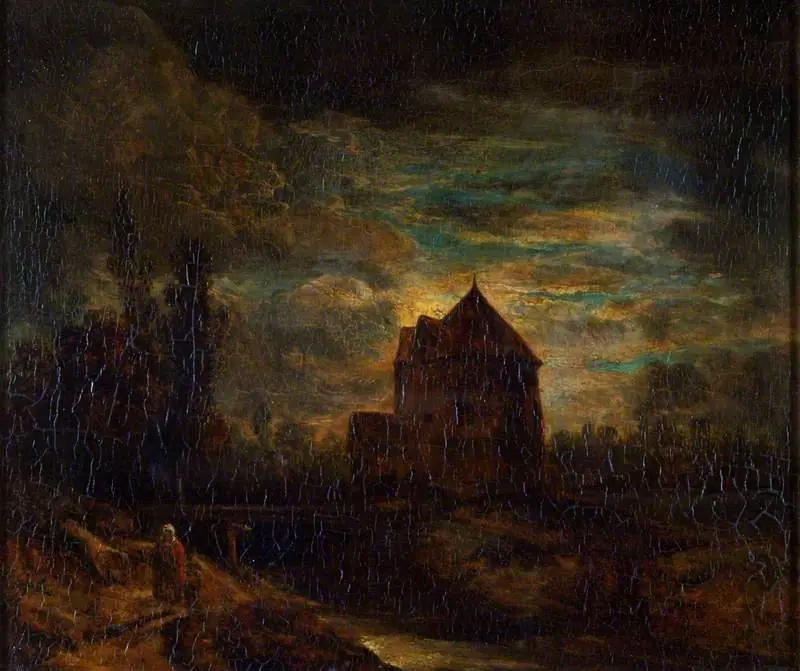
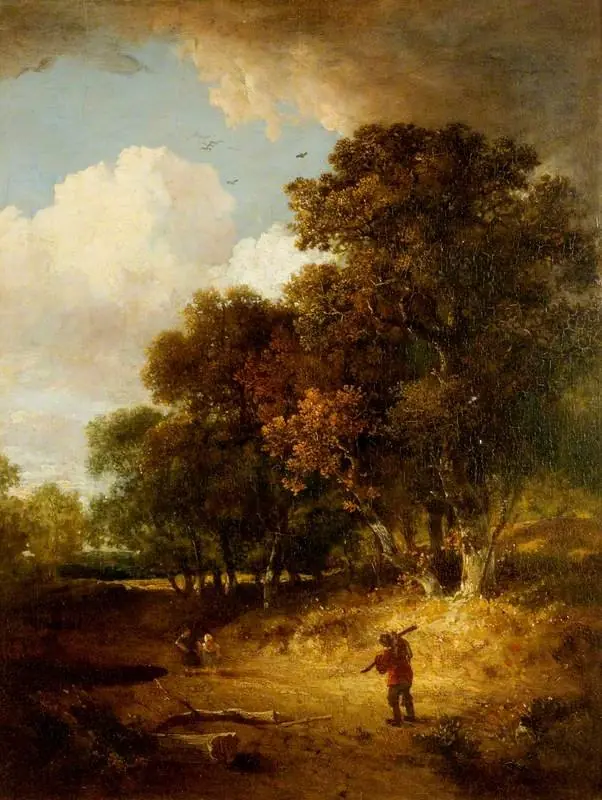
Crome employed thick, textured brushwork to render the bank’s surface, with visible strokes suggesting the roughness of earth and foliage. Oil paint was layered to create depth in the shadows and a soft diffusion of light across the clouds. The palette is restrained—earthy greens, greys, and ochres—enhancing the painting’s atmospheric cohesion. His handling of light, though not theatrical, demonstrates a sensitivity to tonal variation characteristic of early 19th-century British landscape practice.
History & Provenance
Painted in 1820, A Sandy Bank remained in Crome’s possession until his death in 1821. It passed through private collections before entering the Scottish National Gallery’s holdings in the 19th century. Its inclusion in the national collection reflects early institutional recognition of Crome’s contribution to British landscape painting, particularly his role in the Norwich School. The painting has been consistently exhibited as a key example of his observational style.
Context
Crome worked within the Norwich School, a regional movement focused on direct observation of the English countryside. Unlike contemporaries who idealized nature, he favored unembellished scenes from his native Norfolk. A Sandy Bank aligns with this ethos, capturing a local topography with fidelity. The painting reflects a broader shift in British art toward intimate, non-heroic landscapes, influenced by Romantic sensibilities but grounded in empirical detail.
Legacy
A Sandy Bank exemplifies Crome’s influence on later British landscape painters who valued authenticity over spectacle. His use of visible brushwork and naturalistic color anticipated aspects of Impressionism, though without its later luminosity. The painting remains a touchstone for understanding how regional artists in early 19th-century England redefined landscape painting through quiet, attentive observation rather than dramatic composition.
Artist & collection
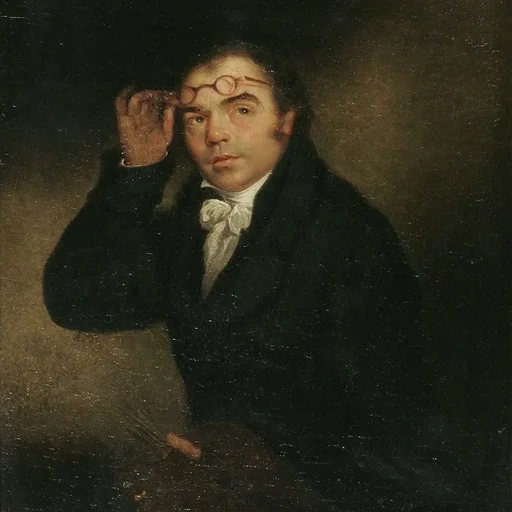
Artist
John Crome, once known as Old Crome to distinguish him from his artist son John Berney Crome, was an English landscape painter of the Romantic era, one of the principal artists and founding members of the Norwich School of painters.