Artwork
Card Rack with a Jack of Hearts
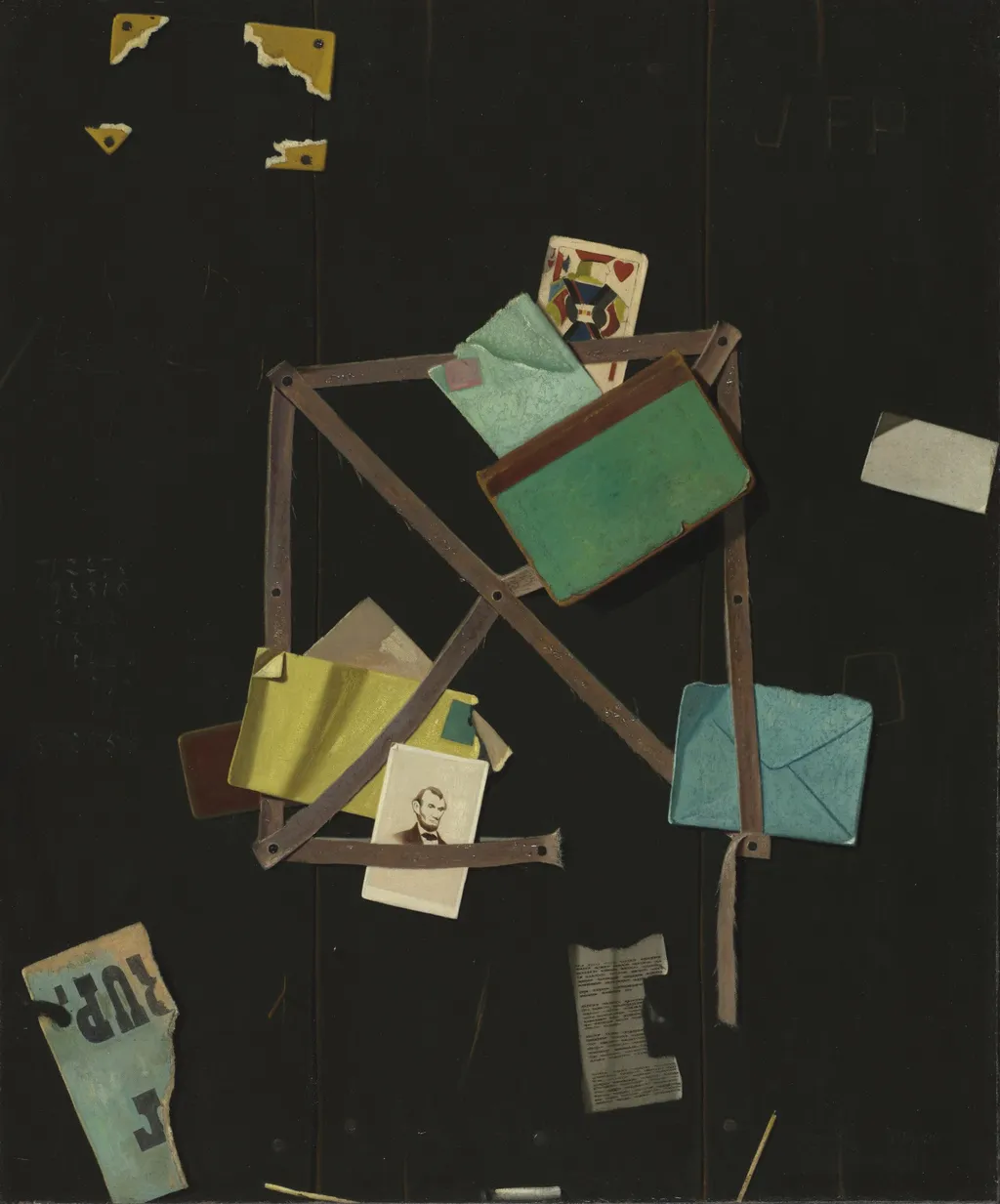
Card Rack with a Jack of Hearts is an oil painting by the American Impressionist artist John F. Peto. It dates from 1898 and is held in the collection of the Cleveland Museum of Art.
About this work
Overview
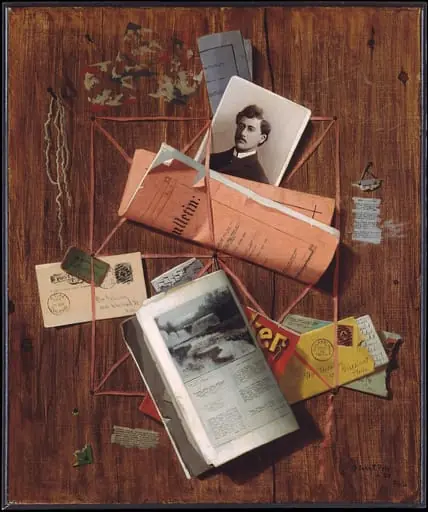
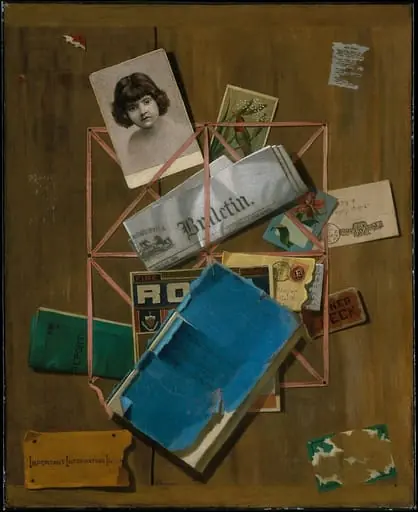
Created in 1898, *Card Rack with a Jack of Hearts* is an oil painting by American artist John F. Peto. The work depicts a simple wooden rack suspended against a dark wall, laden with a few playing cards, a portrait photograph, and folded paper. It belongs to the collection of the Cleveland Museum of Art and exemplifies Peto’s meticulous approach to still‑life illusion.
Subject & Meaning
The composition presents everyday objects—a card holder, a photograph of a suited gentleman, and loose sheets—arranged to suggest a moment frozen in time. By focusing on mundane items, Peto invites viewers to contemplate the quiet rituals of leisure and personal memory, while the inclusion of the Jack of Hearts adds a subtle hint of chance or narrative intrigue.
Technique & Style
Peto employs a trompe‑l'œil strategy, using thick impasto on the cards and wood to create a tactile surface that catches light and emphasizes volume.
Peto employs a trompe‑l'œil strategy, using thick impasto on the cards and wood to create a tactile surface that catches light and emphasizes volume. The vivid greens, yellows, and blues of the cards contrast sharply with the somber background, enhancing the illusion of three‑dimensionality. This painterly precision aligns the work with the broader currents of American Impressionism, where surface texture and light play are paramount.
History & Provenance
After a period of limited recognition, Peto’s oeuvre—including this piece—was reassessed in the late twentieth century alongside that of fellow trompe‑l'œil specialist William Harnett. The painting entered the Cleveland Museum of Art’s holdings through acquisition in the early 2000s, contributing to a renewed scholarly interest in Peto’s realistic still‑life tradition.
Context
The late nineteenth‑century United States saw a fascination with realism and the deceptive potential of paint, especially in depictions of common objects. Peto’s work reflects this cultural moment, merging the technical rigor of trompe‑l'œil with the softer, atmospheric concerns of Impressionism, thereby bridging two influential artistic tendencies of his era.
Artist & collection

Artist
John Frederick Peto (May 21, 1854 – November 23, 1907) was an American trompe-l'œil ("fool the eye") painter who was long forgotten until his paintings were rediscovered along with those of fellow trompe-l'œil artist William Harnett.