Artwork
Paris and Oenone
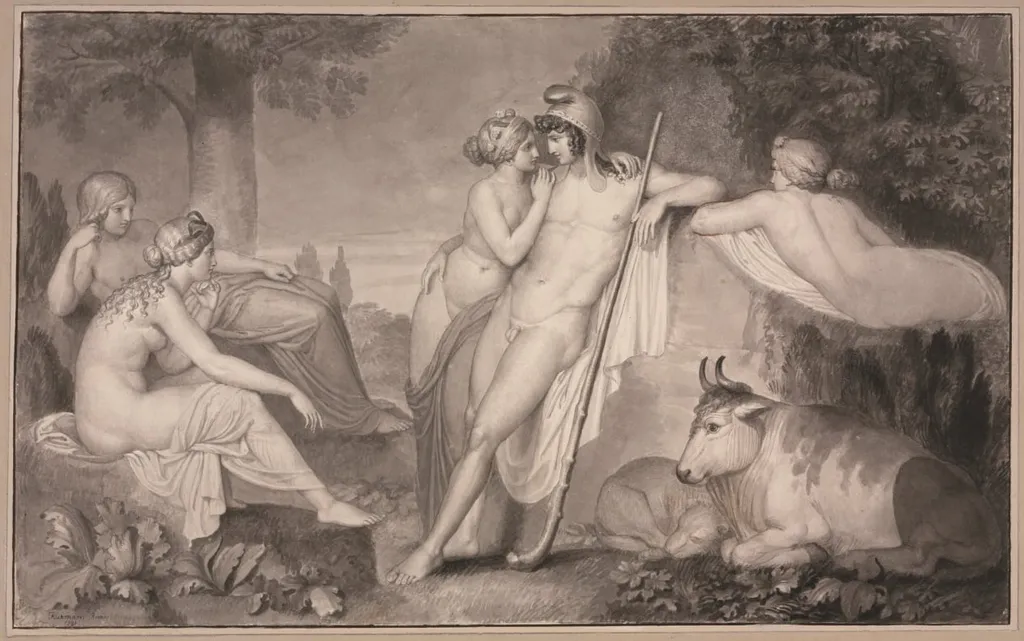
Paris and Oenone is a drawing by the Romanticist artist John Flaxman. It dates from 1791 and is held in the collection of the Cleveland Museum of Art.
About this work
You see two figures in a rocky landscape: a man in armor pointing toward a city, and a woman sitting on a rock with her head in her hands.
You see two figures in a rocky landscape: a man in armor pointing toward a city, and a woman sitting on a rock with her head in her hands.
Flaxman drew this scene from an old Greek myth—Paris leaving his lover Oenone to judge a beauty contest. The lines are clean and simple, almost like a comic strip. He made it in Rome to sell as a finished drawing, not just a sketch.
Look up other works by John Flaxman (British, 1755–1826) to see more of his spare, storybook style.
Overview
John Flaxman's 'Paris and Oenone' is a highly finished drawing created during his time in Rome, showcasing his characteristic linear style. Executed to supplement his income while pursuing sculptural commissions, the work demonstrates his proficiency in drawing, the medium through which he achieved his greatest fame.
Subject & Meaning
The drawing depicts a serene prelude to the Trojan War, with Paris, the Trojan shepherd, and his lover Oenone on Mount Ida. This moment of peace precedes Paris's fateful judgment of the goddesses, highlighting a pivotal yet often overlooked narrative in the mythological sequence leading to the war.
Technique & Style
Characterized by clean, simple lines reminiscent of a narrative or 'storybook' approach, the drawing exemplifies Flaxman's spare, linear aesthetic. This style, though seemingly simplistic, contributes to the work's clarity and emotional restraint, focusing attention on the poignant intimacy of the scene.
History & Provenance
Created in Rome, the drawing is signed and dated, indicating its intention as a finished work for sale. This practice reflects Flaxman's strategic use of drawing to support himself financially while abroad and seeking sculpture commissions.
Context
'Paris and Oenone' fits within Flaxman's broader practice of illustrating classical epics, though it chooses a less common subject. The work aligns with late 18th-century European interests in classical themes, yet its understated execution sets it apart from more ornate contemporaneous styles.
Legacy
While 'Paris and Oenone' contributes to Flaxman's legacy as a draftsman, his overall impact on art history is more significantly defined by the widespread dissemination of his designs through engravings, influencing a broad audience with his linear, classical ideals.
Artist & collection
Artist
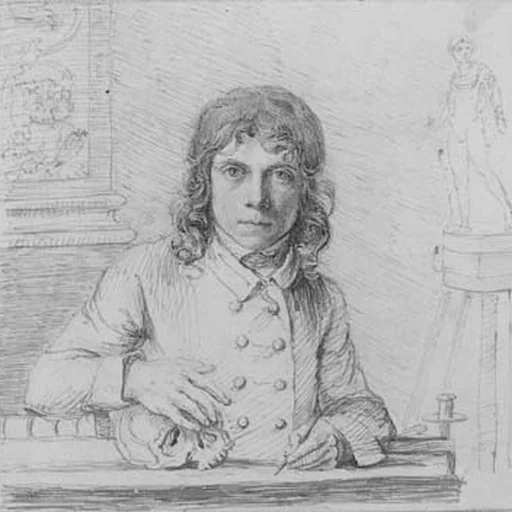
John Flaxman (6 July 1755 – 7 December 1826) was an English sculptor and draughtsman who was a leading figure in British and European Neoclassicism.

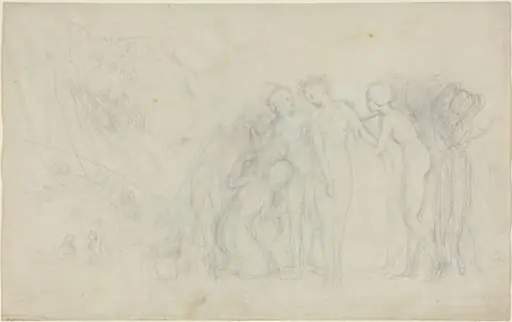
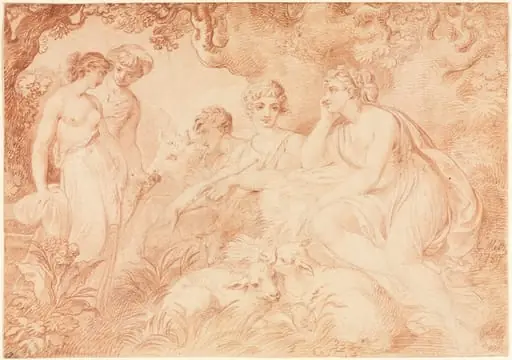 Shepherds and Shepherdesses
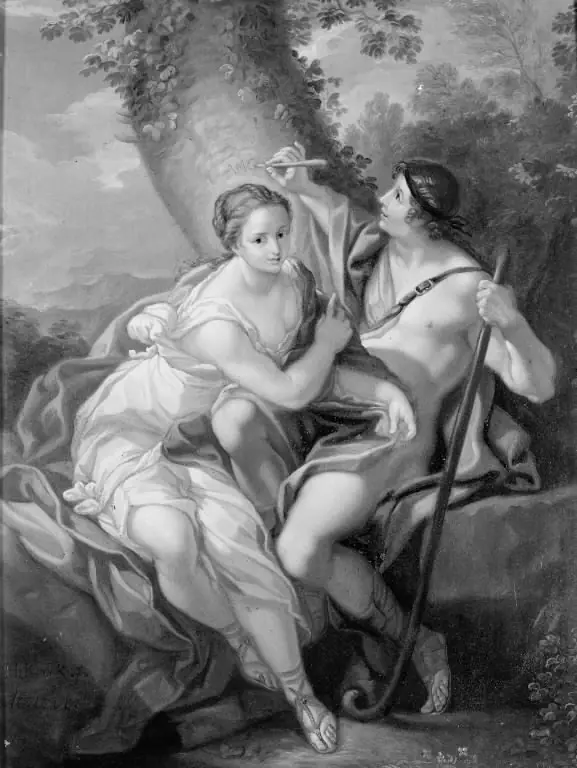 Medos og Angelica
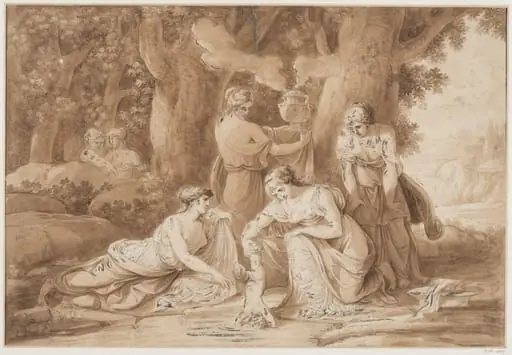 Thetis dipping Achilles
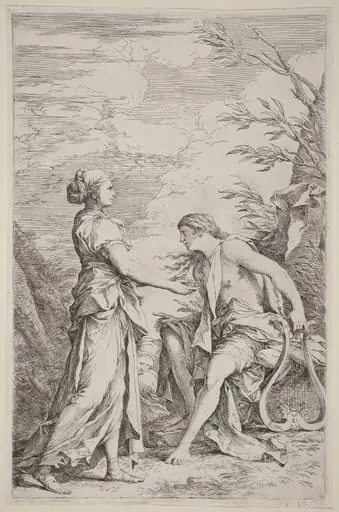 Apollo and the Cumaean Sibyl
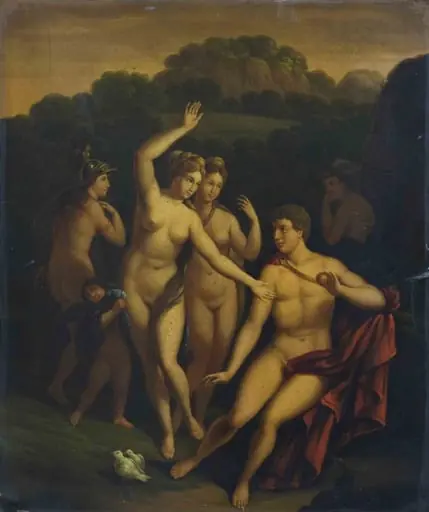 Judecata lui Paris
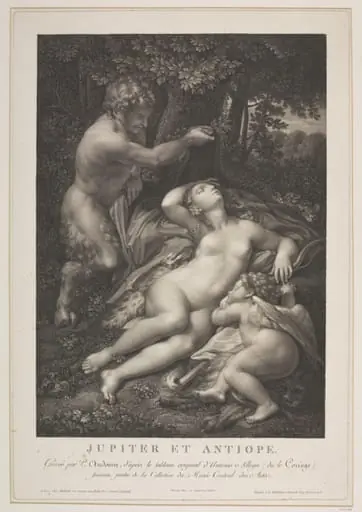 Jupiter as a Satyr, and Antiope
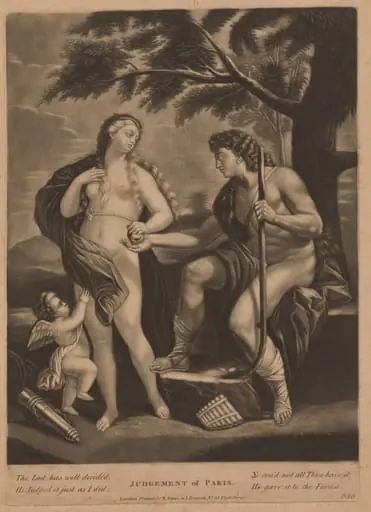 Judgment of Paris
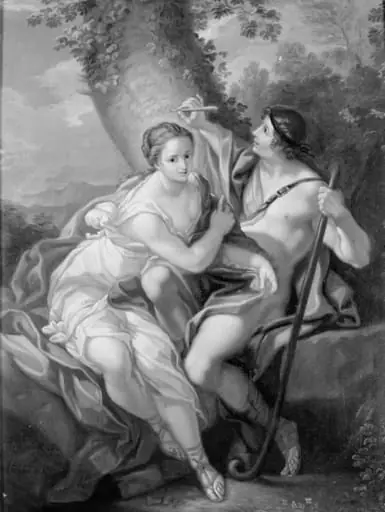 Medos og Angelica
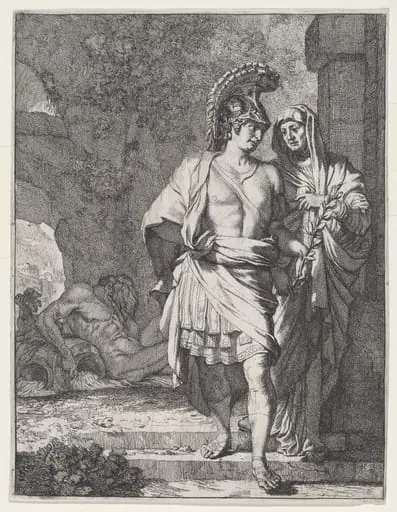 Aeneas and the Sibyl
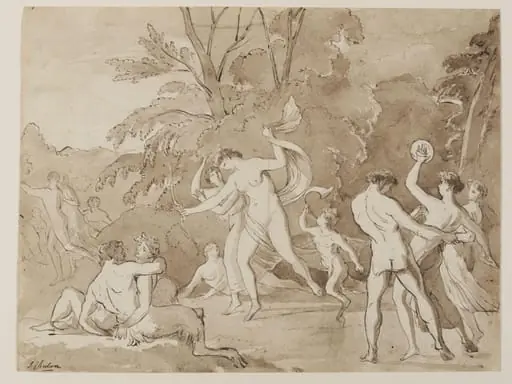 Cheerfulness
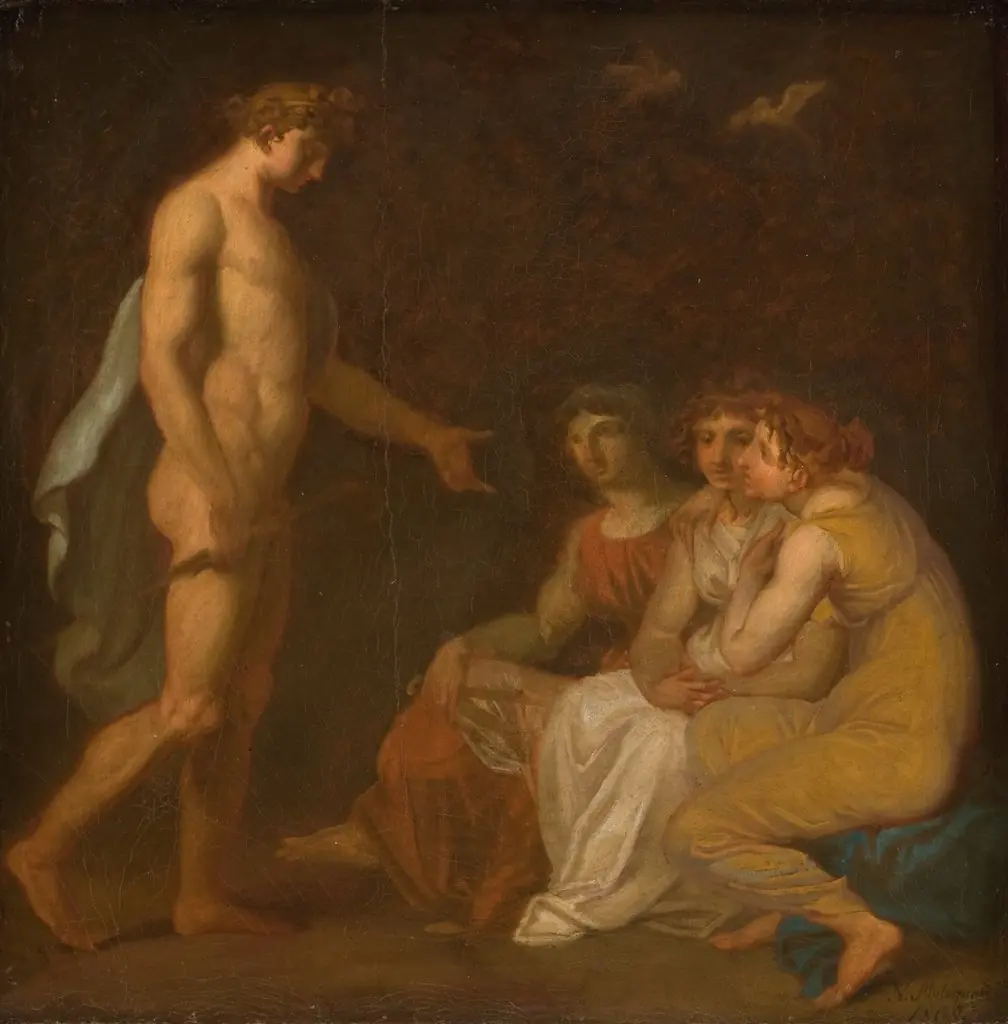 Apollo charging the Parcae to visit Ceres, who has fled from the Earth
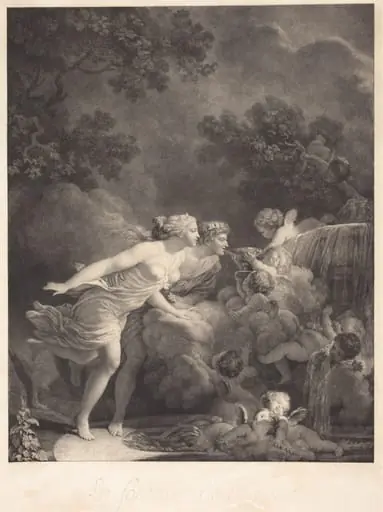 La Fontaine d'Amour (The Fountain of Love)