Artwork
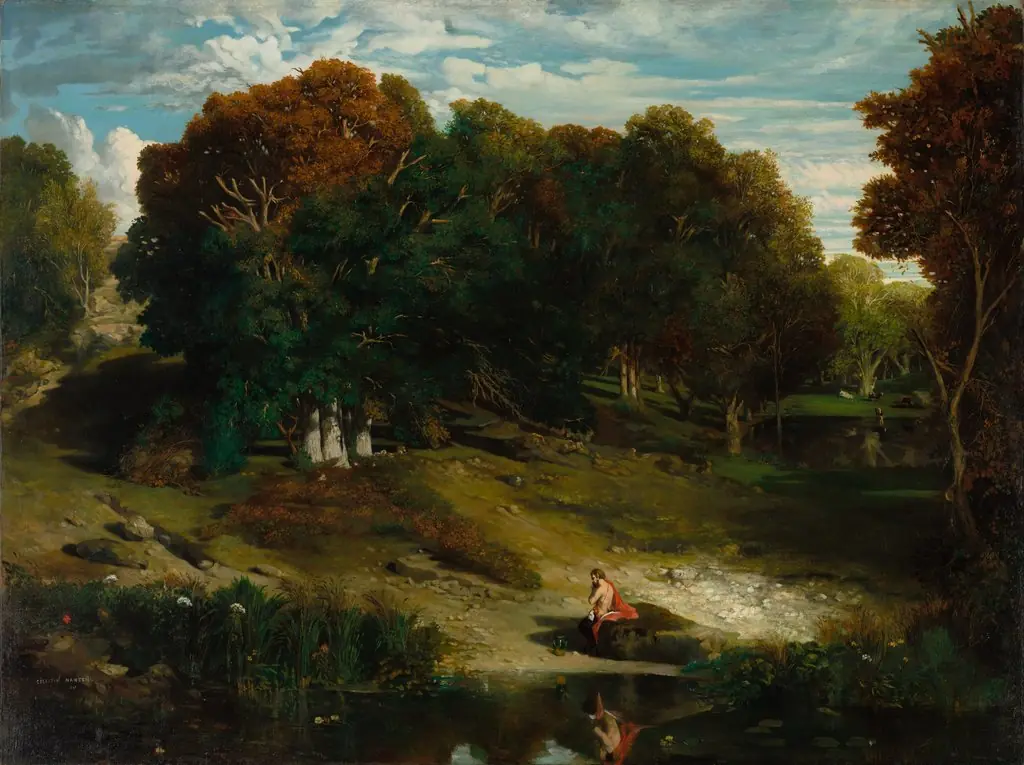
Wychwood Forest, Oxfordshire
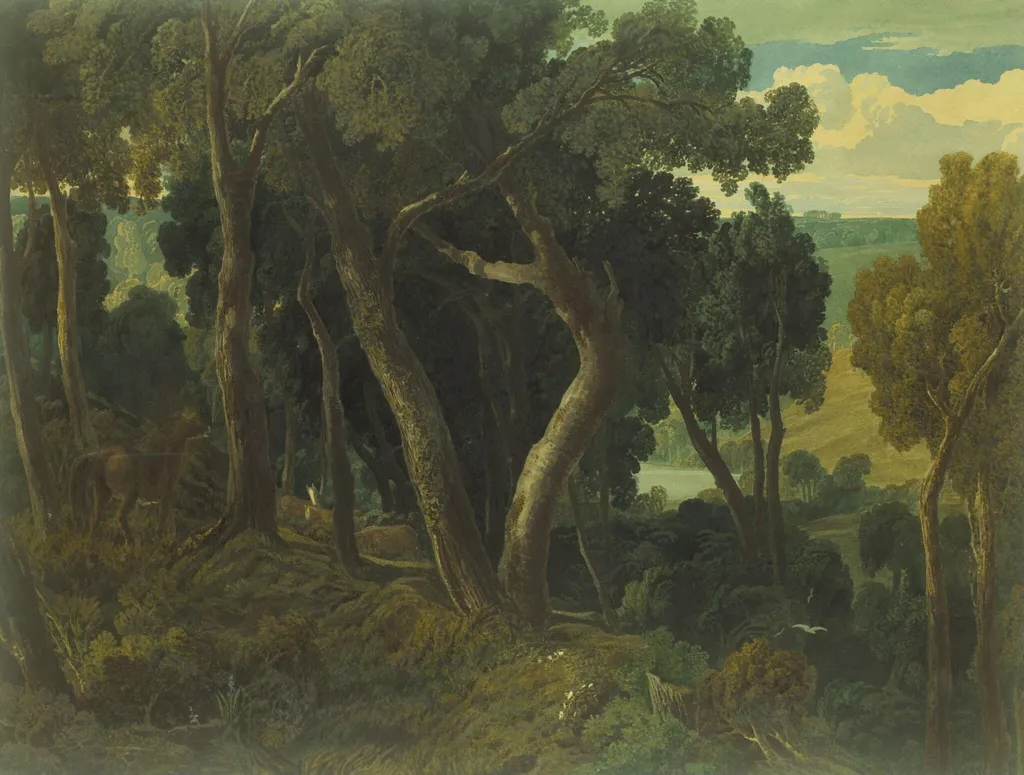
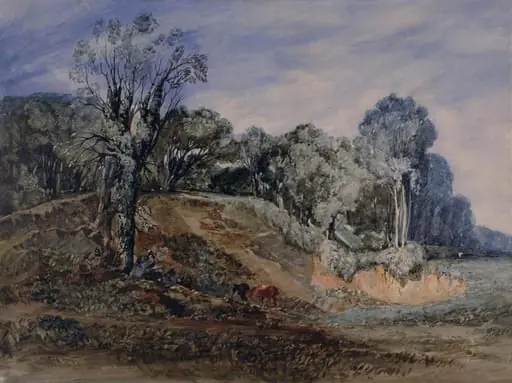
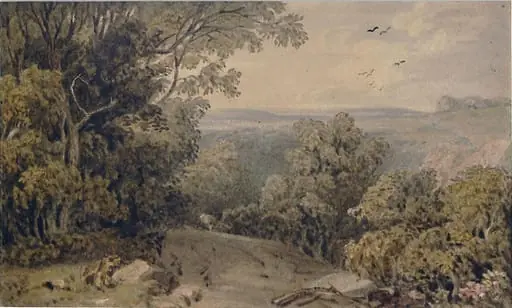
Wychwood Forest, Oxfordshire is a watercolor work on paper by the Romanticist artist William of Oxford Turner. It dates from 1809 and is held in the collection of the Victoria and Albert Museum. Painted in 1809 by William Turner of Oxford, this watercolour depicts a quiet stretch of Wychwood Forest in Oxfordshire.
About this work
Overview
It was first shown at the Old Water Colour Society that year, reflecting the artist’s engagement with contemporary British watercolour circles.
Painted in 1809 by William Turner of Oxford, this watercolour depicts a quiet stretch of Wychwood Forest in Oxfordshire. It was first shown at the Old Water Colour Society that year, reflecting the artist’s engagement with contemporary British watercolour circles. The work captures a natural scene with careful attention to light and spatial depth, characteristic of early 19th-century landscape practice.
Subject & Meaning
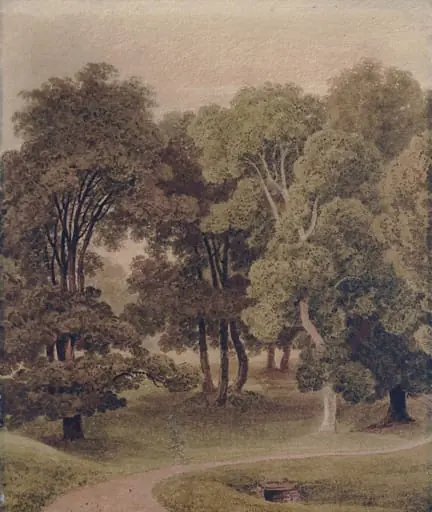
The painting presents a forest interior with a winding path receding into dense woodland. Tall trees, some with gnarled trunks, frame the view, their leaves suggesting seasonal change through hues of green, brown, and yellow. The open sky above contrasts with the shaded undergrowth, evoking stillness and solitude. The composition invites contemplation rather than narrative, emphasizing the quiet presence of nature.
Technique & Style
Turner employed transparent watercolour washes to build subtle layers of tone and atmosphere. Delicate glazes suggest shifting light through the canopy, while drybrush techniques define the textured bark and fallen leaves. The pale blue sky and soft clouds are rendered with minimal pigment, allowing the paper’s whiteness to contribute to luminosity. The method prioritizes mood over detail, aligning with the aesthetic values of British watercolourists of the period.
History & Provenance
After its 1809 exhibition, the painting remained in private hands until 1901, when it was lent by J. Fulleylove to a retrospective of 19th-century watercolours at the Fine Art Society. Its appearance in this later exhibition indicates continued interest in Turner’s work among collectors of British watercolours. No further public records of its ownership or display are documented beyond this point.
Context
Turner’s work emerged during a period when British artists were turning to native landscapes as subjects worthy of serious artistic attention. Wychwood Forest, once a royal hunting ground, had become a symbol of rural tranquility amid industrial change. His approach reflects a broader trend among watercolourists to capture intimate, unidealized natural scenes, distinct from the grandeur of oil painting traditions.
Legacy
Though not widely known today, Turner’s watercolours contributed to the development of a distinctly British tradition in landscape watercolour. His focus on atmospheric effects and quiet naturalism influenced later generations of regional artists. This work remains a modest but representative example of early 19th-century watercolour practice outside the more famous names of the era.
Own this work as a print
Artist & collection
Artist
Turner of Oxford painted quiet English landscapes in watercolour. He framed Wychwood Forest’s tangled oaks and Loch Esteltre’s glassy water with the same careful strokes, catching light on trees and distant spires. See…