Artwork
Felin Isaf, Cynwyd
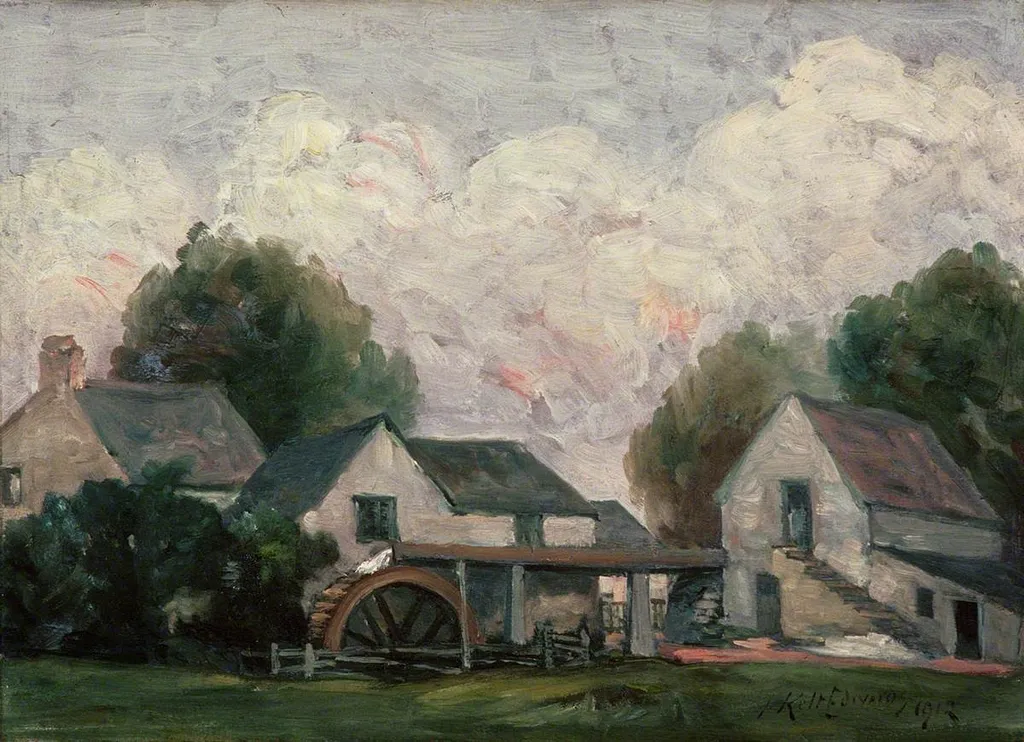
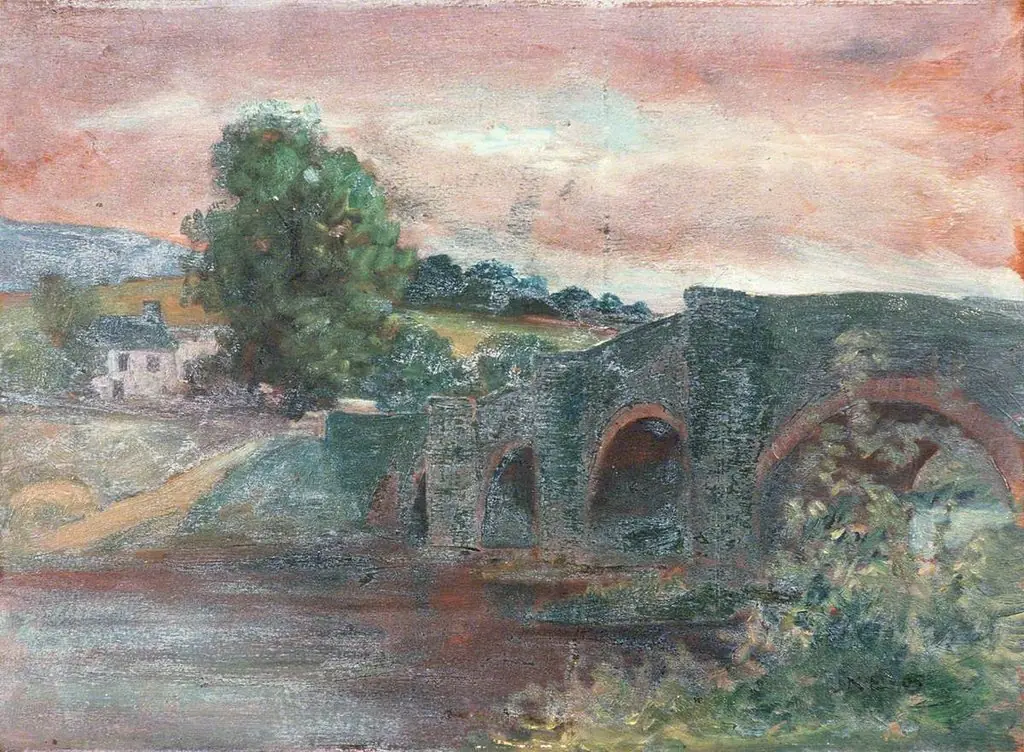
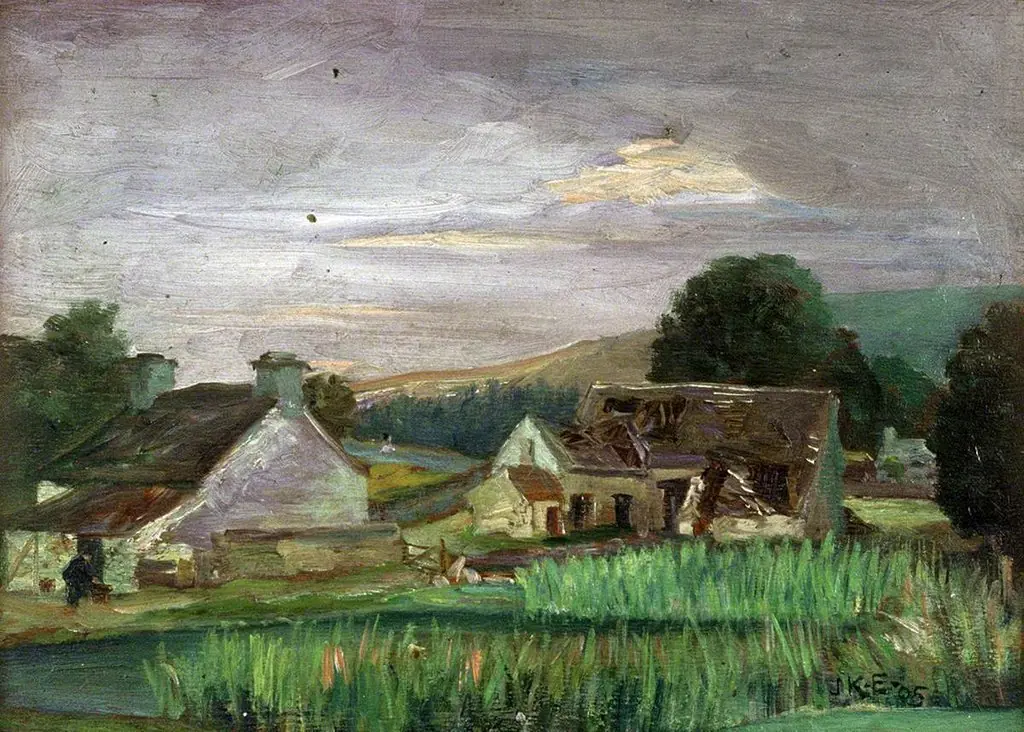
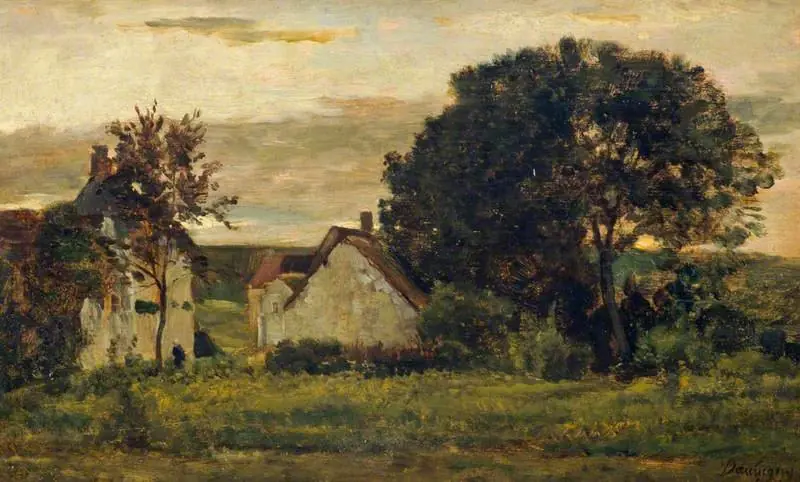
Felin Isaf, Cynwyd is an oil painting by the British Romanticist artist John Kelt Edwards. It dates from 1912 and is held in the collection of the National Library of Wales.
About this work
Trees frame the houses, and the brushstrokes are loose and quick, especially in the clouds and grass.
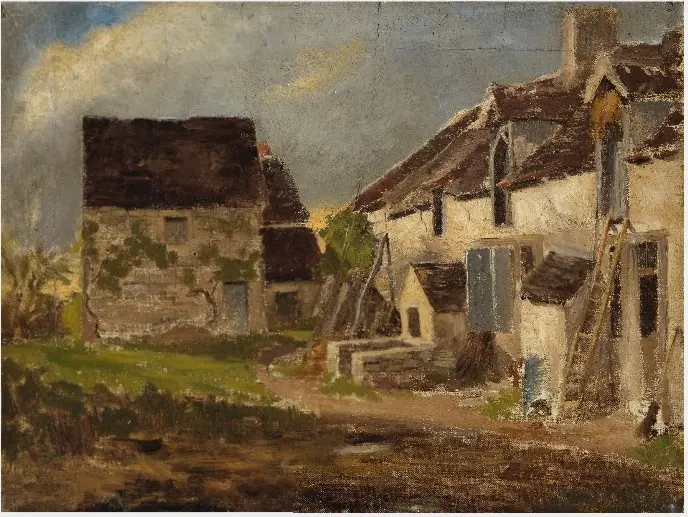
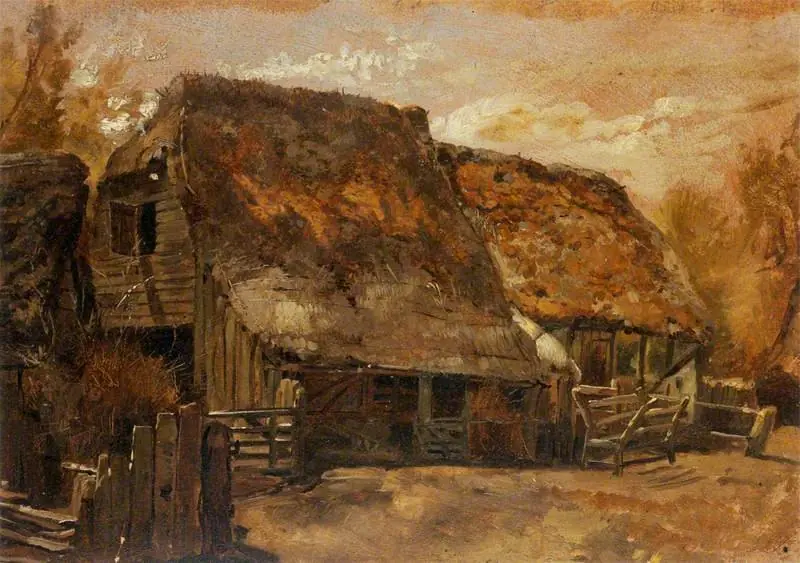
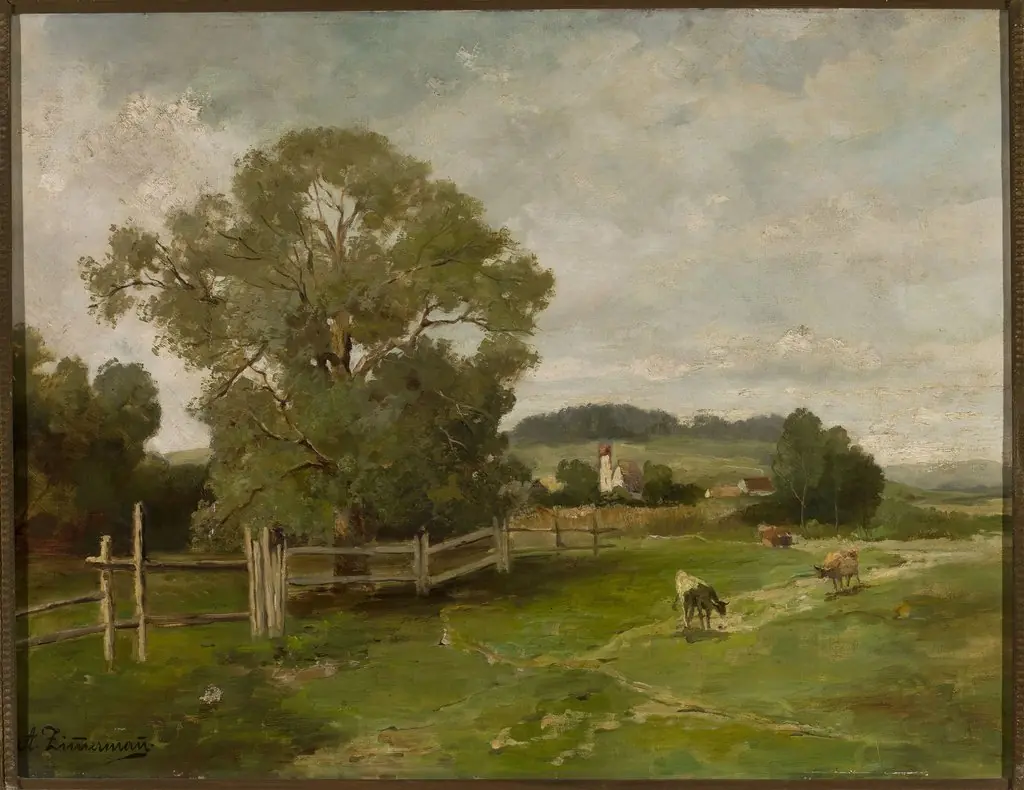
This painting shows a quiet village scene with three small houses under a fluffy sky. In the center is a wooden watermill with a big wheel half-submerged in a stream. Trees frame the houses, and the brushstrokes are loose and quick, especially in the clouds and grass.
The artist left their name in the corner—John Kelt Edwards—and dated it 1912. The way the paint is applied looks rough in spots, almost like it was done fast.
Next, check out watermill, Cynwyd to see how these old mills worked.
Overview
Painted in 1912, Felin Isaf, Cynwyd is an oil-on-canvas landscape by John Kelt Edwards, capturing a modest Welsh hamlet centered around a working watermill. The work is part of the National Library of Wales collection, reflecting Edwards’ interest in rural scenes of his native region. Its unadorned subject and spontaneous brushwork suggest a direct, observational approach rather than a polished studio composition.
Subject & Meaning
The painting portrays a quiet cluster of three dwellings beside a stream, dominated by a wooden watermill with a large, partially submerged wheel. The scene lacks human figures, emphasizing stillness and the quiet integration of architecture with nature. The mill, a functional relic of local industry, anchors the composition, suggesting themes of continuity and rural labor rather than romanticized nostalgia.
Technique & Style
Edwards employed loose, rapid brushstrokes, particularly in the sky and foliage, creating a sense of movement and immediacy. The paint is applied with visible texture—thick in places, thin in others—giving the surface a tactile, almost sketchlike quality. This approach prioritizes atmospheric effect over detail, aligning with late 19th-century trends in plein air painting while retaining a distinctly Welsh sensibility.
History & Provenance
The painting has remained in institutional care since its creation, now held by the National Library of Wales. There is no record of public exhibition or private ownership prior to its acquisition by the library. Edwards, a local artist and illustrator, likely painted it during a period of personal focus on Welsh landscapes, though little documentation survives about its initial reception or purpose.
Context
In early 20th-century Wales, industrialization was altering rural life, yet many artists continued to document traditional scenes like watermills and cottages. Edwards’ work reflects this transitional moment—not as a lament, but as a quiet record. His choice of Cynwyd, a small village in Denbighshire, situates the painting within a regional artistic tradition that valued place over grandeur.
Legacy
Felin Isaf, Cynwyd contributes to a modest but persistent body of Welsh landscape painting that prioritizes local authenticity over national symbolism. While not widely known outside Wales, it remains a representative example of early 20th-century regional art, valued for its unembellished depiction of everyday rural life and its technical honesty.
Artist & collection
Artist
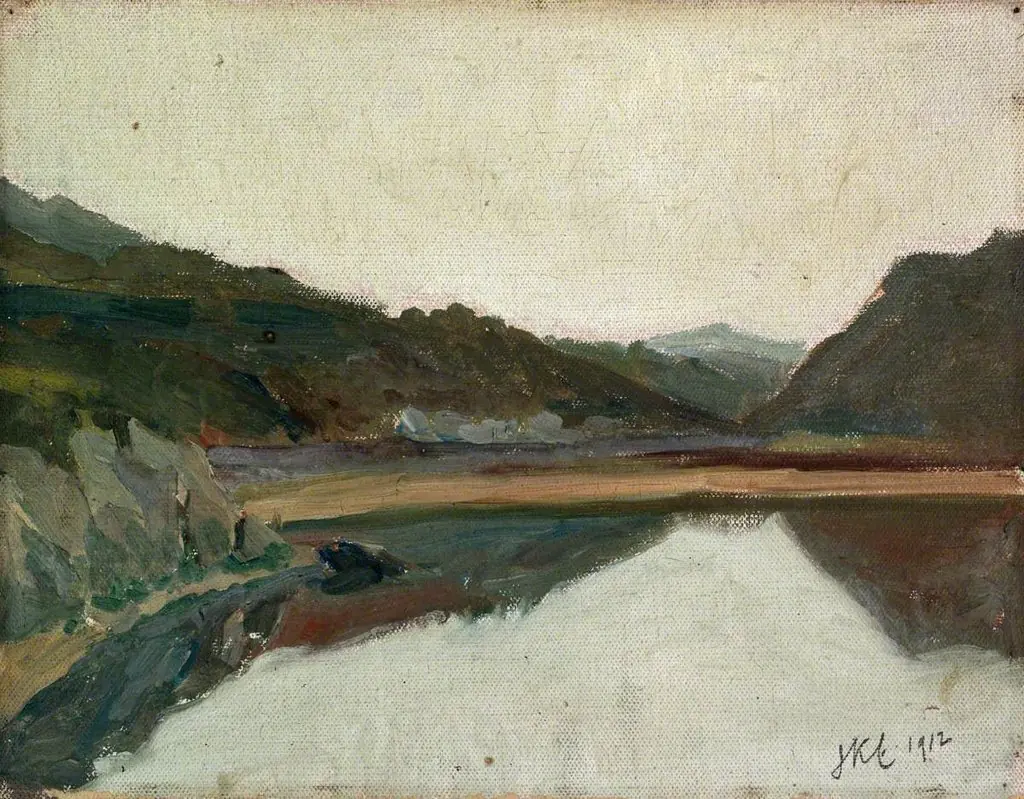
John Kelt Edwards painted quiet scenes of Wales in the early 1900s—garden statues, rocky hillsides, and a village called Cei Newydd near Talsarnau.