Artwork
Watermill
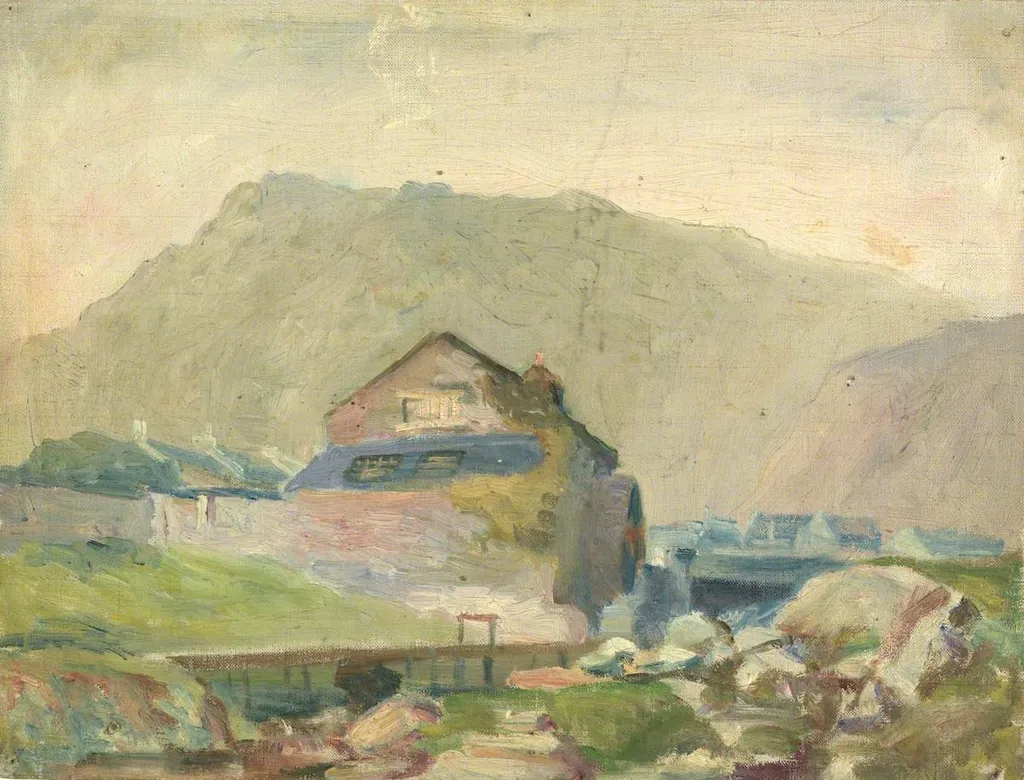
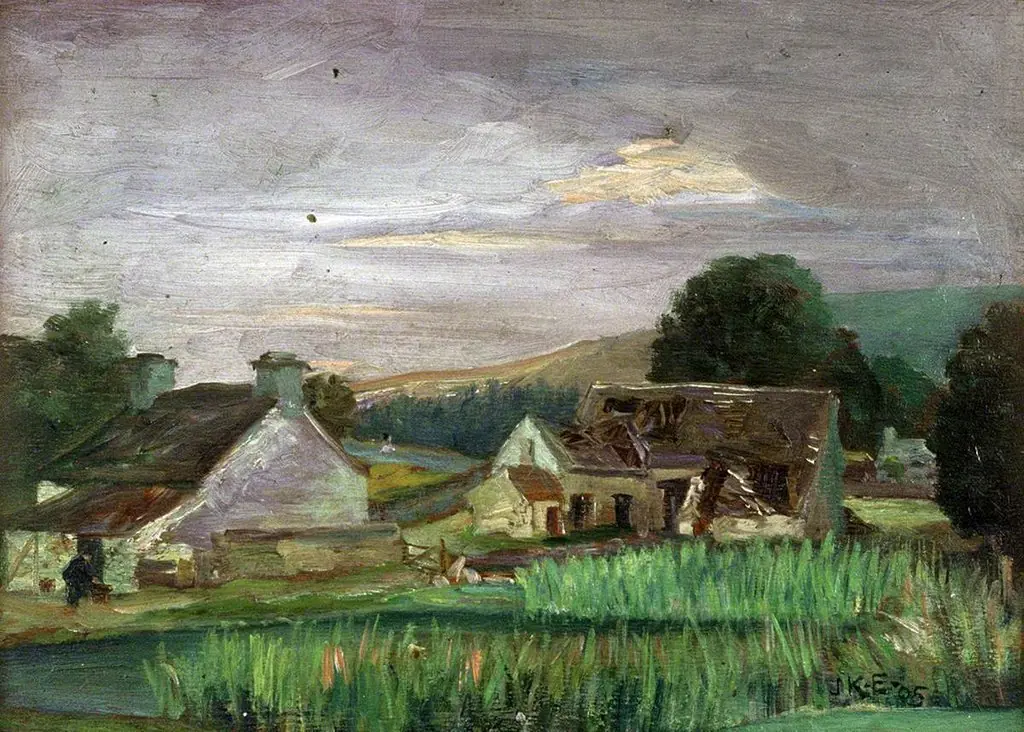
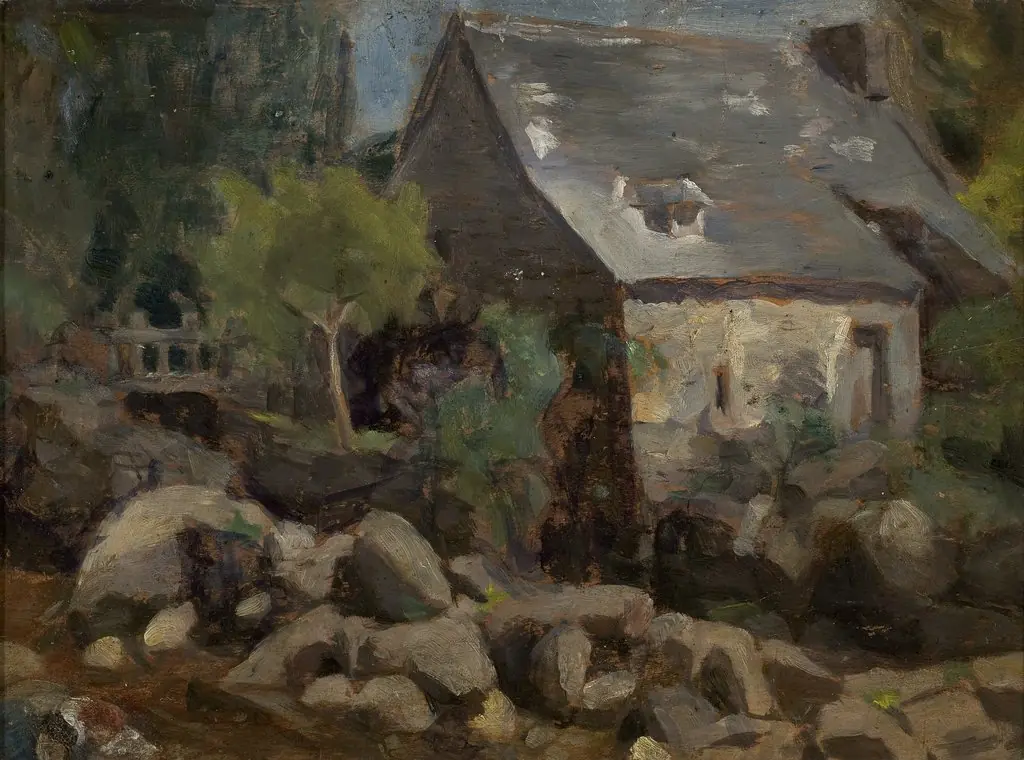
Watermill is an oil painting by the Impressionist artist John Kelt Edwards. It dates from 1912 and is held in the collection of the National Library of Wales.
About this work
Overview
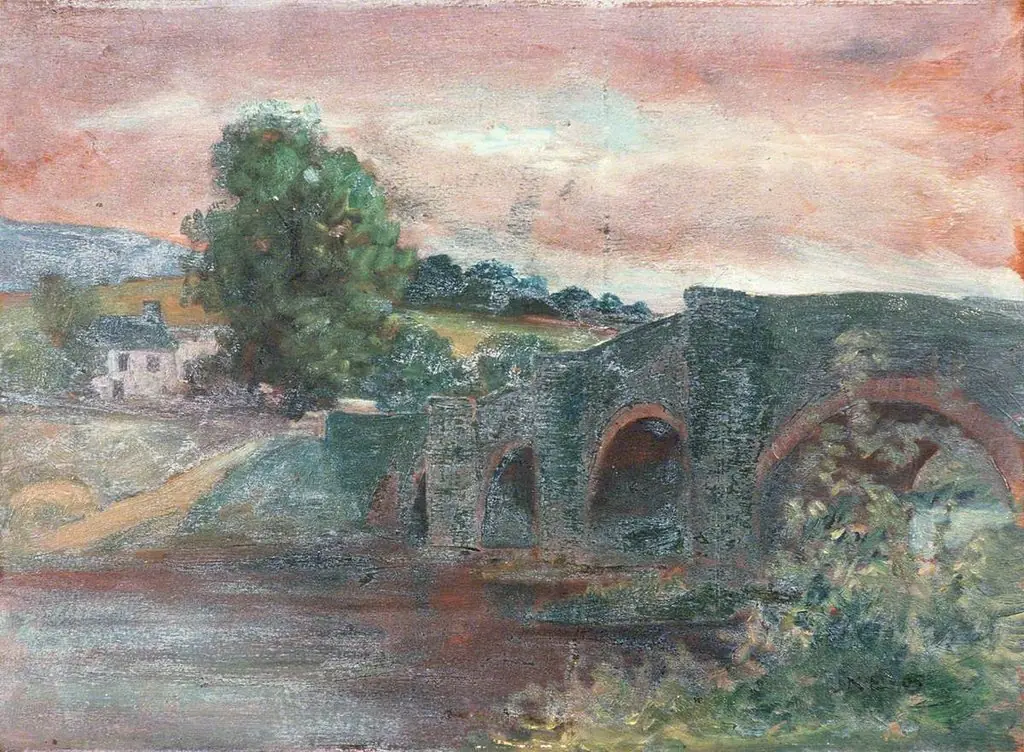
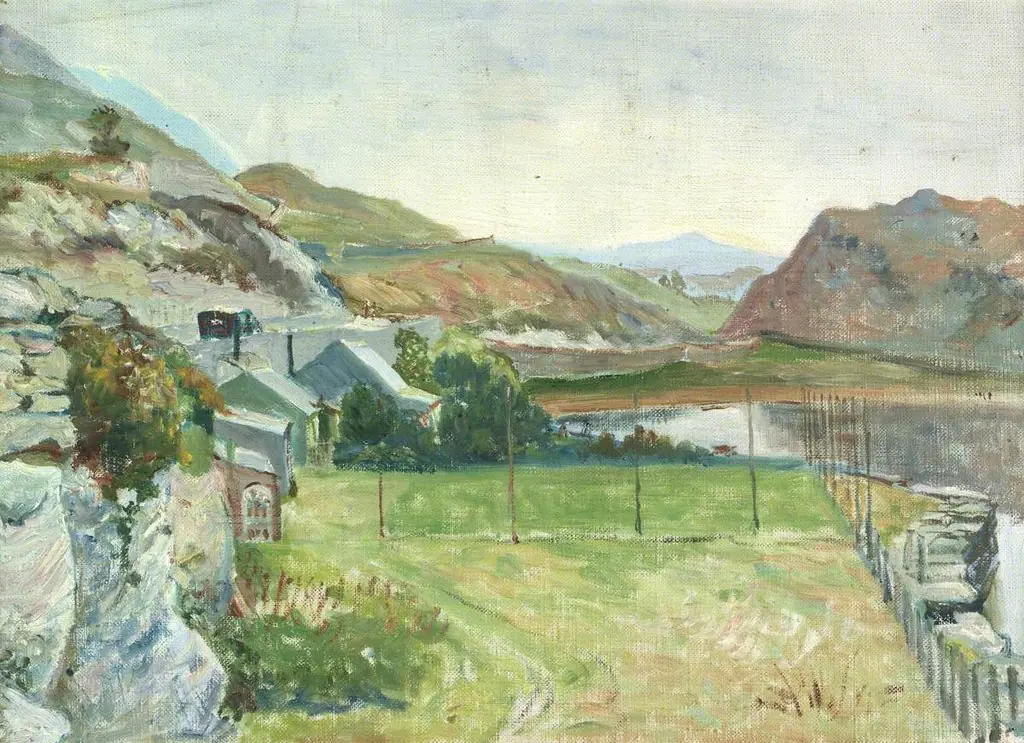
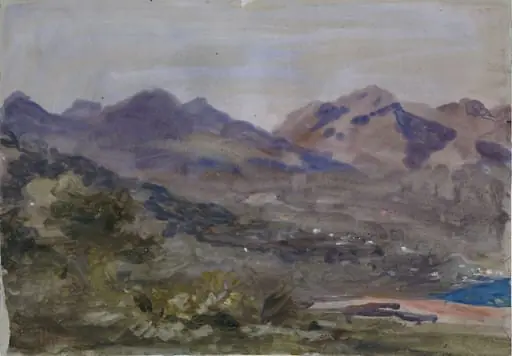
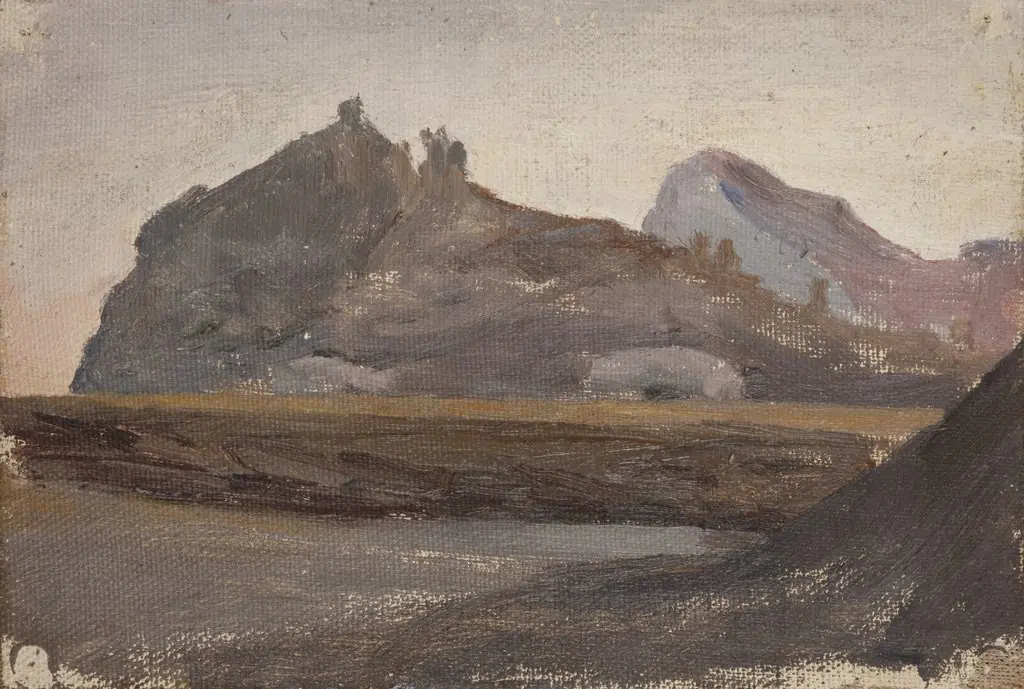
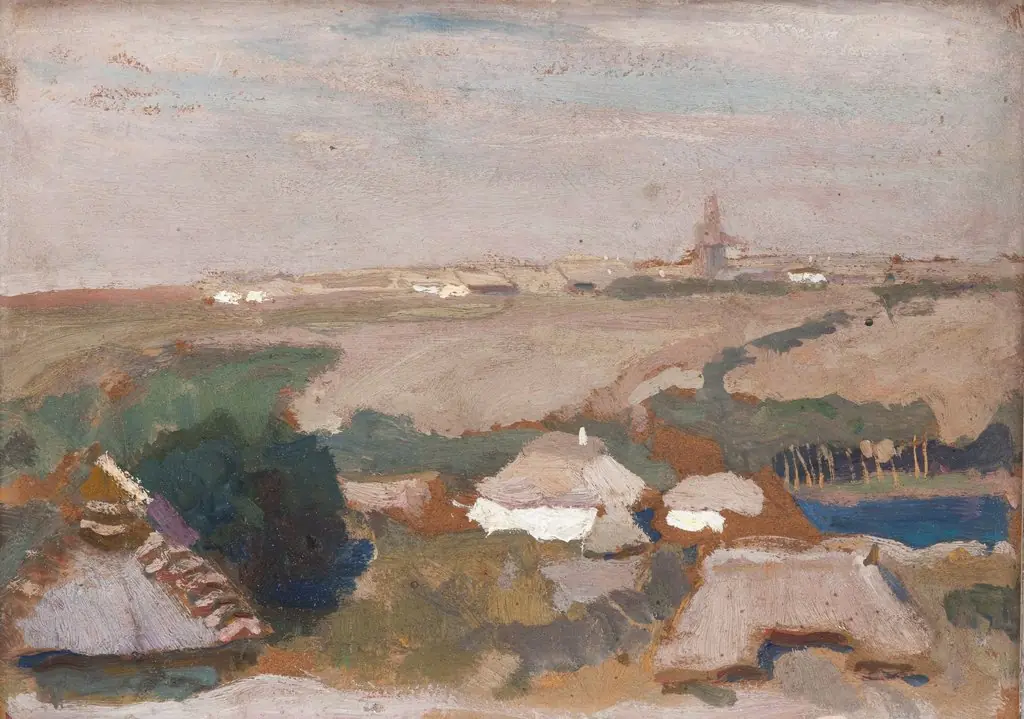
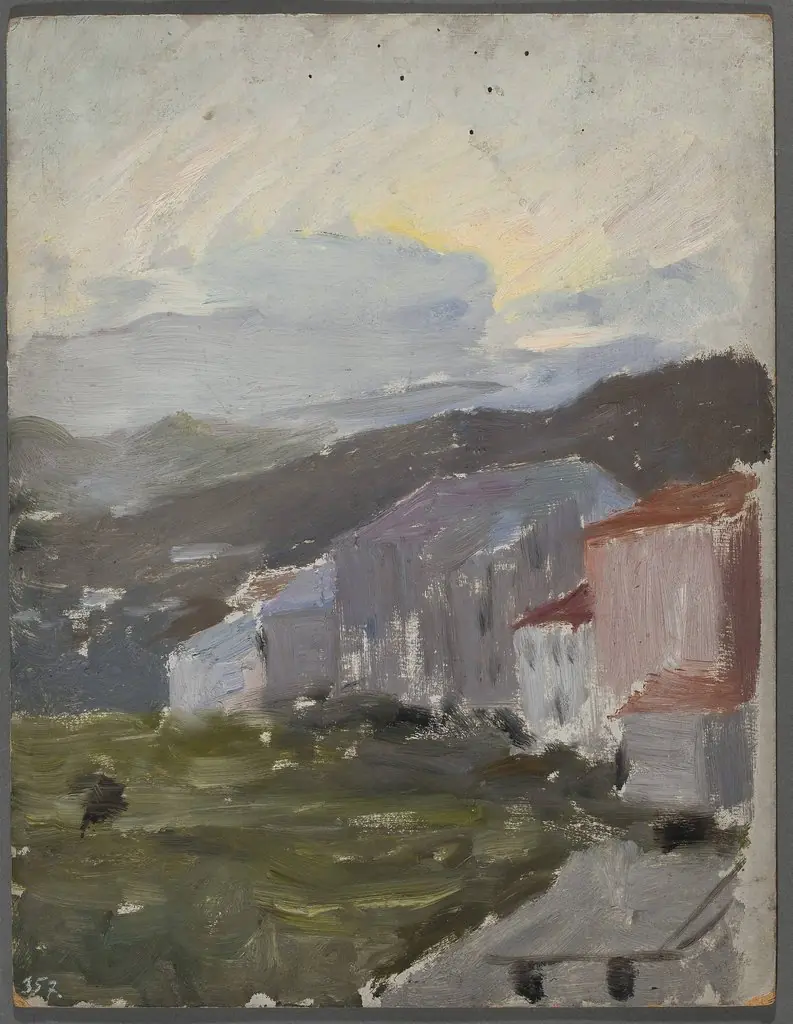
John Kelt Edwards’ 1912 oil painting titled Watermill presents a tranquil rural scene. The composition centers on a modest dwelling with a sloping roof, positioned beside a calm river that winds past rocks and grassy banks. A larger hill rises in the background, bathed in muted light, while a watermill structure is suggested near the house.
Subject & Meaning
The work captures a moment of pastoral stillness, juxtaposing human habitation with the natural flow of water. The modest house and mill together hint at a self‑sufficient countryside lifestyle, where the mill harnesses the river’s gentle current. The subdued atmosphere invites contemplation of the harmony between built environment and landscape.
Technique & Style
Edwards employs a brisk, sketch‑like application of paint, allowing brushstrokes to remain visible and impart a sense of immediacy. The palette is restrained, dominated by pale greens, soft blues, and earth tones, which convey the scene’s quietude. Though the surface is largely flat, occasional thicker passages suggest a subtle impasto that adds texture to the foliage and water.
History & Provenance
Created in the early twentieth century, Watermill entered the collection of the National Library of Wales, where it remains accessible to scholars and the public. Its acquisition reflects the institution’s commitment to preserving Welsh artistic heritage and documenting regional visual culture from this period.
Context
The painting emerges from a time when Welsh artists often turned to rural motifs to express national identity and nostalgia for a disappearing way of life. Edwards’ choice of a watermill—a traditional symbol of communal labor—situates the work within broader artistic trends that valorized the countryside amid rapid industrial change.
Artist & collection
Artist
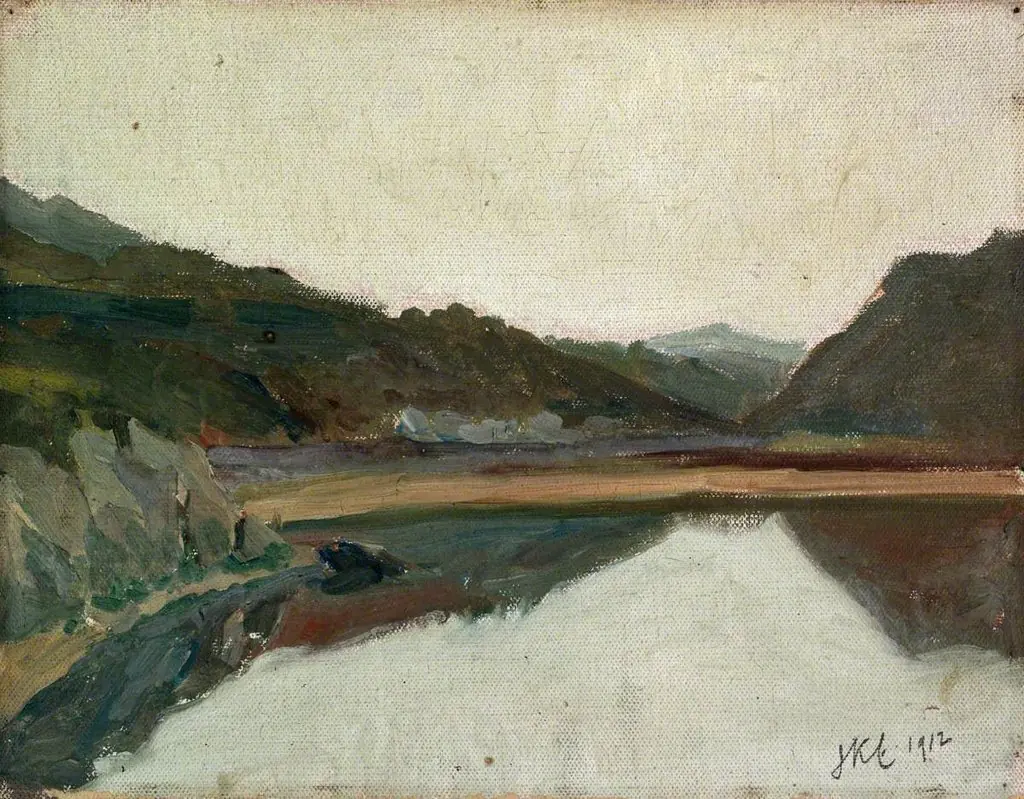
John Kelt Edwards painted quiet scenes of Wales in the early 1900s—garden statues, rocky hillsides, and a village called Cei Newydd near Talsarnau.