Artwork
Cherhana
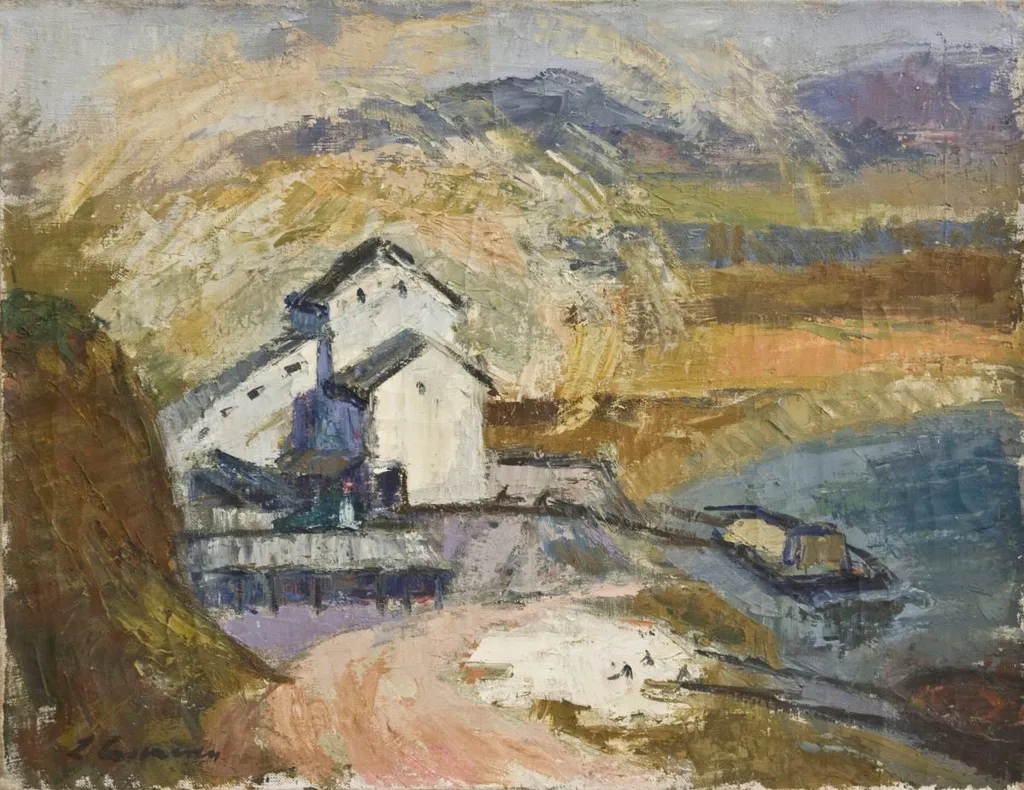
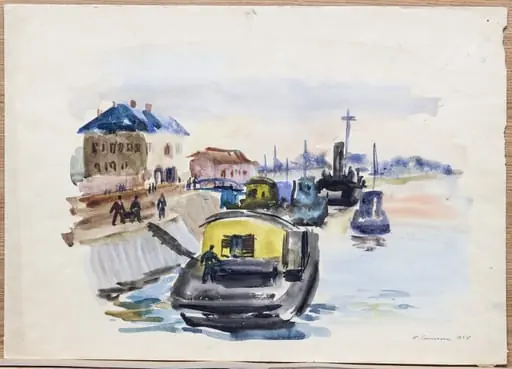
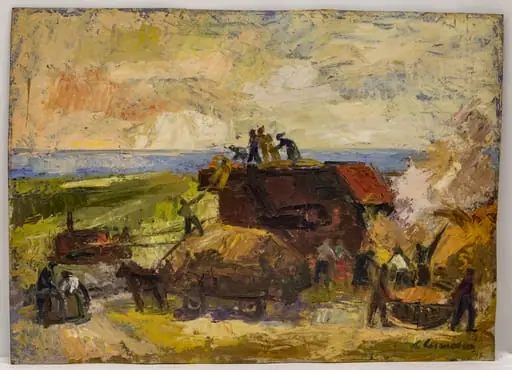
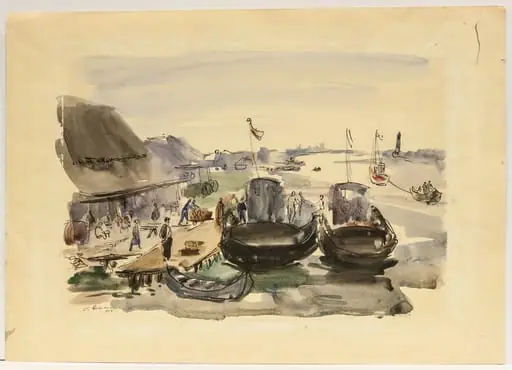
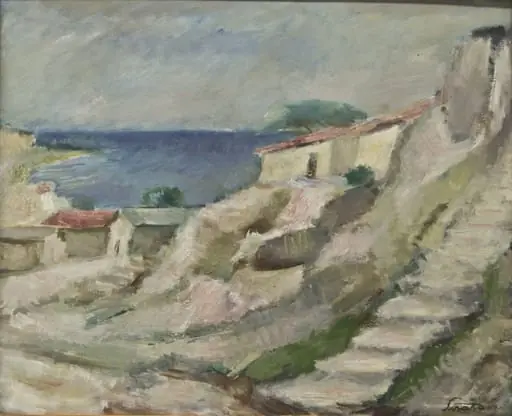
Cherhana is a print by Lucia Cosmescu. It dates from 1949 and is held in the collection of the Gavrilă Simion Eco-Museum Research Institute Tulcea - Art Museum.
About this work
Overview
It is part of the collection at the Museum of Ethnography, where it contributes to documentation of mid-20th-century landscape representation in Romanian art.
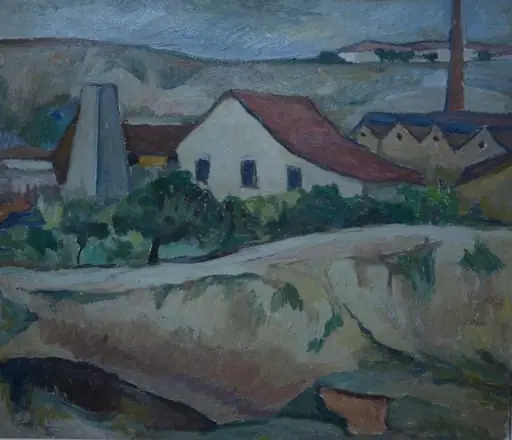
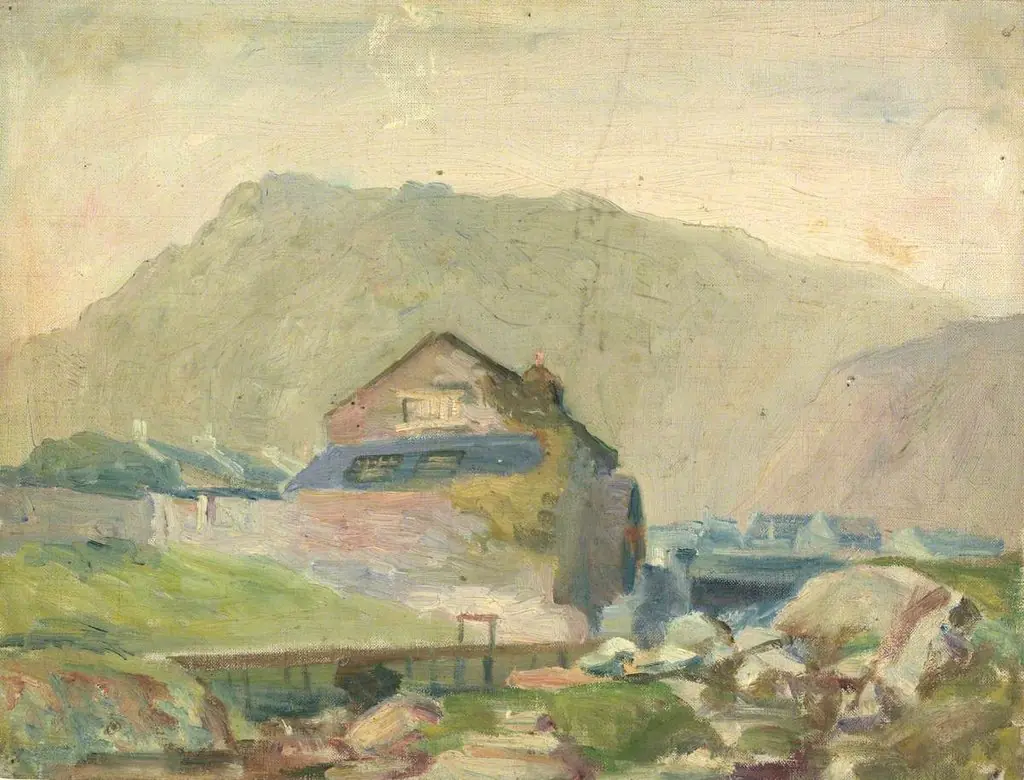
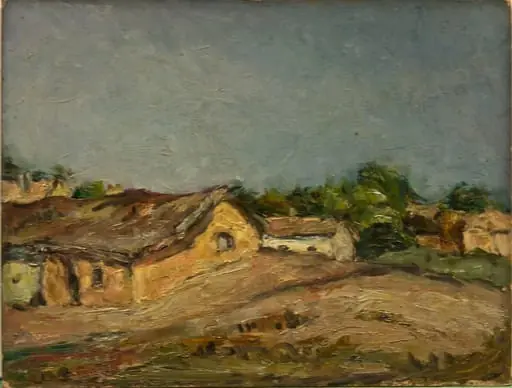
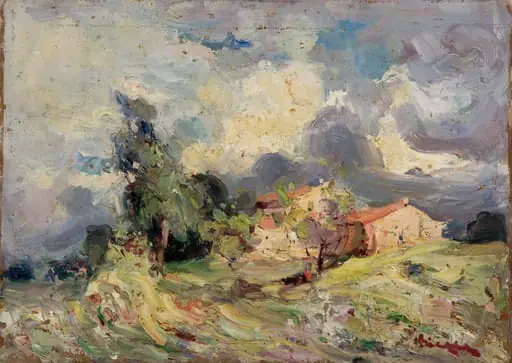
Created around 1949 by Romanian artist Lucia Cosmescu, this oil painting depicts a modest structure perched on a sloping terrain beside a river. Executed with a direct, observational approach, the work reflects a quiet rural scene in the Romanian countryside. It is part of the collection at the Museum of Ethnography, where it contributes to documentation of mid-20th-century landscape representation in Romanian art.
Subject & Meaning
The painting centers on a small, whitewashed building with a dark roof, isolated on a hillside. Below, a winding river suggests a quiet, functional landscape—perhaps near a dam or flood control structure. The absence of figures or activity emphasizes solitude and the quiet endurance of vernacular architecture. The scene conveys a sense of place rather than narrative, rooted in the rhythms of rural life.
Technique & Style
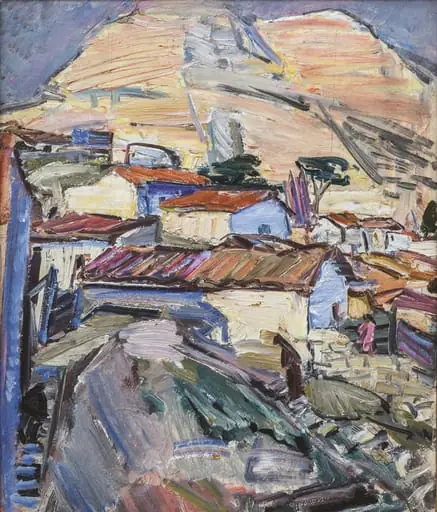
Cosmescu applied paint thickly, using visible, energetic brushstrokes to build form and texture. The impasto technique gives the structure and terrain a tactile presence, while the palette—dominated by earth tones and muted greens—grounds the scene in natural observation. Light is suggested through contrast rather than gradation, enhancing the immediacy of the composition and its sense of being painted en plein air.
History & Provenance
The work was produced in the late 1940s, during a period of cultural consolidation in postwar Romania. It entered the Museum of Ethnography’s collection as part of efforts to document regional artistic responses to the landscape. Its preservation reflects institutional interest in vernacular aesthetics and the role of women artists in shaping Romania’s modern visual culture.
Context
In the years following World War II, Romanian artists increasingly turned to local subjects as national identity was redefined. Cosmescu’s work aligns with this trend, capturing rural architecture and terrain without idealization. Her approach contrasts with official socialist realism, offering instead a personal, unembellished view of the countryside that resonates with earlier Impressionist and Post-Impressionist practices.
Legacy
Though not widely exhibited beyond institutional circles, the painting remains a quiet example of Romanian women artists engaging with landscape during a restrictive era. Its emphasis on materiality and direct observation has influenced later generations interested in non-monumental, intimate portrayals of the environment. The work endures as a testament to sustained, unassuming artistic practice.
Artist & collection
Artist
Lucia Cosmescu made prints and paintings of everyday scenes, mostly in the Danube Delta and Dobruja coast.
Museum
Gavrilă Simion Eco-Museum Research Institute Tulcea - Art Museum
Continue through works from the same source collection.