Artwork
Govan Ferry
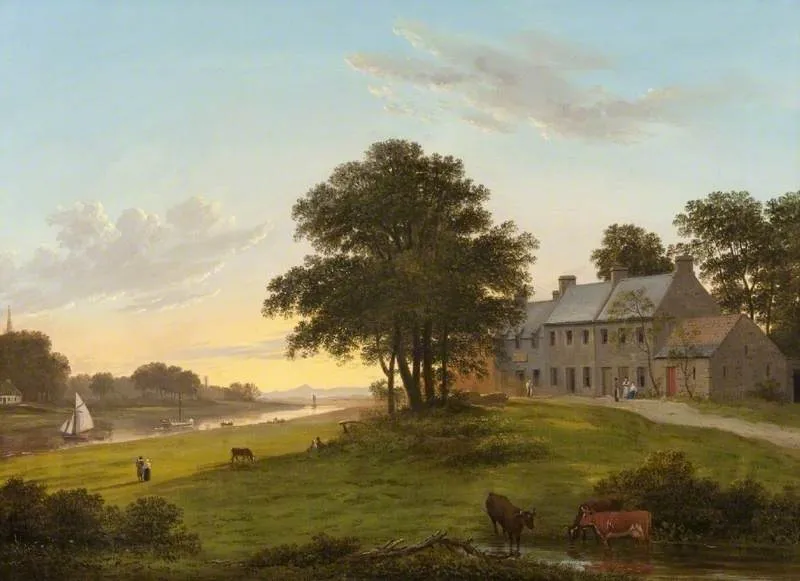
Govan Ferry is an oil painting by the British Romanticist artist John Knox. It dates from 1831 and is held in the collection of the Kelvingrove Art Gallery and Museum.
About this work
Overview
Painted in 1831 by John Knox, Govan Ferry is an oil-on-canvas work depicting a quiet riverside scene near Glasgow. It resides in the Kelvingrove Art Gallery and Museum, where it is displayed as part of a collection of early 19th-century Scottish landscape painting. The composition balances natural elements with subtle human presence, reflecting a calm, uneventful moment in rural life.
Subject & Meaning
The painting centers on a ferry crossing the River Clyde, its motion softened by distance. In the foreground, a herd of cattle gathers near the water, while a handful of figures move quietly along the bank. A large central tree frames the view, anchoring the scene without dominating it. The absence of dramatic action suggests an appreciation for ordinary, unhurried rhythms of daily life.
Technique & Style
The sky, rendered in pale blues and yellows, blends gently into the horizon, while the tree’s foliage is suggested rather than meticulously detailed.
Knox employed soft brushwork and muted tonal transitions to evoke atmospheric stillness. The sky, rendered in pale blues and yellows, blends gently into the horizon, while the tree’s foliage is suggested rather than meticulously detailed. Light falls evenly across the scene, minimizing shadows and reinforcing the sense of quietude. The technique avoids theatricality, favoring observational realism.
History & Provenance
Created during Knox’s active period in Glasgow, the painting remained in private hands until acquired by the city’s municipal collection in the late 19th century. It was later transferred to Kelvingrove Art Gallery and Museum, where it has been consistently exhibited as an example of regional landscape tradition. No significant alterations or restorations are documented.
Context
In the early 1830s, Scottish artists increasingly turned to local scenery as subjects, moving away from grand historical or romantic themes. Knox’s work reflects this shift, capturing everyday rural life near urban centers like Glasgow. The ferry, a common transport link at the time, symbolizes connection rather than spectacle, aligning with broader cultural interests in domestic tranquility.
Legacy
Govan Ferry remains a representative example of early Victorian Scottish landscape painting, valued for its restraint and attention to local detail. While not widely known outside regional collections, it contributes to the understanding of how artists of the period interpreted ordinary environments with quiet dignity, influencing later generations focused on place and atmosphere.
Artist & collection
Artist
John Knox painted sweeping Scottish landscapes in oil, often from high vantage points.

 Landscape with a Cottage and a Brook
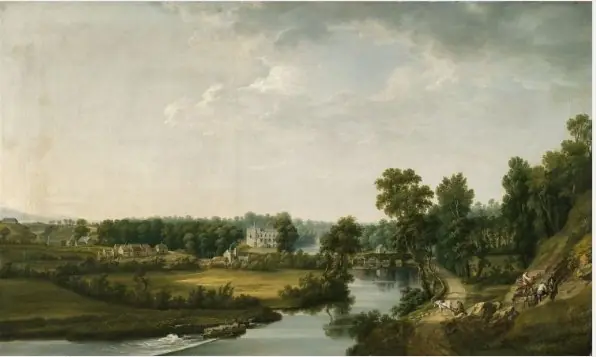 Lucan House and Demesne with Figures Quarrying Stone, County Dublin
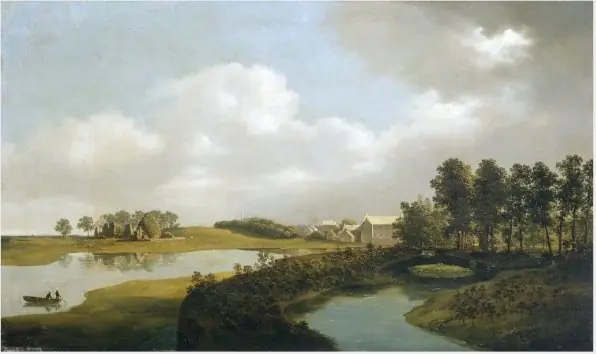 The Mill, Ballinrobe
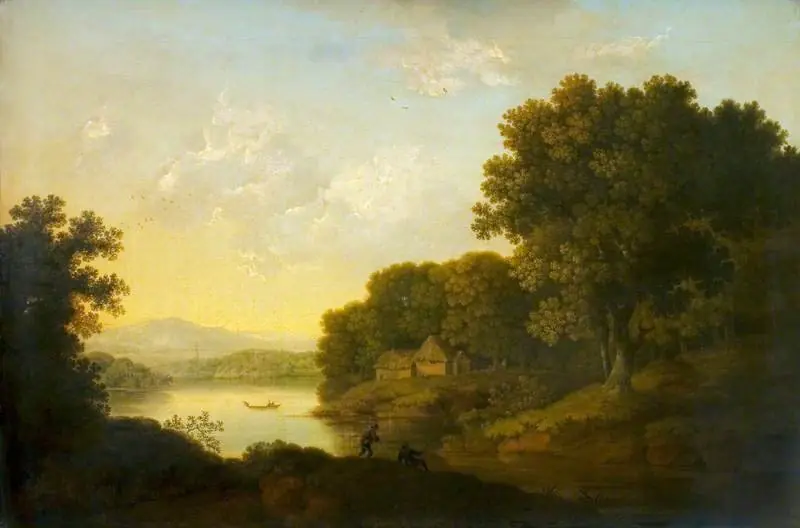 Lake Scene with a Boat and Anglers
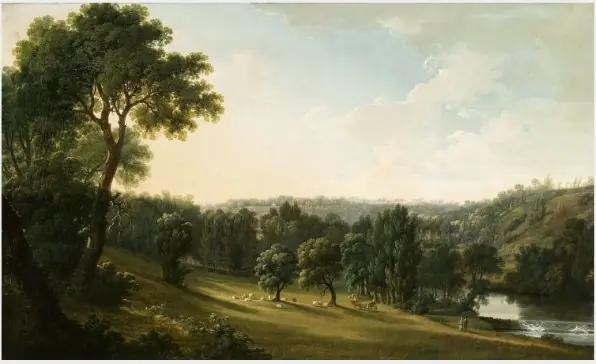 A View in Lucan House Demesne
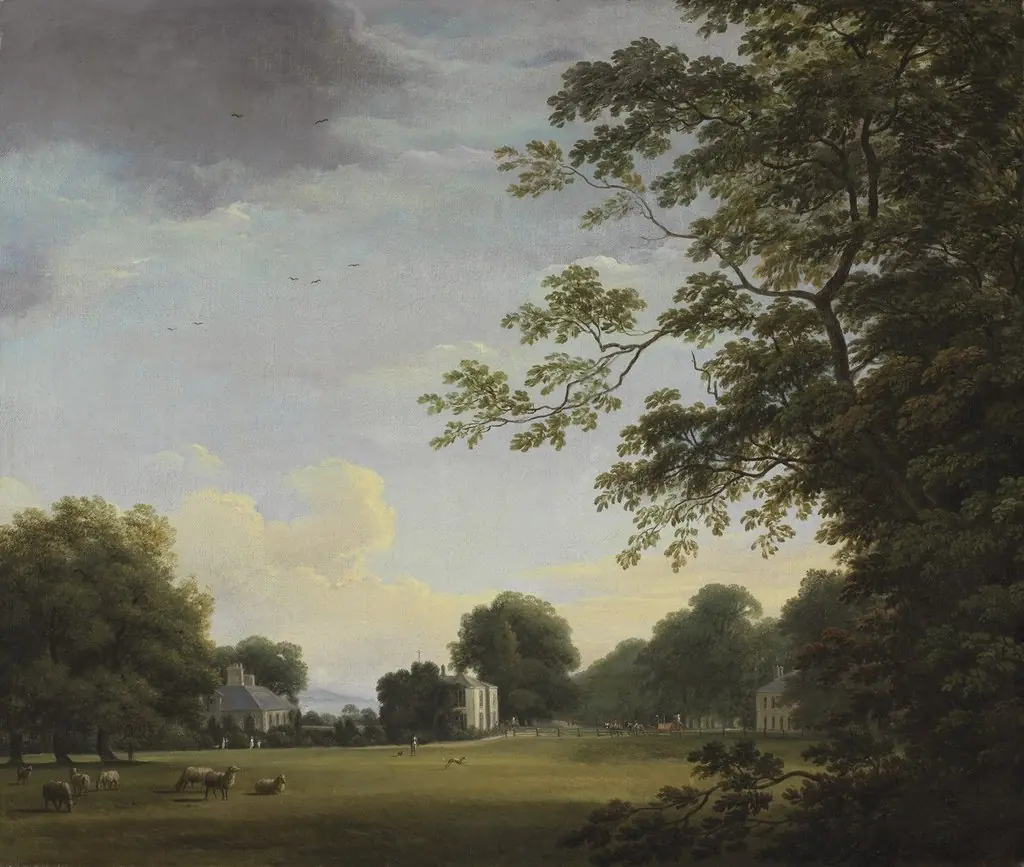 View in Mount Merrion Park
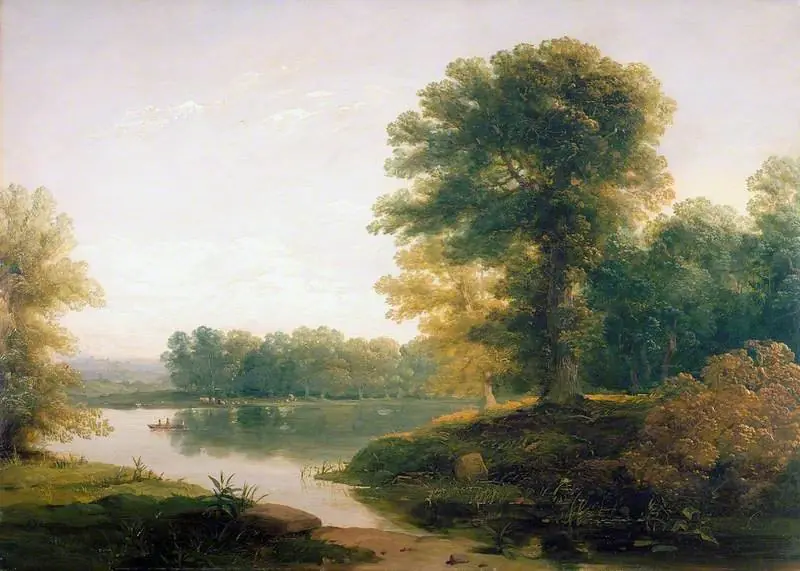 Landscape
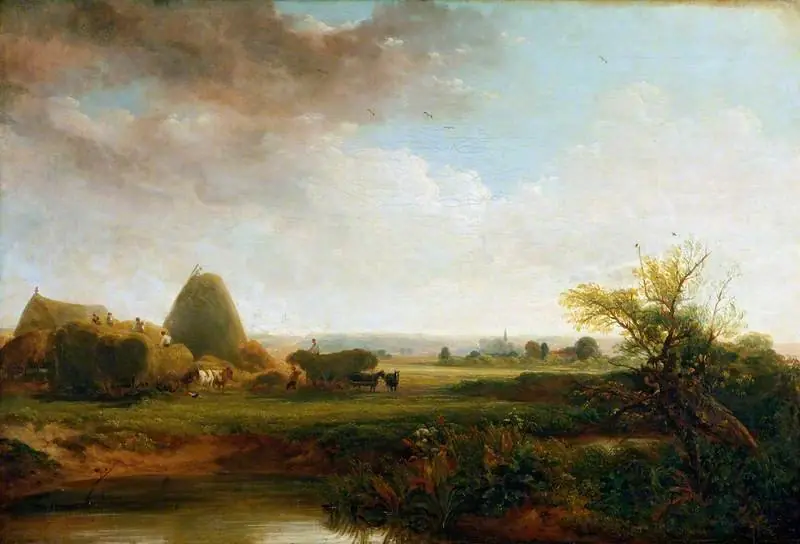 Haymaking
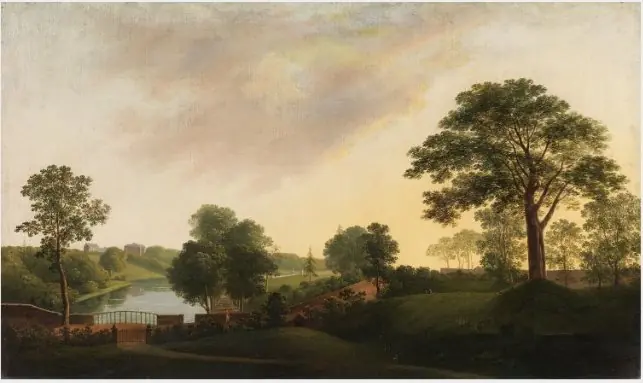 Pleasure Grounds, Ballinrobe
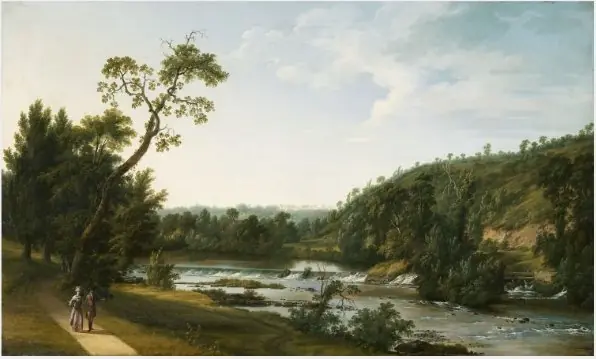 The River Liffey in Lucan House Demesne
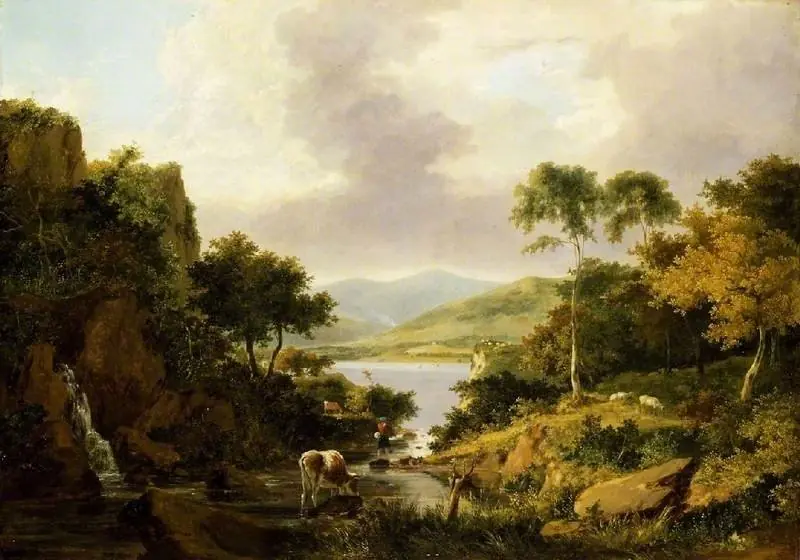 Loch Etive, Argyllshire
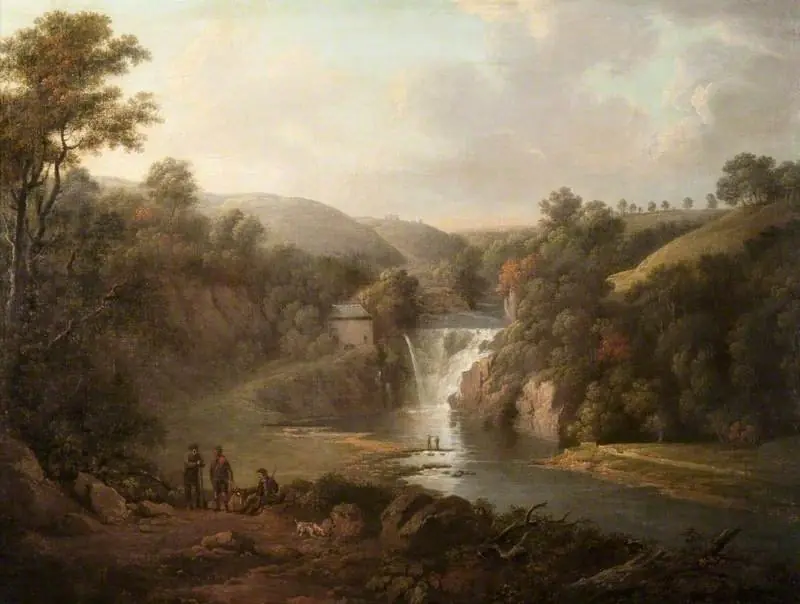 Falls of Clyde