Artwork
Untitled
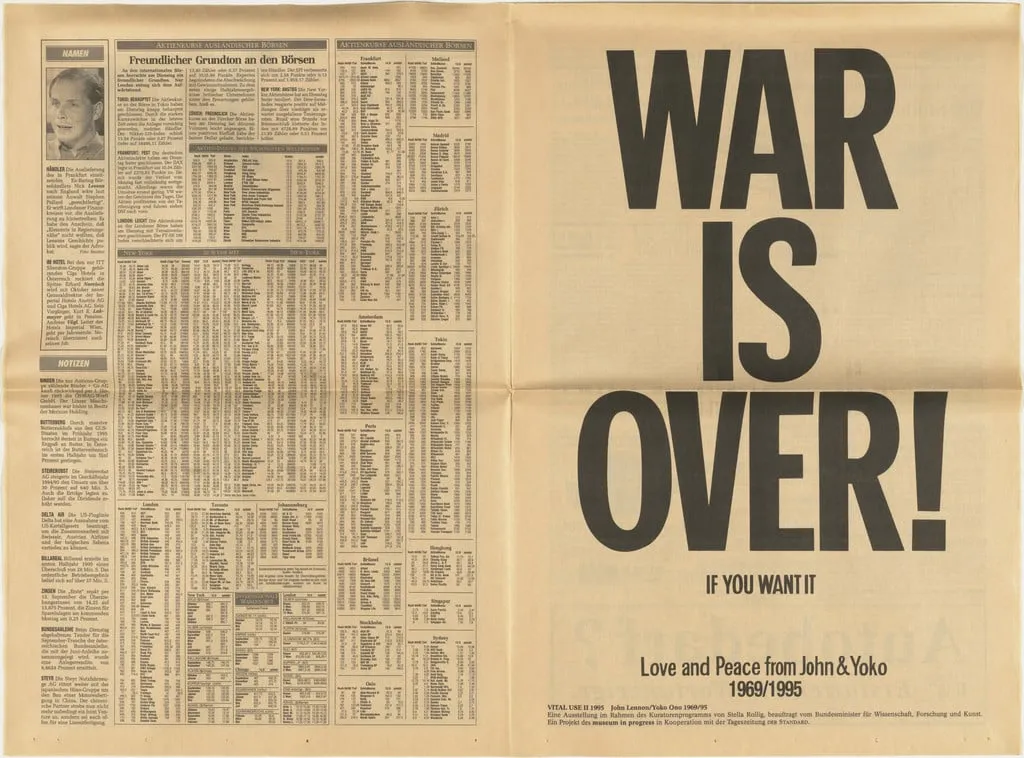
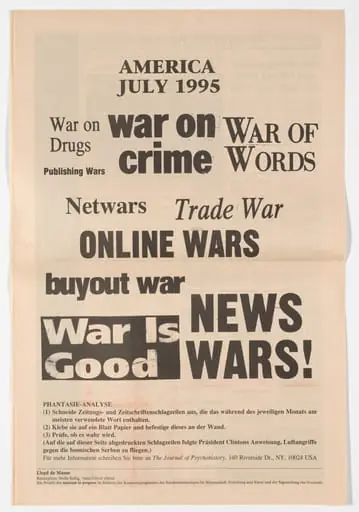
Untitled is an ink print by Yoko Ono John Lennon. It dates from 13 and is held in the collection of the Museum of Modern Art. This lithograph, produced in 1969 and later reprinted in 1995, is a black-and-white print that replicates the layout of a newspaper.
About this work
The contrast between the tiny, dense newsprint and the giant, simple words makes the statement stand out.
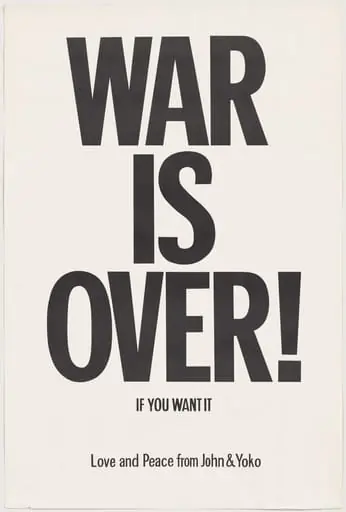
This image is a black-and-white newspaper page. The left side has small text in columns—headlines, stock prices, and short articles. The right side is dominated by bold, block letters spelling "WAR IS OVER! IF YOU WANT IT" in big, uneven type. Below that, it says *"Love and Peace from John & Yoko"* with years 1969/1995 at the bottom.
The text looks like it’s pasted over the newspaper, mixing serious news with a strong message. The contrast between the tiny, dense newsprint and the giant, simple words makes the statement stand out.
If this style of art interests you, look up lithography.
Overview
This lithograph, produced in 1969 and later reprinted in 1995, is a black-and-white print that replicates the layout of a newspaper. It combines dense, conventional news content with a large, hand-lettered political slogan. The work was created by Yoko Ono and John Lennon as part of their peace activism, using mass media aesthetics to deliver a direct message to the public.
Subject & Meaning
The central message—'WAR IS OVER! IF YOU WANT IT'—challenges viewers to consider personal responsibility in ending conflict. Positioned against mundane news items like stock prices and headlines, the slogan disrupts the passive consumption of information. The accompanying note, 'Love and Peace from John & Yoko,' frames the statement as both a plea and a call to action rooted in personal conviction.
Technique & Style
The print mimics the appearance of a newspaper through offset lithography, reproducing fine text and typographic textures. The slogan is rendered in uneven, bold block letters, contrasting sharply with the uniformity of the surrounding newsprint. This deliberate visual dissonance draws attention to the message, using the familiar format of print media to subvert its usual function.
History & Provenance
Created during the height of Lennon and Ono’s public peace campaigns, the image was originally distributed as part of a billboard campaign in major cities. The Museum of Modern Art acquired the lithograph as part of its collection of conceptual and activist art. The 1995 reprint extends its historical reach, reflecting ongoing relevance beyond its initial release.
Context
Emerging from the anti-Vietnam War movement and the broader counterculture of the late 1960s, the work aligns with artist-led interventions in public space. It reflects a trend of using commercial media formats to disseminate political ideas. Unlike traditional protest art, it avoids imagery, relying instead on typography and context to provoke reflection.
Legacy
The print has become a reference point in discussions of art as activism, particularly for its use of everyday media to communicate radical ideas. Its simplicity and repetition in later editions have ensured its presence in institutional collections and public discourse, where it continues to be cited as an example of conceptual messaging in visual form.
Artist & collection