Artwork
Untitled
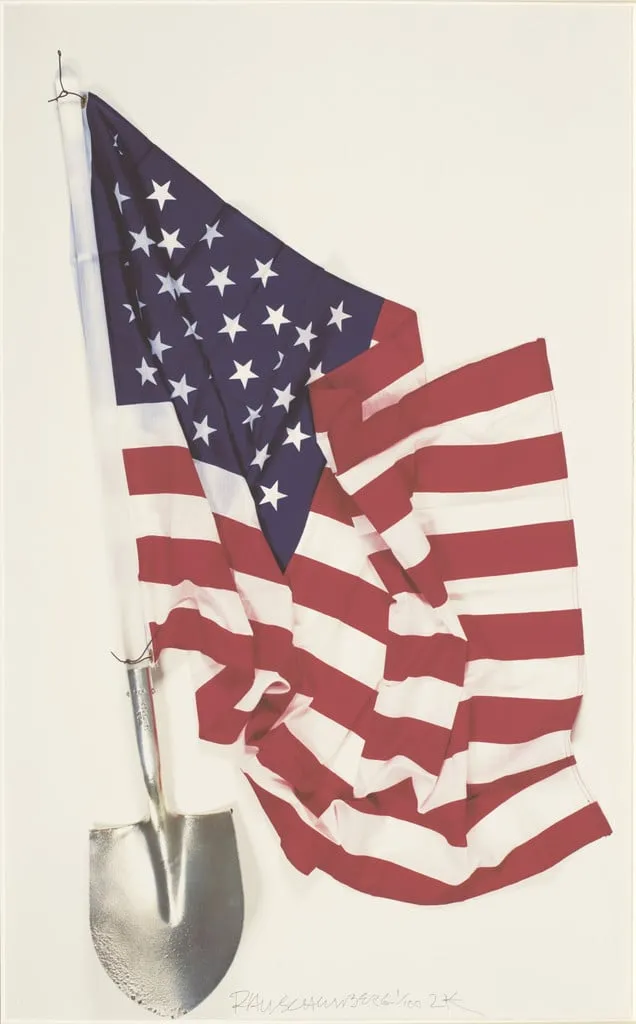
Untitled is a print by Robert Rauschenberg. It dates from 2000 and is held in the collection of the Museum of Modern Art.
About this work
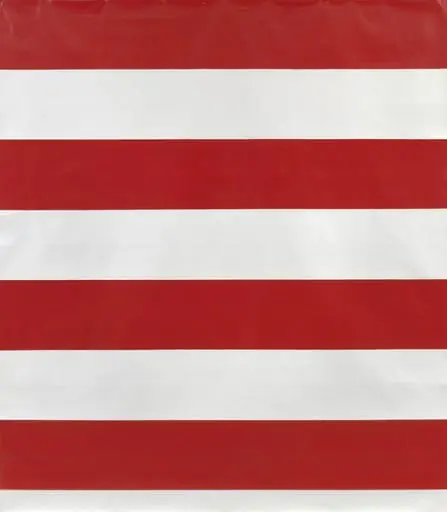
You see a tall, narrow print with swirling red, white, and blue shapes—like ink in water or a flag caught in the wind.
You see a tall, narrow print with swirling red, white, and blue shapes—like ink in water or a flag caught in the wind.
This was made as a campaign poster for the 2000 Democratic presidential race. Rauschenberg didn’t pick sides; he just gave the colors energy. The print feels fast, almost messy, but every mark is deliberate.
To see how he turned politics into art, look up more works by Robert Rauschenberg.
Overview
Created in 2000, this digital print by Robert Rauschenberg is part of The Museum of Modern Art’s collection. It features a vertical composition of dynamic red, white, and blue forms that suggest motion, evoking the visual language of flags or flowing liquids. Though produced for political use, the work resists direct partisan messaging, instead focusing on abstraction and gesture.
Subject & Meaning
The work does not depict specific figures or slogans but channels the symbolic colors of the American flag through abstract movement. Rauschenberg avoided endorsing any candidate, using the palette to evoke national identity rather than political allegiance. The energy of the forms invites interpretation without prescribing a single narrative.
Technique & Style
Rauschenberg employed digital printing to achieve fluid, layered marks that mimic spontaneous brushwork. The composition appears chaotic yet is carefully controlled, with each hue and shape positioned to create visual rhythm. The technique bridges traditional gestural abstraction with emerging digital methods, reflecting his lifelong interest in experimental media.
History & Provenance
The print was commissioned as a campaign poster for the 2000 Democratic presidential race but was never officially adopted by any candidate. Rauschenberg contributed it as a gesture of civic engagement, not as a partisan tool. It entered MoMA’s collection shortly after its creation, recognized for its conceptual approach to political imagery.
Context
Made during a period of intense political polarization, the work reflects Rauschenberg’s longstanding belief in art as a public, non-didactic force. Rather than aligning with party platforms, he used visual language to engage viewers emotionally and symbolically. This approach aligned with his broader practice of transforming everyday symbols into open-ended compositions.
Legacy
The print exemplifies Rauschenberg’s ability to merge political symbolism with abstract expression without reducing either. It remains a notable example of how artists can介入 public discourse through ambiguity rather than assertion. Its presence in MoMA underscores its significance in late 20th-century American art’s engagement with civic life.
Artist & collection

Artist
Milton Ernest "Robert" or "Bob" Rauschenberg was an American painter and multi-media artist, whose work has been associated with numerous mid-20th century art movements including the New York School, Conceptual Art, Pop art, and Neo-Dada.