Artwork
Tiger
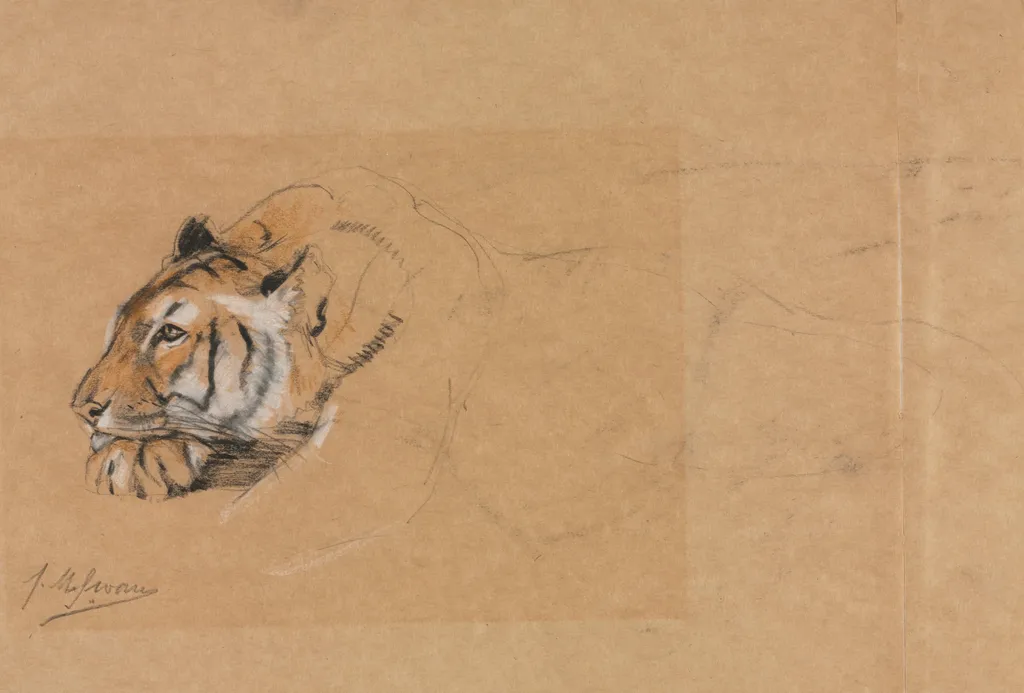
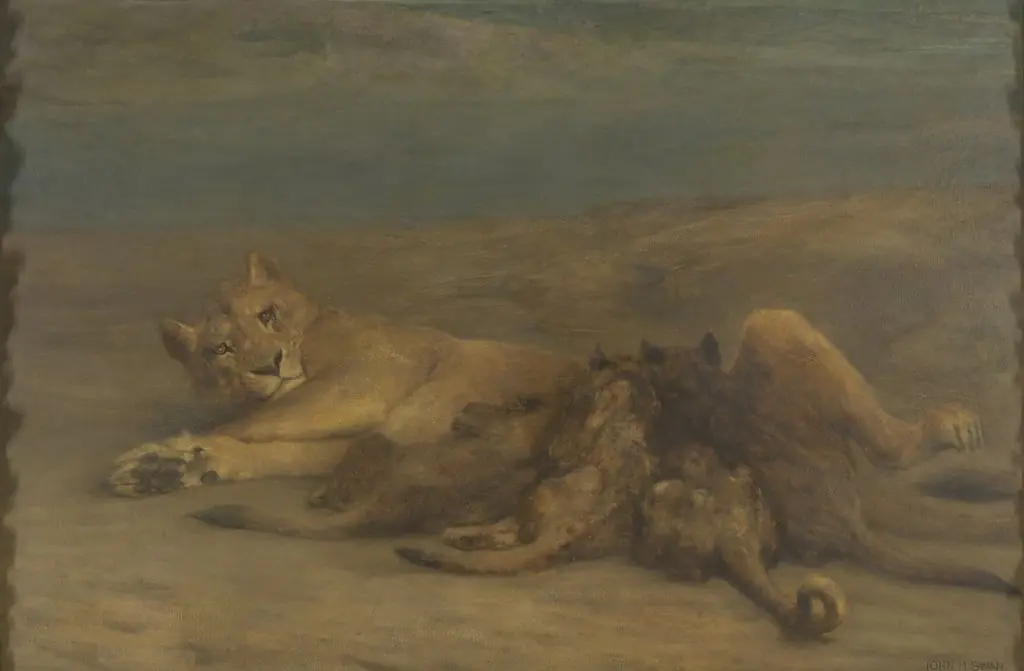
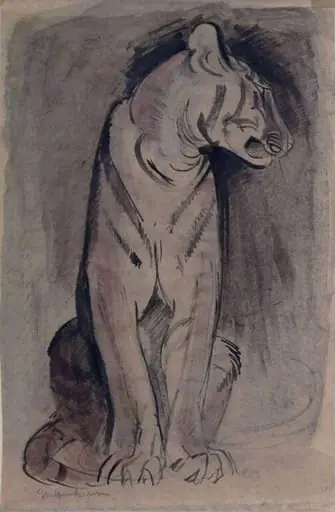
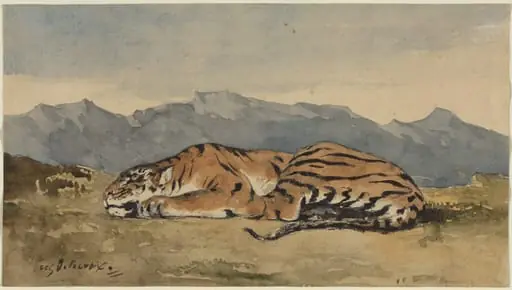
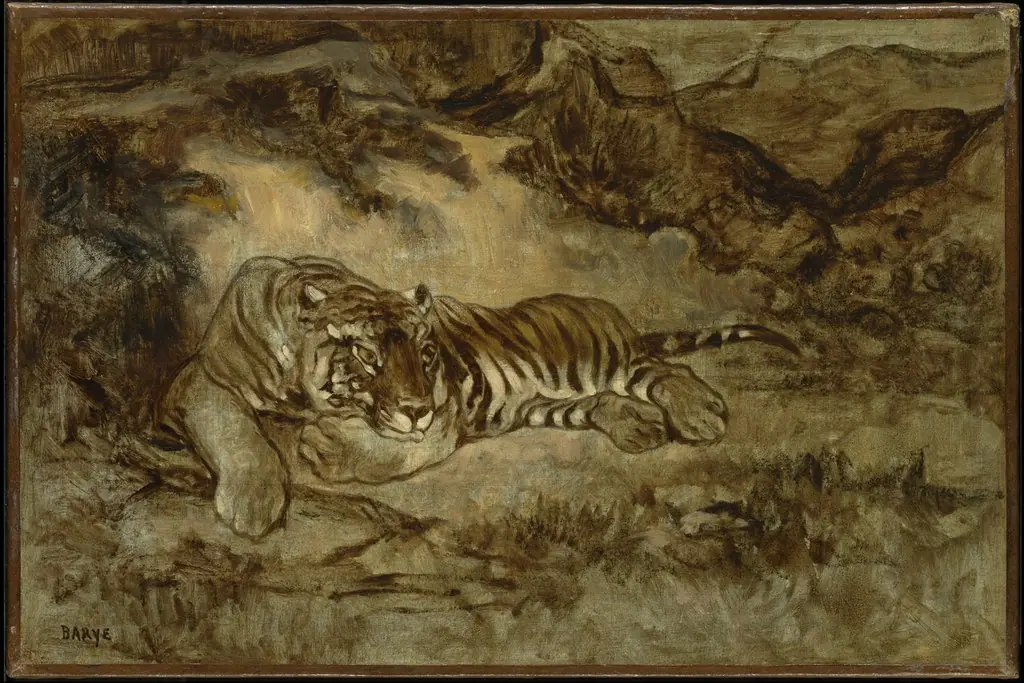
Tiger is a drawing by the Impressionist artist John Macallan Swan. It dates from 1886 and is held in the collection of the Cleveland Museum of Art.
About this work
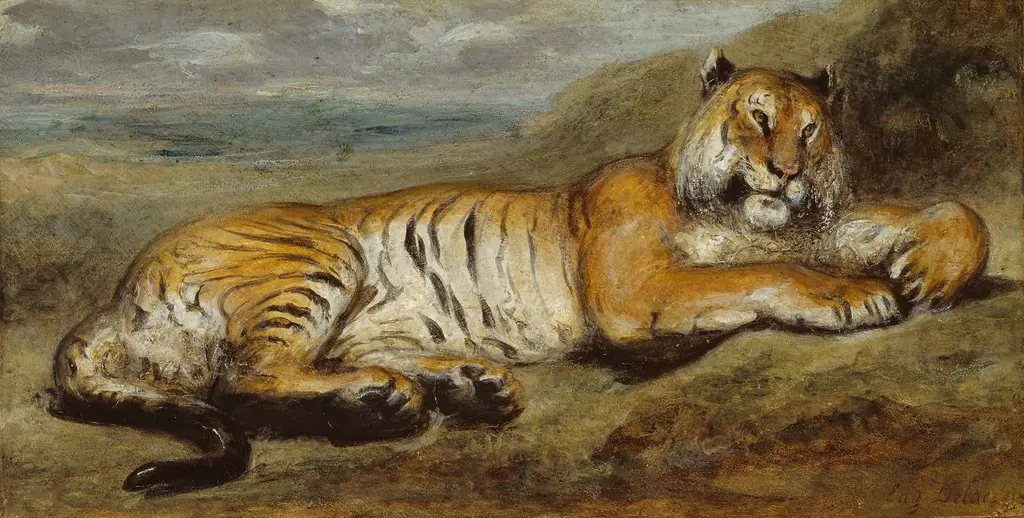
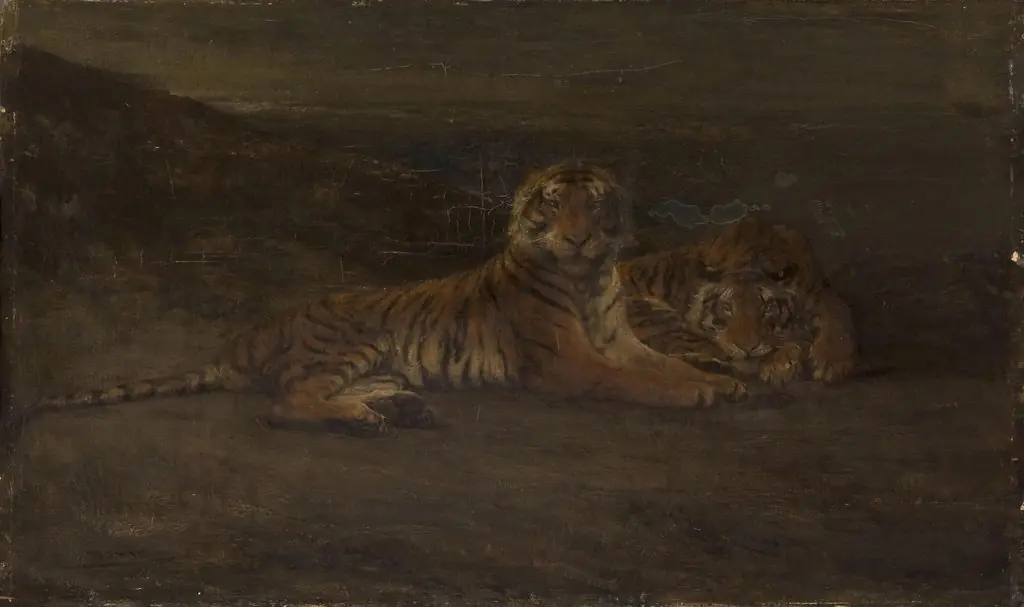
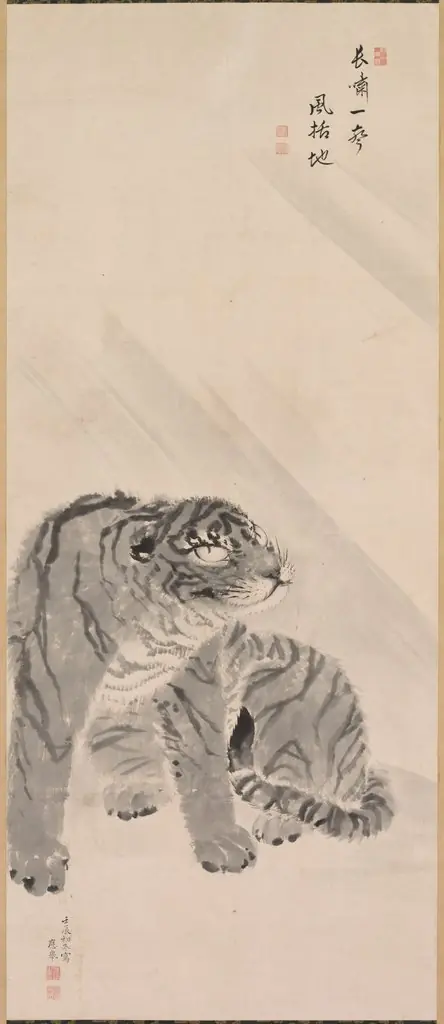
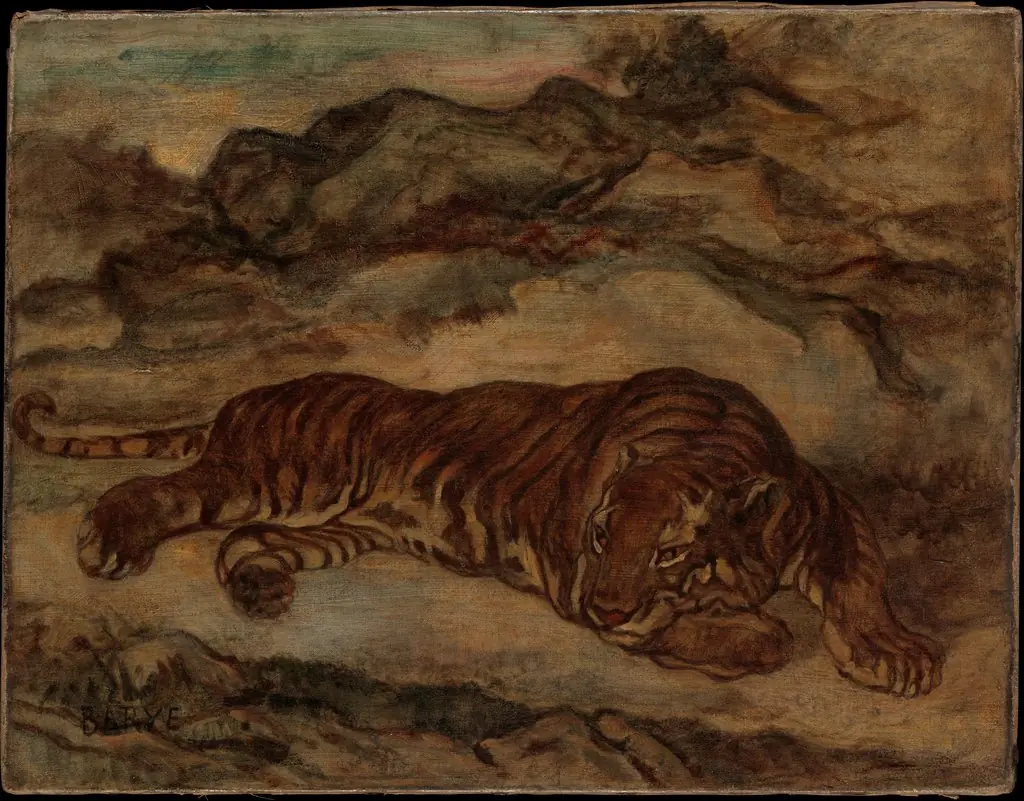
A tiger crouches low in tall grass, its orange fur glowing against the dark greens.
A tiger crouches low in tall grass, its orange fur glowing against the dark greens. The animal’s eyes lock onto something off-canvas, muscles coiled like a spring. Swan painted this before his 1870s shift to sculpture, so it’s all about brushwork.
Look closely: the whiskers are single hairs of paint, not lines. That tiny detail shows how Swan studied animals firsthand, not just from books.
If you like this, check out John Macallan Swan (British, 1847–1910).
Overview
Created in 1886 by British artist John Macallan Swan, this drawing depicts a tiger in a state of alert stillness. Executed in pencil and ink, the work resides in The Cleveland Museum of Art. It reflects Swan’s early focus on naturalistic animal studies before he turned primarily to sculpture in the late 1870s. The precision of the rendering suggests direct observation rather than reliance on secondary sources.
Subject & Meaning
The tiger is captured mid-crouch, poised in tall grass with its gaze fixed beyond the frame. Its tensed muscles and focused expression convey latent power, suggesting an imminent movement—hunting or defending. The composition avoids narrative context, emphasizing the animal’s raw presence. This isolation heightens the sense of wild autonomy, aligning with 19th-century interests in natural behavior over symbolic interpretation.
Technique & Style
Swan employed fine, controlled lines to render the tiger’s fur, with individual whiskers painted as single strokes of pigment rather than broad outlines. The contrast between the warm orange tones of the coat and the deep greens of the background creates depth without color washes. His technique reveals close study of anatomy and texture, prioritizing observational accuracy over decorative flourish, a hallmark of his pre-sculpture period.
History & Provenance
The drawing was completed in 1886, during Swan’s transitional phase between painting and sculpture. It entered The Cleveland Museum of Art’s collection through documented acquisition, though earlier ownership records are not publicly detailed. Its preservation in good condition reflects its status as a significant example of Swan’s draftsmanship, valued for its technical discipline rather than public exhibition history.
Context
In late 19th-century Britain, interest in natural history and zoological accuracy flourished alongside colonial expansion. Artists like Swan traveled to menageries and private collections to sketch live animals, rejecting idealized depictions. This work aligns with a broader movement toward empirical representation, influenced by scientific illustration and the rise of naturalist thought in visual culture.
Legacy
Swan’s tiger stands as a testament to his skill as a draftsman before his shift to three-dimensional work. While less known than his sculptures, this drawing exemplifies the rigor of his observational method. It remains a reference point for understanding how British artists engaged with animal subjects through direct study, bridging art and natural science in an era of growing ecological awareness.
Artist & collection