Artwork
Tiger, Tigress and Cub
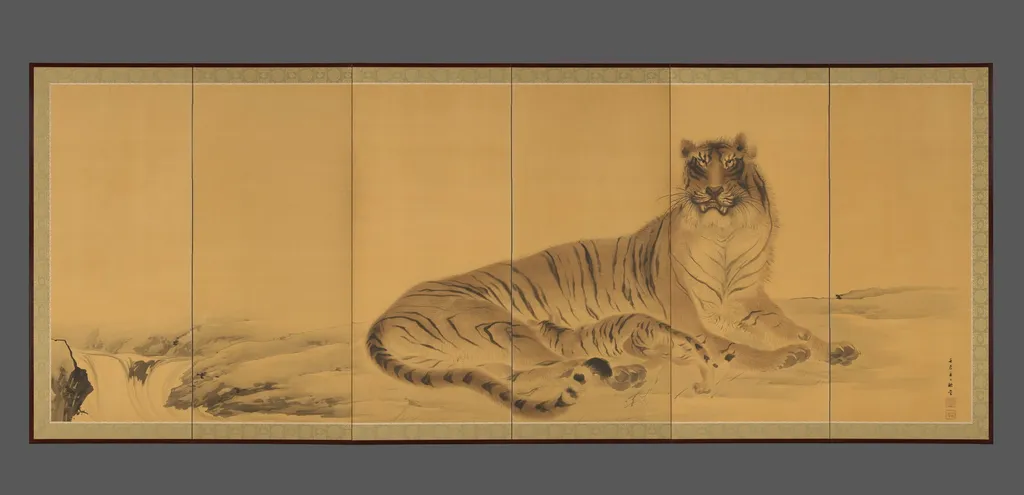
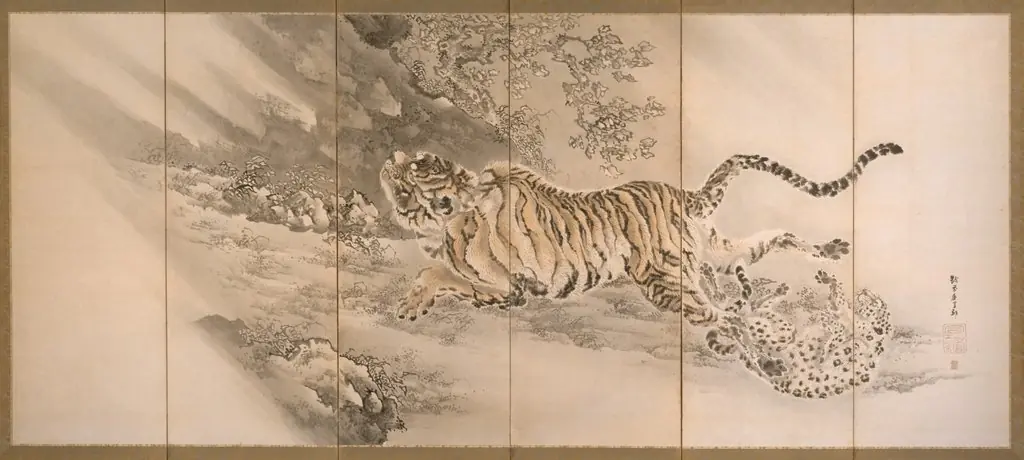
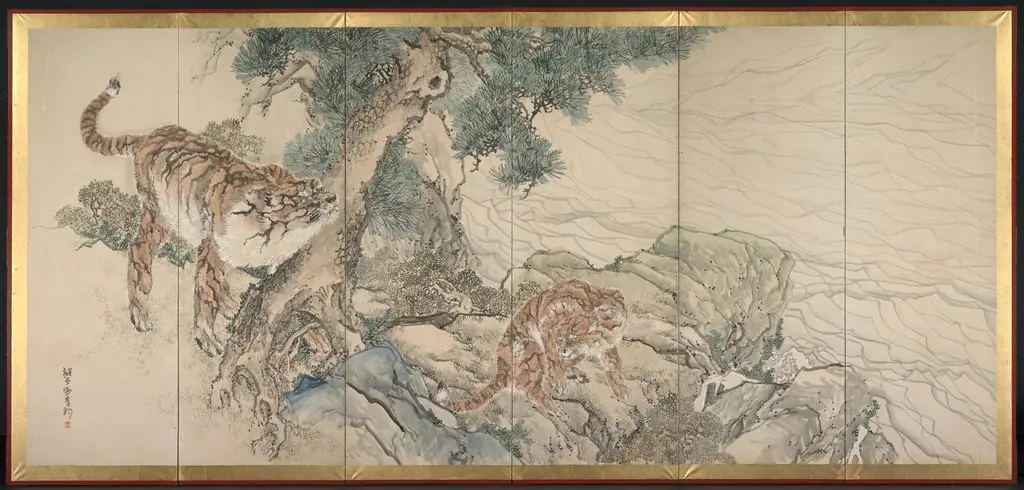
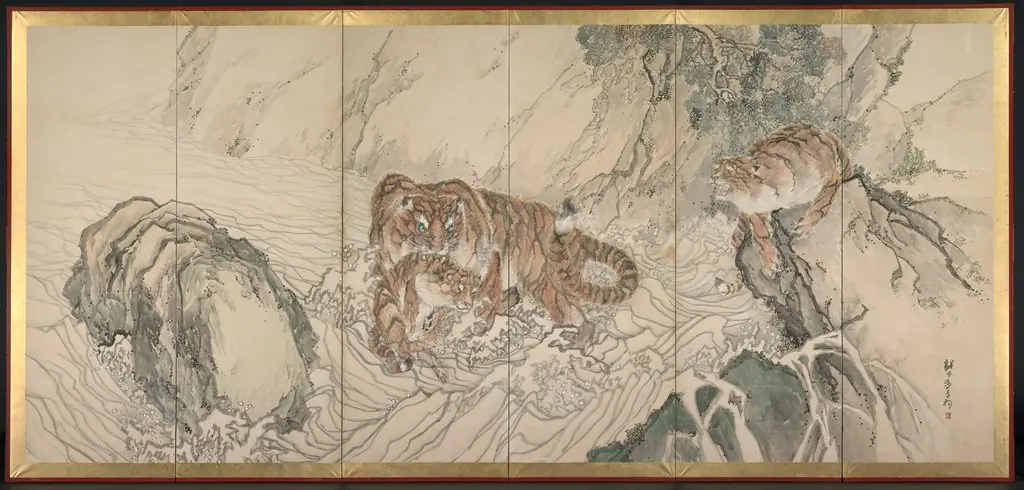
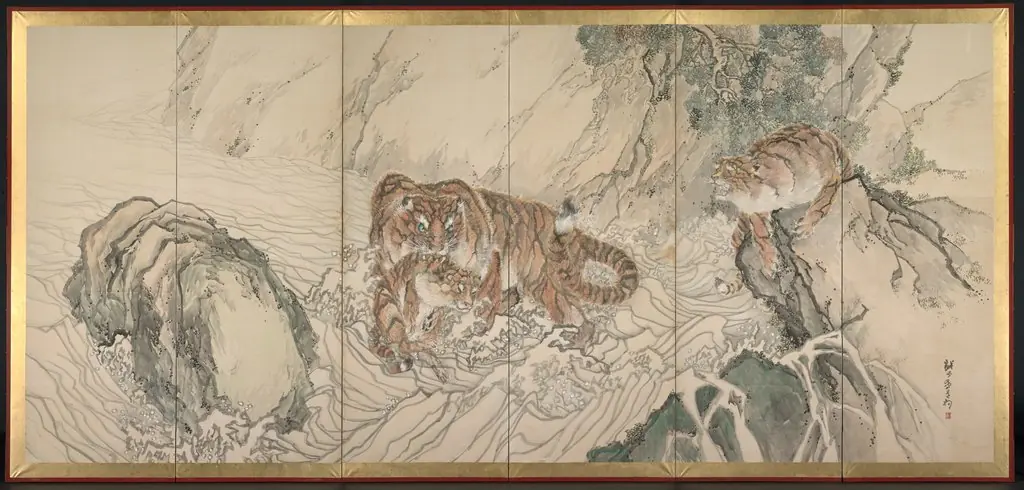
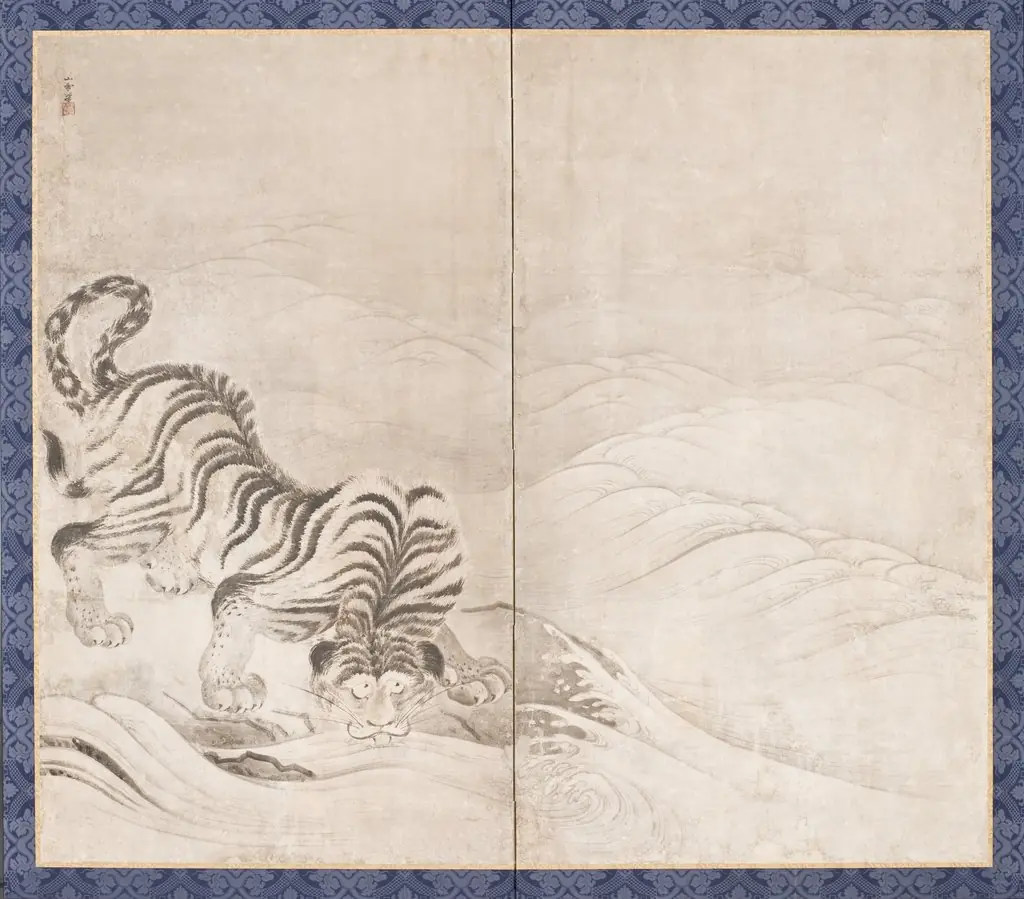
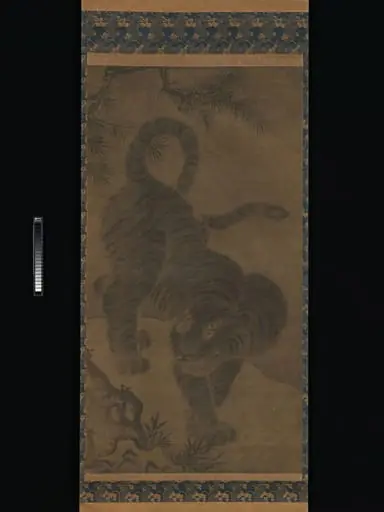
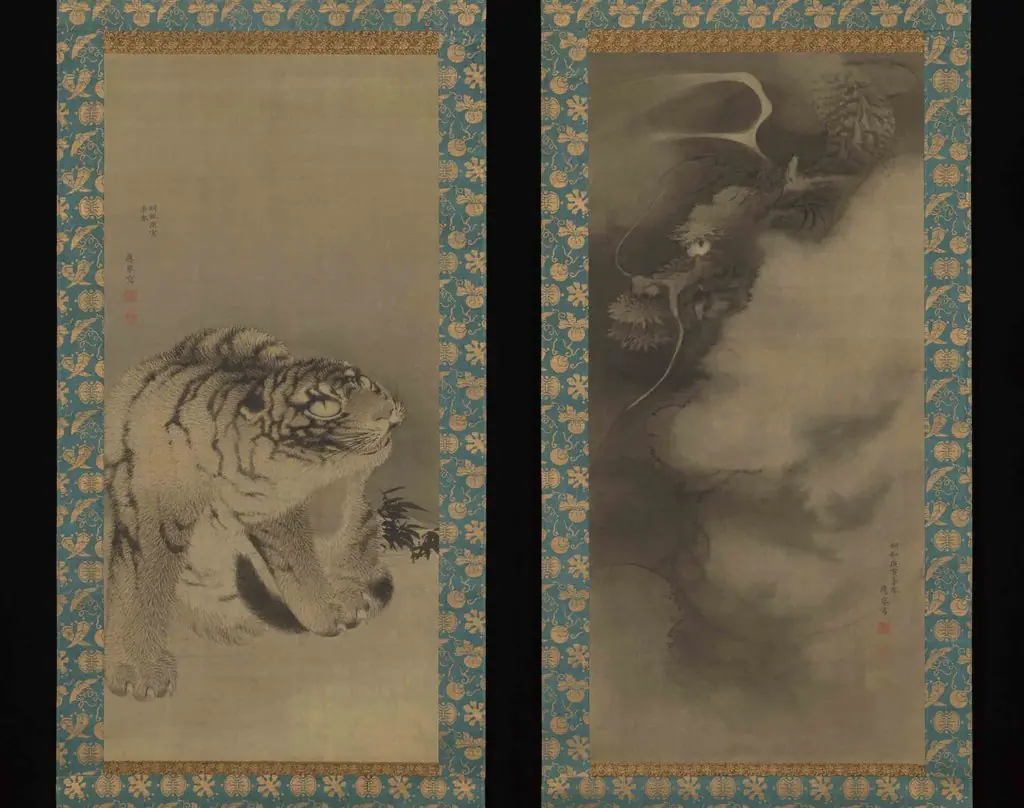
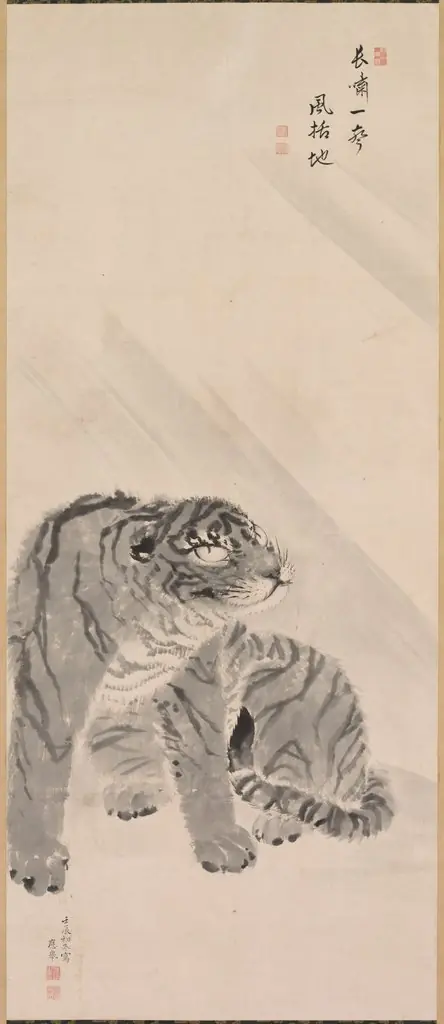
Tiger, Tigress and Cub is an unspecified painting by Kishi Chikudō. It dates from 1896 and is held in the collection of the Metropolitan Museum of Art.
About this work
Overview
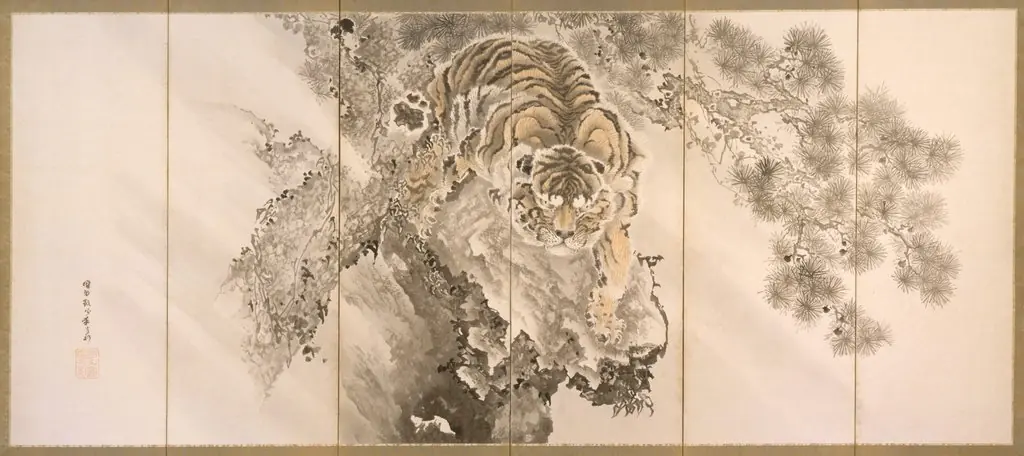
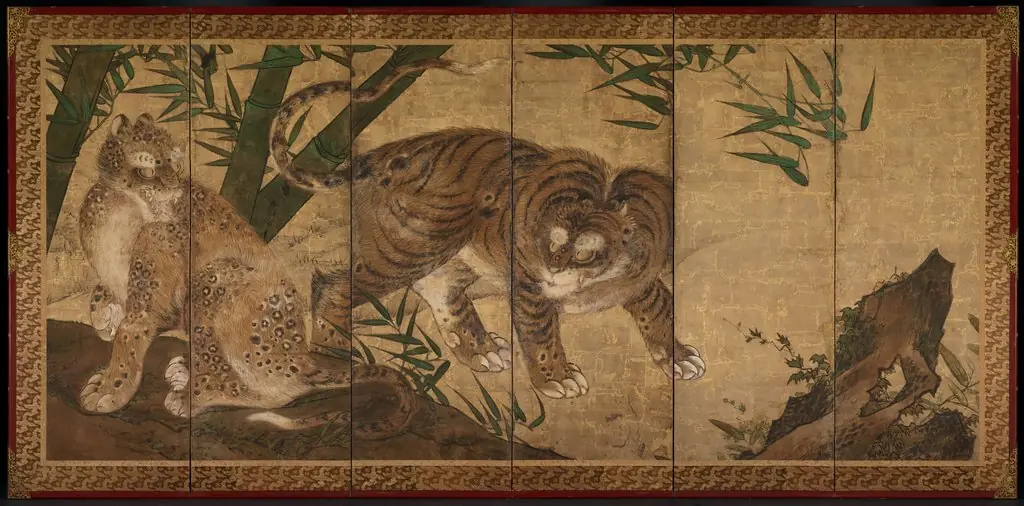
Tiger, Tigress and Cub, painted by Japanese artist Kishi Chikudō in 1896, is part of the Metropolitan Museum of Art’s collection. The work presents a mature tiger and its offspring in a quiet, naturalistic pose, rendered with careful attention to anatomical detail and the play of light across their bodies.
Subject & Meaning
The composition centers on a dominant tiger lying on its side, its gaze directed forward, while a smaller cub nestles beside it, looking upward. The juxtaposition of the adult’s calm authority with the cub’s attentive curiosity suggests themes of familial bond, protection, and the continuity of the species.
Technique & Style
Chikudō employs a realistic approach, emphasizing the texture of fur through fine brushwork and subtle gradations of tone. The striped pattern of black and orange is rendered with precise shading that gives the animals a three‑dimensional presence, while the muted brown background recedes, enhancing the focus on the figures.
History & Provenance
Created at the close of the 19th century, the painting entered the Metropolitan Museum of Art’s holdings, where it remains on display. Its acquisition reflects the museum’s broader effort to represent Japanese art from the Meiji period, a time when Western audiences were increasingly exposed to East Asian artistic traditions.
Artist & collection