Artwork
Paradise Lost: Adam and Eve Driven out of Paradise
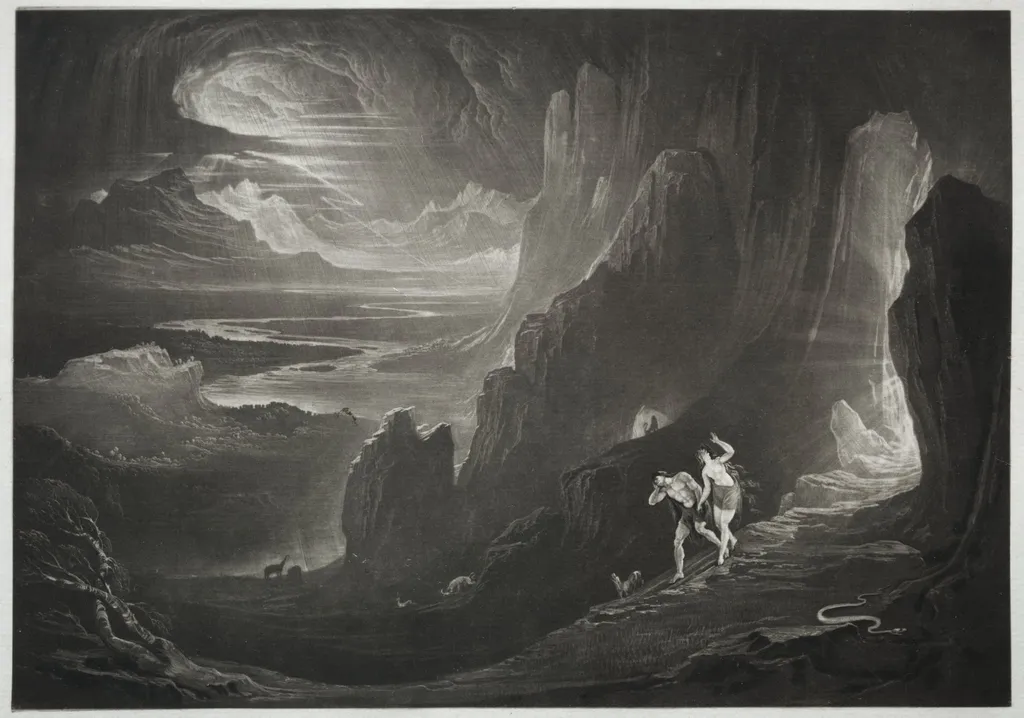
Paradise Lost: Adam and Eve Driven out of Paradise is a print by the Romanticist artist John Martin. It dates from 1826 and is held in the collection of the Cleveland Museum of Art.
About this work
The artist used a lot of detail to show the emotions of the characters, which makes it interesting to look at.
This painting shows Adam and Eve being driven out of paradise.
It's a dramatic scene with dark clouds and angels.
The artist used a lot of detail to show the emotions of the characters, which makes it interesting to look at.
You can see the sadness and fear on Adam and Eve's faces as they leave the garden.
Check out the work of artist John Martin (British, 1789–1854) for more dramatic scenes like this.
Overview
Paradise Lost: Adam and Eve Driven out of Paradise is a 1826 print by John Martin, an English artist known for dramatic compositions. The Cleveland Museum of Art holds the piece.
Subject & Meaning
The print depicts Adam and Eve's expulsion from paradise, a dramatic scene with dark clouds and angels. The characters' emotions are conveyed through detailed expressions, capturing their sadness and fear as they leave the garden.
Technique & Style
Martin's signature style is characterized by vast, imposing landscapes with minute figures, often used to convey religious and fantastical subjects. The level of detail in the characters' expressions adds to the emotional impact of the scene.
History & Provenance
The work was created in 1826 by John Martin, a British artist active during the Romantic period. Martin's paintings and prints gained significant public acclaim during his lifetime, despite criticism from some art critics.
Artist & collection
Artist
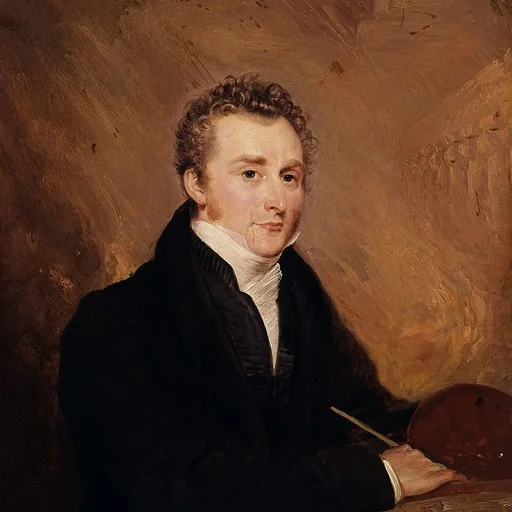
John Martin (19 July 1789 – 17 February 1854) was an English Romanticist painter, engraver, and illustrator.

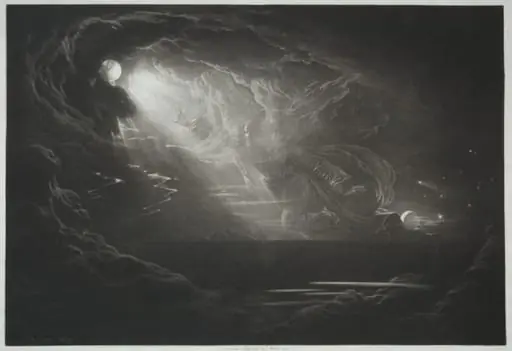 Paradise Lost: The Creation of Light
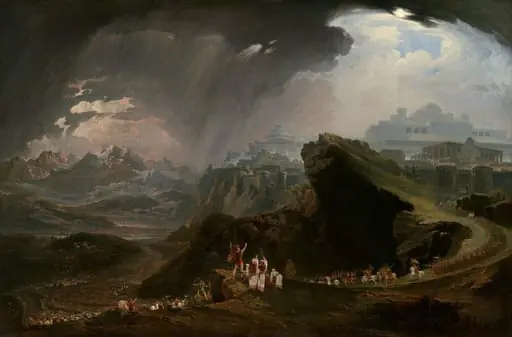
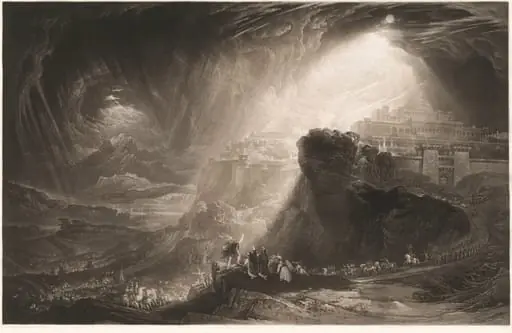 Joshua Commanding the Sun to Stand Still
 The Dawn of Creation
 American Scene
 A Cavern in the Campagna, Rome
 Travelers Resting in Gigantic Caverns
 A Morning
 Gordale Scar
 Seven Nymphs in a Grotto
 The Defeat of Sennacherib
 The Pass Between Dale and Dalsjed
 The Voyage of Life: Old Age