Artwork
The destruction of the Egyptians in the Red Sea
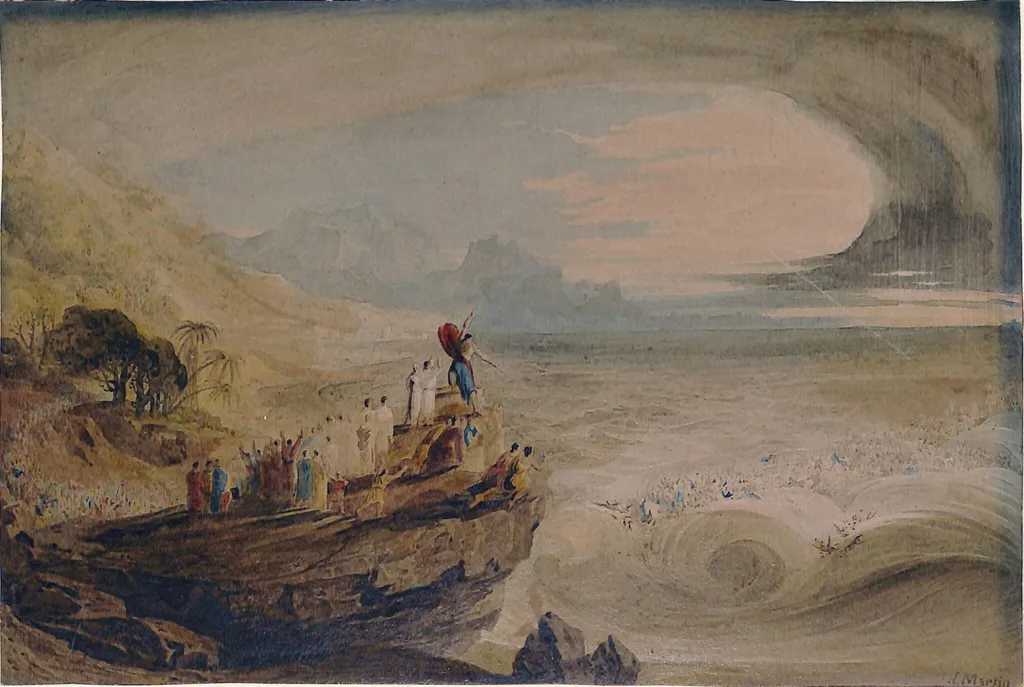
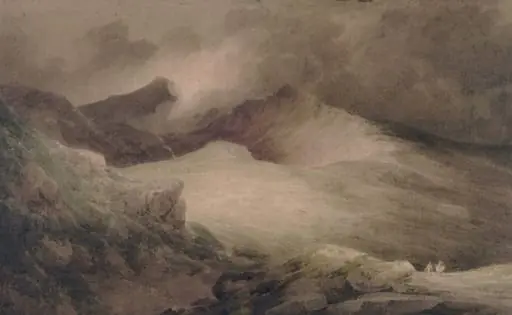
The destruction of the Egyptians in the Red Sea is a watercolor work on paper by John Martin. It dates from 1850 and is held in the collection of the Victoria and Albert Museum.
About this work
Overview
John Martin created this watercolour around 1832, illustrating a dramatic moment from the Book of Exodus. The scene captures the collapse of Pharaoh’s army as the Red Sea closes over them. Executed in transparent pigments, the work exemplifies Martin’s fascination with cataclysmic natural forces and divine retribution, rendered with meticulous attention to scale and atmospheric tension.
Subject & Meaning
The painting portrays the biblical moment when the waters of the Red Sea, parted for the Israelites, surge back to drown the pursuing Egyptian forces.
The painting portrays the biblical moment when the waters of the Red Sea, parted for the Israelites, surge back to drown the pursuing Egyptian forces. Martin emphasizes divine justice through overwhelming natural power, with human figures rendered as fragile, almost insignificant amid the chaos. The composition conveys inevitability and awe, aligning with 19th-century interpretations of biblical narrative as cosmic drama.
Technique & Style
Martin employed layered washes of watercolour to suggest the turbulent motion of the wave, using cool grays, blues, and muted greens to convey depth and volume. The foreground figures are small and loosely defined, contrasting with the sharply rendered crest of the water. His use of chiaroscuro heightens the drama, directing focus to the collapsing mass of water while leaving the distant landscape in softer focus.
History & Provenance
The watercolour was once held in the collection of Alfred Edward Moxon, a British art patron. In 1924, it passed into the hands of Thomas Balston, a noted collector and publisher of prints. Its movement between private collections reflects its status as a significant, though not widely exhibited, work within Martin’s oeuvre during the early 20th century.
Context
Created during a period when Martin was producing large-scale biblical and apocalyptic scenes, this watercolour aligns with his broader interest in sublime natural forces. It responds to contemporary religious and scientific debates about nature’s power, while also echoing Romantic-era aesthetics that privileged emotional intensity over classical restraint.
Legacy
Though less known than Martin’s monumental oil paintings, this watercolour demonstrates his mastery of scale and atmosphere in a more intimate medium. It remains a key example of how biblical themes were visually reinterpreted in the 19th century, influencing later artists who sought to convey awe through landscape and disaster.
Artist & collection
Artist
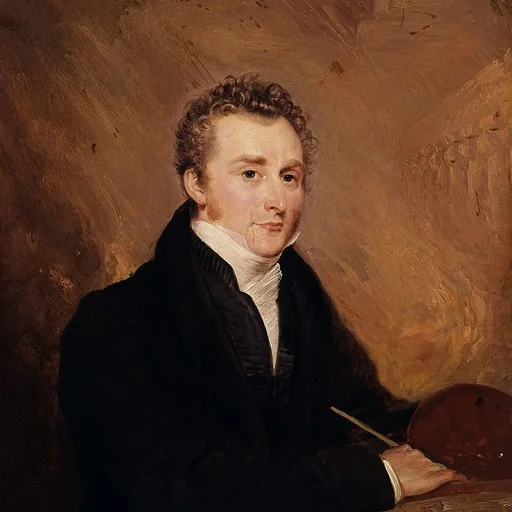
John Martin (19 July 1789 – 17 February 1854) was an English Romanticist painter, engraver, and illustrator.