Artwork
Snowdon
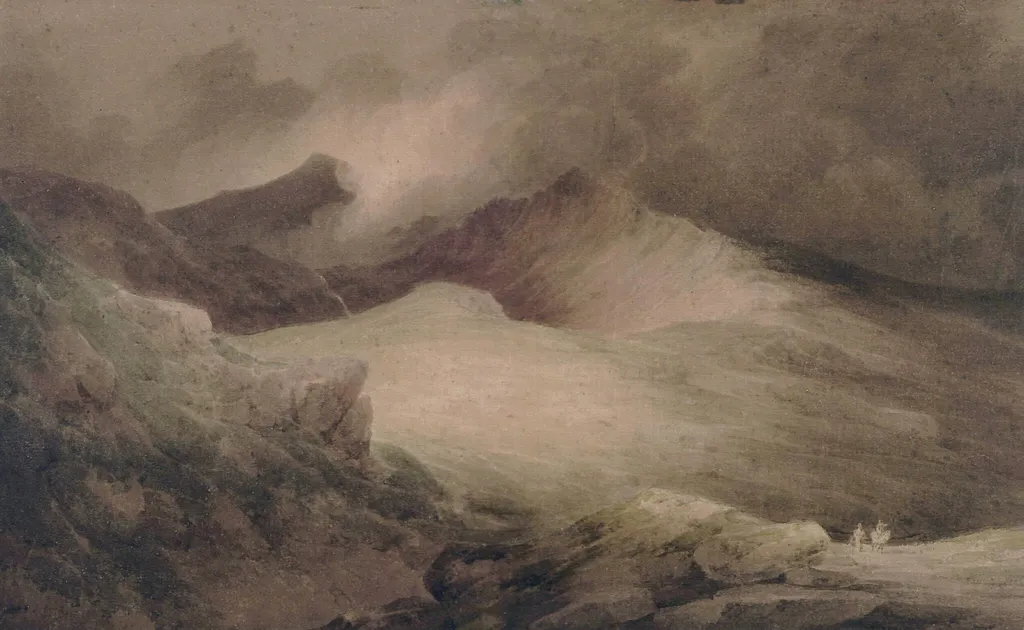
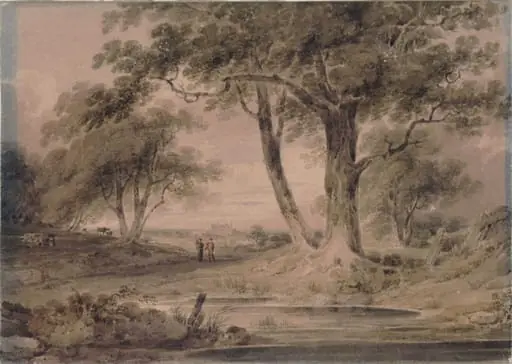
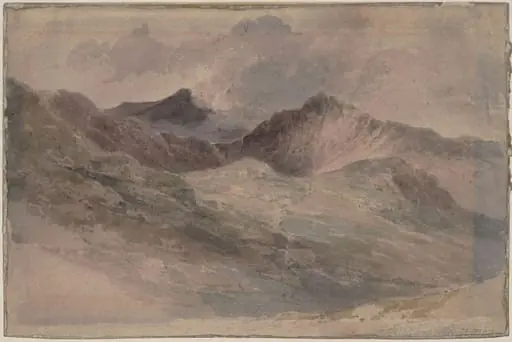
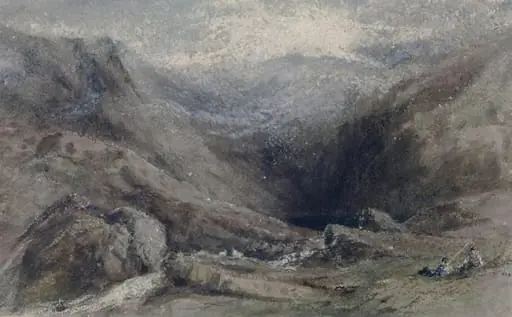
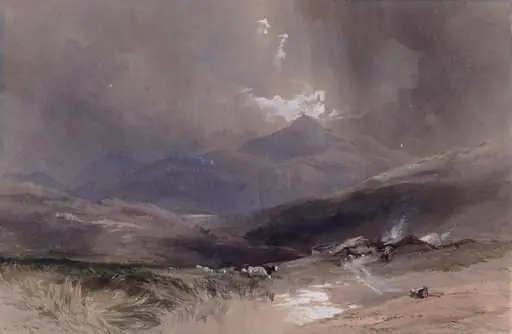
Snowdon is a watercolor work on paper by the British Romanticist artist Paul Sandby Munn. It dates from 1806 and is held in the collection of the Victoria and Albert Museum.
About this work
Overview
Rendered in delicate washes, it captures the landscape with a sense of quiet grandeur, emphasizing natural forms over detailed precision.
Painted around 1806, Snowdon is a watercolour by Paul Sandby Munn depicting the Welsh mountain range of the same name. The work resides in the Victoria and Albert Museum’s collection. Rendered in delicate washes, it captures the landscape with a sense of quiet grandeur, emphasizing natural forms over detailed precision. The medium’s transparency allows light to interact with the paper, enhancing the atmospheric tone.
Subject & Meaning
The painting portrays Snowdon’s rugged peaks under a somber sky, with a narrow path winding through the terrain. Two small equestrian figures traverse the trail, their scale underscoring the vastness of the landscape. The composition invites contemplation rather than narrative, reflecting a Romantic sensibility that finds emotional resonance in nature’s scale and solitude, not in human dominion over it.
Technique & Style
Munn employed loose, fluid brushwork to suggest texture and motion—clouds drift with minimal definition, rock faces are hinted at through layered washes of grey and brown. The palette is restrained, dominated by earth tones and muted greens, with faint white highlights suggesting snow or mist. This approach aligns with contemporary watercolour practices that valued suggestion over detail, prioritizing mood and immediacy.
History & Provenance
Created circa 1806, the painting entered the Victoria and Albert Museum’s collection through its established acquisition of British watercolours from the early 19th century. While little is documented about its early ownership, its presence in the museum reflects institutional interest in the period’s topographical and landscape watercolours, particularly those tied to British natural scenery.
Context
During the early 1800s, British artists increasingly turned to domestic landscapes as subjects worthy of serious artistic treatment. Snowdon, part of this trend, aligns with the Romantic movement’s fascination with wild, untamed nature. Unlike grand historical scenes, such works emphasized personal response to environment, often evoking awe, solitude, or reverence through subtle tonal shifts and atmospheric effects.
Legacy
Snowdon exemplifies the quiet evolution of British watercolour from topographical record to expressive medium. Though not widely known today, it contributes to the broader understanding of how 19th-century artists used restrained technique to convey emotional depth. Its preservation in a major museum affirms its role in the development of landscape watercolour as a legitimate artistic form.
Artist & collection