Artwork
Untitled
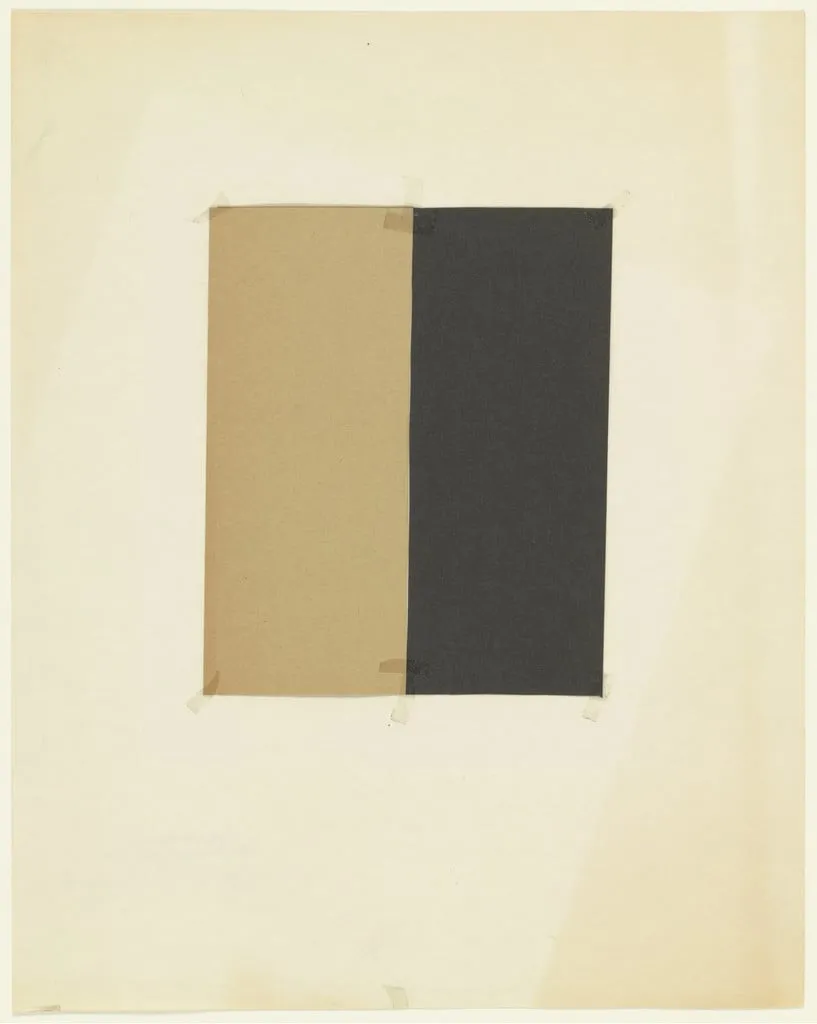
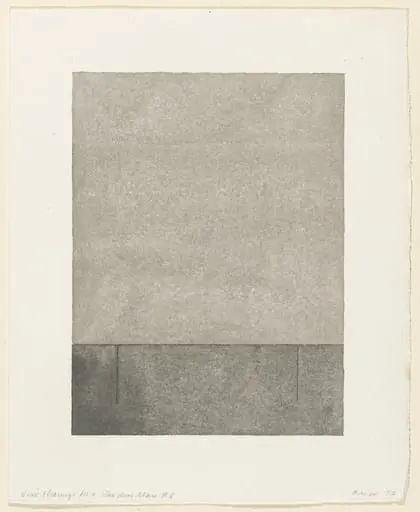
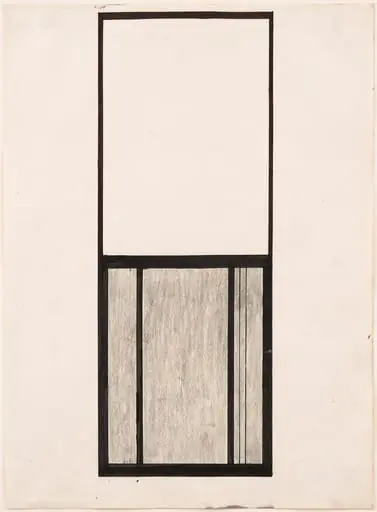
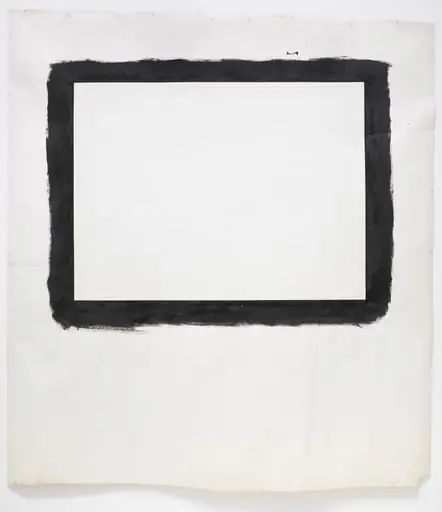
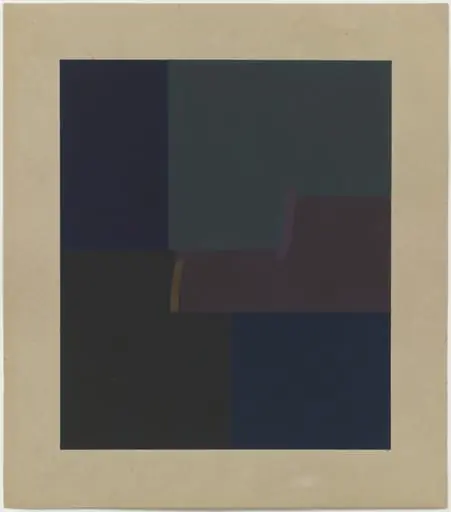
Untitled is a graphite drawing by John McLaughlin. It dates from 1960 and is held in the collection of the Museum of Modern Art.
About this work
Overview
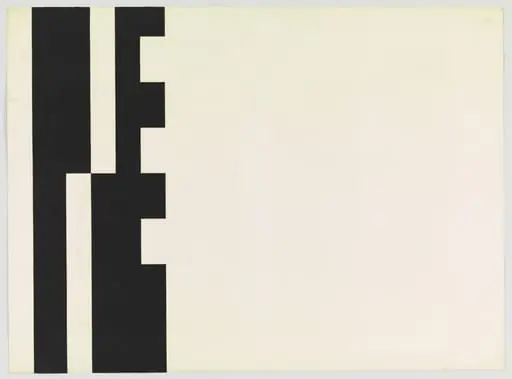
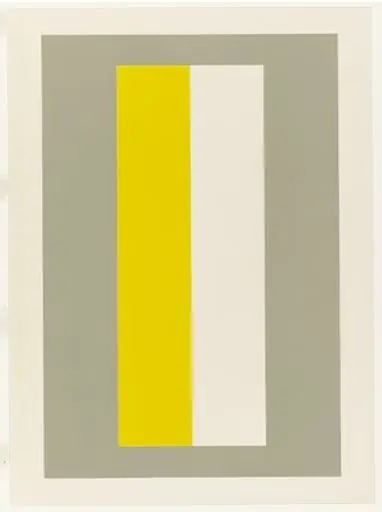
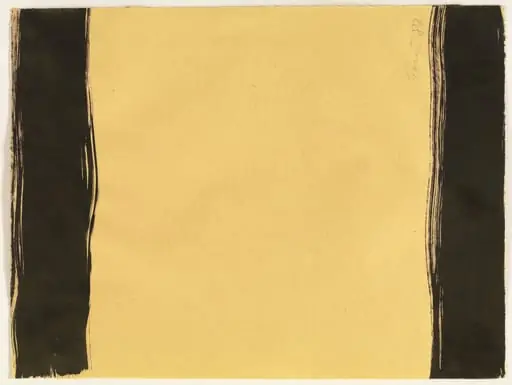
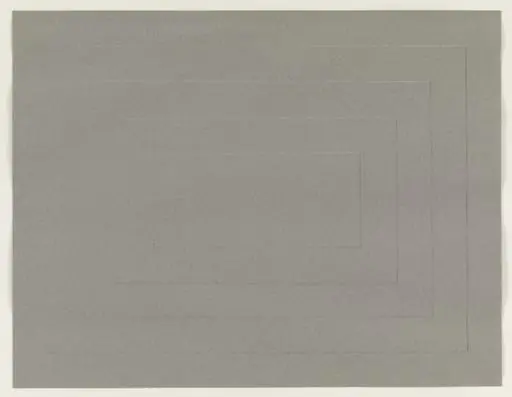
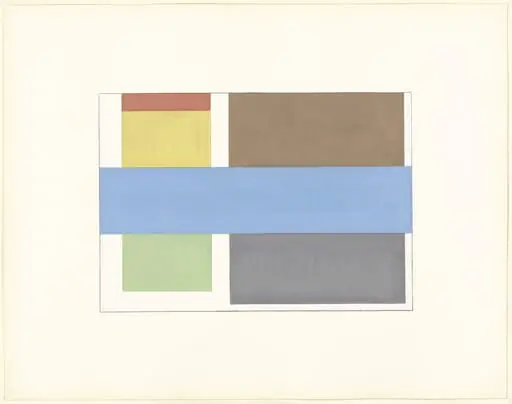
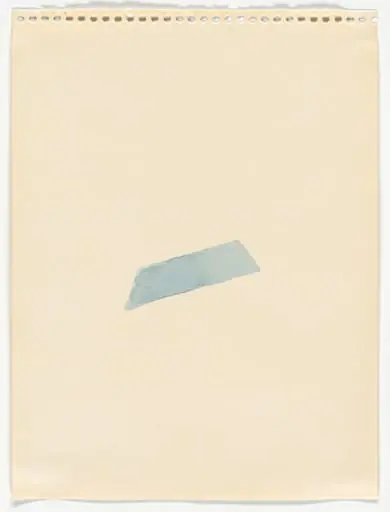
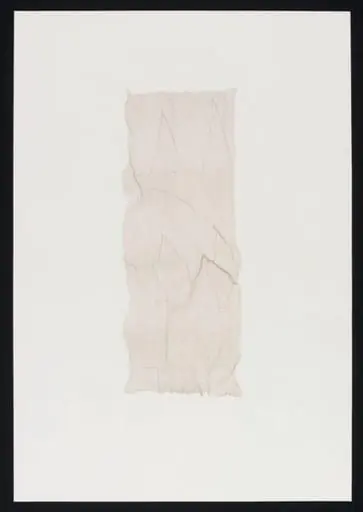
Created in 1960, this drawing by John McLaughlin is composed of cut and taped colored paper mounted on a pale yellow ground. No paint or brushwork is present; the composition relies solely on the physical properties of paper and adhesive. The artist’s hand is evident in the subtle irregularities of the edges, suggesting deliberate, manual assembly rather than mechanical precision.
Subject & Meaning
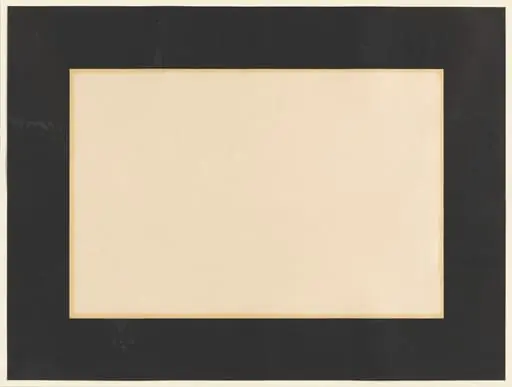
The work presents no representational imagery. Instead, it explores spatial relationships through the contrast of two flat planes: a tan rectangle and a deep black one. Their juxtaposition invites attention to balance, edge, and the quiet tension between color and form. The absence of narrative or symbolism directs focus to the material and structural qualities of the composition itself.
Technique & Style
McLaughlin constructed the piece by cutting colored paper and adhering it with tape, avoiding traditional painting tools. Pencil lines at the corners appear to have been added after the paper was positioned, reinforcing the work’s constructed nature. The slightly uneven edges suggest hand-cutting, emphasizing the artist’s physical engagement with the materials and rejecting industrial perfection.
History & Provenance
The work entered the collection of The Museum of Modern Art in New York, where it remains part of its permanent holdings. Its creation in 1960 places it within McLaughlin’s mature period, following his shift from figurative work to geometric abstraction. The piece reflects his long-standing interest in minimal, non-representational forms derived from Eastern aesthetics and modernist principles.
Context
Made during the rise of Minimalism and Color Field painting, this drawing aligns with contemporaneous efforts to reduce art to essential elements. Unlike many of his peers, McLaughlin avoided industrial materials, favoring humble, hand-worked paper. His approach resonates with Japanese ink painting and Zen principles, emphasizing restraint, quietude, and the integrity of materials.
Legacy
This work exemplifies McLaughlin’s contribution to postwar American abstraction through quiet, meditative form.
This work exemplifies McLaughlin’s contribution to postwar American abstraction through quiet, meditative form. It influenced later artists interested in materiality and non-illusionistic space. Its use of everyday materials and deliberate imperfection prefigured aspects of Process Art and Conceptual practices, establishing a quiet but enduring precedent for art grounded in physical presence rather than symbolic content.
Artist & collection

Artist
John Dwyer McLaughlin was an American abstract painter. Based primarily in California, he was a pioneer in minimalism and hard-edge painting. Considered one of the most significant Californian postwar artists,…