Artwork
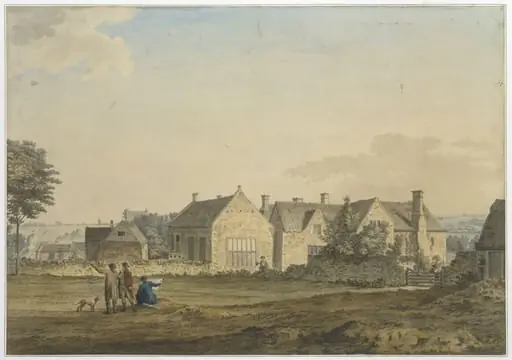
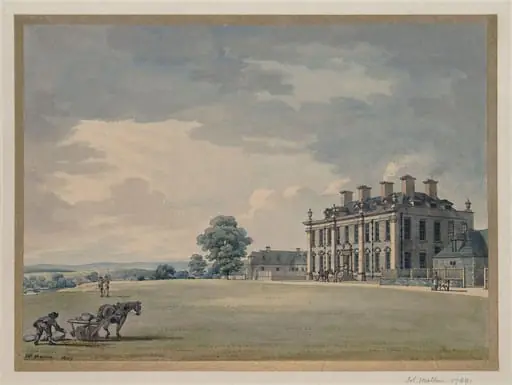
The Courtyard of a Mansion with Figures
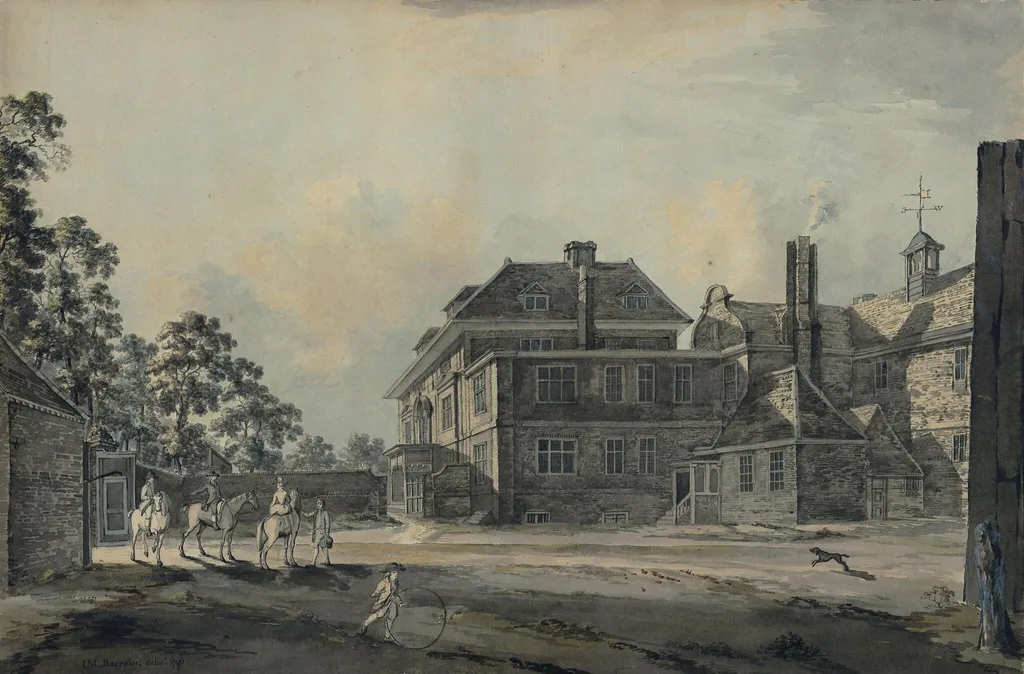
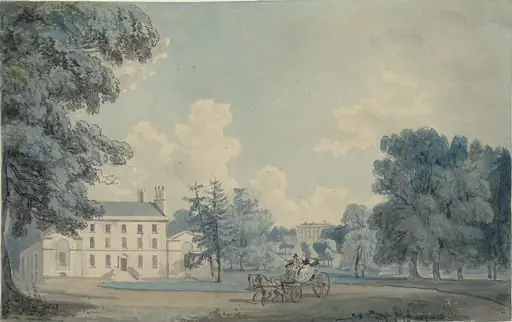
The Courtyard of a Mansion with Figures is a watercolor work on paper by the Rococo painting artist John Melchior Barralet. It dates from 1781 and is held in the collection of the Victoria and Albert Museum.
About this work
Overview
Painted in 1781 by John Melchior Barralet, this watercolour captures a quiet moment in the courtyard of a substantial country residence. Executed in delicate washes, the work presents a restrained domestic scene with minimal narrative tension. The artist’s signature and date confirm its origin, situating it within the late 18th-century British tradition of topographical watercolour.
Subject & Meaning
The scene centers on a stone mansion with a steeply pitched roof and prominent chimneys, suggesting a landed estate. Three figures on horseback traverse a dirt path, while a fourth walks nearby with a dog. The figures are not engaged in dramatic action but appear to move through their environment with routine ease, implying a private, everyday rhythm rather than a ceremonial or public event.
Technique & Style
Barralet employed translucent watercolour washes to render the architecture and landscape with subtle gradations. The house’s windows and roof tiles are suggested rather than sharply defined, while the riders’ garments and the dog are indicated with light, swift strokes. The pale sky and soft clouds contribute to a muted, atmospheric tone, emphasizing stillness over spectacle.
History & Provenance
The work is documented as part of the Victoria and Albert Museum’s collection, where it has been held since at least the 19th century. Its survival in good condition reflects its preservation within institutional care, though its earlier ownership prior to museum acquisition remains unrecorded in publicly accessible sources.
Context
In late 18th-century Britain, watercolour was increasingly used for topographical and domestic scenes by artists documenting estates and rural life. Barralet, an Irish-born painter active in London, contributed to this trend, blending architectural precision with observational intimacy. This piece aligns with contemporaneous works that valued quiet realism over idealized landscapes.
Legacy
Though not widely exhibited outside institutional settings, the painting exemplifies the quiet precision of British watercolour practice in the decades before the medium’s romantic revival. Its preservation in a major museum underscores its value as a record of domestic architecture and everyday movement in the late Georgian countryside.
Artist & collection