Artwork
Harewood House, Yorkshire
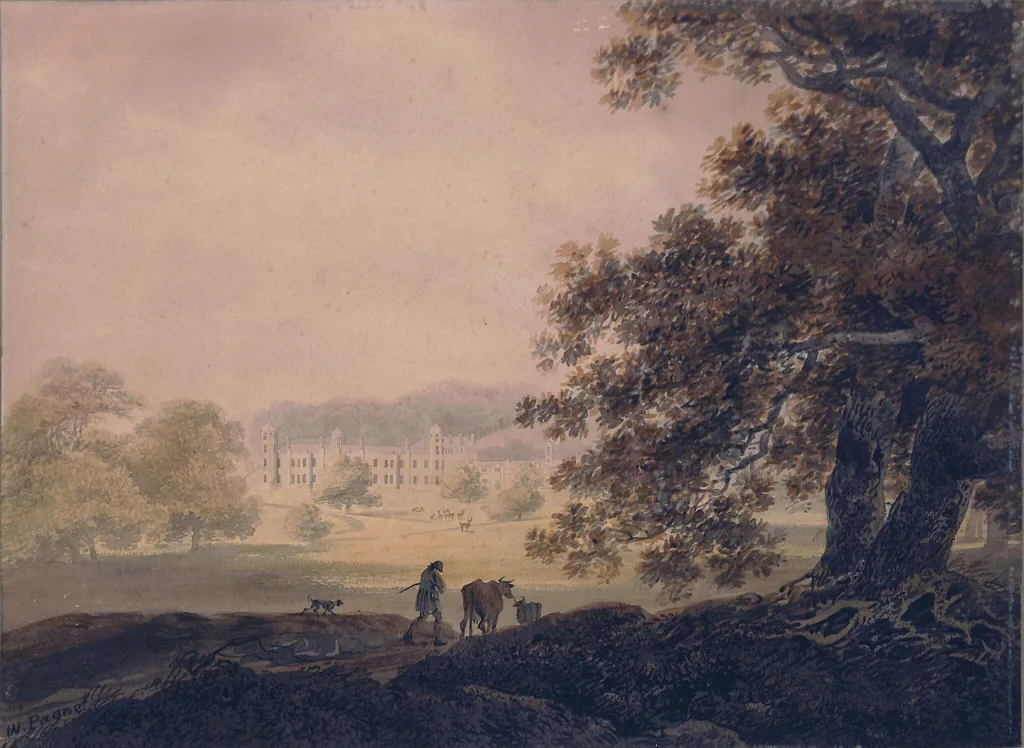
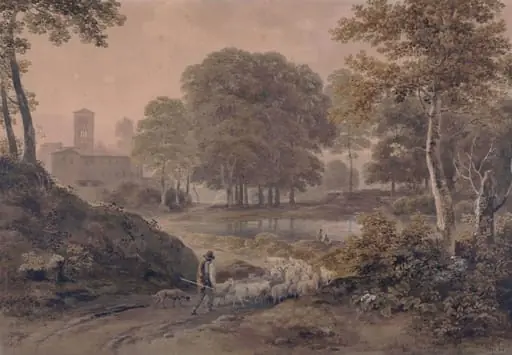
Harewood House, Yorkshire is a watercolor work on paper by the Rococo painting artist William Payne. It dates from 1776 and is held in the collection of the Victoria and Albert Museum.
About this work
Overview
William Payne’s 1776 watercolour depicts Harewood House set within a tranquil Yorkshire landscape. A solitary figure guides a cow along a path, while a dog lingers nearby, and a sprawling tree arches over the scene. The composition balances the distant pale mansion with the intimate foreground, creating a calm, bucolic atmosphere.
Subject & Meaning
The work juxtaposes the grandeur of the country estate with everyday rural activity, suggesting a harmonious relationship between aristocratic architecture and the surrounding agrarian life. The presence of the shepherd and his animals emphasizes the continuity of pastoral labor beneath the imposing yet softened silhouette of the house.
Technique & Style
Payne employs a delicate palette of muted tones, allowing light washes to suggest atmosphere and depth. Soft, blended edges give the sky a hazy quality, while subtle shading renders the tree’s foliage and the building’s form in an almost dreamlike manner, characteristic of late‑18th‑century English watercolour practice.
History & Provenance
Created in 1776, the painting is an early example of Payne’s landscape oeuvre, produced during a period when watercolour was gaining acceptance as a serious medium in Britain. It records Harewood House before later architectural alterations, providing a visual document of the estate’s 18th‑century appearance.
Artist & collection


 Pooley Hall, Warwickshire
 Lake House, Epping
 Hagley Hall, Stourport
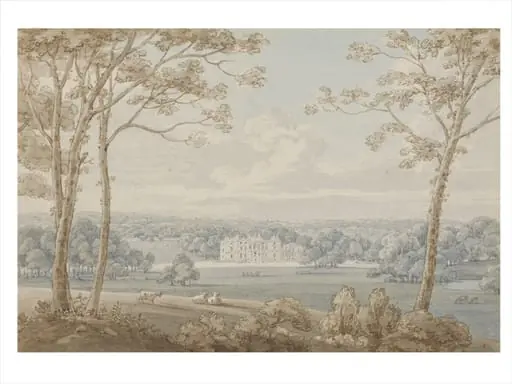 Sandbeck Park, Yorkshire
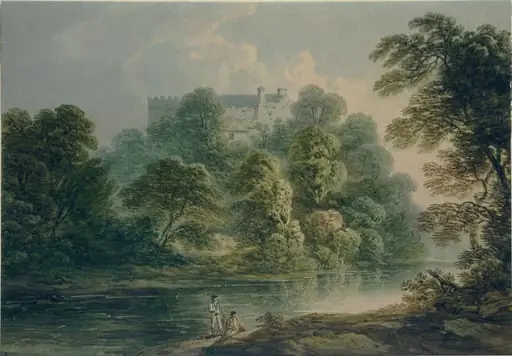 Castle on the Liffey, Ireland
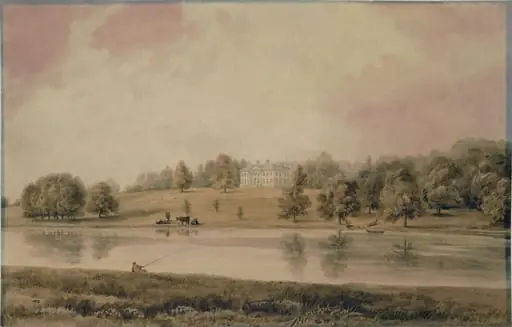 Redgrave Hall
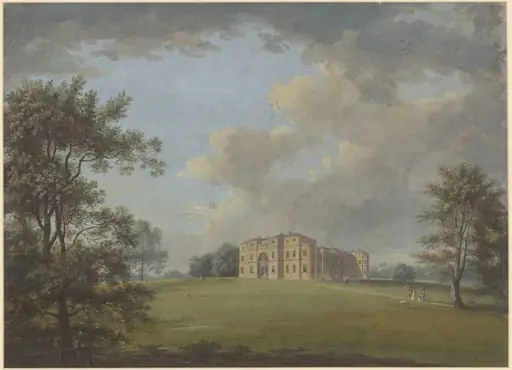 Luton Park (or Luton Hoo), Bedfordshire, from the South
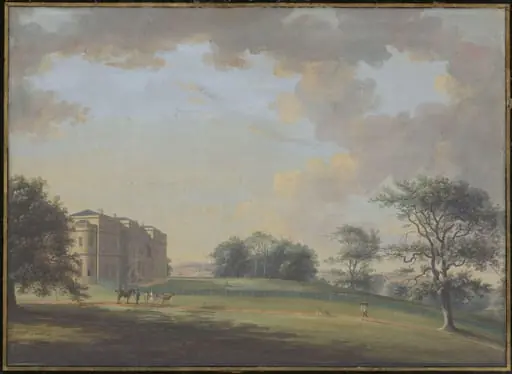 Luton Park (or Luton Hoo), Bedfordshire from the West
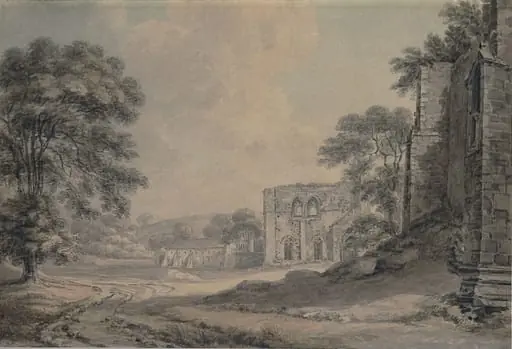 Landscape with ecclesiastical ruins
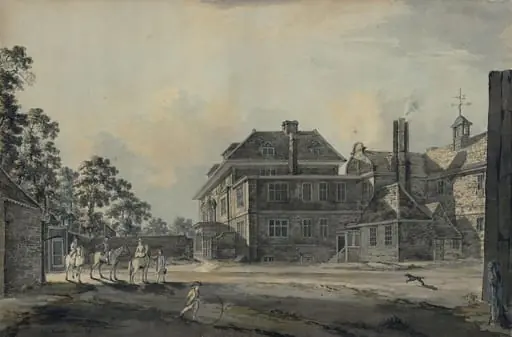 The Courtyard of a Mansion with Figures
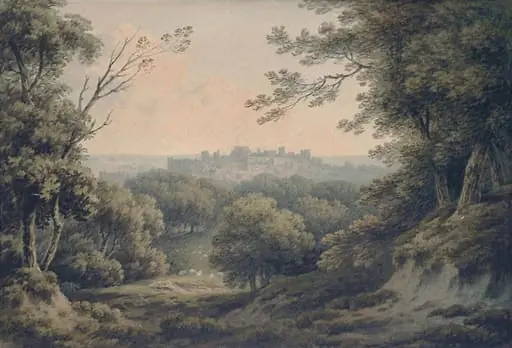 Distant view of Windsor Castle
 Landscape composition