Artwork
Chinese Lanterns
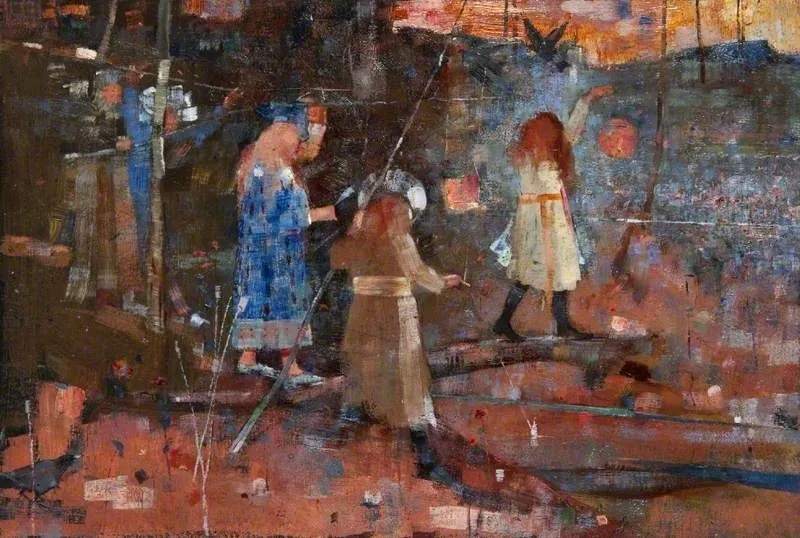
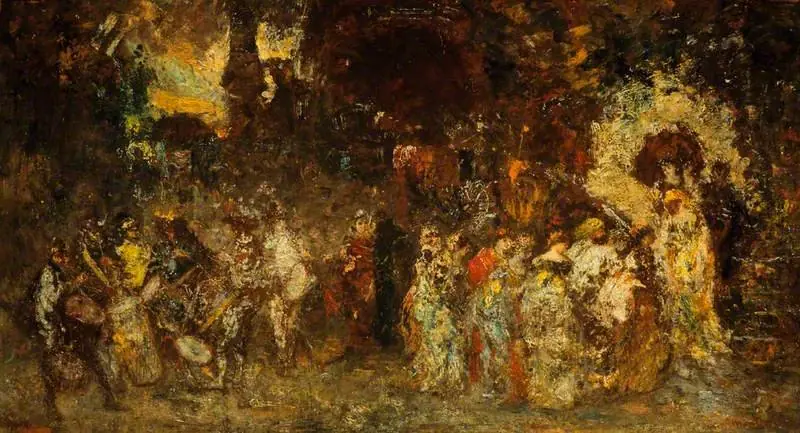
Chinese Lanterns is an unspecified painting by the Orientalist artist John Quinton Pringle. It dates from 1895 and is held in the collection of the Kelvingrove Art Gallery and Museum.
About this work
Overview
Painted in 1895 by Scottish artist John Quinton Pringle, *Chinese Lanterns* is a landscape figure piece that blends naturalism with atmospheric light effects.
Painted in 1895 by Scottish artist John Quinton Pringle, *Chinese Lanterns* is a landscape figure piece that blends naturalism with atmospheric light effects. Pringle, associated with the Glasgow Boys, drew inspiration from French realist Jules Bastien-Lepage. The work reflects late 19th-century European fascination with Eastern motifs, though its setting remains ambiguously pastoral rather than distinctly Asian. It resides in the Kelvingrove Art Gallery and Museum’s permanent collection.
Subject & Meaning
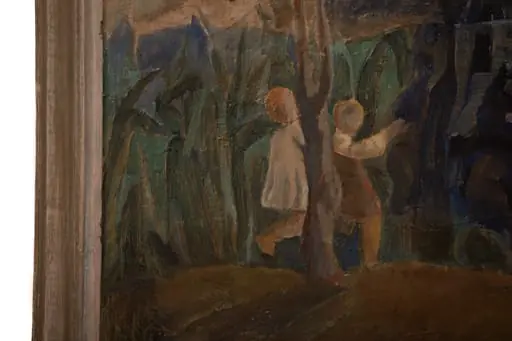
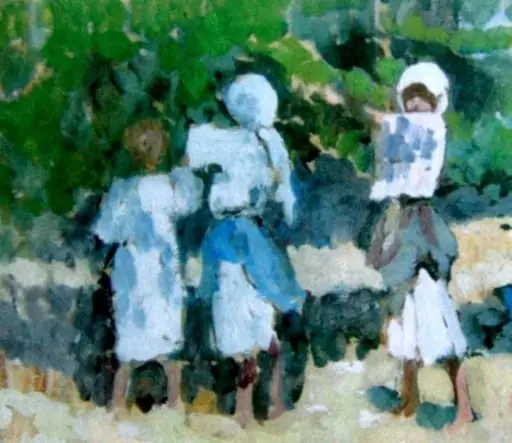
The painting portrays a quiet evening gathering near water, with three figures—a woman in blue, a man in white, and a child—engaged in unremarkable, intimate moments. The title suggests a cultural reference to East Asian traditions, yet no lanterns are visibly present. The scene evokes tranquility and domestic harmony rather than exoticism, subtly engaging with Orientalist themes without literal representation, leaving interpretation open to the viewer’s perception.
Technique & Style
Pringle employs loose, fluid brushwork to capture the fleeting quality of twilight. Warm golden hues from the setting sun bathe the trees, water, and figures, creating a unified tonal harmony. The contrast between the woman’s blue dress and the surrounding light adds visual focus without sharp definition. The technique prioritizes mood over detail, aligning with the Glasgow Boys’ interest in natural light and everyday scenes rendered with expressive immediacy.
History & Provenance
Completed in 1895, *Chinese Lanterns* entered the Kelvingrove Art Gallery and Museum’s collection shortly after its creation. It was acquired during a period when Scottish institutions actively expanded their holdings of contemporary British and Scottish art. There is no record of public exhibition prior to its institutional acquisition, suggesting it was likely purchased directly from the artist or through a private dealer connected to the Glasgow art scene.
Context
In the 1890s, European artists often incorporated Eastern themes as symbolic or decorative elements, even when distant from authentic cultural contexts. Pringle’s work reflects this trend, yet avoids overt stereotyping. His focus on light and rural leisure aligns with broader European naturalism, while his Scottish roots connect him to a regional movement that sought to modernize landscape painting through direct observation and emotional resonance.
Legacy
Though not widely reproduced or critically dominant in art history, *Chinese Lanterns* remains a representative example of late 19th-century Scottish painting’s engagement with light, atmosphere, and cross-cultural motifs. It contributes to understanding how regional artists interpreted global trends without replicating them. The painting continues to be studied for its subtle synthesis of realism and poetic mood within the Glasgow Boys’ broader aesthetic.
Artist & collection
Artist
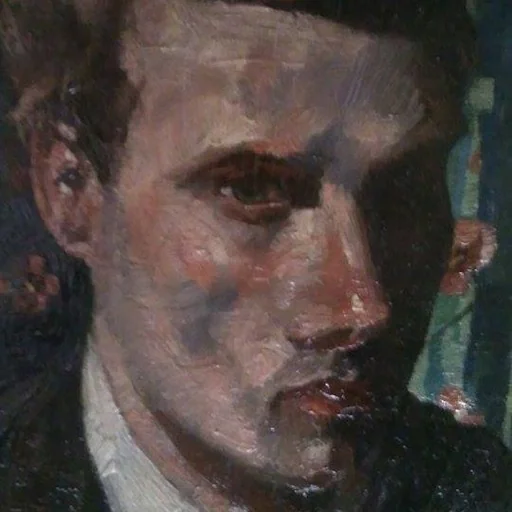
John Quinton Pringle (13 December 1864 – 25 April 1925) was a Scottish painter, influenced by Jules Bastien-Lepage and associated with the Glasgow Boys.