Artwork
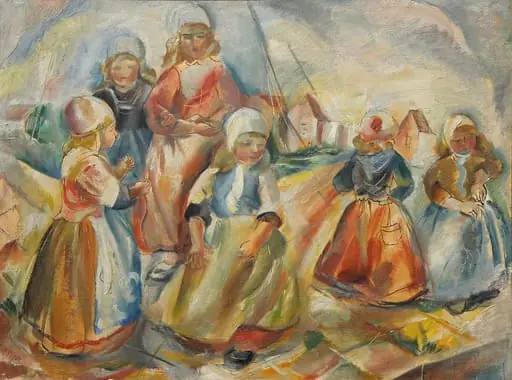
Fetițe olandeze cu saboți de lemn
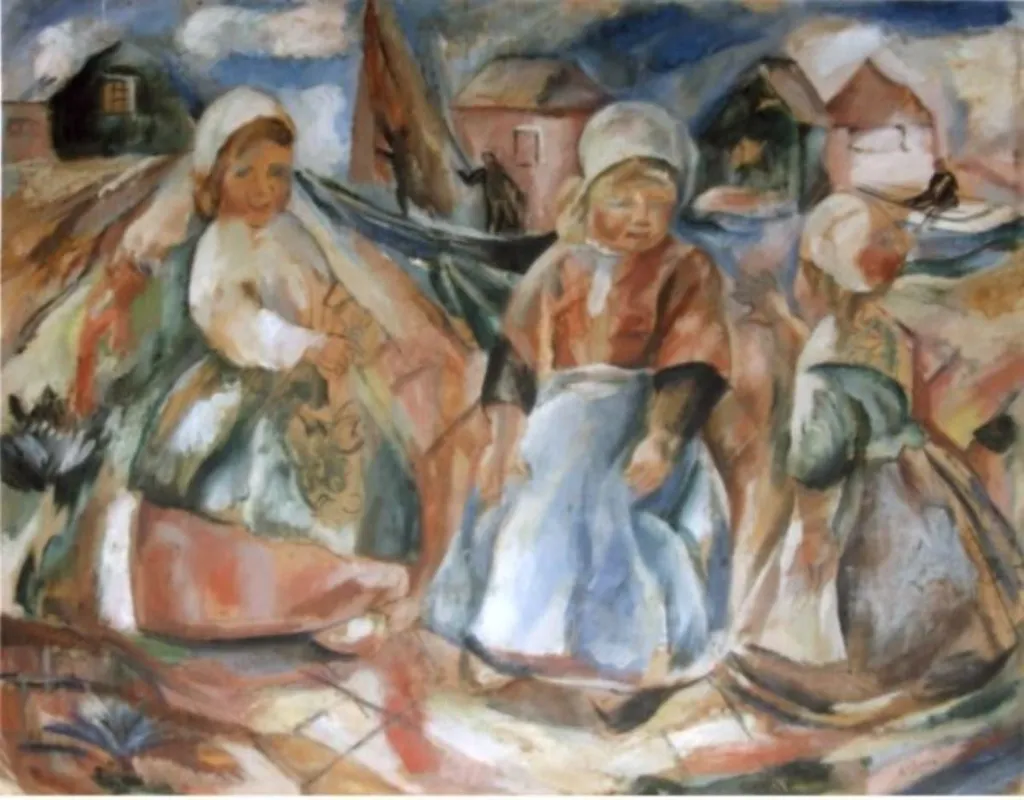
Fetițe olandeze cu saboți de lemn is an unspecified painting by Elena Popea. It dates from 1928 and is held in the collection of the Colecție particulară - Cluj.
About this work
Overview
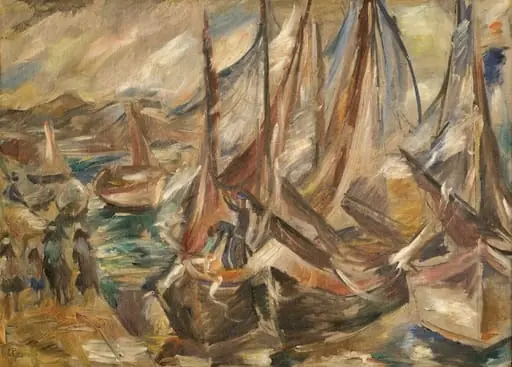
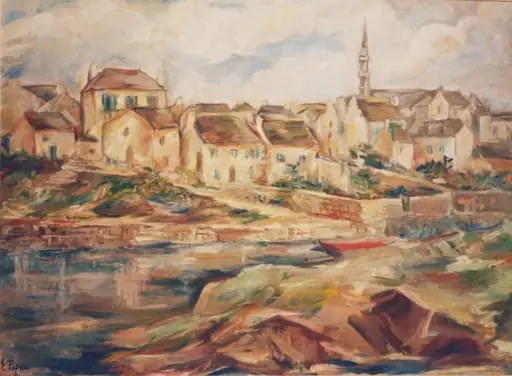
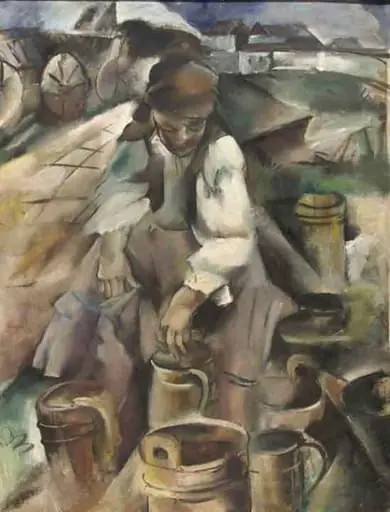
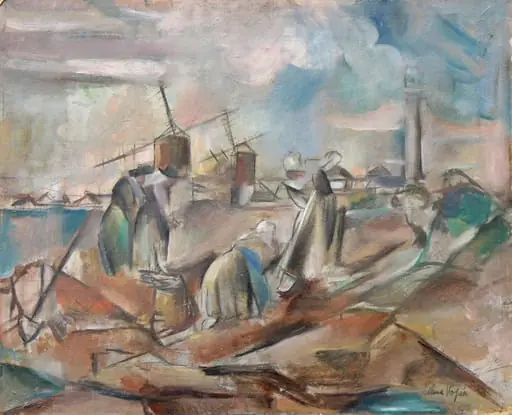
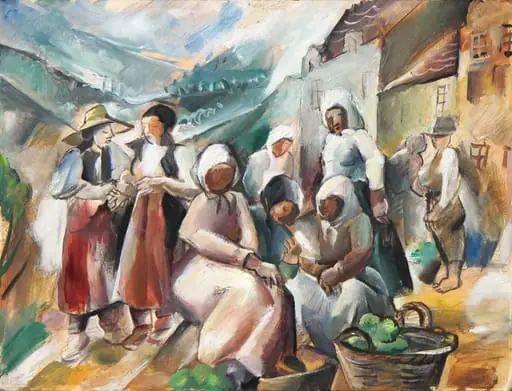
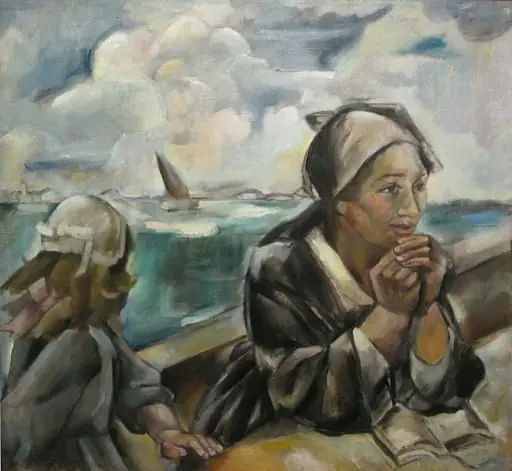
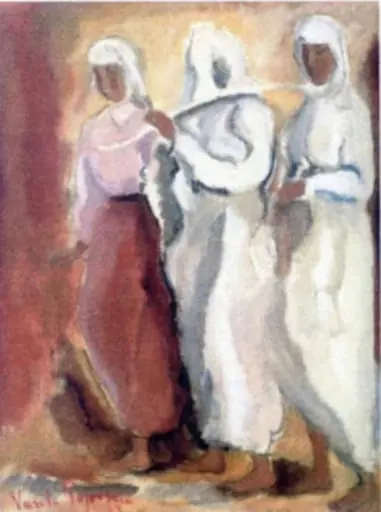
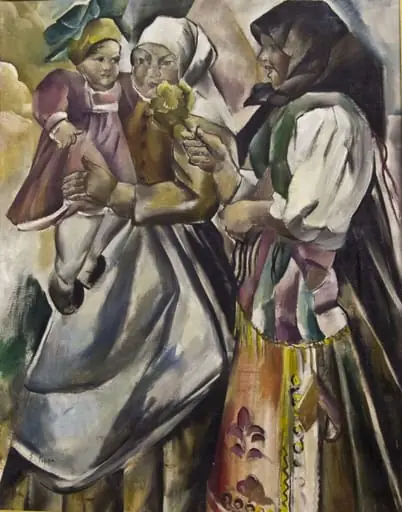
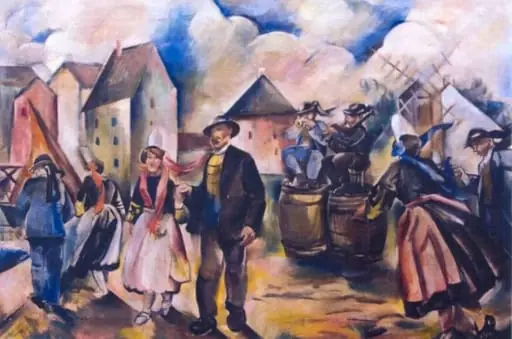
Fetițe olandeze cu saboți de lemn, created by Elena Popea in 1928, is a painting featuring three seated women against a Dutch-inspired backdrop of a river, boat, and houses. The work is characterized by thick, textured brushstrokes and a warm, muted color palette.
Subject & Meaning
The painting depicts three women engaged in quiet, everyday activity, set amidst a serene Dutch landscape. The subject matter reflects Popea's interest in daily life scenes, while the figures' calm poses and the natural setting convey a sense of tranquility.
Technique & Style
Popea employed a distinctive technique with thick, impasto brushstrokes, imparting a lively, almost rough texture to the scene. The style blends elements of Impressionism, Expressionism, and Cubism, though the overall effect here leans towards expressive, textured representation.
History & Provenance
Created in 1928 by Austro-Hungarian-born Romanian Modernist Elena Popea, the painting is now part of the Museum of Ethnography's collection.
Context
While the title suggests a Dutch subject, the painting's style and the artist's background situate it within early 20th-century Romanian Modernism, reflecting broader European artistic influences of the time.
Artist & collection
Artist
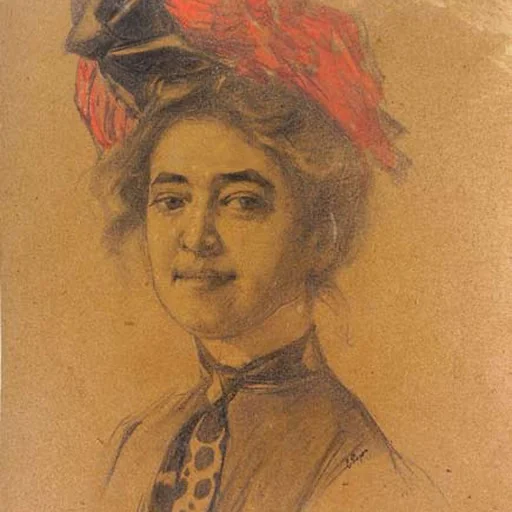
Elena Popea (15 April 1879, Brașov – 19 June 1941, Bucharest) was an Austro-Hungarian-born Romanian Modernist painter whose influences included Impressionism, Expressionism and Cubism.