Artwork
Liber Studiorium: Ragland Castle, Monmouhshire
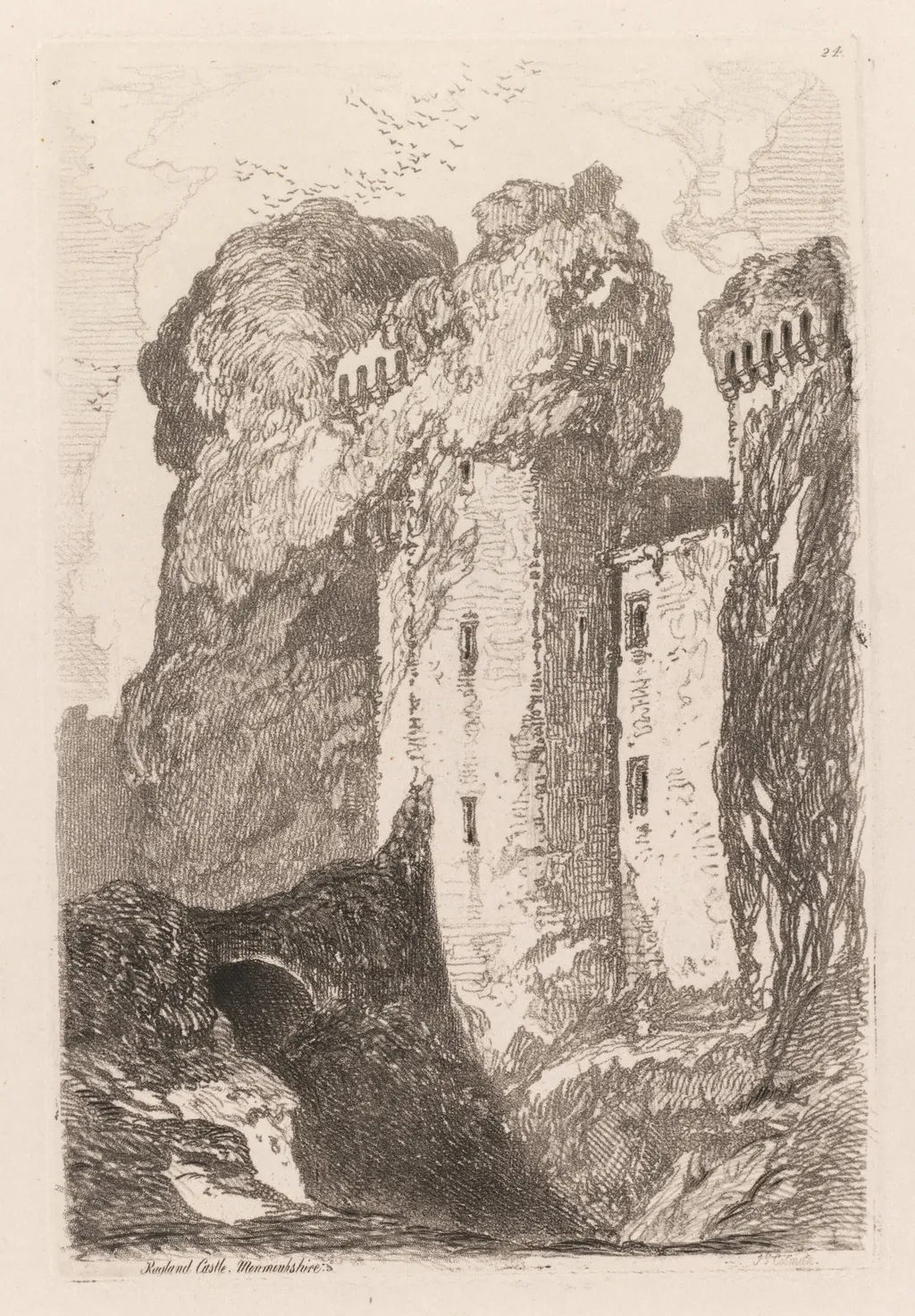
Liber Studiorium: Ragland Castle, Monmouhshire is a print by the Romanticist artist John Sell Cotman. It dates from 1838 and is held in the collection of the Cleveland Museum of Art.
About this work
Overview
This work exemplifies his mature style, combining etching with wash to capture the mood of rural ruins rather than their topographical precision.
John Sell Cotman produced this print in 1838 as part of his *Liber Studiorum* series, a collection of landscape and architectural studies. A central figure in the Norwich School, Cotman shifted from commercial art to fine printmaking after moving to London in 1798. This work exemplifies his mature style, combining etching with wash to capture the mood of rural ruins rather than their topographical precision.
Subject & Meaning
The print depicts Ragland Castle in Monmouthshire, a medieval structure in advanced decay. Cotman emphasizes its isolation and erosion—crumbling walls, overgrown vegetation, and a brooding sky convey a sense of time’s passage. The scene avoids idealization, instead presenting the ruin as a quiet witness to history, aligning with Romantic sensibilities that valued emotional resonance over grandeur.
Technique & Style
Cotman employed etching with subtle watercolor washes to render texture and atmosphere. Quick, angular lines define the jagged stonework and clinging vines, while soft washes suggest the storm-lit sky and distant hills. The sparse use of color and emphasis on line create a sense of immediacy, reflecting his interest in capturing transient light and weather rather than static detail.
History & Provenance
Created late in Cotman’s career, this print belongs to his *Liber Studiorum*, a project inspired by Claude Lorrain’s earlier series of landscape studies. Unlike his earlier watercolors, these prints were intended for broader dissemination. The work was likely produced for private collectors and art students, reflecting Cotman’s commitment to printmaking as a serious artistic medium.
Context
In the early 19th century, British artists increasingly turned to ruins as subjects, drawn to their symbolic weight in an age of industrial change. Cotman’s focus on Welsh and borderland castles aligned with a wider cultural fascination with national heritage and the sublime in nature. His approach, less dramatic than Turner’s, emphasized quiet contemplation over spectacle.
Legacy
Cotman’s *Liber Studiorum* influenced later generations of British printmakers by demonstrating how etching could convey mood and atmosphere with restraint. His emphasis on decay and natural integration over architectural accuracy helped shift landscape art toward psychological depth. Though less celebrated than his contemporaries, his work remains a quiet benchmark in 19th-century British printmaking.
Artist & collection
Artist
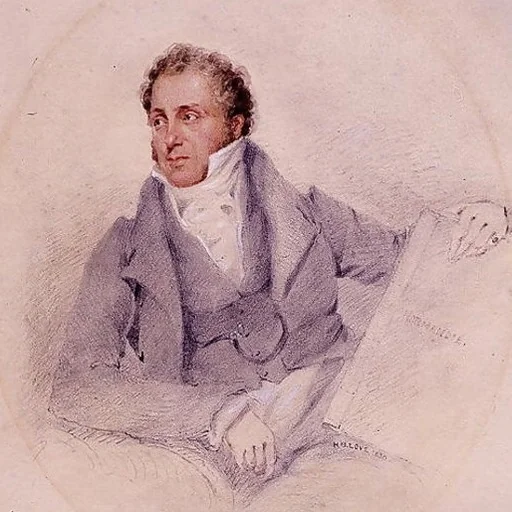
John Sell Cotman (16 May 1782 – 24 July 1842) was an English marine and landscape painter, etcher, illustrator, and a leading member of the Norwich School of painters.

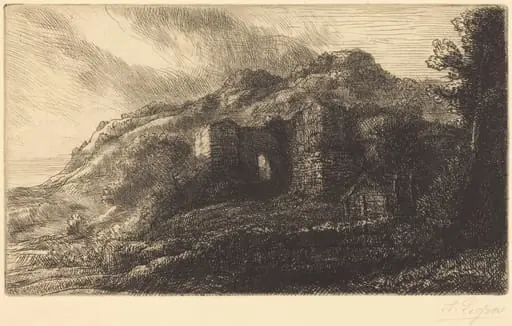 Ruins of a Chateau (Les ruines du chateau)
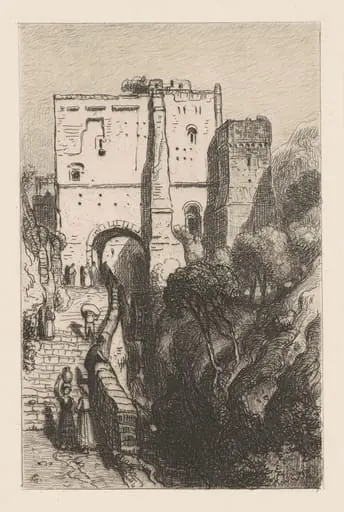 Untitled
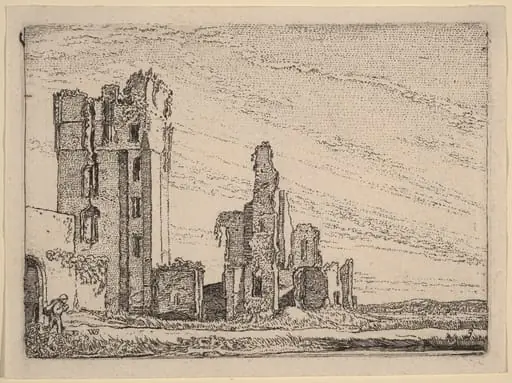 Two Ruins (Huys te Kleef near Haarlem)
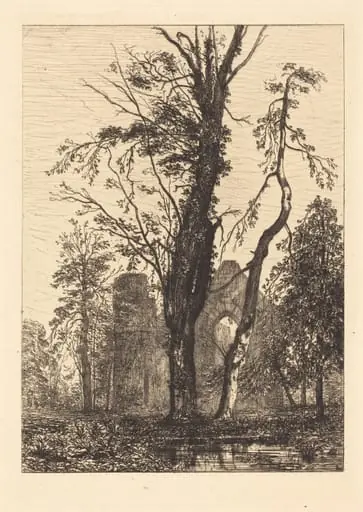 Dans un Parc
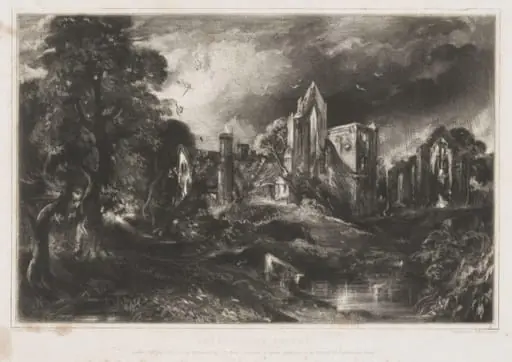 CASTLE ACRE PRIORY
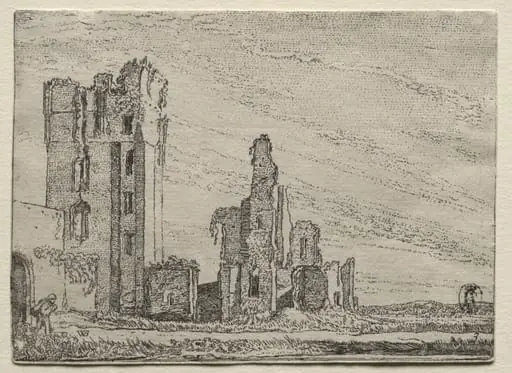 Ruins of the Castle Huys Te Kleef near Haarlem
 Radoub d'une Barque à la Marée Basse (Refitting of a Ship at Low Tide)
 A Series of Ancient Buildings and Rural Cottages in the North of England: At York, Farmyard with Chickens
 Landscape with Ruined Castle
 Vue du Chateau de Saconnex